Tragedy in Lucknow: 15 Dead as Fire Rips Through Aliganj Coaching Centre
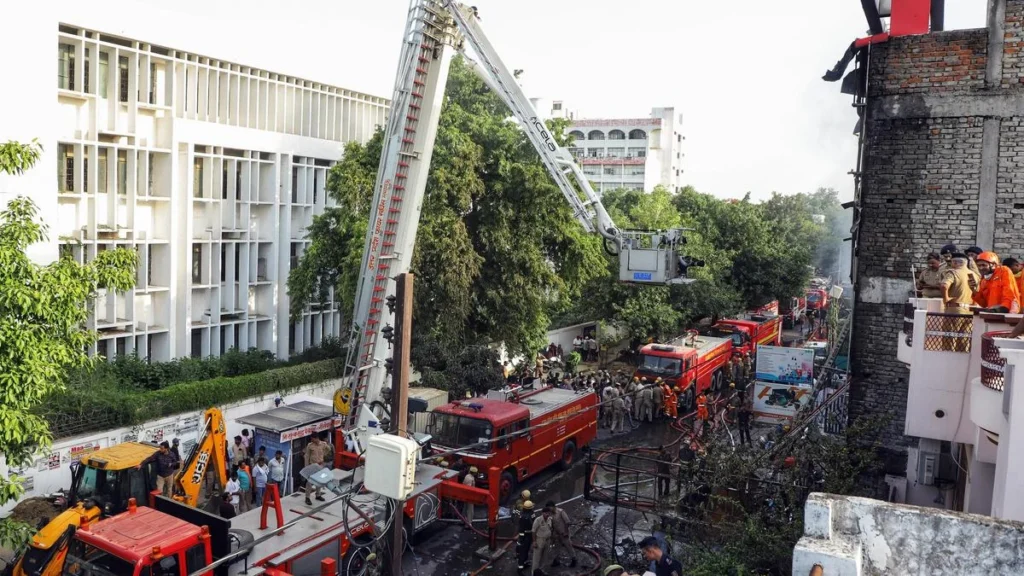
LUCKNOW | JUNE 22, 2026 — A day that began with the promise of academic pursuit for dozens of students in Lucknow’s Aliganj area ended in unimaginable tragedy on Monday. A ferocious fire broke out at a three-storey commercial building on Usha Mehta Marg, trapping students and staff in a smoke-filled inferno that has claimed at least 15 lives and left seven others battling severe injuries.
As of late Monday evening, the city remained in a state of shock, with authorities scrambling to determine the cause of the blaze while rescue teams continued to comb the charred remains of the structure.
The Chronology of the Disaster
The fire was reported in the late afternoon, a time when the building—which housed an animation and gaming training centre—was packed with students attending summer vacation courses.
Initial Outbreak and Panic
Eyewitness accounts suggest the fire began on one of the lower floors, quickly sending thick, toxic plumes of black smoke billowing through the narrow stairwells. The speed with which the flames spread caught those inside off-guard, effectively cutting off primary exits. As the smoke intensified, panic gripped the building. Frantic students and employees began calling their families, their voices trembling with fear as they described the heat and the darkness.
The First Responders
Before the professional fire department could navigate the city’s evening traffic, local residents and passersby became the first line of defense. The scene was one of chaotic heroism: civilians were seen throwing heavy objects at glass panes, shattering them in a desperate attempt to vent the smoke and create makeshift escape routes.
In one harrowing moment captured by onlookers, a student was seen leaping from an upper floor to escape the encroaching flames. The community’s quick thinking proved vital; bystanders scrambled to pull a mattress to the ground, cushioning the fall and preventing a likely fatality. The student was immediately whisked away for medical attention by locals.
The Rescue Operation
As official emergency services arrived, the scale of the operation expanded rapidly. A total of 19 fire tenders were deployed to the site. The National Disaster Response Force (NDRF) and the State Disaster Response Force (SDRF) joined the local fire teams, executing a high-risk operation that involved creating openings from an adjoining building to reach trapped victims from the upper floors.

A Community in Anguish
Outside the perimeter, the atmosphere was defined by raw, unfiltered grief. Parents and relatives gathered in the hundreds, their eyes fixed on the smoke-choked structure. The scene was punctuated by the agonizing pleas of mothers begging police to let them charge into the building to find their children.
"Mujhe jaane do apne bete ke paas" (Let me go to my son), one woman cried repeatedly, her voice rising above the roar of the fire engines. Her plea was a microcosm of the heartbreak unfolding across the barricades.
Among those who stepped into the fray was Lance Naik Chhabi Ram, a soldier posted in Agra and currently attached to the Lucknow headquarters. Off-duty and passing by, he instinctively joined the rescue efforts. "My professional training took over," he told PTI. "I assisted in the relief operations, pulling people out. It was a harrowing sight—we recovered more than a dozen bodies, but we also held onto the hope of finding survivors."
Dhiraj Mehra, a colleague of an employee trapped inside, recounted the final moments of communication. He had received a frantic call from Aditya Srivastava, a 3D artist on the third floor. "He told me, ‘bacha lo’ (save me)," Mehra said, his voice breaking. "I rushed as fast as I could, but the heat was already too intense to penetrate."
Supporting Data and Technical Challenges
The Aliganj building was a typical mid-rise commercial structure, a configuration that often presents significant challenges for modern fire safety standards.
- Casualties: 15 confirmed deceased, 7 injured.
- Response Units: 19 fire tenders, supplemented by NDRF and SDRF teams.
- Building Usage: Primarily an animation centre and gaming zone, leading to a high concentration of young students.
- Contributing Factors: The rapid spread of smoke is currently being investigated as the primary cause of fatalities, suggesting potential issues with ventilation or the presence of highly flammable materials within the animation studio.
The rescue operation was bolstered by neighbors, who, recognizing the gravity of the situation, began supplying water bottles to firefighters, allowing them to remain in the heat for longer durations without having to withdraw for supplies.
Official Response and Accountability
The Uttar Pradesh government has already moved to address the fallout of the tragedy. Authorities have ordered a high-level inquiry to investigate the cause of the fire and, crucially, to audit the safety compliance of the coaching centre.

Preliminary questions are being raised regarding:
- Fire Safety Certification: Did the building have the necessary fire exits and operational fire suppression systems?
- Structural Integrity: Were the renovations for the animation centre compliant with commercial building codes?
- Emergency Evacuation Plans: Why were so many individuals trapped on the third floor without an alternate means of egress?
"The priority is the treatment of the injured and the identification of the victims," a local official stated during a press briefing. "A comprehensive probe will follow, and anyone found responsible for negligence—whether in the building management or the oversight of such centres—will face the full extent of the law."
Implications for Public Safety
This tragedy is the latest in a series of fire accidents that have plagued Indian urban centers over the past few decades. The incident in Aliganj highlights a recurring theme: the rapid proliferation of coaching centers and commercial offices in residential or mixed-use buildings that were never designed to handle such high footfalls.
The Need for Stricter Enforcement
Experts argue that while fire safety laws exist on paper, their implementation remains patchy. Coaching hubs often operate with "cramped, windowless classrooms" and lack basic fire safety infrastructure like external fire escapes, smoke detectors, or sprinklers.
For the students of Lucknow, the day was meant to be one of skill-building and career advancement. Instead, it has become a grim reminder of the vulnerability of the urban student population. The "fire safety timeline" for India, which has seen numerous similar disasters in the past, now adds another dark chapter.
As the sun set on Monday, the sirens finally began to fade, replaced by the somber quiet of a city mourning. For the parents waiting outside the morgues and the hospitals, the wait for answers has only just begun. The state administration is expected to release a detailed report on the fire’s origins within 48 hours, but for the families of the 15 victims, no report will ever be enough to compensate for the loss of their loved ones.
As the community looks for answers, the plea of the mother at the barricade remains the defining memory of the day: a desperate, human demand for safety in a world that, for the students of Aliganj, failed to provide it.