St. John’s Medical College Celebrates Academic Excellence: 217 Graduates Inducted into Allied Health Professions
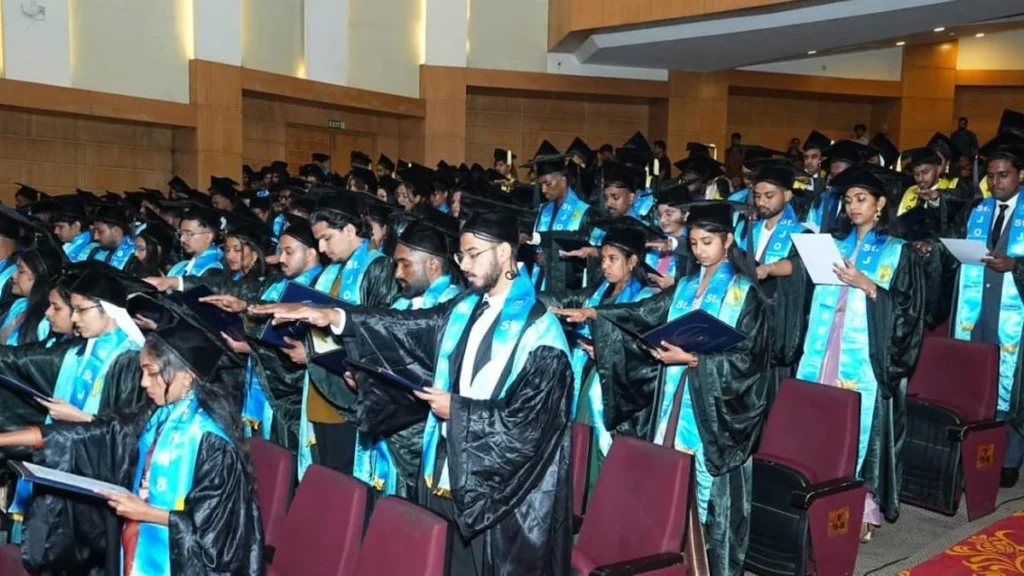
BENGALURU – In a ceremony marked by solemnity and the promise of future contributions to the national healthcare landscape, the Institute of Allied Health Sciences at St. John’s Medical College, Bengaluru, hosted its annual convocation on Friday, July 24, 2026. A total of 217 students crossed the stage to receive their degrees, marking the culmination of years of rigorous clinical training and academic study.
The event, which brought together faculty, parents, and distinguished guests, served as a testament to the institution’s enduring commitment to medical excellence. As these graduates prepare to transition into the workforce, they do so against the backdrop of an evolving global health infrastructure that increasingly relies on the specialized skills of allied health professionals.
The Convocation: A Milestone in Clinical Education
The annual convocation stands as the crowning achievement for students at St. John’s Medical College, an institution widely regarded as one of the premier medical training grounds in India. The 2026 cohort represented a diverse array of disciplines, ranging from advanced hospital administration and physiotherapy to specialized laboratory technologies.
The atmosphere inside the auditorium was one of anticipation and reflection. For the 217 graduates, the day represented more than just the receipt of a diploma; it was a formal induction into a community of practice that forms the backbone of patient care. The ceremony, conducted with traditional academic rigor, saw the graduates take an oath—a commitment to uphold the sanctity of their profession and the welfare of the patients they are set to serve.
Academic Performance: A Statistical Overview of Excellence
The quality of an academic institution is often reflected in the performance of its students on regional and national platforms. The Institute of Allied Health Sciences demonstrated its competitive edge this year by securing a total of 14 university ranks under the umbrella of the Rajiv Gandhi University of Health Sciences (RGUHS).
A Breakdown of University Rank-Holders
The performance of the 2026 batch was particularly notable for the breadth of its success across multiple specialized fields:
- Hospital Administration: Leading the charge was Maria Renita Swathy, who secured the prestigious first rank in the Master’s in Hospital Administration (MHA) program.
- Medical Laboratory Technology (MLT): Payel Chakraborty distinguished herself by achieving the first rank in MSc Medical Laboratory Technology. In the same discipline, Sandeep secured the third rank in the Haematology and Blood Transfusion specialization.
- Microbiology and Immunology: The department saw a significant haul of accolades, with Dhanasree Varrier (2nd rank), Bhat Divyashree Mahabala (3rd rank), and Muhammed Shiyas (4th rank) bringing honor to the institute.
The total tally of 14 university ranks includes two graduates from the BSc programs, three from the Master’s in Hospital Administration, one from the Master’s in Physiotherapy, and an impressive eight from various MSc MLT streams. This distribution underscores the institute’s ability to foster excellence across diverse medical domains, ensuring that graduates are not merely qualified, but are among the top tier of their peers nationwide.
Keynote Address: The Ethical Mandate of the Healthcare Professional
The convocation address was delivered by Dr. P. Ranganath Nayak, a senior consultant interventional cardiologist, whose words resonated with the urgency and responsibility inherent in modern medicine. Dr. Nayak focused his address on the intersection of technical proficiency and moral integrity.
"Quality healthcare is not a solo pursuit; it is a symphony of coordinated efforts," Dr. Nayak remarked. He challenged the graduates to view their roles not just as technicians or administrators, but as vital contributors to a collaborative healing process. In an era of rapid technological advancement, he cautioned against the dehumanization of medicine, urging the new professionals to remain anchored to the oath they had taken.

"Integrity is the bedrock of your professional identity," he emphasized. "Patients entrust you with their lives and their vulnerabilities. Your technical skills will evolve with technology, but your professional values—your empathy, your honesty, and your dedication to the patient’s well-being—are the constants that will define your career."
Institutional Leadership and the Path Forward
The event was presided over by Rev. Fr. Jesudoss Rajamanickam, Director of St. John’s National Academy of Health Sciences. His presence, along with the participation of senior faculty members, highlighted the collaborative spirit that defines the St. John’s experience.
The Institute of Allied Health Sciences has long been instrumental in bridging the gap between medical diagnostics and patient treatment. By training students in highly technical fields like microbiology, blood transfusion, and health systems management, the college ensures that the Indian healthcare ecosystem is equipped with the human capital necessary to tackle emerging health challenges.
Implications for the Healthcare Sector
The graduation of these 217 professionals comes at a critical time for India’s healthcare sector. As the nation continues to expand its medical infrastructure, the demand for highly skilled allied health professionals—those who work alongside doctors to provide diagnostic, technical, and therapeutic support—is at an all-time high.
Addressing the Skills Gap
The success of these graduates suggests a positive trajectory for the industry. With specialized training in areas like Hospital Administration and Laboratory Technology, these students are well-positioned to improve the efficiency and diagnostic accuracy of hospitals across the country.
- Administrative Efficiency: Graduates of the MHA program, like rank-holder Maria Renita Swathy, enter a field that is currently undergoing a digital transformation. Their role is pivotal in optimizing resource allocation, reducing wait times, and improving the overall patient experience.
- Diagnostic Precision: The high performance of the MSc MLT graduates is particularly vital. As diagnostic medicine becomes increasingly complex—requiring mastery of molecular biology and advanced immunology—the role of laboratory technologists becomes the definitive factor in early disease detection and treatment planning.
- Collaborative Care: The emphasis placed on "teamwork" by Dr. Nayak during his address is reflective of the global shift toward "Interprofessional Education" (IPE). In modern hospital settings, the lines between medical departments are blurring, and success is increasingly dependent on how well a lab technician communicates with a physician, or how effectively an administrator supports the nursing staff.
A Legacy of Service
St. John’s Medical College has maintained a reputation for producing professionals who are not only technically competent but are also imbued with a sense of social service. The convocation was not merely an end-point, but a launchpad for these individuals to enter clinical environments where their work will directly impact patient outcomes.
As the ceremony concluded, the pride of the parents and the faculty was palpable. The 217 graduates now join a vast network of St. John’s alumni who are currently serving in various capacities across the globe. For the city of Bengaluru, a hub of medical innovation, this batch of graduates represents a significant infusion of talent into the local and national workforce.
The event served as a reminder that the heartbeat of any medical institution is its students. As they move forward, the challenge for these graduates will be to maintain the balance between the rigorous demands of clinical accuracy and the compassionate delivery of care. Given the academic rigor they have navigated and the ethical framework instilled in them by their mentors, the prospects for this cohort—and the patients they will serve—remain bright.
As the sun set on the St. John’s campus on this July evening, it was clear that the future of allied health is in capable hands. The 2026 convocation stands as a benchmark for the next generation of healthcare providers, setting a standard for both academic prowess and professional character.