Mitigata Secures $15 Million in Series B Funding to Revolutionize Global Cyber Resilience
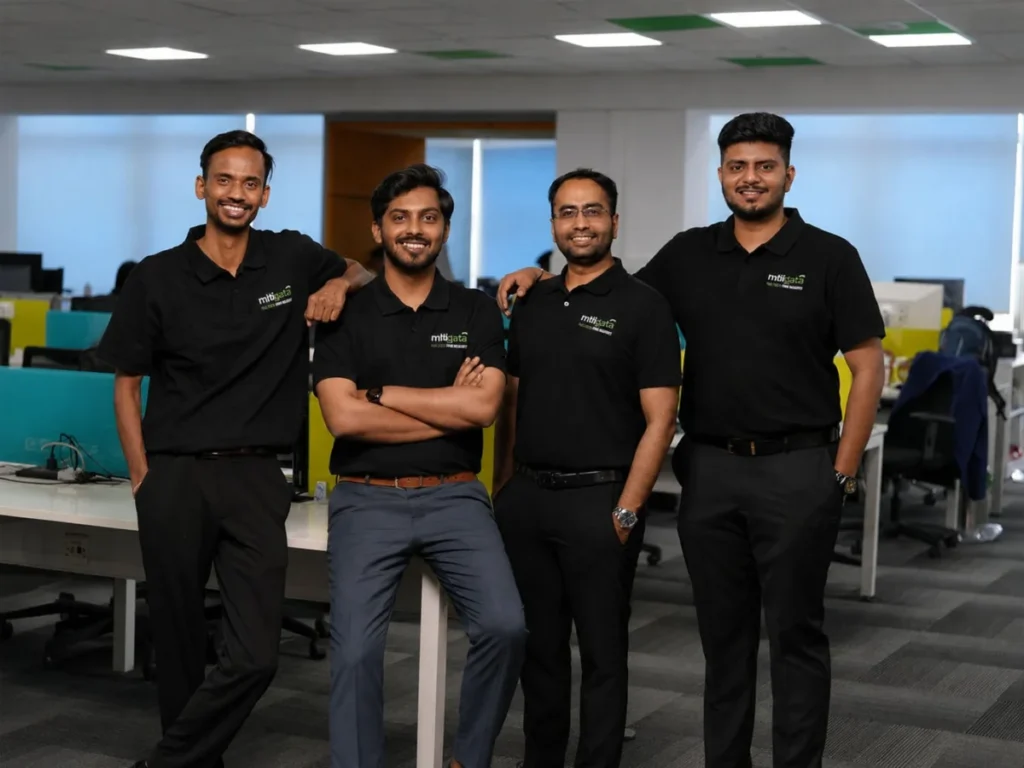
In a significant boost for India’s burgeoning deep-tech ecosystem, Bengaluru-based cybersecurity startup Mitigata has successfully raised $15 million (approximately ₹141 crore) in a Series B funding round. The investment, led by Bessemer Venture Partners, marks a pivotal milestone for the company as it seeks to redefine the intersection of artificial intelligence, threat intelligence, and financial protection.
The round saw robust participation from existing investors, including Nexus Venture Partners, Titan Capital, and WEH Ventures, signaling strong institutional confidence in Mitigata’s "full-stack" approach to cyber risk management. As digital transformation accelerates globally, Mitigata’s unique model—which bridges the gap between proactive security operations and financial insurance coverage—is positioning the startup as a critical player in the global security landscape.
The Strategic Roadmap: Scaling for Global Impact
The fresh infusion of capital arrives at a critical juncture for the company. Mitigata has outlined a three-pronged growth strategy to utilize the funds: aggressive international expansion, the enhancement of its AI-native technology suite, and the scaling of its domestic Security Operations Centre (SOC).
The startup’s ambition for its SOC is particularly noteworthy: it aims to build the largest domestic SOC in India. By bolstering its infrastructure, Mitigata plans to provide real-time, 24/7 monitoring and incident response capabilities to its rapidly growing client base. Furthermore, the company intends to double its headcount, with a dedicated focus on hiring top-tier talent in product engineering, software development, and customer success divisions. This human capital expansion is essential to supporting the complex demands of a platform that integrates automated security with human-led forensic expertise.
A Chronology of Innovation: From Inception to Market Leader
Founded in 2023 by a visionary quartet—Mohit Anand, Sarthak Dubey, Mayank Morya, and Akshit Kaushik—Mitigata emerged with the intent to solve a fundamental disconnect in the enterprise world: the siloed nature of cybersecurity and risk transfer.
- 2023: Mitigata is founded in Bengaluru, aiming to provide a consolidated platform for cyber resilience. The company achieves a significant regulatory milestone by becoming India’s first IRDAI-regulated insurance broker focused exclusively on the cyber domain.
- Late 2023 – Early 2024: The company focuses on refining its product stack, including the deployment of "Gordon AI," a security co-pilot, and "RELIQ," its proprietary risk-measurement engine.
- Mid-2024: Mitigata records a staggering 12x year-over-year (YoY) growth, triaging over 10 lakh security incidents.
- Late 2024: The startup secures $15 million in Series B funding, setting the stage for its global footprint expansion.
The Full-Stack Resilience Paradigm
Unlike traditional cybersecurity vendors that limit their scope to threat prevention, Mitigata offers a holistic ecosystem. Its platform architecture is designed to manage the entire lifecycle of a cyber incident, from pre-emptive risk assessment to post-breach financial recovery.
The product suite is built on four core pillars:
- Gordon AI: A security co-pilot designed for automated threat detection, providing incident response at machine speed.
- RELIQ: A proprietary engine that quantifies cyber risk, allowing companies to translate technical vulnerabilities into tangible financial metrics.
- Dranta: A comprehensive privacy governance and consent management platform.
- Scan by Mitigata: A consumer-centric data exposure monitoring solution.
By bundling these tools with dedicated cyber insurance, Mitigata is effectively de-risking the digital operations of over 800 organizations across critical sectors, including BFSI, healthcare, manufacturing, automotive, and e-commerce.
Official Perspective: The CEO’s Vision
Reflecting on the funding and the evolving nature of the cybersecurity market, co-founder and CEO Mohit Anand emphasized that the industry is undergoing a structural shift.
"Cybersecurity is entering an AI-first era, and resilience will become one of the defining capabilities of the modern enterprise," Anand stated. "As AI becomes increasingly embedded into economies and critical infrastructure, security stops being just an IT problem. It becomes a question of trust, continuity, and, increasingly, national security. We believe India has a unique opportunity to build world-class cyber resilience infrastructure from India, for the world."
Anand’s vision highlights a broader sentiment within the Indian tech sector: the transition from being a service-provider hub to a source of proprietary, high-end intellectual property in the global security domain.
Implications for the Broader Cybersecurity Landscape
The success of Mitigata’s fundraising effort does not exist in a vacuum. It is part of a larger trend of capital flowing toward AI-driven security solutions. This is particularly relevant given recent discourse surrounding advanced AI models.
The Mythos Controversy
The industry is currently grappling with the implications of Anthropic’s "Claude Mythos," an AI model capable of identifying software security flaws. While the model promises to help developers patch vulnerabilities faster, it has triggered significant anxiety regarding potential misuse. Concerns that such powerful tools could be leveraged by malicious actors to identify zero-day vulnerabilities have led to restricted access protocols and heightened regulatory scrutiny.
Regulatory Response
In India, the Securities and Exchange Board of India (SEBI) has responded to these emerging threats by constituting a specialized task force dubbed "cyber-suraksha.ai." This body is charged with assessing the risks posed by generative AI models like Mythos to the financial markets. The government’s proactive stance mirrors the global regulatory shift toward ensuring that AI-led innovation does not compromise systemic financial stability.
Investor Sentiment
The broader venture capital market is betting heavily on the "AI-security" synergy. Recent high-profile deals underscore this appetite for risk:
- Innefu Labs: Raised $30 million earlier this month to advance its intelligence and security solutions.
- CloudSEK: Secured $10 million to catalyze its expansion into the US market.
- Mirror Security: Bagged $2.5 million to enhance its specialized AI cybersecurity tools.
These investments indicate that investors view the "Cyber-Resilience-as-a-Service" model as the next frontier. As digital threats become more automated and AI-driven, companies are increasingly looking for platforms that offer not just alerts, but automated remediation and financial indemnity.
Future Outlook: Building the Trust Infrastructure
As Mitigata sets its sights on international expansion, the company faces the challenge of adapting its model to different regulatory environments, particularly regarding insurance laws and data privacy standards (such as GDPR in Europe or various state-level privacy acts in the US).
However, the company’s success in India’s highly regulated financial services sector provides a strong foundation for global scaling. By integrating insurance into the tech stack, Mitigata provides a unique value proposition: it is not just selling software; it is selling the assurance of business continuity.
The success of this $15 million round serves as a bellwether for the Indian cybersecurity industry. It proves that local startups are capable of building sophisticated, full-stack solutions that satisfy the requirements of global enterprises. In an era where trust is the most valuable currency, Mitigata’s ability to combine AI-powered defense with the traditional safety net of insurance is not just a business strategy—it is a critical evolution in how the world handles the inevitable reality of cyber risk.
As the company scales its operations and integrates deeper layers of machine learning into its SOC, the global industry will be watching closely. If Mitigata can successfully export its model, it could well become the blueprint for a new generation of "resilience-first" cybersecurity firms.