The Dawn of the Agentic Era: Key Takeaways from AWS Summit New York 2026
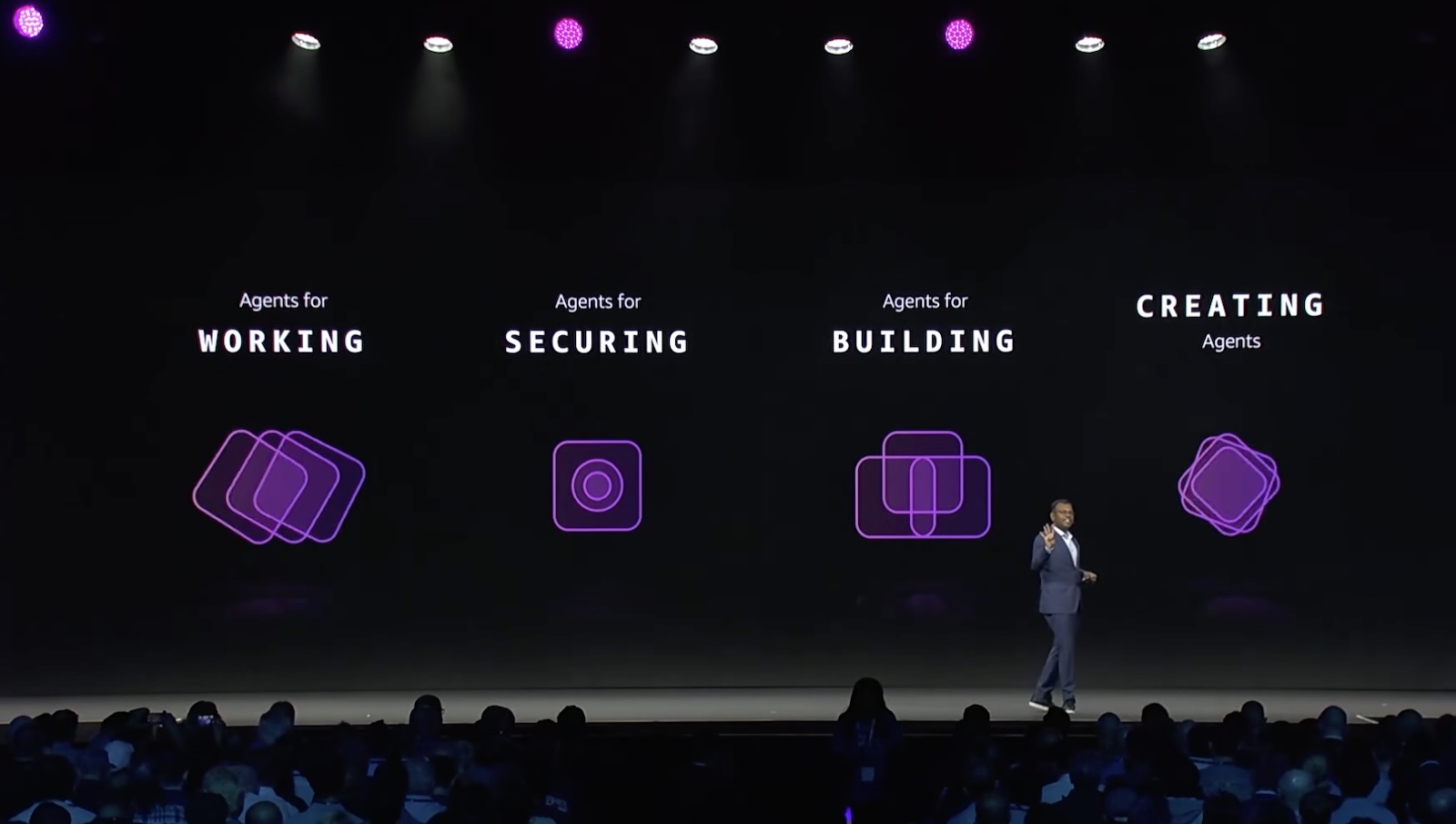
The landscape of generative AI is undergoing a fundamental shift. No longer content with merely generating text or images upon request, the industry is racing toward "Agentic AI"—systems capable of independent reasoning, tool usage, and long-term task execution. This evolution took center stage at the AWS Summit in New York City, where Swami Sivasubramanian, AWS Vice President of Agentic AI, delivered a keynote that signaled a new chapter for enterprise automation.
As businesses move past the experimental phase of Large Language Models (LLMs), the focus has pivoted toward operationalizing AI. AWS’s latest announcements, centered around Amazon Bedrock and the introduction of Amazon Quick, underscore a strategic commitment to providing developers and business users with the infrastructure to build, govern, and deploy autonomous agents that do not just talk, but work.
Main Facts: The Core Announcements
The announcements at the New York Summit can be distilled into two primary pillars: the evolution of the development layer through Amazon Bedrock AgentCore and the debut of the Amazon Quick autonomous platform.
Amazon Bedrock AgentCore: Scaling Intelligence
Bedrock AgentCore is positioned as the foundational backbone for developers building agentic workflows. The new capabilities announced include:
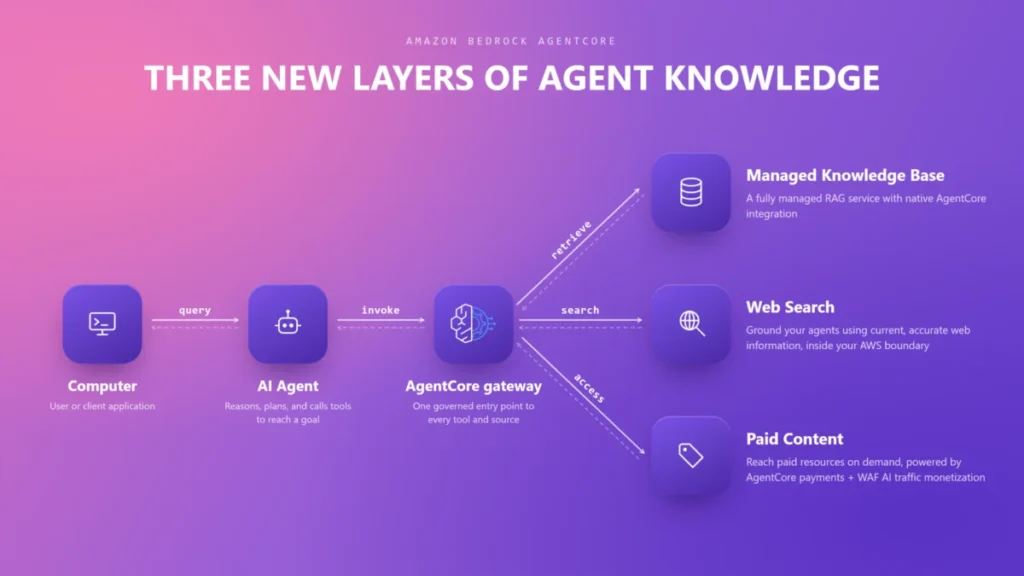
- Knowledge Integration: Agents can now seamlessly tap into organizational data, live web sources, and paid external knowledge repositories. This allows agents to operate with context that was previously siloed.
- Production Observability: New diagnostic tools help teams identify bottlenecks in agent reasoning, enabling them to "fix what’s going wrong" in real-time production environments.
- Governance at Scale: AWS has introduced new guardrails designed to evolve alongside the agent’s capabilities, ensuring that as systems become more autonomous, they remain within the bounds of corporate security and compliance policies.
Amazon Quick: AI Agents for the Workflow
While Bedrock targets the builder, Amazon Quick targets the end-user. This new platform allows for the creation of autonomous agents that operate in the background of a business. These agents are characterized by:
- Domain Expertise: Agents can be assigned specific roles—such as a finance agent for order processing or a sales agent for CRM management.
- Tool Access: These agents can bridge the gap between applications like Slack, email, and CRMs to perform proactive tasks, such as drafting follow-ups or flagging financial risks.
- Unified Activity Feed: A centralized dashboard consolidates communications and tasks. By leveraging machine learning, the feed prioritizes information based on user behavior, learning which threads require immediate attention and which can be deferred.
Chronology: The Road to Agentic AI
To understand the magnitude of these updates, one must look at the rapid acceleration of the AWS AI roadmap over the last 18 months.
- Early 2025: AWS doubles down on "RAG" (Retrieval-Augmented Generation) as the industry standard for grounding LLMs in company data.
- Late 2025: Initial beta testing begins for autonomous reasoning loops within Amazon Bedrock, allowing models to chain together multiple tool calls.
- June 16, 2026: Pre-summit technical documentation is released, hinting at "Knowledge Layers," a new way for agents to access dynamic data.
- June 17, 2026 (Keynote Day): Swami Sivasubramanian formally unveils the AgentCore framework and the Amazon Quick assistant, marking the transition from "Chatbots" to "Autonomous Workers."
- June 18, 2026: AWS pushes a secondary wave of supplemental launches, focusing on infrastructure optimizations to support the increased compute load of agentic reasoning cycles.
Supporting Data: Why "Agentic" Matters
The pivot to Agentic AI is driven by the limitations of traditional chatbot interfaces. Data from industry benchmarks and AWS internal testing suggests a significant "productivity gap" between passive AI and active agents.
Current enterprise data indicates that while 80% of organizations have experimented with generative AI, less than 20% have moved these experiments into mission-critical workflows. The primary barrier? Context switching and tool fragmentation. Employees spend an average of 30% of their day toggling between applications—Slack, email, CRM, and ERP systems—to manually move data.
By automating these "swivel-chair" tasks, AWS aims to recover this lost productivity. The Amazon Quick platform’s internal metrics suggest that a well-tuned sales agent can reduce the "lead-to-follow-up" time by as much as 65%, significantly increasing conversion rates in high-velocity environments. Furthermore, the governance features in Bedrock AgentCore are designed to address the "black box" concern, providing audit trails that satisfy the stringent regulatory requirements of the financial and healthcare sectors.
Official Responses and Strategic Direction
During the keynote, Swami Sivasubramanian emphasized that the goal is not to replace human decision-making, but to provide "cognitive leverage."

"We are moving from a world where you ask an AI for a document, to a world where you ask an AI to run your business processes," Sivasubramanian stated. "This requires three things: the ability to understand context, the ability to act on that context, and the ability to be held accountable. With AgentCore and Amazon Quick, we are providing the infrastructure for all three."
Industry analysts have reacted positively, noting that AWS is successfully positioning itself as the "plumbing" for the agentic economy. By embedding these capabilities directly into the cloud infrastructure, AWS removes the overhead of building complex integration layers, making sophisticated AI accessible to mid-market firms that lack massive research departments.
Implications: The Future of Enterprise Work
The introduction of these tools carries profound implications for the future of work.
1. The Death of the "Prompt-Only" Workflow
We are entering an era where users will spend less time writing prompts and more time "managing" agents. The skill set required for a modern office worker will shift toward orchestration—defining the goals, constraints, and tool access of an agent, then monitoring the output for quality.
2. The Rise of "Continuous Learning" Organizations
With the integration of knowledge layers and production diagnostics, systems are becoming self-improving. If an agent fails to close a sale, it can now analyze the conversation, compare it against historical success data, and "learn" to adjust its tone or strategy for the next interaction. This creates a flywheel effect where the organization’s collective intelligence grows with every transaction.
3. Security as a Competitive Differentiator
As agents gain the ability to "act," they also gain the ability to do damage. AWS’s focus on governance and scaling controls is a direct response to the fear of "hallucinations" causing real-world errors. Companies that adopt these robust, governed agentic frameworks will have a significant competitive advantage over those relying on "shadow AI"—unmanaged, siloed, and potentially insecure tools.
4. The Economic Shift
The economic impact will likely be felt in operational efficiency. As Amazon Quick and similar tools become standard, the overhead cost of processing orders, managing customer inquiries, and drafting internal communications will drop precipitously. This may lead to a reallocation of human capital toward higher-level strategic initiatives, creative problem-solving, and relationship management—areas where human empathy and intuition remain irreplaceable.
Conclusion: A New Baseline for Cloud Computing
The 2026 AWS Summit in New York will likely be remembered as the moment when the "Agentic" hype became an operational reality. By moving beyond the novelty of chatbots and focusing on the rigorous, governed, and highly integrated world of autonomous agents, AWS has set a new baseline for what is expected of cloud service providers.
For the enterprise, the message is clear: the technology to automate complex, multi-step workflows is now available. The challenge—and the opportunity—for the next twelve months lies in implementation. As companies begin to deploy these agents across their organizations, the definition of "work" will inevitably be rewritten. We are no longer just building software; we are building a digital workforce.