Tragedy in Tiruvallur: Death Toll Rises to 11 in Ammonia Gas Leak Disaster
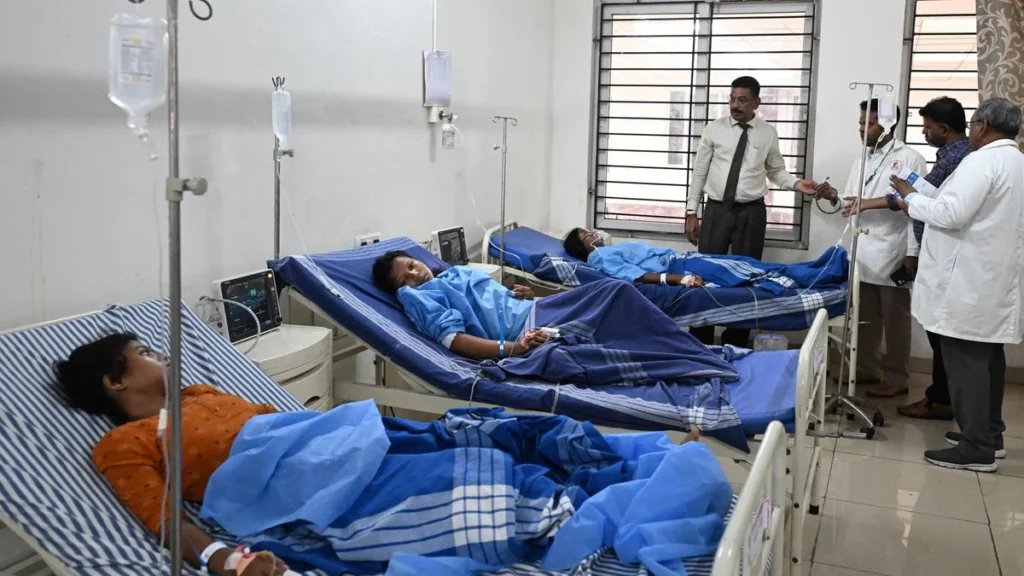
TIRUVALLUR, JUNE 25, 2026 – The industrial tragedy that has gripped the coastal district of Tiruvallur deepened on Thursday as the death toll from the catastrophic ammonia gas leak at a seafood processing and export facility reached 11. Health officials confirmed that Rita Juanga, a migrant worker hailing from Odisha, succumbed to her injuries while undergoing treatment, marking the latest casualty in a disaster that has reignited urgent debates surrounding industrial safety protocols and the working conditions of migrant laborers in India’s manufacturing hubs.
The Human Cost: A Growing Crisis
The Health Department’s official bulletin released on Thursday morning detailed the precarious condition of the survivors. As of 11:00 am, 67 individuals—comprising 64 women and three men—remain hospitalized under intensive medical care.
The clinical severity of the incident is highlighted by the high number of patients requiring advanced respiratory intervention. According to the medical report, 16 patients are currently fighting for their lives on ventilator support, while another 21 remain tethered to nasal oxygen. While 30 patients have been reported as "stable," medical experts caution that the long-term respiratory damage caused by ammonia inhalation can be unpredictable, necessitating prolonged observation.
The logistical challenge of repatriating the victims has become a central focus for the district administration. With the facility employing a significant number of migrant workers from Odisha, the process of transporting mortal remains has been complex. To date, the mortal remains of seven victims have been airlifted to their home state. Authorities stated that the remaining four bodies will be repatriated as soon as the mandatory post-mortem examinations and legal documentation processes are finalized.
Chronology of the Disaster
The incident began on the evening of June 23, when a massive structural failure in the facility’s cooling system led to a pressurized ammonia leak. Ammonia, a highly toxic and corrosive chemical commonly used in industrial refrigeration, quickly saturated the workspace.
- June 23 (The Leak): The leak was detected late in the evening during a shift change. Workers reported a pungent, suffocating odor, followed immediately by burning sensations in the eyes and lungs. Panic ensued as staff scrambled to evacuate the premises, with many collapsing before they could reach the exits.
- June 24 (The Emergency Response): By early morning, local fire and rescue services had contained the leak. However, the sheer volume of exposure meant that local hospitals were overwhelmed by the influx of casualties. The state government activated a crisis management team to coordinate medical aid and establish communication channels for the families of the victims.
- June 25 (The Rising Toll): Despite the deployment of specialized medical teams and a steady supply of oxygen, the condition of the most critically ill patients deteriorated. The death of Rita Juanga has prompted a surge of grief and outrage among the worker community, leading to heightened security around the facility and local hospitals.
Anatomy of the Failure: Industrial Safety Under Scrutiny
While the official investigation is ongoing, preliminary reports from the Pollution Control Board suggest that the facility’s cooling infrastructure had been subject to minimal maintenance over the past two quarters. The seafood processing sector, which relies heavily on high-pressure ammonia refrigeration systems, is governed by stringent safety norms; however, the speed and intensity of the leak suggest a catastrophic failure of the pressure relief valves or a major rupture in the piping system.
The Vulnerability of Migrant Labor
The disaster has cast a harsh spotlight on the systemic vulnerabilities faced by the workforce. The majority of those affected are migrant laborers who traveled thousands of kilometers for economic opportunities. Activists have pointed out that in many such export-oriented units, safety training is often conducted in languages that the workers do not fully comprehend, and emergency evacuation drills are frequently neglected.
"This is not merely a technical accident; it is a human rights issue," said a representative from a local labor rights group. "When workers are trapped in a facility without adequate ventilation or emergency escape training, the outcome is inevitably fatal."

Official Responses and Administrative Action
The state government has announced an ex-gratia payment for the families of the deceased and has promised full medical coverage for those still in the hospital. The District Collector has ordered a comprehensive safety audit of all seafood processing plants within a 50-kilometer radius of the incident site.
In a statement issued Thursday, the Health Minister remarked: "Our priority remains the stabilization of the 67 survivors. We have deployed top-tier pulmonary specialists and toxicologists to ensure that the patients receive the highest standard of care. Simultaneously, the police have registered an FIR against the facility owners and the plant manager for criminal negligence."
The factory’s management has been summoned for questioning, and the facility has been sealed pending a forensic inspection by the Directorate of Industrial Safety and Health (DISH).
Implications: A Call for Reform
The Tiruvallur leak serves as a grim reminder of the "silent" dangers inherent in industrial zones. Ammonia, while essential for the cold chain, is an unforgiving substance. When released into a confined space, it reacts with the moisture in the air and the human body to form ammonium hydroxide, causing severe internal and external chemical burns.
Immediate Policy Needs:
- Mandatory Automated Shutdowns: Experts are calling for the installation of automated ammonia detection systems that trigger an immediate plant-wide shutdown if gas levels exceed a minimal threshold.
- Regular Compliance Audits: The current model of "annual inspection" is clearly insufficient. There is an urgent demand for quarterly, unannounced audits of cooling infrastructure in all chemical-reliant industries.
- Language-Accessible Safety Training: Safety protocols must be communicated in the native languages of the migrant workforce, with pictorial signage and regular, mandatory evacuation drills.
As the state grapples with the loss of 11 lives, the broader industrial sector in the region faces a reckoning. The tragedy in Tiruvallur is not an isolated event but a signal that the rapid industrial expansion of the district has outpaced the safety frameworks required to protect the human beings powering that growth.
Conclusion
As of Thursday afternoon, the atmosphere at the district hospital remains somber. Families wait in hushed circles for updates on their loved ones, while local authorities scramble to manage the logistics of the ongoing medical emergency. The path to recovery for the survivors will be long, and for the families of the 11 who perished, the void is permanent.
The investigation, led by a special task force, is expected to produce a preliminary report by early next week. For now, the focus remains on the wards, where doctors continue their efforts to ensure that the death toll does not rise any further. The nation watches with bated breath, waiting to see if this tragedy will finally force the hand of regulators to implement the safety reforms that have been requested for years.
Justice for the victims of the Tiruvallur gas leak will be measured not just by the legal penalties handed down to the facility owners, but by the tangible changes made to protect the thousands of other workers who step into similar high-risk environments every single day.