Empowering AI Agents: AWS Announces General Availability of Web Search for Amazon Bedrock AgentCore
In a significant leap forward for generative AI integration, Amazon Web Services (AWS) has officially announced the general availability of Web Search for Amazon Bedrock AgentCore. This fully managed tool is engineered to solve one of the most persistent challenges in enterprise AI: the "hallucination" gap. By enabling agents to ground their responses in real-time, cited web knowledge without requiring data to leave the secured confines of the AWS environment, AWS is setting a new standard for accuracy, security, and enterprise-grade reliability in the AI agent ecosystem.
Main Facts: Bringing Real-Time Intelligence to the Enterprise
The core value proposition of Web Search for Amazon Bedrock AgentCore lies in its ability to bridge the gap between a model’s static training data and the rapidly evolving world. Until now, AI agents were often constrained by the "cutoff date" of their pre-training, making them ill-equipped to handle queries about current events, recent market shifts, or the latest scientific literature.
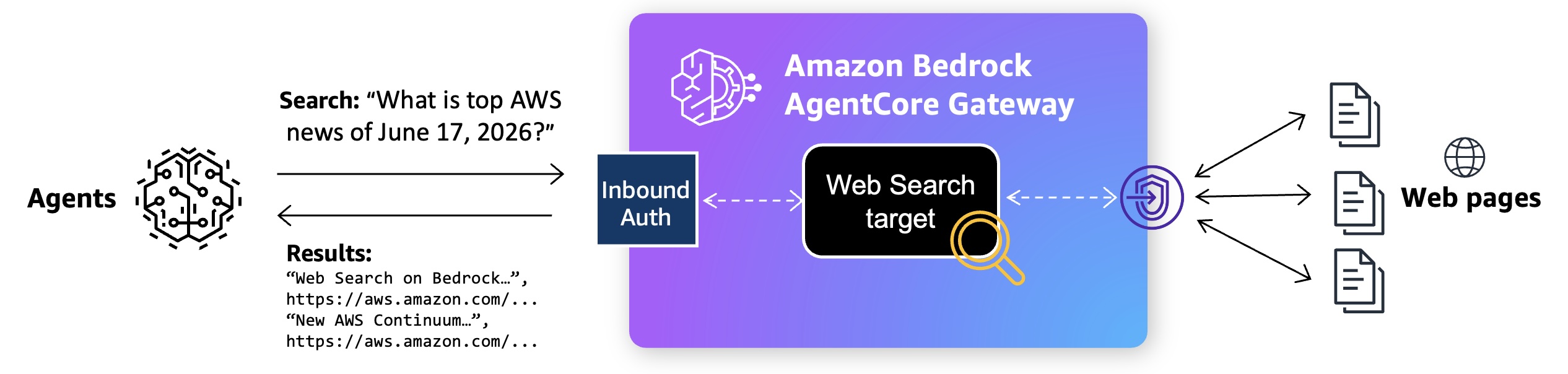
Web Search effectively acts as a dynamic cognitive expansion for Bedrock agents. It utilizes a built-in connector target on the Bedrock AgentCore Gateway, leveraging the Model Context Protocol (MCP)—an open-standard initiative designed to simplify how AI applications interact with data sources. When an agent receives a natural-language query, it can now trigger a Web Search request. The system returns highly relevant snippets, source URLs, publication titles, and timestamps, allowing the large language model (LLM) to synthesize a grounded, verifiable response.

Crucially, this system operates within the customer’s existing AWS governance framework. By keeping the entire retrieval process internal to the AWS ecosystem, organizations avoid the security risks associated with third-party search APIs, ensuring that proprietary queries and context remain protected.
Chronology: A Trajectory of Search Innovation
The release of Web Search for AgentCore did not happen in a vacuum; it is the culmination of years of technical refinement within Amazon’s broader research and product divisions.
- Foundational Development: The underlying search infrastructure was built upon the collective expertise gathered from powering Amazon’s internal and consumer-facing search experiences. Technologies refined through Alexa+, the Amazon Quick insights engine, and the Kiro developer platform provided the foundational architecture for this launch.
- The Multi-Source Approach: Unlike standard search engines that crawl the web indiscriminately, the Bedrock integration uses a multi-source grounding methodology. It blends the vast breadth of Amazon’s proprietary web index with structured data from the Amazon Knowledge Graph. This dual-layered approach ensures that agents aren’t just finding "results," but are retrieving verified facts alongside current web content.
- The Beta Phase: Prior to the June 2026 general availability, the feature underwent rigorous testing with key enterprise partners, including Benchling and Gen Digital. This feedback loop allowed AWS to refine the API responsiveness and the precision of the retrieval snippets.
- General Availability: The service went live for the US East (N. Virginia) region in June 2026, marking the transition from experimental integration to a production-ready enterprise tool.
Supporting Data and Technical Architecture
The technical architecture of Web Search is designed for ease of implementation, prioritizing a "low-friction" developer experience. The process of integrating Web Search is categorized into a few distinct steps:

1. Gateway Configuration
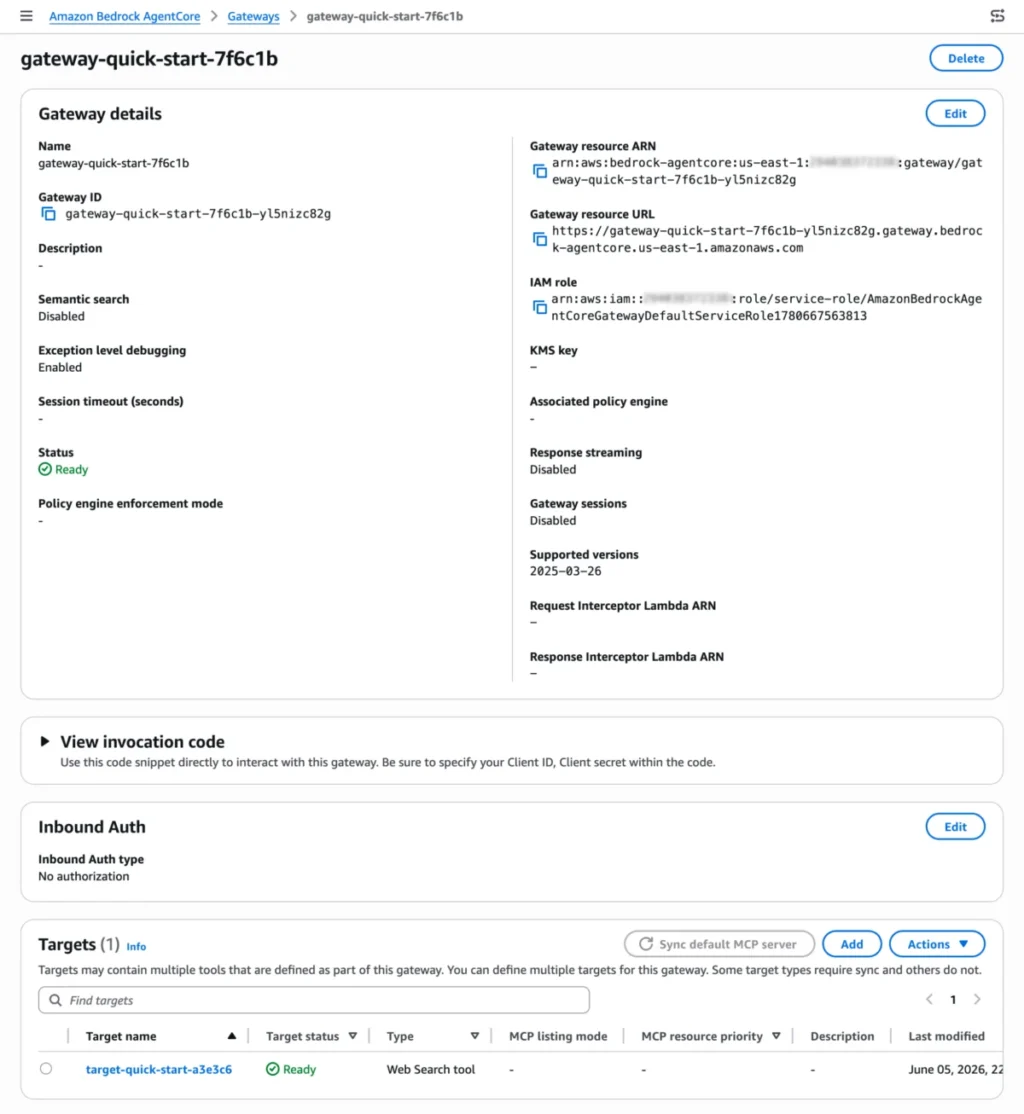
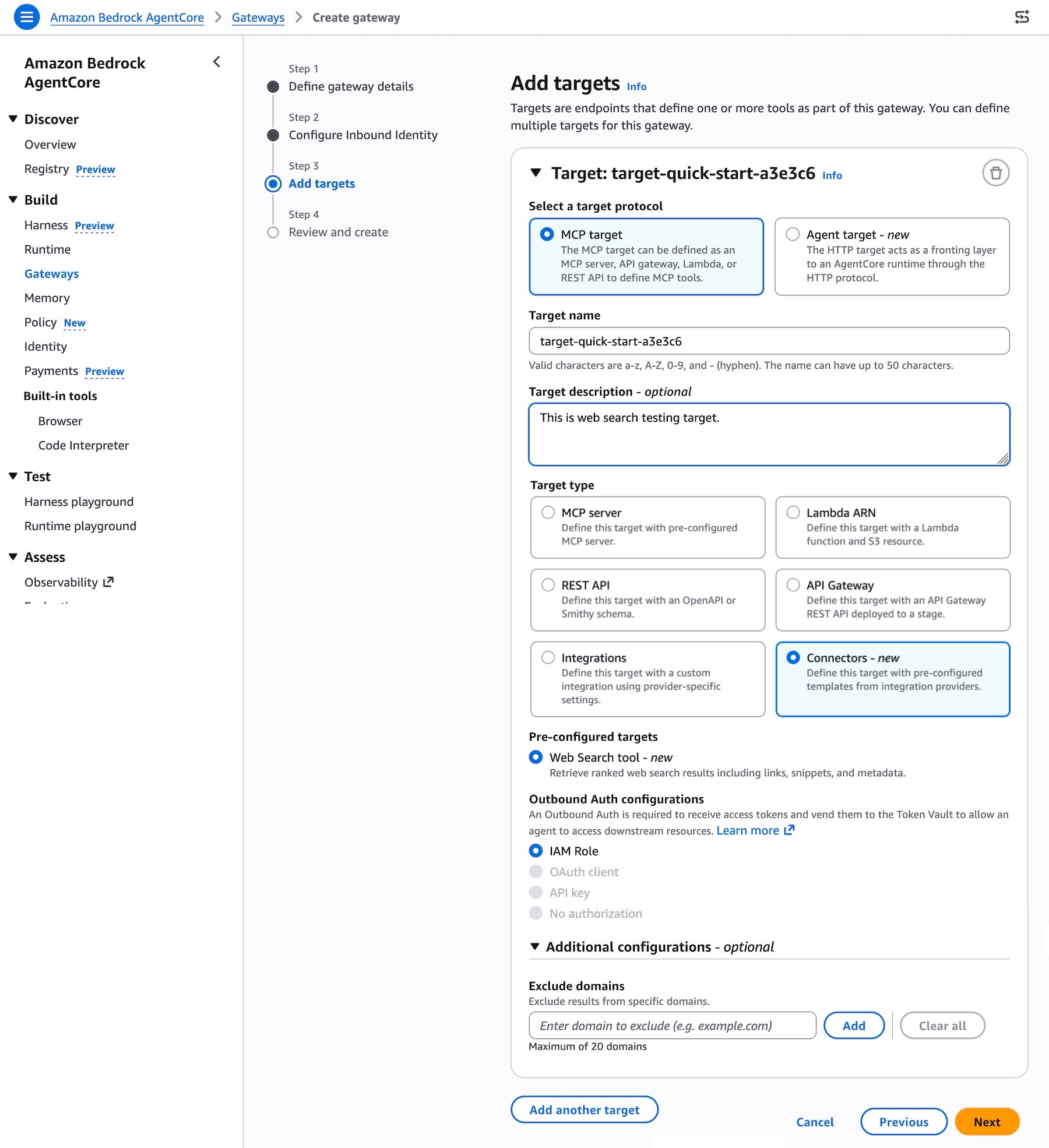
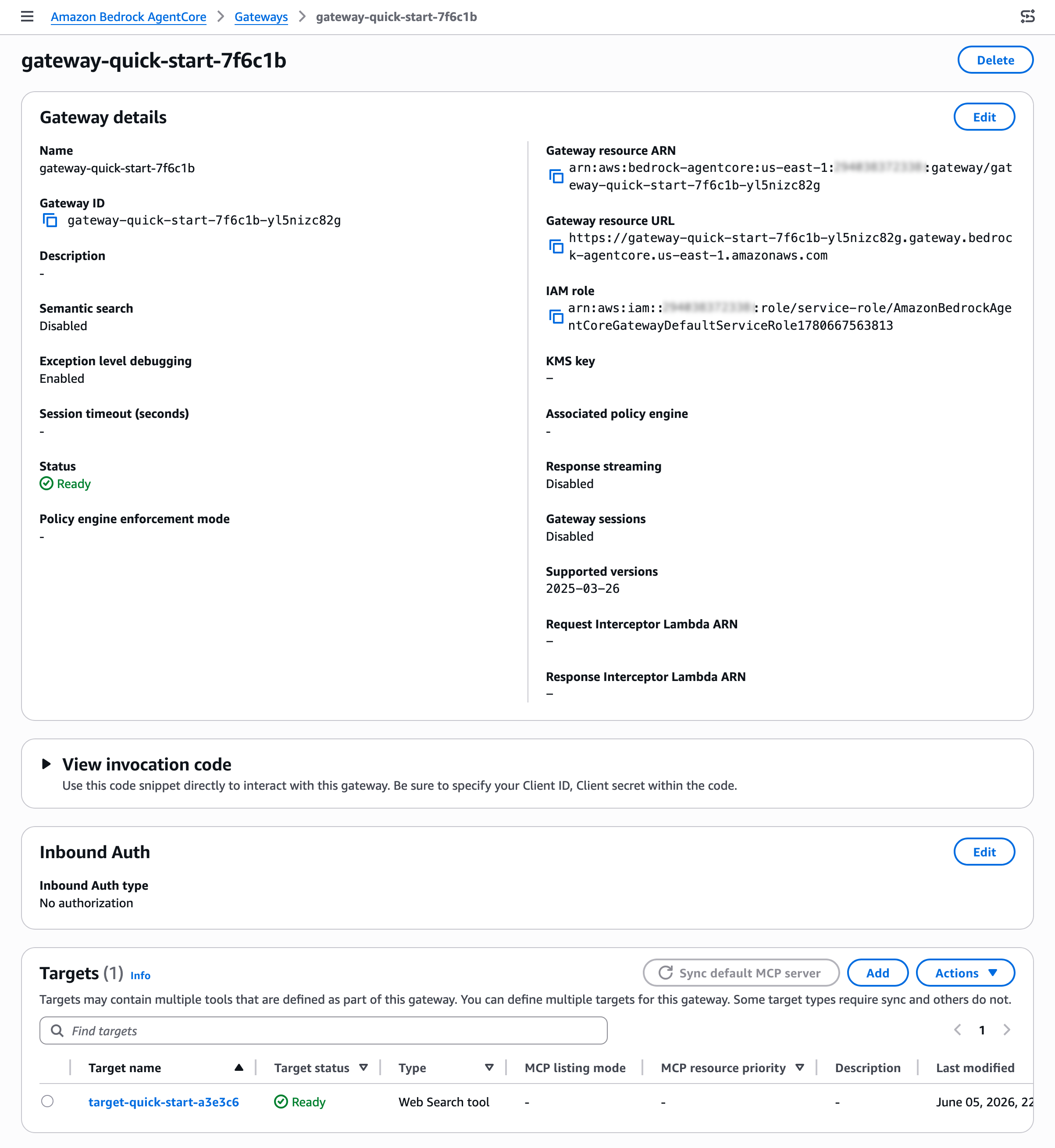
Developers initiate the process through the Bedrock AgentCore console. By configuring a Gateway with the "MCP target" protocol and selecting the "Web Search tool" as the connector, engineers can immediately equip their agents with external search capabilities.
2. The MCP Advantage
By adopting the Model Context Protocol, AWS ensures that these agents are not siloed. The MCP provides a universal language for the agent to talk to the search tool. Whether using Python SDKs, the Strands MCP Client, or the interactive MCP Inspector for debugging, developers have a unified interface to test how their agents handle complex search queries.
3. Cost-Effective Scaling
AWS has opted for a transparent, usage-based pricing model that removes the need for long-term commitments. Priced at $7 per 1,000 queries, the model allows companies to scale their agentic operations linearly with demand. For startups and new AWS customers, the inclusion of up to $200 in Free Tier credits significantly lowers the barrier to entry for prototyping and testing.
Official Responses: How Industry Leaders are Utilizing the Tool
The early adoption phase has provided insight into how diverse industries are applying this technology to solve high-stakes problems.
Benchling: Revolutionizing Scientific R&D
For Benchling, an R&D platform for scientists, the challenge was keeping AI-generated insights aligned with both internal data and the ever-changing landscape of global scientific publication. Nicholas Larus-Stone, Head of AI Agents at Benchling, noted, "Scientists using Benchling AI can now ask about a target they’re actively working on and get answers grounded in both their institutional data in Benchling and published literature." Larus-Stone emphasized that the primary value is the "secure, governed environment," which allows scientists to perform hypothesis generation without risking the exposure of sensitive proprietary research.
Gen Digital: Protecting the Online Reputation
Cyber safety giant Gen Digital has integrated the tool into its "Norton Revamp" service. Iskander Sanchez-Rola, Senior Director of AI & Innovation at Gen Digital, highlighted the importance of real-time grounding in the fast-moving cybersecurity sector. "What we value most is that AWS uses its own search index and keeps queries within our trusted AWS environment," Sanchez-Rola explained. By relying on current, grounded content, the AI is able to assist professionals in managing their online reputations against the backdrop of real-time threats.
Implications for the Future of AI Agents
The release of Web Search on Bedrock AgentCore signifies a fundamental shift in how the enterprise views the "agentic" workflow.
Moving Beyond the "Black Box"
Traditional LLMs have long been criticized as "black boxes" that generate plausible but often incorrect answers. By mandating a grounding layer, AWS is pushing the industry toward a future where AI output is always accompanied by a paper trail. The ability for an agent to cite its sources—and for those sources to be verified against a structured Knowledge Graph—drastically reduces the risk of liability for corporations deploying AI in customer-facing roles.
Enterprise Governance as a Competitive Advantage
As data privacy regulations tighten globally, the ability to perform "zero data egress" searches becomes a critical compliance feature. Organizations that are currently wary of using public LLMs due to data leakage concerns can now utilize the power of the web without exposing their internal queries to external search engine providers. This effectively closes the security loop that has previously prevented many highly regulated industries—such as healthcare, legal, and finance—from adopting advanced AI agents.
The Expansion of the Agentic Ecosystem
With the success of this integration, it is likely that AWS will continue to expand the "connector" capabilities of the Bedrock AgentCore Gateway. The move toward a standard protocol (MCP) suggests that we will soon see a marketplace of interoperable tools, where developers can plug in databases, CRM systems, and real-time news feeds with the same ease as they have added the Web Search tool today.
Conclusion: A New Standard for Accuracy
The general availability of Web Search on Amazon Bedrock AgentCore is more than just a feature update; it is a declaration of the maturity of the generative AI market. By focusing on the "three pillars" of enterprise AI—security, accuracy, and ease of implementation—AWS has provided developers with a robust toolset that transforms static models into dynamic, knowledgeable, and reliable digital assistants.
As businesses continue to navigate the complexities of AI adoption, tools that provide transparent, cited, and secure access to the world’s knowledge will be the ones that win. With this launch, AWS has clearly signaled that they intend to be the primary infrastructure provider for that next generation of intelligent, agent-driven enterprise applications. Developers are encouraged to begin their exploration through the Bedrock AgentCore console, utilizing the provided sample invocation codes to begin building the next generation of grounded, responsive AI agents.