SpaceX Aborts First Post-IPO Starship Test Flight Following Engine Ignition Failure at Starbase
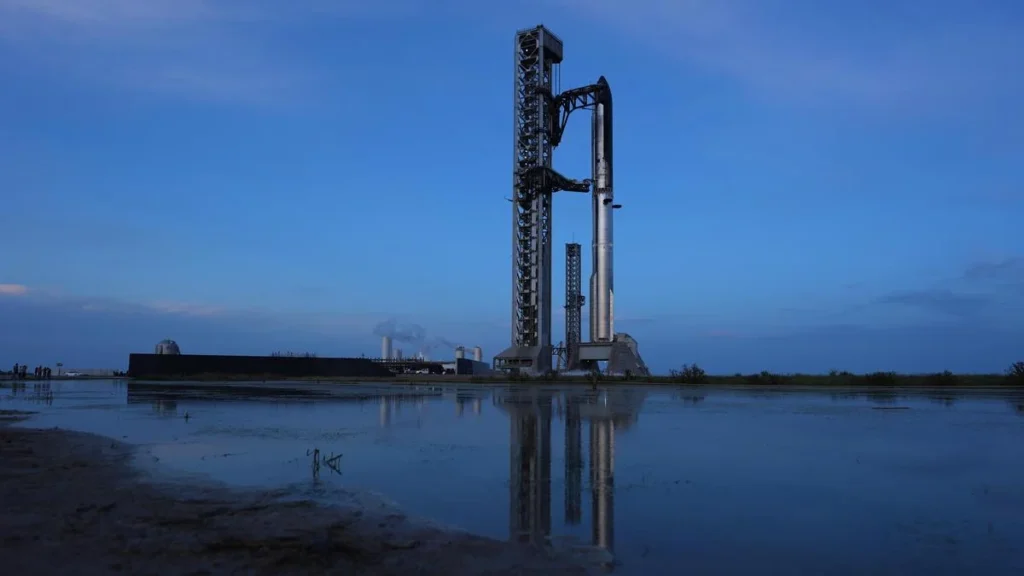
BOCA CHICA, Texas — In a dramatic moment that underscored the high-stakes reality of commercial spaceflight under the scrutiny of public markets, SpaceX abruptly aborted the maiden launch attempt of its thirteenth Starship flight test on Thursday. The launch sequence was halted mere seconds before liftoff when the vehicle’s automated flight computers detected a critical ignition anomaly within the Super Heavy booster’s massive Raptor engine array.
The scrub marks a highly visible setback for the aerospace giant, representing its first major launch operation since transitioning to a publicly traded corporation on Wall Street last month. The towering 121-meter (400-foot) rocket remains standing on the orbital launch pad at Starbase in Boca Chica, Texas, as ground crews work to de-tank propellant and prepare the vehicle for engine replacements.
Main Facts of the Aborted Launch
The launch attempt, scheduled for the morning of July 16, 2026, was designed to test the latest iterative advancements of the Starship system. However, as the countdown reached the final ignition sequence and the Super Heavy booster’s Raptor engines began their startup cycle, the onboard automated safety systems intervened.
According to technical telemetry, several of the 33 Raptor engines powering the Super Heavy booster failed to ignite within the precise millisecond windows required for a balanced liftoff. The flight computer instantly triggered an automatic launch abort, shutting down the active engines and preserving the structural integrity of both the launch vehicle and the orbital launch mount.
Following the abort, ground teams immediately initiated safety protocols to offload hundreds of thousands of gallons of super-cooled liquid methane and liquid oxygen (LOX) propellant. SpaceX engineers identified that two specific Raptor engines on the Super Heavy booster would require physical removal and replacement before another launch attempt could be authorized.
The primary objectives for this thirteenth test flight (IFT-13) are modeled closely on the flight path of the previous, moderately successful test flight conducted in May 2026. Once the vehicle is cleared for flight, SpaceX aims to achieve a clean ascent, successful hot-staging separation, a controlled boostback burn, and a precise offshore landing burn of the Super Heavy booster in the Gulf of Mexico. The upper-stage Starship spacecraft is slated to deploy a payload of 20 next-generation Starlink V3 satellites, perform a critical in-space relight of its vacuum-optimized Raptor engines, and test an upgraded, high-durability thermal protection system (TPS) during atmospheric reentry.
Chronology of Starship’s Developmental Pathway
The road to Flight 13 has been defined by SpaceX’s signature "rapid iterative design" philosophy—a methodology that prioritizes real-world flight testing and controlled failures over prolonged ground simulations. This approach has led to rapid evolution since the program’s inception:
[April 2023: IFT-1] ---> [Nov 2023: IFT-2] ---> [March/June 2024: IFT-3 & IFT-4] ---> [May 2026: IFT-12 (Gen 3 Debut)] ---> [July 2026: IFT-13 (Aborted)]- April 2023 (Integrated Flight Test 1): The inaugural fully integrated launch of Starship and Super Heavy ended in a dramatic mid-air explosion over the Gulf of Mexico after multiple engine failures and a loss of attitude control. The launch also caused extensive damage to the orbital launch pad, prompting a complete redesign of the ground infrastructure, including the addition of a water-deluge steel plate system.
- November 2023 (Integrated Flight Test 2): This flight demonstrated the successful execution of "hot-staging"—a technique where the upper stage ignites its engines while still attached to the booster. While both stages were ultimately destroyed before completing their full profiles, the flight proved the viability of the redesigned staging mechanism.
- March and June 2024 (IFT-3 and IFT-4): These flights achieved major milestones, including reaching orbital velocity, demonstrating propellant transfer technologies in microgravity, and executing controlled reentries of both the booster and the ship. By IFT-4, SpaceX successfully demonstrated a soft splashdown of the Super Heavy booster in the Gulf of Mexico and survived extreme reentry heating to splash down the upper stage in the Indian Ocean.
- Late 2024 to 2025 (Flights 5 through 11): This phase was dedicated to refining booster recovery techniques, structural optimizations, and thermal protection system durability. SpaceX gradually transitioned from its second-generation architecture to the highly anticipated third-generation (Gen 3) Starship platform.
- May 2026 (Integrated Flight Test 12): This flight marked the operational debut of the Gen 3 Starship, featuring stretched propellant tanks, improved aerodynamic flaps, and simplified plumbing. While the mission achieved most of its primary goals, the Super Heavy booster suffered engine anomalies during its final landing burn, preventing a precision recovery and resulting in a hard impact in the Gulf of Mexico.
- July 16, 2026 (Integrated Flight Test 13): The first post-IPO launch attempt. The flight was aborted on the pad during the final ignition sequence due to Raptor engine start failures.
Supporting Data and Technical Specifications
The Gen 3 Starship stack represents the most powerful launch vehicle ever constructed, dwarfing NASA’s historic Saturn V and the Space Launch System (SLS) in both physical scale and thrust capacity.

| Parameter | Specification / Metric |
|---|---|
| Total Stack Height | 121 meters (approx. 400 feet) |
| Booster Height (Super Heavy) | 71 meters |
| Ship Height (Starship) | 50 meters |
| Total Liftoff Thrust | ~16.7 million pounds (7,600 metric tons) |
| Propellant Type | Sub-cooled Liquid Methane ($CH_4$) and Liquid Oxygen ($LOX$) |
| Booster Propulsion | 33 Raptor 3 Engines |
| Upper Stage Propulsion | 6 Raptor Engines (3 Sea-level, 3 Vacuum-optimized) |
| Payload Capacity (To LEO) | Up to 150 metric tons (fully reusable configuration) |
| Target Payload (IFT-13) | 20 Starlink V3 Satellites |
| IPO Offering Price (June 2026) | $135.00 per share |
| Closing Stock Price (July 16, 2026) | $131.11 per share |
The financial metrics surrounding this launch are as novel as the engineering. SpaceX’s historic initial public offering (IPO) in June 2026 valued the company at a record-breaking market capitalization, reflecting investor enthusiasm for its Starlink satellite constellation and deep-space transport capabilities. However, the market’s reaction to operational delays has introduced a new variable for the company’s management. The closing price of $131.11 on the day of the abort represents a 2.88% discount to its initial offering price of $135.00, signaling that Wall Street is closely monitoring the operational risks associated with Starship’s development.
Official Responses and Executive Strategy
Following the abort, SpaceX leadership quickly moved to manage public and investor expectations. Elon Musk, the founder and Chief Executive of SpaceX, utilized his social media platform X (formerly Twitter) to provide immediate technical context and outline the company’s path forward.
"Some of the engines didn’t start, triggering an automatic launch abort. Now offloading propellant," Musk posted shortly after the scrub.
In a subsequent update detailing the engineering response, Musk added: "To be confident of a good flight, 2 Raptors will be removed and replaced. Most probable launch timing is early next week."
The decision to abort and replace the engines rather than attempt a rapid turnaround highlights a shift toward a more conservative risk-management posture. While SpaceX has historically accepted a high degree of risk during its developmental phases, its new status as a publicly traded entity—coupled with high-value government contracts—demands a balance between rapid innovation and mission assurance.
Industry analysts noted that the automated abort system performed precisely as designed. The failure of the engines to ignite, while inconvenient, demonstrated the robustness of SpaceX’s safety software, which successfully prevented a catastrophic on-pad failure that could have destroyed the launch infrastructure and severely damaged the company’s financial valuation.
Strategic and Financial Implications
The aborted launch of Flight 13 carries profound implications across several sectors of the aerospace and financial industries.
Wall Street and the Public Market Transition
For over two decades, SpaceX operated as a private entity, insulated from the quarter-to-quarter earnings pressure and daily stock fluctuations that govern public corporations. The June 2026 IPO changed this dynamic.

Now, launch anomalies, technical delays, and development costs are directly tied to shareholder value. The minor drop in stock price to $131.11 reflects a cautious market that is still learning how to value a company whose business model relies on high-risk, high-reward deep-space exploration. Analysts suggest that consistent, successful Starship launches will be critical to sustaining the company’s premium valuation and funding its long-term capital-intensive projects.
[Public Market Pressures]
       │
       ├─► Requirement for Predictable Launch Cadence
       ├─► Direct Impact of Technical Scrupps on Stock Price ($131.11 vs. $135.00 IPO)
       └─► Increased Regulatory & Financial Disclosure Scrutiny
The NASA Artemis Program and Lunar Ambitions
SpaceX holds a multi-billion-dollar contract under NASA’s Human Landing System (HLS) program to develop a modified version of Starship to land American astronauts on the lunar surface during the Artemis III and Artemis IV missions.
NASA’s lunar timeline is highly dependent on Starship achieving operational status, which requires not only successful orbital flights but also the mastery of rapid propellant transfer in low-Earth orbit. Any persistent delays in the Starship test flight cadence could create a cascading effect on NASA’s schedule, pushing the targeted lunar landing dates further into the late 2020s or early 2030s.
Commercial Expansion: Starlink V3 and Space-Based AI
The deployment of Starlink V3 satellites is central to SpaceX’s commercial strategy. These advanced satellites are designed to deliver direct-to-cell connectivity and massive data throughput, cementing Starlink’s dominance in the global satellite internet market. Because the V3 satellites are larger and heavier than previous generations, they require the unmatched payload volume of Starship to be deployed at scale.
Furthermore, SpaceX has recently articulated ambitious plans to build and operate AI data centers in space. These orbital data centers, designed to process vast quantities of Earth-observation and telecommunications data with minimal latency, rely entirely on the low-cost, heavy-lift capabilities of a fully operational Starship fleet.
As ground crews at Starbase work through the weekend to replace the two faulty Raptor engines, the aerospace industry and Wall Street alike will be watching Boca Chica. The upcoming launch attempt next week will serve as a key indicator of whether SpaceX can maintain its rapid pace of innovation under the watchful eye of public investors.