WP Rocket Unveils Free CDN for Critical Pages: A Game Changer for WordPress Performance
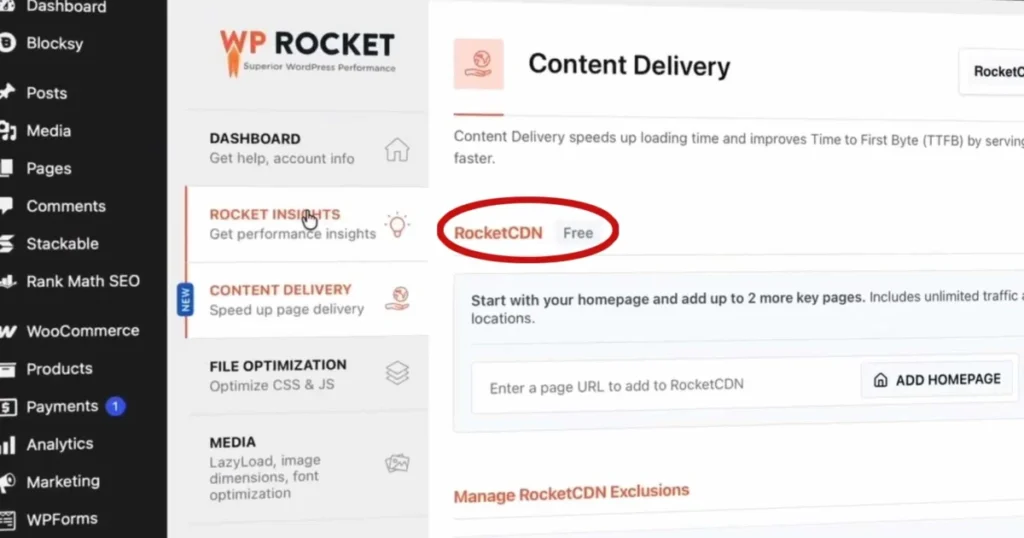
Paris, France – [Current Date] – In a significant move set to democratize web performance optimization, WP Rocket, a leading caching and performance plugin for WordPress, has announced the integration of a free Content Delivery Network (CDN) directly into its plugin. Available with WP Rocket version 3.22, this new feature allows WordPress site owners to leverage the power of a CDN for their most critical pages without requiring a separate subscription or complex setup. While limited to three pages, this strategic offering aims to provide targeted performance boosts where they matter most, potentially reshaping how small to medium-sized websites approach speed optimization.
The announcement signifies a continued commitment by WP Rocket to simplify the often-intimidating world of web performance. By embedding a CDN solution directly within the WordPress dashboard, the company is lowering the barrier to entry for site owners looking to enhance page load times, improve user experience, and gain an edge in search engine rankings. This integration, powered by RocketCDN and built on the robust Bunny.net network, promises a streamlined workflow for identifying, optimizing, and monitoring the speed of crucial web assets.
Main Facts: A New Frontier in WordPress Speed
WP Rocket’s latest update, version 3.22, introduces a groundbreaking feature: a built-in, free CDN. This is not merely an optional add-on but an integrated component designed to deliver content more efficiently to global audiences. For the uninitiated, a CDN is a geographically distributed network of proxy servers and their data centers. The goal is to provide high availability and performance by distributing the service spatially relative to end-users. When a visitor requests content from a website, the CDN delivers that content from the server closest to them, dramatically reducing latency and accelerating page load times.
What makes WP Rocket’s offering particularly noteworthy is its accessibility. Site owners no longer need to navigate the complexities of configuring a third-party CDN service or managing separate accounts. The functionality is available directly through a new "Content Delivery" tab within the WP Rocket plugin interface. With just a few clicks, users can activate the CDN and select the pages they wish to optimize.
The strategic limitation of the free tier to three pages is a deliberate design choice. Instead of attempting to replace a comprehensive, sitewide CDN, WP Rocket is positioning this feature as a precision tool. It encourages site owners to identify their "high-value" pages – such as the homepage, critical landing pages, or pricing pages – where a fraction of a second in load time can significantly impact user engagement, conversion rates, and overall business outcomes. This targeted approach ensures that the most impactful pages receive the maximum benefit, providing a tangible demonstration of CDN power without overwhelming users or requiring a full financial commitment.
This integrated solution is powered by RocketCDN, WP Rocket’s existing premium CDN service, which itself is built upon the highly regarded Bunny.net infrastructure. This ensures that even the free tier benefits from enterprise-grade performance and reliability. The blend of ease of use, strategic targeting, and robust underlying technology positions WP Rocket’s free CDN as a powerful new asset for WordPress users striving for optimal website performance.
Chronology: The Evolution of Web Performance and WP Rocket’s Journey
The introduction of a free, integrated CDN by WP Rocket is not an isolated event but rather a logical progression in the ongoing evolution of web performance and the company’s own strategic development. Understanding this trajectory provides crucial context for appreciating the significance of this new offering.
The Enduring Quest for Speed
The desire for faster websites is as old as the internet itself. In the early days of the web, performance optimization was often a manual, highly technical endeavor, involving arcane server configurations and meticulous code optimization. As the web matured and user expectations rose, the need for automated and accessible performance solutions became paramount.
The turn of the millennium saw the rise of dedicated caching plugins for content management systems like WordPress. These plugins aimed to reduce server load and accelerate delivery by storing static versions of dynamic pages. Tools like WP Super Cache and W3 Total Cache became foundational for WordPress users seeking speed improvements. However, as global internet usage surged and content became richer, the limitations of server-side caching alone became apparent. Users in distant geographies still experienced noticeable delays due to the physical distance data had to travel. This gave rise to the widespread adoption of CDNs as an essential component of a robust web performance strategy. CDNs effectively brought content closer to the user, bypassing geographical latency issues.
More recently, search engines, particularly Google, have formalized the importance of speed and user experience through initiatives like Core Web Vitals. These metrics (Largest Contentful Paint, First Input Delay, Cumulative Layout Shift) directly measure user-centric performance, making website speed not just a matter of user satisfaction but a critical factor in search engine ranking and visibility. This shift has propelled performance optimization from a desirable feature to an absolute necessity for any online presence.
WP Rocket’s Path to Performance Dominance
WP Rocket emerged into this landscape as a premium caching plugin, quickly distinguishing itself through its user-friendly interface and comprehensive feature set. Launched in 2013, it rapidly gained a reputation for being one of the most effective and easiest-to-use performance solutions for WordPress. Unlike some competitors that required extensive technical knowledge, WP Rocket offered a "set it and forget it" approach, with many optimizations enabled by default upon activation.
Over the years, WP Rocket consistently expanded its capabilities, incorporating advanced features like minification of HTML, CSS, and JavaScript, lazy loading of images and videos, database optimization, and integration with various third-party services. This continuous development solidified its position as a go-to solution for both beginners and experienced developers.
A significant milestone in WP Rocket’s journey was the introduction of RocketCDN. Recognizing the critical role CDNs play in global performance, WP Rocket developed its own CDN service, leveraging the highly performant Bunny.net network. This allowed users to purchase and integrate a dedicated CDN solution seamlessly with their WP Rocket caching, creating a more holistic performance ecosystem.
Further enhancing its value proposition, WP Rocket introduced Rocket Insights earlier this year. This performance monitoring feature provides users with actionable data and recommendations directly within the plugin, allowing them to track their website’s speed metrics over time. The integration of Rocket Insights marked a strategic pivot towards offering not just optimization tools but also the means to measure and iterate on those optimizations.
The Strategic Timing of Version 3.22
The release of WP Rocket 3.22, with its free CDN, is perfectly timed to address current market needs and competitive pressures. In an era where every millisecond counts and Google continually emphasizes page experience, providing an accessible entry point to CDN technology is a powerful differentiator. Many website owners, particularly small businesses and individual bloggers, understand the concept of speed but may lack the budget or technical confidence to implement a full CDN.
By offering a free, targeted CDN, WP Rocket is not only expanding its feature set but also strengthening its brand as an innovator committed to democratizing high-level web performance. This move strategically positions the plugin as an all-encompassing performance hub, moving beyond mere caching to offer a truly integrated optimization and monitoring workflow within the familiar confines of the WordPress dashboard. It reflects an understanding that convenience and ease of use are just as important as raw power in the competitive landscape of WordPress plugins.
Supporting Data: The Tangible Benefits of CDN and Performance
The impact of a Content Delivery Network on website performance is not merely theoretical; it is backed by extensive data and real-world results. WP Rocket’s decision to offer a free CDN for critical pages is rooted in the proven, tangible benefits that speed optimization delivers across various key metrics.
Quantifying Performance Gains
The primary benefit of a CDN is a significant reduction in page load times. By serving static assets (images, CSS, JavaScript) from geographically closer servers, CDNs minimize latency – the time it takes for data to travel from the server to the user’s browser. This directly translates into faster rendering of web pages.
Studies and industry benchmarks consistently show that even marginal improvements in load speed can have profound effects:
- Bounce Rate: A study by Google found that as page load time goes from 1 second to 3 seconds, the probability of bounce increases by 32%. If it goes to 5 seconds, the probability increases by 90%. CDNs drastically reduce these critical initial load times.
- Conversion Rates: For e-commerce sites, speed directly correlates with sales. Amazon famously found that every 100ms improvement in page load time translated to a 1% increase in revenue. For other businesses, faster pages lead to more form submissions, downloads, or sign-ups.
- User Satisfaction: Users expect instantaneous access to information. A slow website creates frustration, negatively impacting brand perception and customer loyalty. A CDN contributes to a smoother, more enjoyable browsing experience.
Specifically, CDNs improve key performance metrics like:
- Time To First Byte (TTFB): The time it takes for a user’s browser to receive the first byte of response from the server. CDNs reduce this by serving cached content from the edge server.
- Largest Contentful Paint (LCP): A Core Web Vital metric that measures the time it takes for the largest content element on the screen to become visible. By speeding up asset delivery, CDNs directly improve LCP.
- First Contentful Paint (FCP): The time it takes for the first piece of content to appear on the screen. CDNs accelerate this by delivering initial assets rapidly.
Even optimizing just three pages with a CDN can yield substantial benefits. A homepage is often the first impression a user has of a brand; a pricing page is where critical buying decisions are made; and a landing page is designed for specific conversion goals. Improving the performance of these specific touchpoints ensures that the most impactful interactions are as frictionless as possible.
The SEO Imperative
Google has been increasingly vocal about the importance of page speed and user experience as ranking factors. The introduction of Core Web Vitals in 2021 solidified this, making these metrics an integral part of Google’s Page Experience signals. Websites that offer a superior user experience, including fast load times, are favored in search results.
A CDN directly contributes to better Core Web Vitals scores by:
- Improving LCP: As mentioned, faster asset delivery means the main content of a page loads quicker.
- Reducing CLS (Cumulative Layout Shift): While not a direct CDN benefit, faster loading assets can prevent layout shifts that occur when elements load late.
- Potentially improving FID (First Input Delay): While FID is more related to JavaScript execution, a faster initial load can free up the main thread sooner, contributing to a better overall interactive experience.
For SEO, even a limited CDN offering for three pages can be highly strategic. If these three pages are high-traffic entry points or critical conversion paths, optimizing them can:
- Boost rankings: For those specific pages, potentially drawing more organic traffic.
- Reduce bounce rates from search: Users clicking through from search results are less likely to bounce if the page loads quickly, sending positive signals to search engines.
- Enhance overall site authority: A positive user experience on key pages can indirectly benefit the entire site’s perception in the eyes of search engines.
User Experience and Business Outcomes
Beyond the technical metrics and SEO advantages, the ultimate goal of speed optimization is to deliver a superior user experience, which in turn drives better business outcomes. A fast website feels professional, reliable, and trustworthy.
Consider the psychological impact:
- Reduced Frustration: Users are impatient. A fast site removes a major source of friction.
- Increased Engagement: When pages load quickly, users are more likely to explore further, view more content, and spend more time on the site.
- Improved Brand Perception: A slick, fast website conveys competence and attention to detail, enhancing a brand’s image.
For businesses, these qualitative benefits translate into quantitative gains:
- Higher Conversion Rates: Whether it’s e-commerce sales, lead generation, or subscriptions, a smoother journey leads to more completed actions.
- Lower Customer Acquisition Costs: By optimizing the user journey on key landing pages, businesses can get more value from their advertising spend.
- Increased Customer Lifetime Value: A positive initial experience can lead to repeat visits and stronger customer loyalty.
The "marginal gains" philosophy, often applied in sports, holds true for web performance. Small, consistent improvements across various aspects can accumulate into a significant competitive advantage. WP Rocket’s free CDN, even for a limited number of pages, represents a focused application of this philosophy, targeting the points of greatest leverage for maximum impact.
Official Responses and Industry Context
WP Rocket’s latest offering arrives within a dynamic and competitive ecosystem of WordPress performance tools and global CDN providers. Understanding the company’s official stance and how this feature fits into the broader industry landscape is crucial for a complete picture.
WP Rocket’s Stated Vision
While no direct quotes were provided in the initial article, WP Rocket’s consistent messaging and product development trajectory indicate a clear vision. The introduction of a free, integrated CDN aligns perfectly with their overarching goal: to democratize web performance optimization. Their products are designed to make advanced performance features accessible to a wider audience, regardless of technical expertise or budget.
The decision to offer a free tier, even a limited one, serves multiple strategic purposes:
- Lowering the Barrier to Entry: Many smaller site owners and bloggers are aware of CDNs but perceive them as complex or expensive. This free tier provides a risk-free way to experience the benefits firsthand.
- Product Education and Awareness: It serves as an excellent demonstration of what RocketCDN (and CDNs in general) can do, educating users about its value in a practical context.
- Lead Generation and Upselling: By demonstrating value on critical pages, WP Rocket creates a natural pathway for users to upgrade to the full RocketCDN service or other premium features if they wish to extend CDN benefits sitewide.
- Consolidating the Performance Workflow: Coupled with Rocket Insights, this feature reinforces WP Rocket’s ambition to be a comprehensive performance hub where users can optimize, monitor, and improve their site’s speed all from one interface. This reduces the need for "stitching together" disparate tools, simplifying the user’s workflow.
Essentially, WP Rocket is positioning itself as an end-to-end performance partner, not just a caching plugin. This free CDN is a powerful statement of that intent, showcasing their commitment to providing robust, integrated solutions.
The Competitive Landscape
The WordPress performance plugin market is crowded and highly competitive. Major players include:
- W3 Total Cache & WP Super Cache: Established, free, and highly configurable plugins that often require more technical knowledge. They do not typically offer integrated CDN services themselves but provide robust integration options with third-party CDNs.
- LiteSpeed Cache: A powerful free plugin often bundled with LiteSpeed web servers, offering extensive optimization features, including some CDN integration options.
- SG Optimizer: Developed by SiteGround, this plugin is optimized for their hosting environment and offers a range of performance features, including caching and some CDN integration for their users.
Most of these competitors rely on users configuring external CDN services. WP Rocket’s move to offer a built-in, free CDN (even limited) is a significant differentiator. While others might offer integration, WP Rocket is offering delivery directly within its plugin for a subset of pages. This distinction is crucial for ease of use.
Furthermore, the rise of managed WordPress hosting providers (e.g., Kinsta, WP Engine, Flywheel) has also impacted the performance landscape. Many of these hosts include built-in caching, CDNs, and other optimizations as part of their service. For users on shared or less optimized hosting environments, WP Rocket’s solution becomes even more valuable. It allows them to access enterprise-level performance features without migrating hosts or incurring additional costs for separate CDN subscriptions.
In terms of the underlying CDN technology, RocketCDN is built on Bunny.net, a reputable and high-performance CDN provider. While it doesn’t aim to compete directly with giants like Cloudflare (which offers a robust free tier with DNS and security features) or Akamai (an enterprise-grade solution), it provides a focused, high-quality content delivery service specifically tailored for WP Rocket users. The choice of Bunny.net underscores WP Rocket’s commitment to quality and speed.
Expert Opinions and Community Reception
The web performance community is likely to view this offering with a mix of enthusiasm and pragmatism.
- Enthusiasm for Accessibility: Experts will appreciate the move towards making CDN technology more accessible, especially for small businesses and individual site owners who often struggle with performance optimization. It’s a valuable educational tool and a practical starting point.
- Pragmatism for Large Sites: For large publishers, e-commerce stores with thousands of products, or complex web applications, a three-page CDN will not be sufficient. These entities will still require a full, sitewide CDN solution. However, even for them, the free tier could serve as an excellent way to test RocketCDN’s performance before committing to a paid plan.
- Focus on Critical Pages: Performance experts often advise a "pareto principle" approach, focusing optimization efforts where they yield the greatest return. WP Rocket’s targeted three-page CDN perfectly aligns with this strategy, reinforcing the importance of optimizing high-impact pages.
Overall, the reception is expected to be positive, recognizing WP Rocket’s continuous innovation and its dedication to enhancing the WordPress user experience.
Implications: The Broader Impact and Future Outlook
The introduction of a free CDN within WP Rocket 3.22 carries significant implications, not only for individual WordPress users but also for the broader landscape of web performance, plugin development, and online business strategy.
Empowering Small Businesses and Bloggers
Perhaps the most profound implication of this new feature is its potential to empower small businesses, independent bloggers, and burgeoning online ventures. These entities often operate with limited budgets and technical resources. Investing in a dedicated CDN service, which can range from a few dollars to hundreds per month depending on traffic, might be perceived as an unaffordable luxury or an overly complex technical hurdle.
WP Rocket’s free CDN changes this dynamic. It democratizes access to a performance-enhancing technology that was once largely the domain of larger enterprises. Now, a small e-commerce store owner can ensure their homepage and crucial product pages load lightning-fast, directly impacting sales. A blogger can optimize their most popular articles or landing pages, improving reader engagement and SEO. This levels the playing field, allowing smaller players to compete more effectively on the crucial metric of website speed. It reduces technical debt and allows them to focus more on content creation or business operations, rather than complex infrastructure management.
The "Freemium" Model in Performance Tools
WP Rocket’s offering is a classic example of the "freemium" business model, skillfully applied to the performance plugin space. By providing a valuable, albeit limited, free service, the company achieves several strategic objectives:
- Customer Acquisition: The free CDN acts as a powerful lead magnet, attracting users who might otherwise not consider WP Rocket or RocketCDN.
- Value Demonstration: It allows users to experience the tangible benefits of a CDN without financial commitment, proving its worth before asking for payment. This builds trust and showcases the quality of RocketCDN.
- Upsell Opportunity: Once users see the performance gains on their three critical pages, they are more likely to consider upgrading to the full RocketCDN service or a higher-tier WP Rocket license to extend these benefits across their entire site.
- Brand Loyalty: Providing such a valuable free feature fosters goodwill and loyalty among the user base, reinforcing WP Rocket’s reputation as a user-centric innovator.
This model is increasingly prevalent in the software industry, and its effective deployment by WP Rocket highlights a sophisticated understanding of market dynamics and user psychology.
Redefining the WordPress Performance Workflow
The integration of the free CDN with Rocket Insights marks a significant step towards a more unified and streamlined performance workflow within WordPress. Traditionally, optimizing a website involved a fragmented approach: a caching plugin, a separate CDN provider, an analytics tool for monitoring, and perhaps a third-party service for Core Web Vitals assessment. Each required its own configuration, dashboard, and learning curve.
WP Rocket is consolidating these functions into a single, cohesive ecosystem. The workflow now looks something like this:
- Optimize: WP Rocket handles caching, minification, lazy loading, and now, CDN delivery.
- Monitor: Rocket Insights provides performance analytics and Core Web Vitals data.
- Identify: Insights help pinpoint pages that need attention.
- Implement: The free CDN (or full RocketCDN) can be applied directly to those pages.
- Iterate: Continue monitoring with Rocket Insights to confirm improvements and make further adjustments.
This consolidated approach significantly reduces the time, effort, and technical expertise required to maintain a high-performing website. It transforms performance optimization from a piecemeal chore into an integrated, iterative process, making it far more accessible and manageable for the average WordPress user.
Future Prospects for WP Rocket and Web Performance
This release hints at a broader trajectory for WP Rocket and the web performance industry as a whole.
- Further Integration: We might see WP Rocket continue to integrate more performance-related tools directly into its plugin, potentially venturing into areas like image optimization (beyond lazy loading), advanced JavaScript deferral, or even security features, aiming to become an even more comprehensive "all-in-one" solution.
- AI-Driven Optimization: The future of web performance is likely to involve more automation and AI-driven insights. WP Rocket, with its existing data and analytics capabilities through Rocket Insights, is well-positioned to leverage AI to proactively suggest optimizations or even automatically adjust settings based on real-time traffic patterns and user behavior.
- Edge Computing: As technology evolves, the concept of "edge computing" – processing data closer to the source of data generation – will become increasingly relevant. CDNs are a form of edge computing, and future developments might see even more sophisticated serverless functions and dynamic content delivery at the edge, which WP Rocket could potentially integrate.
- Continued Emphasis on User Experience: The industry’s focus on user experience, driven by search engines and user expectations, will only intensify. Plugins like WP Rocket will continue to innovate to meet these demands, ensuring websites are not just fast, but also responsive, secure, and delightful to interact with.
In conclusion, WP Rocket’s decision to offer a free CDN for critical pages is more than just a new feature; it’s a strategic move that reflects the evolving landscape of web performance. It empowers a wider audience, streamlines complex workflows, and sets a new benchmark for what users can expect from their WordPress performance plugins. As the web becomes increasingly competitive and demanding, tools like this will be indispensable for anyone striving to build a fast, efficient, and user-friendly online presence.