The Philosopher of Fintech: Kunal Shah’s High-Stakes Leap to Meta
"Kunal Shah represents the very best of India’s startup ecosystem: bold thinking, intellectual curiosity, relentless execution, and the ability to challenge conventional wisdom."
This tribute, penned by Amitabh Kant, the former CEO of Niti Aayog, on the social media platform X, encapsulates the prevailing sentiment among the luminaries of the Indian venture capital and startup landscape. As news broke that Kunal Shah—the architect behind the fintech unicorn CRED—would be stepping away from his brainchild to lead Meta’s global business initiatives, the industry erupted in a mix of celebration, speculation, and intense scrutiny.
Shah is not merely a founder; he is an ideological force. His transition from the helm of a home-grown Indian unicorn to the inner sanctum of Mark Zuckerberg’s Meta represents a seismic shift in the trajectory of one of India’s most enigmatic business leaders.
The Genesis: A Philosopher in the Machine
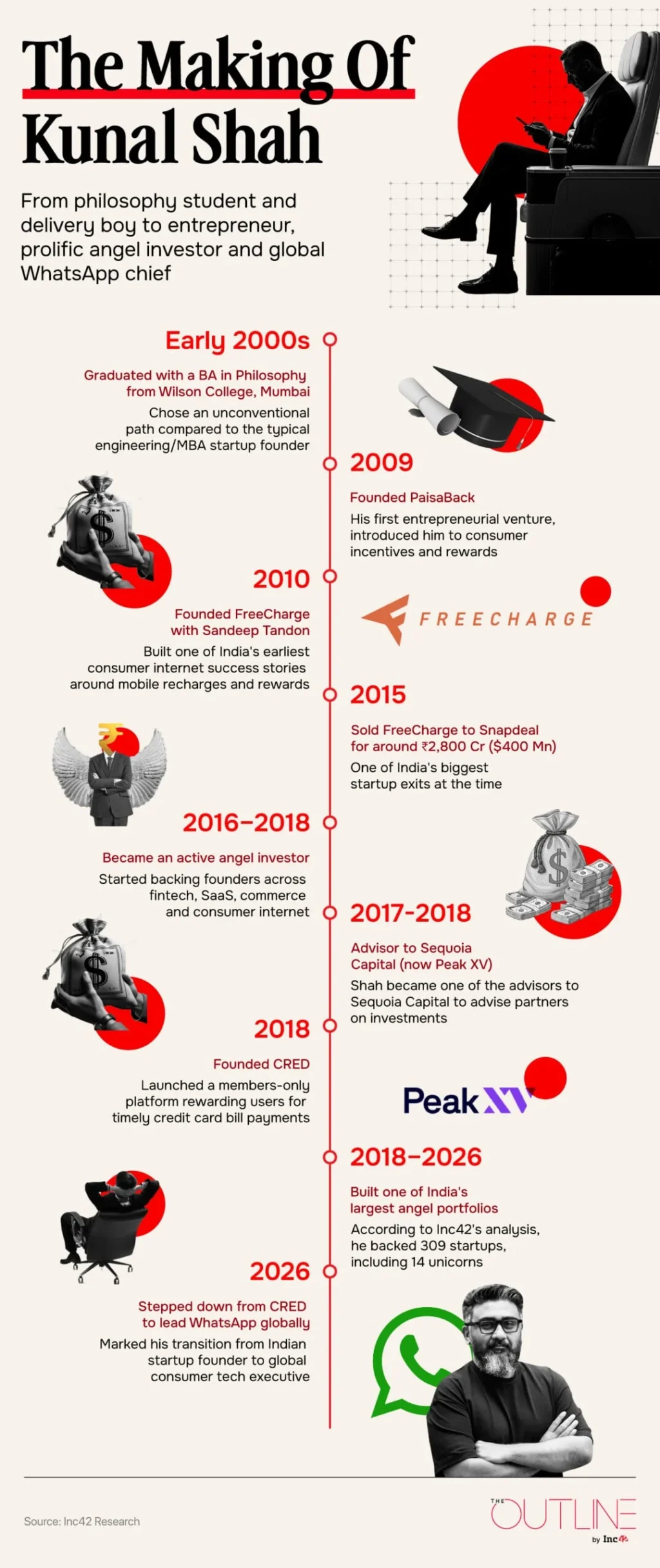
To understand Kunal Shah, one must look beyond the standard narratives of coding bootcamps and IIT-JEE success stories. Unlike the prototypical Silicon Valley-style founder, Shah’s origin story is rooted in the humanities. A philosophy graduate from Mumbai’s Wilson College, Shah’s early life was marked by the grit of the working class—he famously juggled roles as a data entry operator and a delivery boy to fund his education.
These formative years, spent navigating the mundane realities of the Indian consumer, provided him with a unique vantage point on human behavior. While his peers were obsessed with the next breakthrough in server-side architecture, Shah was obsessing over the "why" behind human choices. This intellectual curiosity became the bedrock of his entrepreneurial journey, from his early ventures like PaisaBack to the massive success of FreeCharge, and eventually, the lifestyle-fintech juggernaut, CRED.

Chronology of an Iconoclast
- Early Days: Shah cuts his teeth in the startup world, learning the mechanics of customer incentives and the psychology of loyalty through early experiments.
- The FreeCharge Era: Shah proves his mettle by transforming mobile recharges into a gamified rewards experience, setting a precedent for cashback culture in India long before it became the industry standard.
- The CRED Phenomenon: Launched as a "members-only" credit card management platform, CRED challenged the assumption that fintech had to be mass-market. Shah bet on aspiration and exclusivity, turning credit scores into a competitive advantage.
- The Angel Investor Zenith: Over the last decade, Shah has quietly deployed capital into over 300 startups, 14 of which have reached unicorn status. His investment style—often involving rapid-fire decision-making based on intuition rather than months of due diligence—has become legendary.
- The Meta Pivot (2026): In a move that shocked the ecosystem, Shah steps down from his operational role at CRED to take on a global leadership position at WhatsApp/Meta.
The Philosophy of Product: Why Shah is Different
The defining characteristic of Shah’s success is his refusal to be a "tech-first" founder. "He thinks like a philosopher, not an engineer," notes the founder of a soon-to-be IPO-bound startup. "He believes the greatest opportunities lie in observing human behaviors that nobody else notices."
This philosophy has manifested in how he builds products. At CRED, Shah treated marketing and brand perception with the same rigor as engineering. By positioning the app as a premium, invite-only club, he tapped into the psychology of the elite. As one industry observer remarked, "He dared to build something that feels premium. It’s very Apple-like. Sometimes, people don’t buy the product first; they buy what the brand represents."
Supporting Data: The Angel Investor’s Impact
Shah’s influence is not limited to his own companies. As an angel investor, his track record is statistically anomalous. With over 300 investments, his portfolio serves as a microcosm of the modern Indian digital economy.
Founders frequently speak of his "high-agency" approach. Akshay Chaturvedi, co-founder and CEO of Leverage Edu, recalls a funding experience that took place over a few short text messages, with the capital wired almost instantly. This decisiveness has set a new, albeit demanding, standard for angel investing in India. By acting as a mentor who pushes founders to think about "culture" and "long-term vision" rather than just growth metrics, Shah has effectively "uplifted" the ecosystem, fostering a generation of entrepreneurs who prioritize brand-building over mere utility.
The WhatsApp Acid Test: Implications of the Meta Move
Shah’s appointment at Meta comes at a time of extreme volatility. He enters the company amid swirling allegations—denied by Meta—that the tech giant colluded with Indian authorities to stifle rivals like Telegram following the NEET controversy.

The Challenges Ahead
- From Autonomy to Accountability: As a founder, Shah enjoyed the freedom to experiment. As a high-ranking executive at a publicly traded, hyper-scrutinized global corporation, he will face a relentless barrage of performance metrics, regulatory scrutiny, and bureaucratic hurdles.
- The Monetization Conundrum: WhatsApp is a ubiquitous utility, yet it remains a complex beast to monetize. Shah’s critics point out that despite his brilliance, CRED itself has struggled to displace incumbent UPI giants like PhonePe and Google Pay in terms of transaction volume. If he could not fully crack the code for payments within his own curated sandbox, how will he scale it for a global, diverse, and often resistant user base?
- The Political Minefield: Unlike the relatively sheltered world of a fintech startup, WhatsApp is a geopolitical entity. It sits at the intersection of encryption, national security, and government regulation. Shah will no longer be the "homegrown hero" fighting the giants; he will be the face of one. This shift in identity raises questions about his future loyalty: when WhatsApp faces pressure from the Indian government, where will the "philosopher-founder" stand?
The "Founder for Life" Dilemma
Perhaps the most significant concern is the impact on CRED. Shah has been the face, the voice, and the visionary of the brand. While he has secured a significant deal for the company, the departure of a founder so intrinsically linked to his creation is a massive organizational risk. History is littered with startups that drifted into irrelevance after the departure of their charismatic central figures. Whether CRED can maintain its cultural edge and product innovation without Shah remains the multi-billion-dollar question.
Conclusion: Results vs. Narratives
Kunal Shah’s career has been defined by his ability to weave compelling narratives. He has sold visions that were years ahead of their time, convincing investors and users alike to see the future through his eyes. However, the world of Big Tech is notoriously cold to narrative-driven success. In the corridors of Meta, the currency is not philosophy—it is operational efficiency, scale, and the ability to navigate complex global legal frameworks.
As he dons the suit of a Meta executive, Shah is entering the most difficult phase of his career. He is leaving behind the autonomy of the founder’s chair for the high-stakes pressure cooker of global corporate leadership. Whether his unique brand of intellectual inquiry and consumer behavior analysis can translate into tangible results for WhatsApp remains to be seen.
One thing is certain: the entire startup ecosystem is watching. For Shah, this is the ultimate test—not of his ability to dream, but of his ability to deliver under the weight of global expectation. The philosopher has stepped into the arena; now, the world waits to see if he can reshape the machine from the inside.