Strategic Shifts in AI Deployment: Anthropic’s Claude 5 Series and the Regulatory Landscape
Executive Summary: A New Paradigm in Generative AI
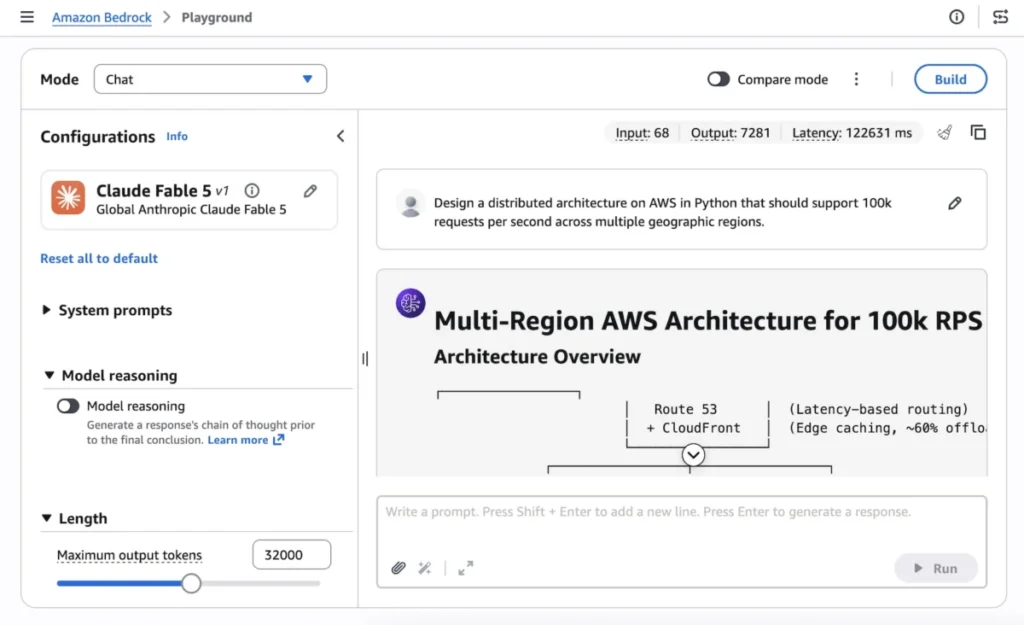
The landscape of generative artificial intelligence underwent a significant transformation in mid-June 2026, as Anthropic officially introduced its highly anticipated "Claude 5" suite of models. Designed for high-performance software engineering, complex knowledge synthesis, and advanced vision tasks, the release of the Claude Fable 5 and Claude Mythos 5 models was intended to signal a new benchmark for enterprise-grade AI.
However, the launch has been marked by rapid regulatory adjustments. As of June 12, 2026, access to these cutting-edge models has been restricted on the Amazon Bedrock platform in direct response to a U.S. Government export control directive. This development highlights the intensifying friction between the rapid pace of AI innovation and the growing complexity of international technology trade policies. While enterprise users face temporary disruptions, industry analysts view this as a pivotal moment for "responsible AI" frameworks, balancing state-of-the-art capability with rigorous national security oversight.
Chronology of the Claude 5 Rollout
The trajectory of the Claude 5 launch has been nothing short of volatile, defined by a rapid succession of announcements, technical integration, and subsequent compliance-driven retractions.
- Initial Launch (Early June 2026): Anthropic unveiled Claude Fable 5 and Mythos 5, promising a step-change in reasoning capabilities and long-running task performance. Integration via Amazon Bedrock and the Claude Platform on AWS was touted as the primary vehicle for enterprise adoption.
- The Compliance Pivot (June 10–11, 2026): As technical documentation was finalized and developers began migrating workloads, administrative updates were issued to clarify API endpoints and data retention requirements, specifically focusing on the
provider_data_shareconfiguration. - The June 12 Directive: In a move that surprised many in the tech sector, Anthropic and AWS announced a suspension of access to the Fable 5 and Mythos 5 models to comply with a new US government export control directive.
- Ongoing Continuity: Despite the suspension of the flagship models, Anthropic confirmed that its Opus 4.8 model remains unaffected and fully operational, providing a stable, albeit less powerful, fallback for existing enterprise customers.
Technical Specifications: The "Fable vs. Mythos" Distinction
To understand the gravity of the recent access revocation, it is necessary to examine what these models represent. Claude Fable 5 was engineered as a high-performance, robust tool for complex technical environments. It features "strong safeguards" that automatically pivot sensitive queries—specifically those involving cybersecurity, advanced biology, or chemical synthesis—to the established Opus 4.8 model.
In contrast, Claude Mythos 5 represents the unconstrained version of the model. By removing the safety "fall-back" mechanisms found in Fable 5, Mythos 5 offers raw, unadulterated performance. Due to its potential for misuse in high-risk domains, access to Mythos 5 was limited from the outset to a small, highly vetted cohort of researchers and strategic partners. The recent government directive has effectively shuttered access to both, creating a compliance vacuum that developers are currently scrambling to address.
Supporting Data: Infrastructure and Implementation
For organizations attempting to leverage the Claude 5 ecosystem, the technical barrier to entry was intentionally set high to ensure data security and regulatory alignment.
The Data Retention Requirement
Anthropic mandated that any user accessing Fable 5 must opt into a data-sharing protocol via the Amazon Bedrock Data Retention API. This was not merely a feature, but a functional necessity. By setting the mode to provider_data_share, users authorized a 30-day retention period for all inputs and outputs. This data is subject to human review for abuse detection, a cornerstone of Anthropic’s safety-first philosophy.
API Integration and Developer Workflow
The integration path for the Claude 5 series involved a dual-path architecture:
bedrock-mantle: Intended for high-throughput, specialized deployments.bedrock-runtime: The primary interface for the broader AWS ecosystem, supporting the standardInvokeandConverseAPIs.
For developers, the transition involved updating standard Python workflows using the anthropic SDK. The complexity of these requirements—ranging from SigV4 authentication to specific JSON payloads for data retention—underscores the enterprise-grade nature of the model. It was never intended for "plug-and-play" hobbyist use, but rather for deep, integrated deployment within large-scale AWS environments.
Official Responses and Strategic Implications
The partnership between Anthropic and AWS remains the central pillar of this rollout. In an official statement, Anthropic emphasized that the revocation of access was a compliance measure, not a product failure.
The Compliance Burden
The US Government export control directive serves as a reminder that AI models of this caliber are now being treated as strategic national assets. Similar to high-end semiconductors or advanced cryptographic hardware, the export or broad availability of "frontier models" is subject to strict geopolitical oversight.
Industry experts suggest this trend will continue. Companies like Anthropic are now operating in a world where technical capability is secondary to regulatory compliance. The "safety-first" architecture of Fable 5—which triggers model-switching when it detects high-risk prompts—was likely an attempt to proactively appease these regulators. The fact that the government intervened regardless suggests that the threshold for what constitutes a "sensitive" model is shifting downward.

Navigating the Future: Continuity for Enterprise
For businesses that built workflows around the anticipation of Claude 5, the current landscape requires an immediate contingency strategy.
Leveraging the Opus 4.8 Fallback
The continued availability of Opus 4.8 is the critical lifeline for current operations. While it may lack the specific optimizations and "reasoning depth" of the 5-series, it remains a state-of-the-art model capable of handling the vast majority of enterprise use cases. Developers are encouraged to:
- Audit Current Workflows: Identify where Claude 5-specific features were utilized and determine if Opus 4.8 can fulfill these requirements.
- Maintain Compliance Standards: Even while using Opus 4.8, the infrastructure established for the Fable 5 rollout (such as the
provider_data_shareAPI) should be maintained to ensure a seamless transition should access to the newer models be restored. - Engage with AWS Support: Organizations with critical dependencies should utilize their AWS Support contacts to receive updates on regional availability and potential future regulatory exemptions.
The Road Ahead
The saga of Claude Fable 5 is not the end of the line, but rather a maturation of the AI industry. As models become more capable, the "black box" nature of AI will be increasingly scrutinized by governments. The technical community must prepare for a future where the deployment of a new model is preceded by a legal and compliance review as rigorous as the machine learning training process itself.
In the coming months, we expect further guidance from the U.S. government regarding how these frontier models can be securely deployed in international contexts. Until then, the focus remains on stability, security, and the reliable performance of the existing toolset.
For real-time updates on model availability and further technical documentation, users are encouraged to monitor the AWS re:Post for Amazon Bedrock and the official Anthropic News portal.
Disclaimer: This report is based on information provided by AWS and Anthropic as of June 12, 2026. Users are advised to review the official Amazon Bedrock documentation for the most recent updates on model regional availability and regulatory compliance requirements.