Elevating Generative AI: AWS Unveils the Next-Generation Bedrock Console Experience
In a significant leap forward for generative AI development, Amazon Web Services (AWS) has announced the launch of a refreshed, high-performance console experience for Amazon Bedrock. Designed to streamline the lifecycle of AI development—from initial experimentation to full-scale production deployment—this update introduces the bedrock-mantle inference engine. This new architecture is specifically engineered to provide the high-reliability, low-latency performance required by modern enterprise applications. By integrating support for industry-standard APIs, including OpenAI’s Chat Completions and Anthropic’s Messages API, AWS is positioning Bedrock as the definitive hub for building with top-tier foundation models.
Main Facts: A New Gateway to Generative AI
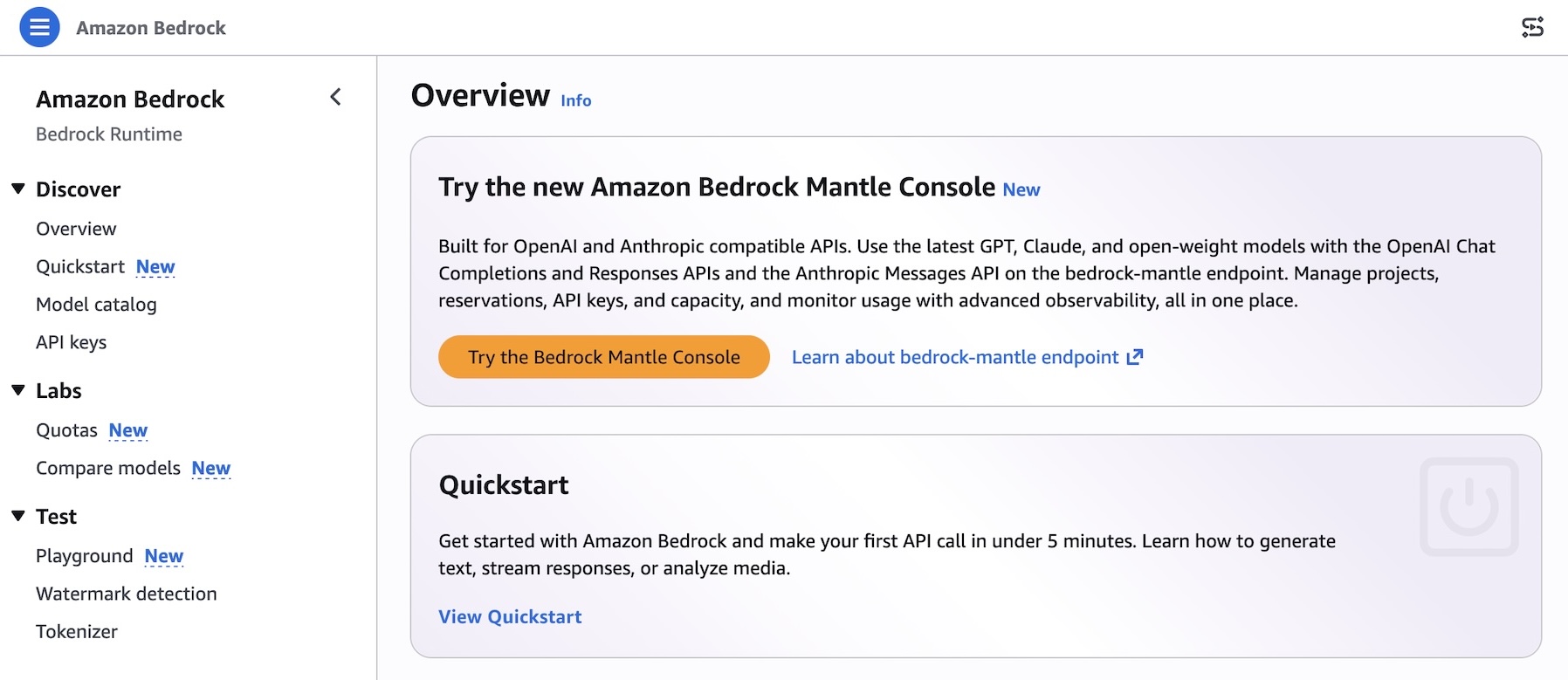
The newly minted Bedrock console is not merely a cosmetic update; it is a fundamental shift in how developers interact with foundation models. At its core, the console is built around the bedrock-mantle endpoint, a high-performance inference engine that caters to a diverse ecosystem of GPT, Claude, and open-weight models.
Key highlights of this release include:
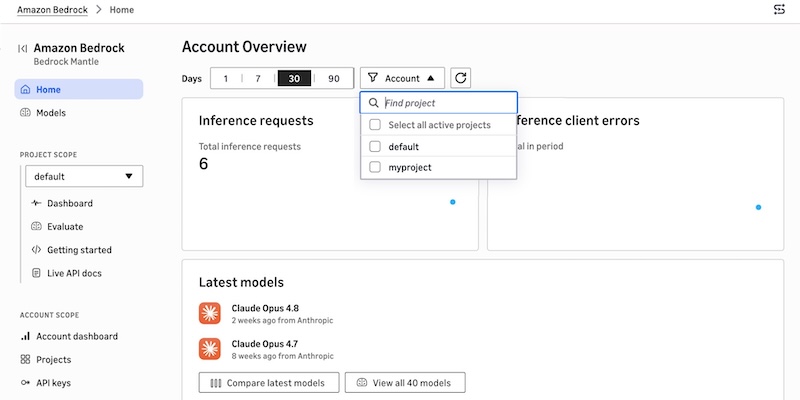
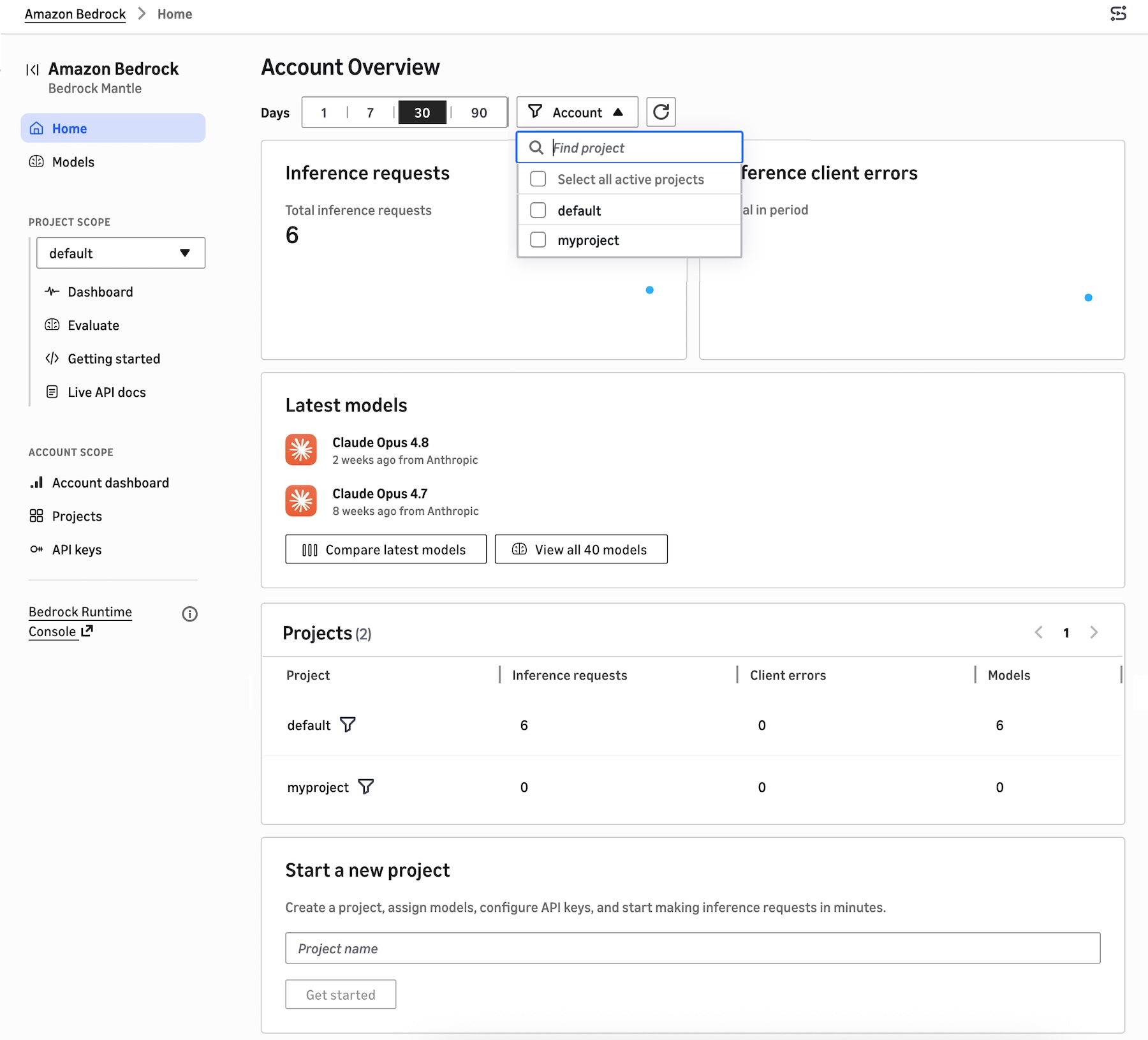
- Unified Project Dashboard: Developers can now organize their work into specific projects, allowing for granular tracking of inference requests, error rates, and model performance metrics over time.
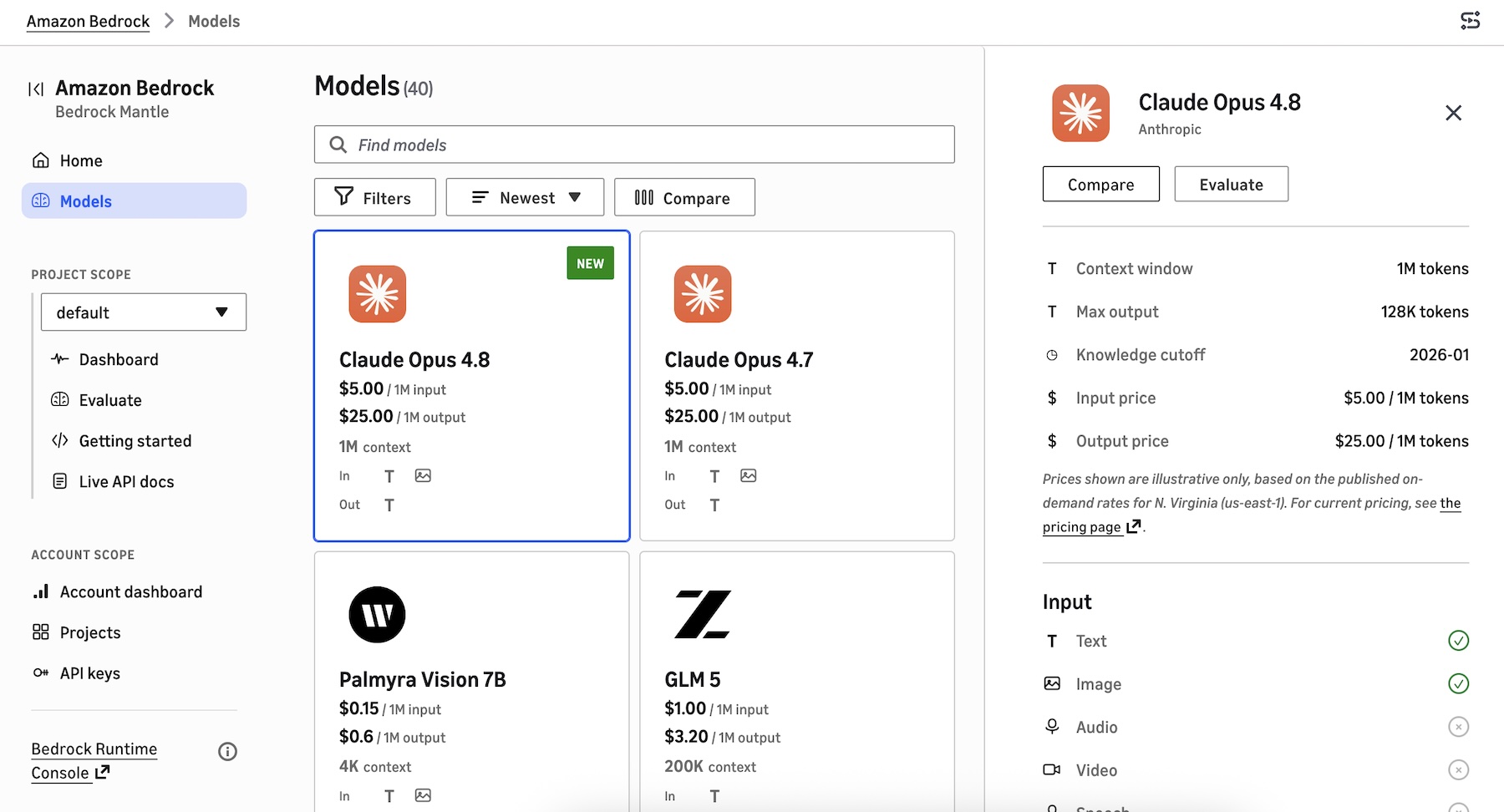
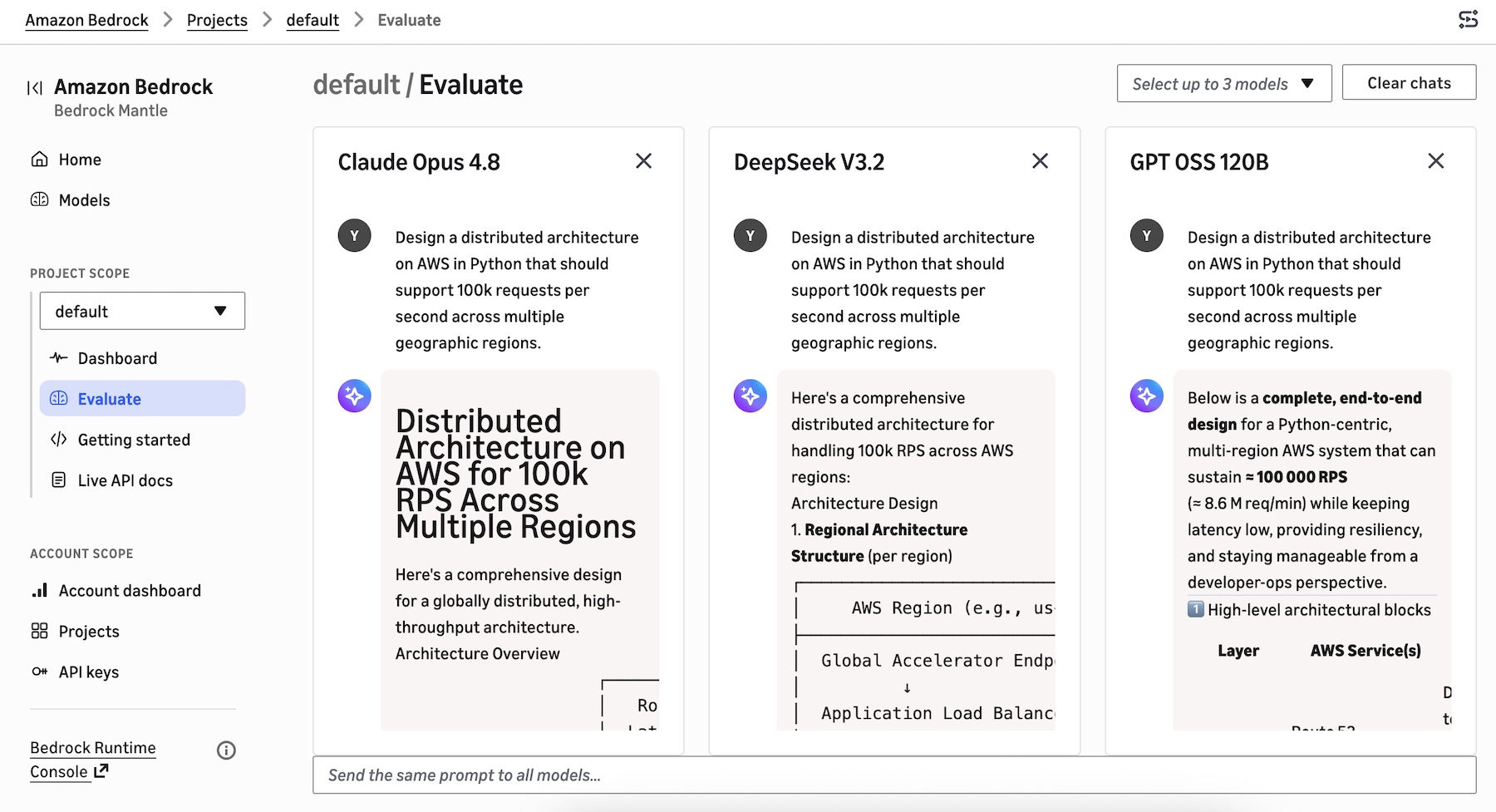
- Enhanced Model Catalog: A centralized hub that provides transparent access to model details, including token pricing, input/output specifications, and regional availability. Users can perform side-by-side comparisons of up to three models simultaneously.
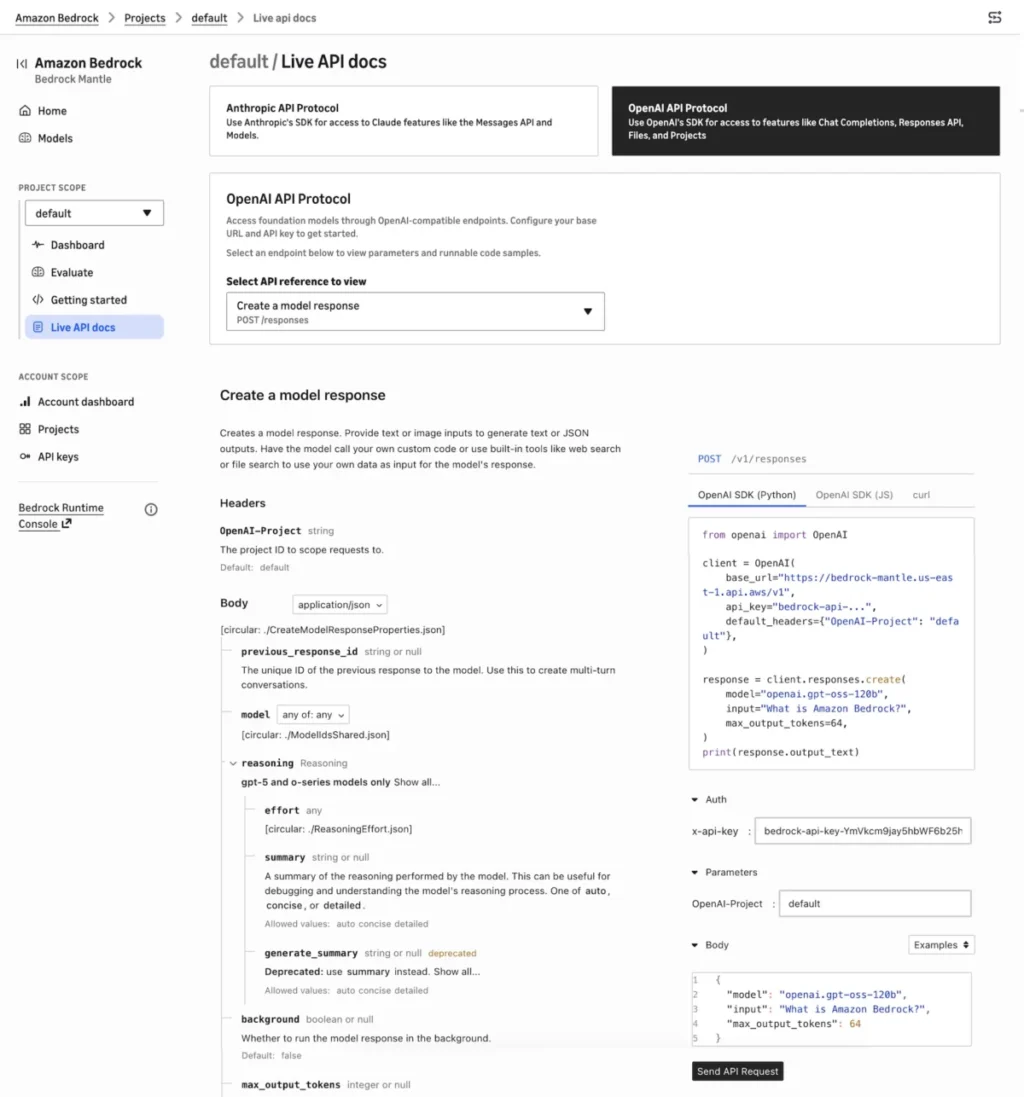
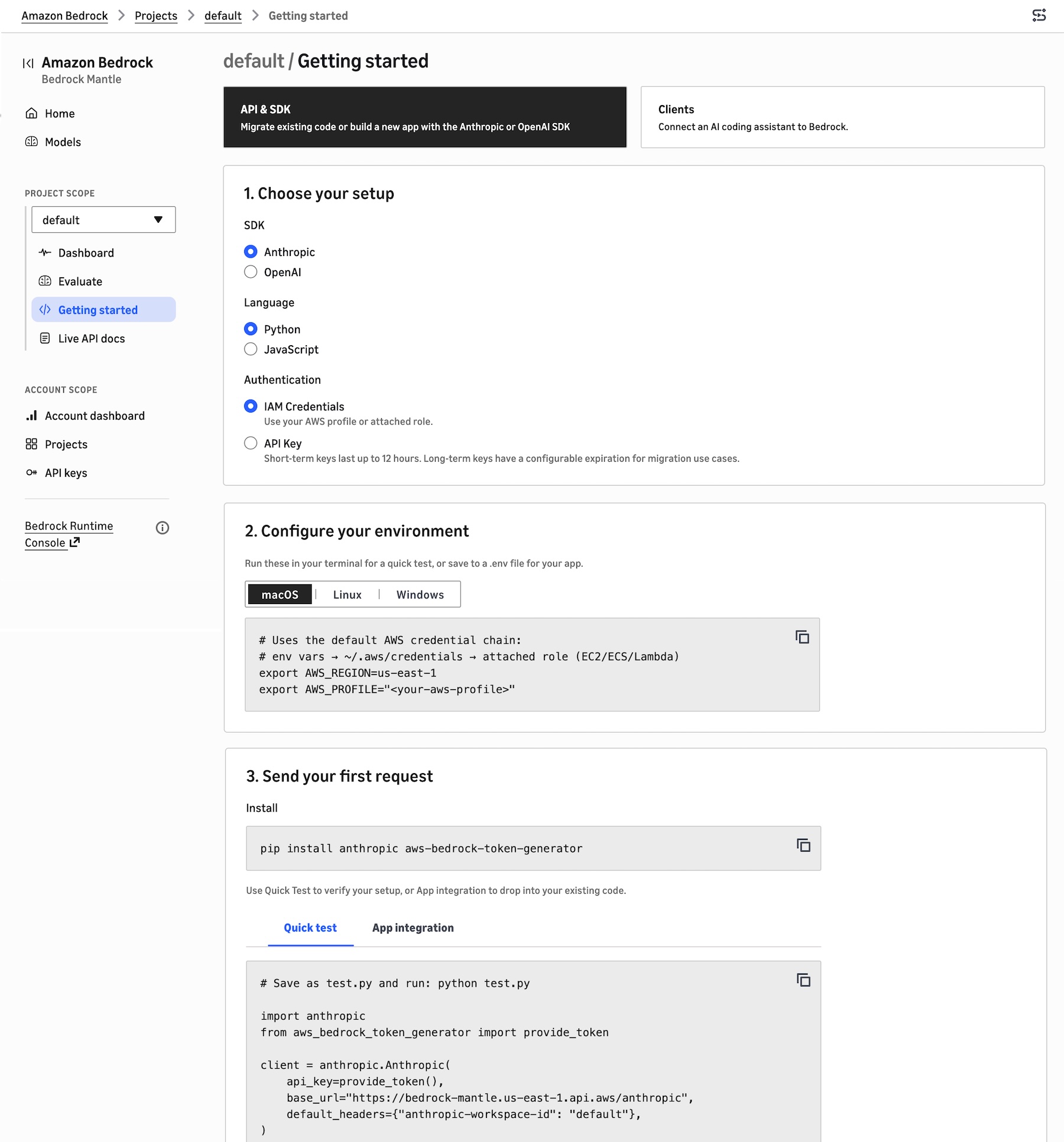
- Developer-First Integration: The platform now offers streamlined onboarding for SDKs (Anthropic and OpenAI), including pre-filled environment variables and code snippets to accelerate time-to-market.
- AI Agent Ecosystem: The console supports seamless integration with popular AI coding agents such as Cursor, Cline, and Claude Code, allowing developers to route agentic workflows directly through the secure AWS infrastructure.
Chronology: The Evolution of Bedrock
The path to this release reflects the rapid acceleration of the generative AI market. Since its inception, Amazon Bedrock has functioned as a serverless environment for building generative AI applications. However, as the ecosystem matured, the need for a more specialized, developer-centric interface became apparent.

- Phase 1 (The Foundation): AWS introduced Amazon Bedrock to offer a choice of high-performing foundation models via a single API, abstracting the complexity of infrastructure management.
- Phase 2 (Expansion): Following the initial launch, AWS expanded the model catalog to include a vast array of proprietary and open-source models, necessitating better organizational tools for developers.
- Phase 3 (The Current Milestone): With the introduction of the
bedrock-mantleengine, AWS is now focusing on "Performance-First" development. This phase addresses the developer’s requirement for industry-standard compatibility, allowing them to swap models from different providers with minimal code changes, thanks to the standardized OpenAI and Anthropic API protocols.
Supporting Data: Efficiency and Analytics
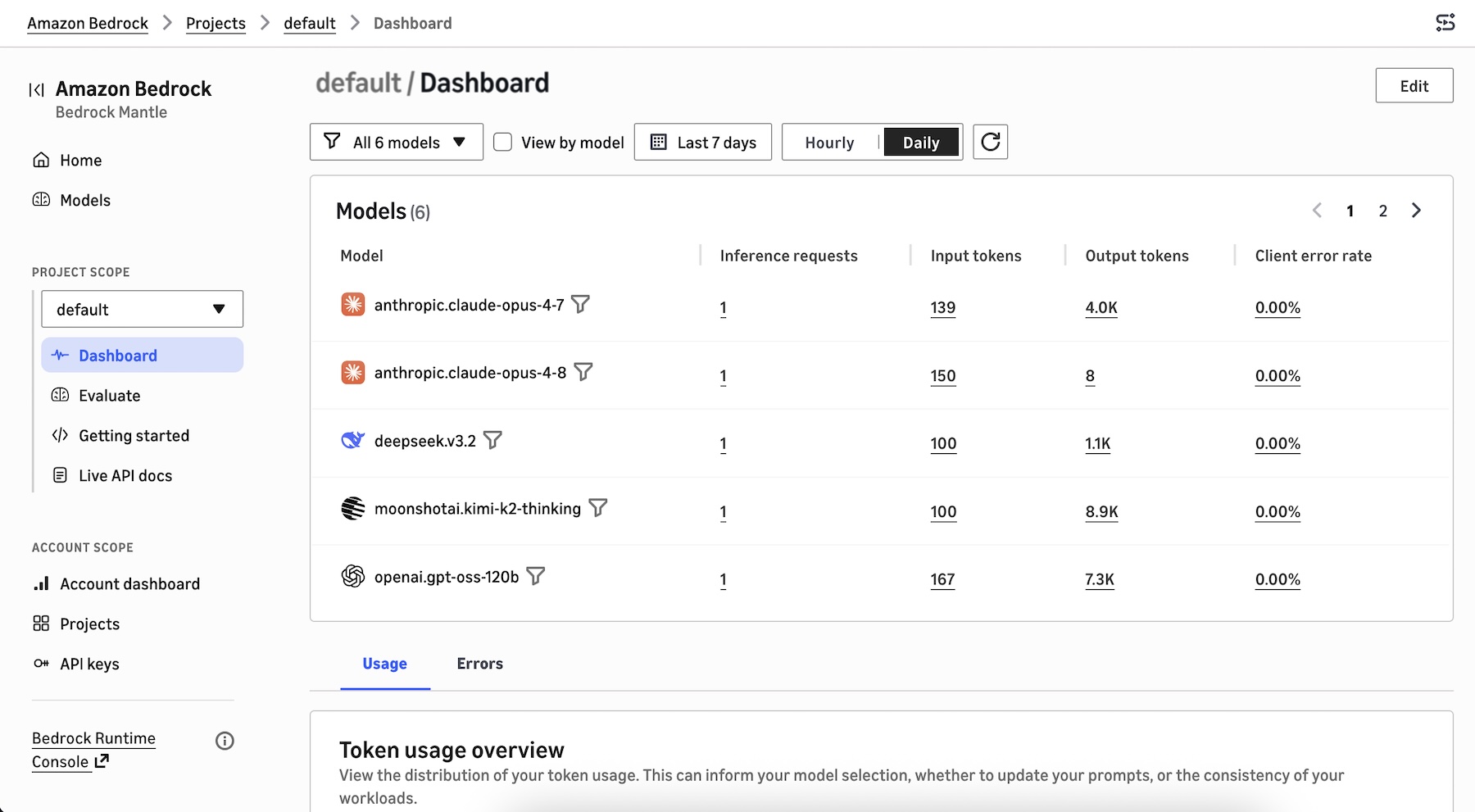
The new dashboard provides telemetry that was previously difficult to aggregate manually. By monitoring token usage, developers can now make data-driven decisions regarding prompt engineering and cost optimization.
Performance Metrics
The dashboard visualizes critical KPIs, including:
- Token Consumption: Total usage broken down by model, allowing for precise budget forecasting.
- Inference Throughput: Tracking "tokens per minute" and "requests per minute" to ensure applications scale reliably under load.
- Latency Analysis: By observing tokens per inference request, developers can identify which models offer the optimal balance between speed and output quality for specific use cases.
The Comparison Engine
The ability to compare up to three models side-by-side represents a major productivity gain. In the previous iteration, developers often had to run separate test scripts for each model. Now, by using the same prompt across three different models within the console, teams can perform qualitative A/B/C testing in seconds, accelerating the selection process for production-ready models.
Official Responses and Strategic Vision
AWS has emphasized that this console is a direct response to feedback from the developer community. By reducing the "time-to-first-request," AWS aims to minimize the friction often associated with cloud-native AI development.
"The goal is to allow developers to move quickly from an idea on a whiteboard to a production-grade application without getting bogged down in infrastructure configuration," says Channy Yun, Principal Developer Advocate at AWS. "By supporting standard APIs and offering a project-based approach, we are meeting developers where they are, using the tools they already know and love."
The decision to maintain the legacy Bedrock console alongside the new bedrock-mantle console ensures that enterprises can continue to utilize specialized features—such as Agents, Knowledge Bases, Guardrails, and fine-tuning capabilities—while adopting the new interface for standard inference tasks.
Implications: The Future of Enterprise AI
The introduction of the bedrock-mantle console has far-reaching implications for the enterprise AI landscape.
1. Vendor Agnostic Development
By adopting the OpenAI and Anthropic API protocols, AWS is effectively enabling a "plug-and-play" architecture. Enterprises are no longer locked into a specific model provider; they can switch their underlying model architecture with minimal code changes. This reduces the risk of vendor lock-in and allows companies to benefit from the constant innovation occurring in the open-weight model space.
2. Streamlined AI Agent Workflows
The direct support for AI coding assistants like Cursor and OpenCode is a turning point. As software development becomes increasingly agent-driven, having a secure, enterprise-grade inference engine that can "power" these agents—while maintaining strict IAM-based security and compliance—is a major competitive advantage for AWS customers.
3. Democratization of Performance
High-performance inference engines were once the domain of specialized ML engineers. With the new console, the technical barrier to entry is lowered significantly. Junior developers can now access sophisticated metrics and model comparisons that were previously hidden behind complex AWS CLI commands or custom-built monitoring dashboards.
4. Regional Availability and Global Scaling
The availability of the bedrock-mantle endpoint across key regions—including US East, US West, Asia Pacific (Sydney, Tokyo, Jakarta, etc.), and Europe (Frankfurt, Ireland, London, etc.)—ensures that global enterprises can maintain low-latency connections to their AI models, satisfying both performance needs and data residency requirements.
Getting Started: A Step-by-Step Guide
For developers looking to integrate these new features, the process is designed to be frictionless.
- Access: Navigate to the Amazon Bedrock console and select "Try the Bedrock Mantle Console."
- Configuration: Create a project and assign the relevant API keys.
- Integration: Use the "Getting Started" tab to select your preferred language (Python, Node.js, etc.) and SDK.
- Verification: Utilize the provided code snippets to run a "Hello World" request against the
bedrock-mantleendpoint. - Scaling: Once verified, use the "Live API Docs" to copy the exact configuration needed for your production environment.
Conclusion
The launch of the new Amazon Bedrock console marks a pivotal moment in the maturity of generative AI. By bridging the gap between raw model performance and developer experience, AWS has provided a sophisticated toolset that enables enterprises to iterate faster, experiment more boldly, and scale their AI initiatives with confidence. As the bedrock-mantle ecosystem continues to grow, it is likely that this console will become the primary interface for developers who prioritize reliability, speed, and seamless integration in their AI development lifecycle.
As we look toward the future, the integration of these high-performance engines into the standard AWS workflow suggests that the era of "AI experimentation" is rapidly giving way to an era of "AI industrialization," where building high-quality, reliable AI applications is as accessible as spinning up a virtual server.