Fortifying Digital Identity: Amazon Cognito Introduces Multi-Region Replication and Enhanced Encryption Controls
In an era where digital resilience is no longer a luxury but a fundamental requirement for business continuity, the stakes for identity and access management (IAM) have never been higher. As organizations increasingly rely on complex ecosystems of microservices, agentic AI, and automated service accounts, the need for seamless, cross-regional authentication has become a critical architectural pillar. Recognizing these challenges, Amazon Web Services (AWS) has announced two transformative updates to Amazon Cognito: native multi-Region replication and enhanced support for customer-managed keys (CMK).
These updates represent a significant departure from the manual, high-effort workarounds previously required to maintain identity consistency, promising to reduce operational overhead while simultaneously bolstering security postures for enterprises operating at scale.
The Strategic Imperative: Why Resilience Matters
For years, developers have struggled with the "Regionality Trap." When a primary AWS Region faces an interruption, the inability to authenticate users—or worse, the loss of state—can paralyze an entire application stack. Previously, engineers were forced to architect complex, custom synchronization pipelines to mirror user data, configurations, and secrets across geographical boundaries.
These manual interventions were not only time-consuming but fraught with risk. Inconsistent data states, potential security leaks during manual exports, and the dreaded requirement for users to reset passwords or re-authenticate during a failover event were common pain points. Furthermore, machine-to-machine (M2M) communication often broke down, as secondary regions required entirely new app client configurations, forcing developers to update OAuth-protected resources mid-incident.

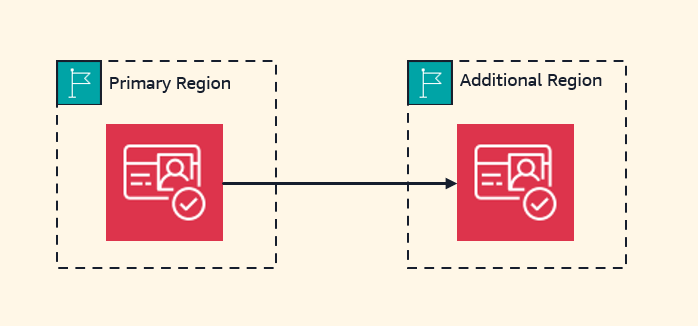
The introduction of multi-Region replication for Amazon Cognito effectively mitigates these risks by automating the synchronization of user profiles, credentials, and pool configurations, allowing applications to remain functional even in the face of regional disruptions.
Chronology: Implementing Multi-Region Resilience
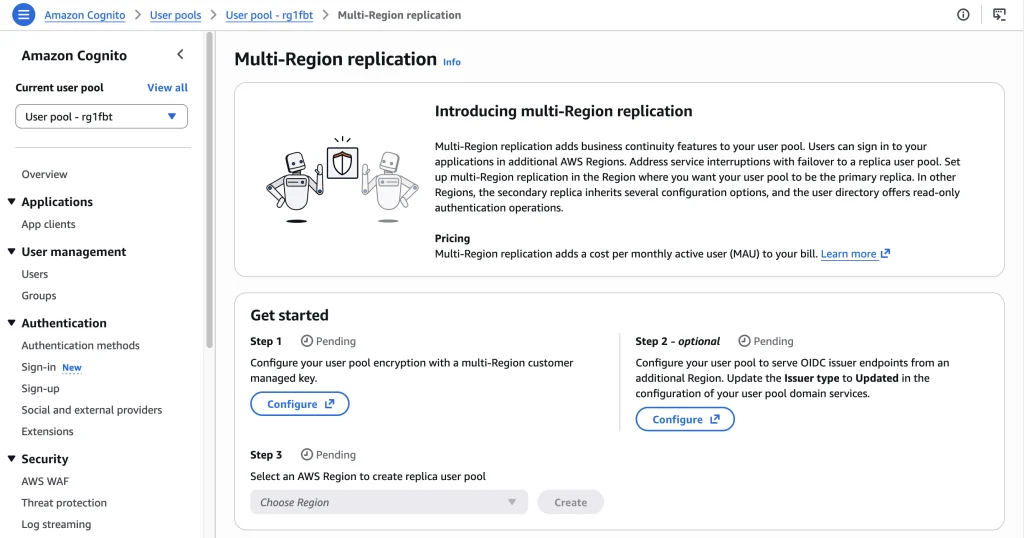
Transitioning to a resilient, multi-region identity architecture is now a streamlined, three-step process within the AWS Management Console. The evolution of the implementation can be broken down as follows:

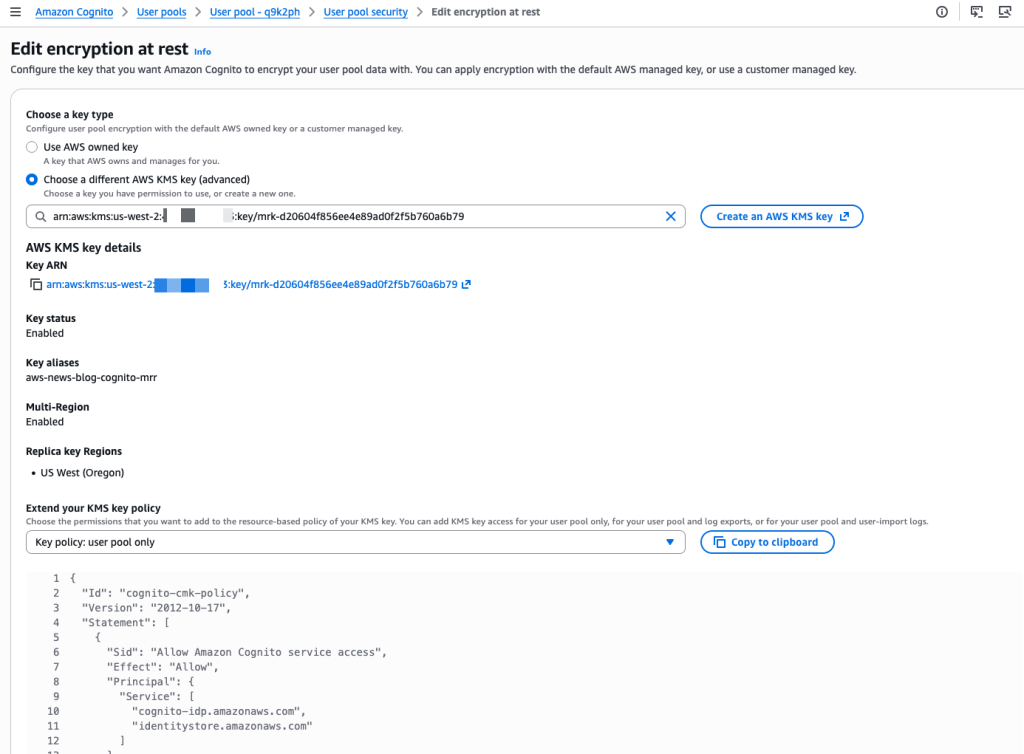
1. Encryption Foundation
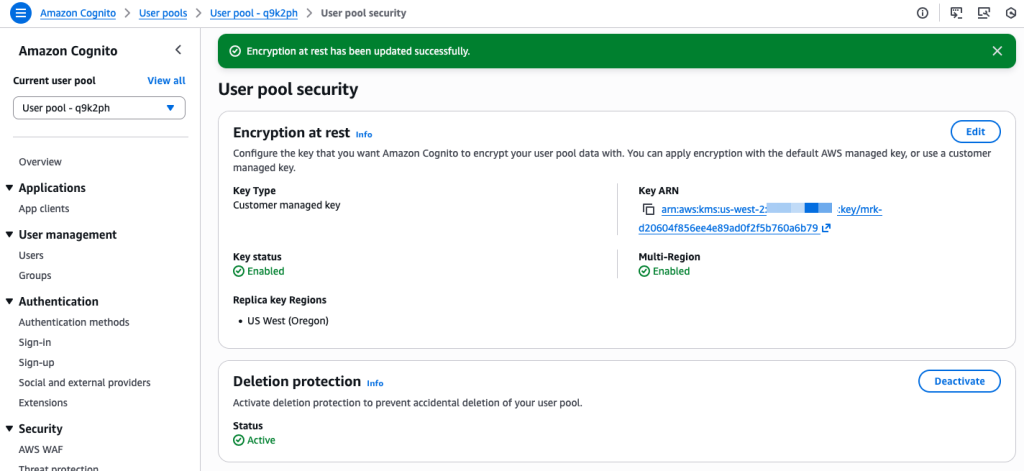
The prerequisite for this new capability is the establishment of a multi-Region customer-managed key via AWS Key Management Service (AWS KMS). This ensures that data at rest is protected by an encryption strategy dictated by the customer, meeting the stringent compliance requirements of the financial and healthcare sectors. The developer must configure the key policy to grant Amazon Cognito explicit permissions to perform cryptographic operations, a process facilitated by clear IAM policy templates provided within the console.
2. OIDC Endpoint Configuration
The second phase involves defining the OpenID Connect (OIDC) issuer type. By selecting "Configure," developers can migrate their applications to new, multi-region aware endpoints. This step is a critical inflection point: it necessitates the redeployment of server-side application logic and, in the case of mobile applications, a submission of updates to the App Store and Google Play. Neglecting this step would render the secondary region unreachable by client applications, effectively nullifying the benefit of the replication.
3. Activation and Synchronization
Once the endpoints are established, the developer selects the target replication Region. The system then initiates a background synchronization process. The duration of this operation is inherently tied to the volume of the user pool. Upon completion, the developer manually triggers the "Activate" status. Once the status changes to "Active," the secondary region stands ready to serve as a high-availability mirror, capable of accepting traffic while the primary region remains the source of truth for write operations.
Supporting Data: Operational Control and Financials
The technical shift toward multi-Region replication is supported by a transparent pricing model designed to provide value to both Essentials and Plus tier customers.
Pricing Structure
- User Authentication: The add-on is priced at $0.0045 per monthly active user (MAU) per replica Region for the Essentials tier, and $0.006 per MAU for the Plus tier.
- M2M Authentication: For backend services and service accounts, the cost is structured as a 30% premium on top of standard, volume-based token issuance fees.
Regional Availability
The reach of these updates is global. Multi-Region replication is currently deployed across a wide footprint, including US East (Ohio, N. Virginia), US West (N. California, Oregon), Canada (Central), South America (São Paulo), and major hubs across Asia Pacific and Europe. Customer-managed key support is even more expansive, covering virtually all global AWS infrastructure, including specialized zones like AWS GovCloud and Israel (Tel Aviv).
Official Perspective: The Developer Advocate’s View
From the desk of the AWS developer advocacy team, the message is clear: the focus is on reducing the "undifferentiated heavy lifting." By providing a managed service that handles the replication logic, AWS is shifting the burden away from engineering teams.

"We’ve heard the frustration," notes the advocacy team. "Developers want to build applications that don’t fall over when a Region experiences a hiccup. They don’t want to spend their time maintaining custom scripts to sync user pools. This feature is about giving back time to the builders while ensuring that the end-user experience remains uninterrupted."
The integration of customer-managed keys is specifically touted as a response to the "sovereignty" movement in enterprise IT. Organizations in highly regulated industries can now retain control over their encryption keys, ensuring that even in a managed environment, they maintain authority over the lifecycle and access to their encrypted data.

Implications: Building for the Future
The implications of this update for the broader software development lifecycle are profound.
Improved Business Continuity
By maintaining a read-only replica in a secondary Region, organizations can now design "active-passive" disaster recovery strategies that are far more reliable than previous iterations. Existing sessions remain valid, meaning users who are already logged in do not face the friction of a forced logout during a regional failover.

The "Task List" Reality Check
While the service handles data synchronization, it is not a "magic button" for total infrastructure resilience. Developers must still manually handle the replication of peripheral services. Lambda functions used for custom authentication flows, SMS and email notification settings, log streaming configurations, and AWS WAF rules must be manually deployed and synchronized in the target region. The AWS console provides a checklist to guide developers through these requirements, acknowledging that identity is only one component of a total regional failover strategy.
Strategic Monitoring
The responsibility for triggering a failover remains with the customer. AWS emphasizes that organizations should design monitoring strategies that track error rates, latency patterns, and service health. Whether using Amazon Route 53 health checks or custom observability tooling, the decision to pivot traffic to the secondary Region should be a deliberate, data-driven action. Testing this strategy—perhaps by diverting a small percentage of traffic during off-peak hours—is highly recommended to validate the integrity of the secondary environment.

A New Standard for Compliance
With support for customer-managed keys, Cognito is positioning itself to be a viable identity provider for companies that have previously been forced to build custom, on-premises identity solutions due to strict data encryption mandates. This move bridges the gap between the convenience of a managed cloud service and the security requirements of modern compliance frameworks like HIPAA, GDPR, and PCI-DSS.
Conclusion
The introduction of multi-Region replication and customer-managed keys is a landmark update for Amazon Cognito. By automating the most complex aspects of regional failover and providing granular control over data encryption, AWS is empowering developers to build more robust, secure, and compliant applications. As the digital landscape continues to demand near-zero downtime, these tools provide the necessary foundation for organizations to maintain trust and operational integrity, regardless of the challenges posed by underlying infrastructure. Developers are encouraged to review the updated AWS documentation and begin mapping their transition plans to this more resilient, multi-regional future.