Amaravati’s Global Ambition: Singapore Delegation Concludes Landmark Visit to Accelerate Capital Development
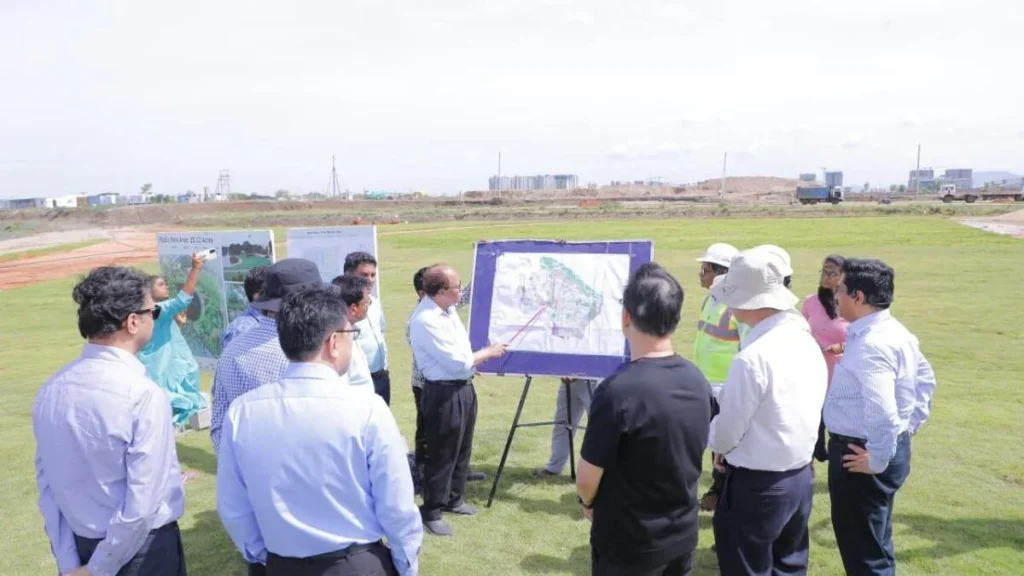
AMARAVATI, Andhra Pradesh — In a move signaling a major push toward the realization of Andhra Pradesh’s “people’s capital,” a high-level delegation from Singapore concluded a pivotal two-day visit to Amaravati on Tuesday, June 30, 2026. The visit, held under the robust framework of the Andhra Pradesh-Singapore Memorandum of Understanding (MoU), marks a critical juncture in the state’s efforts to leverage international expertise for the creation of a world-class, integrated urban township.
The engagement represents a significant rekindling of the bilateral cooperation between the Andhra Pradesh Capital Region Development Authority (APCRDA) and Singaporean agencies, focusing on sustainable urban governance, cutting-edge technology, and strategic investment.
The Strategic Framework: Bridging Expertise and Vision
The visit is part of a broader diplomatic and developmental initiative following recent high-level meetings between the Andhra Pradesh government and the Singaporean leadership. The primary objective of this collaboration is to transform the greenfield site of Amaravati into a model of modern urban planning that balances economic vitality with environmental sustainability.
The delegation, which arrived via Gannavaram, comprised a diverse group of experts representing a nexus of academia, trade, and urban planning. Key members included:
- National University of Singapore (NUS): Yeo Siew Haip, Zhou Yimin, Lineswala Darshan, and Jayeshkumar.
- Ministry of Trade and Industry (MTI), Singapore: Francis Chong.
- Surbana Jurong (SCE): Tay Lian Chew.
- International Finance Corporation (IFC): Anant Shankar.
By bringing together these stakeholders, the APCRDA aims to ensure that Amaravati is not merely built as a collection of buildings, but as a holistic, functional, and future-ready metropolis.
Chronology of the Visit: A Deep Dive into Amaravati’s Blueprint
Day 1: Laying the Conceptual Foundation
The delegation’s first day was marked by intensive technical sessions at the APCRDA Project Office. Following a warm reception, the team engaged in a series of detailed briefings that dissected the core pillars of the Amaravati Master Plan.
APCRDA Commissioner V. Vijay Rama Raju, along with his team of Additional Commissioners, led the discourse. The discussion moved beyond basic construction, focusing on:
- Urban Design Advisory Group (UDAG) Initiatives: Exploring how aesthetic and functional design can foster a better quality of life for residents.
- Streetscape Development: Focusing on pedestrian-friendly infrastructure, smart connectivity, and the integration of green corridors within the urban fabric.
- Technical Integration: The team reviewed the digital and structural components of the capital’s development, ensuring that the infrastructure is scalable to meet the demands of a growing population.
Day 2: On-Ground Assessment and Field Inspections
The second day shifted from the conference room to the field, allowing the delegation to witness the physical progress of the capital. The inspection tour was comprehensive, covering several high-priority sites:
- LPS Infrastructure Zone-7: Assessing the land pooling scheme’s infrastructure readiness.
- MLA-MLC Housing: Inspecting the nearly completed residential quarters, a project that signals the government’s intent to establish a functioning administrative hub.
- Key Infrastructure Hubs: The team visited the Shakamuru Lake area, the E6 Trunk Infrastructure works, the Judges’ Bungalows, and the Amaravati Government Complex (AGC) Head of Department Towers.
The presence of the IFC and MTI representatives during these site visits suggests a focus on the economic viability and investment potential of these zones, aiming to attract global capital once the core infrastructure reaches maturity.
Supporting Data: Infrastructure and Urban Strategy
Amaravati is being designed as a high-density, smart, and sustainable city. The data presented to the delegation by the APCRDA highlights the scale of the project:
- Administrative Readiness: The MLA and MLC housing projects are near completion, with 288 flats already finalized and ready for allotment. This is a critical step in shifting the administrative machinery to the new capital.
- Integrated Development: The master plan utilizes an "integrated urban development model," which prioritizes transit-oriented development (TOD). This model is designed to minimize commuting times and optimize land use, a philosophy heavily influenced by Singapore’s own urban success story.
- Sustainability Metrics: Through the development of the Shakamuru Lake and other water-sensitive designs, the city aims to maintain a high green-cover ratio, counteracting the heat-island effects typically associated with rapid urbanization.
Official Responses and Strategic Vision
The conclusion of the visit saw a wrap-up meeting with S. Suresh Kumar, the Principal Secretary of the Municipal Administration and Urban Development (MA&UD) Department.

In his remarks, S. Suresh Kumar emphasized that the collaboration with Singapore is not merely transactional but developmental. "The insights provided by the Singapore delegation regarding urban governance and long-term sustainability are invaluable," he stated. "We are committed to learning from the best practices in urban planning to ensure Amaravati serves as a beacon of growth for the entire state."
The APCRDA officials reiterated that the "people’s capital" is being built with a long-term vision. By aligning with global standards, the state government intends to make Amaravati an attractive destination for foreign direct investment (FDI), tech industries, and service-sector giants.
Implications: What This Means for the Future
The visit carries significant implications for the future trajectory of the Amaravati project:
1. Strengthening Global Investor Confidence
The participation of the International Finance Corporation (IFC) and Singapore’s MTI is a strong vote of confidence in the project’s viability. International oversight and advisory roles often serve as a "de-risking" mechanism, signaling to global markets that Amaravati is a secure and well-planned environment for business.
2. Implementation of Best-in-Class Urban Governance
Singapore is globally renowned for its efficient urban governance, public housing models, and transport networks. By integrating these lessons, Andhra Pradesh aims to avoid the common pitfalls of rapid urbanization, such as traffic congestion, inadequate public amenities, and environmental degradation.
3. Economic Multiplier Effect
The development of the AGC Towers and residential quarters for legislators is the first wave of a larger economic ripple. Once the administrative core is fully operational, it will naturally drive demand for commercial spaces, retail, hospitality, and educational institutions, creating thousands of jobs and fostering a thriving secondary economy in the Krishna-Guntur region.
4. A Template for Sustainable Growth
Amaravati is being closely watched as a pilot for sustainable development in India. If the integrated model succeeds, it provides a replicable template for other Indian states looking to build greenfield capitals or expand urban infrastructure in a climate-conscious manner.
Conclusion: A New Chapter for Andhra Pradesh
As the delegation departed, the message from the APCRDA was one of continuity and commitment. The two-day visit has effectively bridged the gap between vision and execution, providing the state government with a clear roadmap for the next phase of development.
With the foundations of the MLA/MLC housing, the Trunk Infrastructure, and the Government Complex now firmly in place, the focus for the remainder of 2026 will be on scaling up these projects and inviting private sector participation. Amaravati stands at the threshold of becoming a major urban center in Southeast Asia’s wider economic sphere, provided the partnership with Singapore remains as robust and active as this week’s visit has demonstrated.
The success of the Amaravati capital project will ultimately be measured by its ability to provide a high quality of life for its citizens while acting as an engine of economic growth for the state. With international experts from Singapore now deeply embedded in the planning process, the "people’s capital" appears to be on a firmer, more accelerated footing than ever before.