Bridging the Data Gap: A Comprehensive Guide to Migrating from Oracle to BigQuery
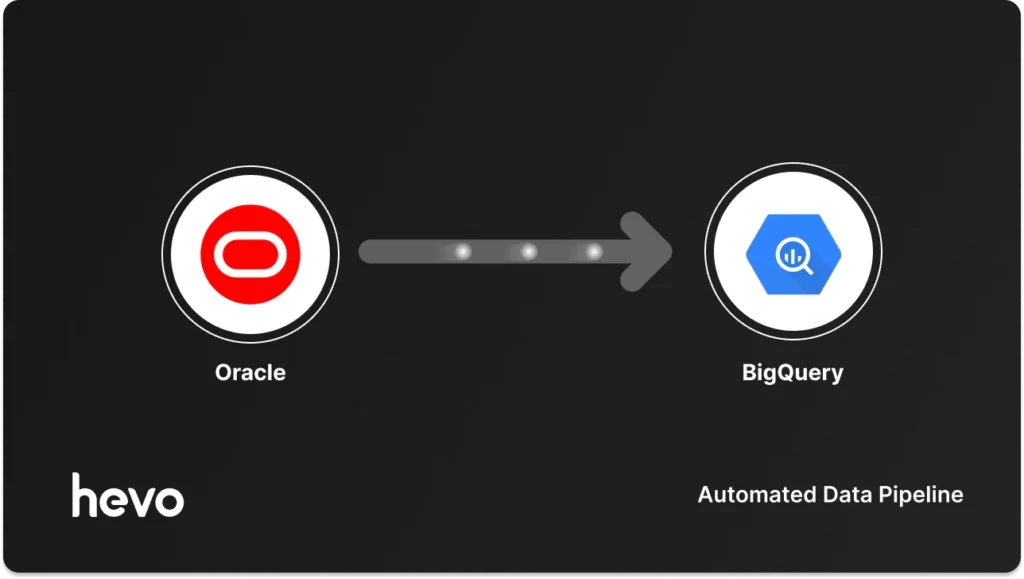
In the modern enterprise landscape, the divide between operational data storage and analytical intelligence is widening. Organizations that rely on Oracle—a titan of transactional database management—often find themselves hitting a "performance ceiling" when attempting to run complex, high-concurrency analytical queries. As business intelligence requirements evolve, the shift toward cloud-native, serverless data warehouses like Google BigQuery has become a strategic imperative.
Migrating from an on-premise or legacy Oracle environment to BigQuery is more than a simple data transfer; it is a fundamental architectural transition. This guide explores the methodologies, technical prerequisites, and strategic implications of executing a successful migration.
The Strategic Imperative: Why Move to BigQuery?
Oracle databases are masterpieces of ACID compliance and transactional integrity, designed to ensure that every banking record or inventory update is precise. However, these systems are fundamentally "row-oriented." When analysts attempt to run massive aggregations or complex joins across billions of rows, performance degrades rapidly.
BigQuery, conversely, utilizes a columnar storage architecture and massive parallel processing (MPP). By decoupling storage from compute, BigQuery allows businesses to scale their analytical power independently of their data volume. The primary advantages of this migration include:
- Blazing Performance: Execute complex analytical operations in seconds that would take hours in a traditional RDBMS.
- Serverless Scalability: Eliminate the need for manual server provisioning or database sharding.
- Advanced Ecosystem Integration: Seamless connectivity with Google Cloud’s machine learning (Vertex AI) and visualization (Looker) tools.
- Operational Decoupling: Prevent analytical heavy-lifting from impacting the performance of your production transactional applications.
Methods of Migration: A Comparative Analysis
There is no "one-size-fits-all" approach to moving data. The methodology you choose is ultimately dictated by your organization’s risk tolerance, technical bandwidth, and requirement for real-time data accuracy.
1. Automated Pipeline Integration (e.g., Hevo)
For teams prioritizing agility, automated ELT (Extract, Load, Transform) platforms are the gold standard. These tools handle the "heavy lifting"—managing schema mapping, handling data type conversions, and performing Change Data Capture (CDC) to keep BigQuery in sync with Oracle in real-time.

2. Native Google Cloud Tools
Google offers the BigQuery Data Transfer Service (DTS), a managed service that automates data ingestion from various sources. This is an excellent middle-ground for organizations already deeply invested in the Google Cloud ecosystem.
3. Manual Extraction and Loading
The "traditional" route involves exporting data from Oracle into flat files (CSV or Parquet), staging them in Google Cloud Storage (GCS), and using the bq command-line tool or console to load them into the warehouse. This method offers the most control but requires significant manual oversight and maintenance.
Deep Dive: The Automated Migration Workflow
To ensure a seamless transition, let’s examine the technical lifecycle of an automated migration using a solution like Hevo.
Phase 1: Establishing Connectivity
Before data can flow, the Oracle environment must be "primed." This involves creating a dedicated service user with granular permissions.
Key SQL Commands for User Configuration:
CREATE USER HEVO_USER IDENTIFIED BY 'secure_password';
GRANT CREATE SESSION, ALTER SESSION TO HEVO_USER;
GRANT SELECT ANY DICTIONARY TO HEVO_USER;
GRANT SELECT ON SYS.V_$DATABASE TO HEVO_USER;
For real-time replication, the database must be configured for ARCHIVELOG mode, and supplemental logging must be enabled to capture row-level changes.

Phase 2: Staging and Destination Mapping
BigQuery requires data to be staged in a GCS bucket before it is ingested. An automated pipeline handles this transition invisibly, but manual migrations require the following architectural setup:
- IAM Roles: Ensure your Service Account has
BigQuery Data Editor,BigQuery Job User, andStorage Object Adminroles. - Schema Normalization: Oracle and BigQuery handle data types differently (e.g.,
VARCHAR2vs.STRING). Automated tools resolve these conflicts at the ingestion layer, preventing data truncation or load errors.
Chronology of a Successful Migration
A successful migration follows a logical, time-tested progression. Skipping steps—particularly in testing—is the leading cause of failed projects.
- Discovery (Weeks 1-2): Audit your current Oracle estate. Catalog schemas, identify "dead" tables that no longer need migration, and document current storage volumes.
- Infrastructure Setup (Weeks 3-4): Establish the network connectivity (VPN or Interconnect) between your Oracle instance and Google Cloud. Configure the target BigQuery datasets.
- Proof of Concept (PoC) (Week 5): Select a non-critical schema. Perform a full load and verify data integrity by running row counts and sum-checks against both the source and the destination.
- Initial Load (Weeks 6-7): Execute the historical data migration. This is typically done during off-peak hours to minimize the performance impact on the production Oracle system.
- Cutover and Real-Time Sync (Week 8): Enable CDC to capture new inserts, updates, and deletes. Validate that the data is flowing in near-real-time.
- Decommissioning (Ongoing): Once the analytical traffic is fully routed to BigQuery, decommission the read-replicas in Oracle to save costs.
Supporting Data: Efficiency Metrics
When comparing manual vs. automated methods, the metrics are stark. According to internal industry benchmarks:
- Engineering Overhead: Manual migrations require an average of 30-40 hours of monthly maintenance for schema drift and connection failures. Automated tools reduce this to near-zero.
- Latency: Custom manual pipelines often operate on 24-hour batch cycles. CDC-enabled automated pipelines typically deliver sub-minute latency.
- Error Rate: Manual SQL-based exports are prone to human error (e.g., character encoding issues, timestamp mismatches), whereas automated pipelines provide built-in validation logic.
Official Responses and Best Practices
In documentation regarding migrations to BigQuery, Google’s cloud architects consistently emphasize the importance of "Data Partitioning."
When moving from Oracle to BigQuery, you are not just copying tables; you are optimizing them. BigQuery allows you to partition tables by time (e.g., by date or hour). If you move a large TRANSACTIONS table from Oracle, ensure you partition it by the transaction_date. This small change can reduce the cost and duration of future queries by orders of magnitude.
Furthermore, Google recommends using the bq load command with the --source_format=PARQUET flag. Parquet is a columnar format that compresses better and provides faster read speeds than traditional CSV files.

Implications for the Enterprise
The shift from Oracle to BigQuery changes the organizational culture surrounding data.
1. Democratization of Insights
In an Oracle-centric world, access to data is often restricted by the need for DBA approval. In BigQuery, the serverless nature allows you to provide analysts with access to massive datasets without fearing that a "bad query" will crash the production server.
2. Cost Optimization
Moving to a consumption-based model (BigQuery) means you stop paying for idle hardware. You only pay for the storage you use and the queries you run. However, organizations must be diligent; poorly written queries can result in unexpected costs. Implementing "query cost limits" is a critical administrative step.
3. Future-Proofing
By moving to BigQuery, you gain immediate access to Google’s broader AI and ML stack. Whether you are looking to build predictive churn models or implement real-time fraud detection, the data is already in the right place to be consumed by these advanced tools.
Conclusion: Making the Choice
Moving your data from Oracle to BigQuery is a milestone in any digital transformation journey. If your organization is prepared to invest in a dedicated data engineering team to build and maintain custom pipelines, manual migration offers unparalleled control. However, for most enterprises, the overhead of maintaining custom integrations—dealing with schema drift, connection timeouts, and scaling issues—distracts from the actual goal: generating business intelligence.
Automation, whether through established platforms like Hevo or via managed cloud services, provides a reliable, scalable path forward. It allows your team to stop "fixing the plumbing" and start "building the product." By aligning your migration strategy with your technical capacity, you can ensure that your enterprise data doesn’t just sit in a database, but acts as the engine that drives your business into the future.

FAQs: Clarifying the Migration Journey
Q: How do I handle complex Oracle stored procedures in BigQuery?
A: BigQuery does not support Oracle’s PL/SQL. You must refactor your business logic into either BigQuery SQL (using User-Defined Functions) or move the logic into a transformation layer like dbt (data build tool) after the data has been loaded.
Q: Will the migration affect my production Oracle performance?
A: If you use log-based CDC (Change Data Capture), the impact is minimal as the tool reads from the Redo Logs rather than querying the tables directly. However, large initial backfills should always be scheduled during off-peak hours to avoid resource contention.
Q: Is BigQuery compatible with my existing reporting tools?
A: Yes. BigQuery supports standard JDBC/ODBC drivers, making it compatible with almost all major BI tools, including Tableau, PowerBI, and Looker.