Innovation, Community, and the Future of the Web: A Deep Dive into WordCamp Europe 2026
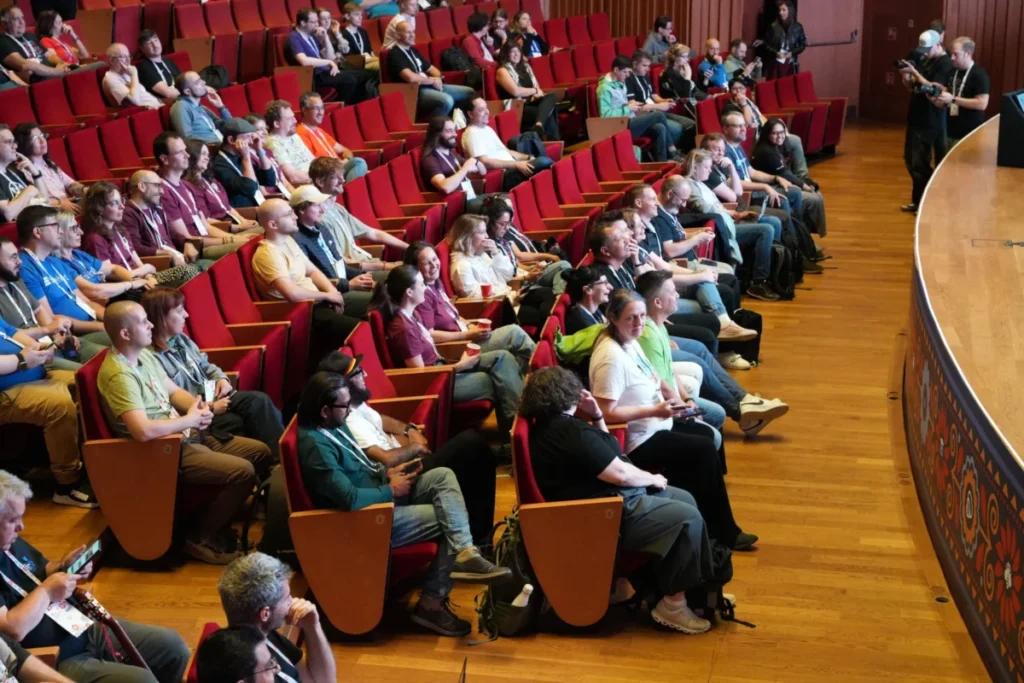
The first week of June 2026 transformed the ICE Kraków Congress Centre into a global nexus for the open web. WordCamp Europe (WCEU), the premier gathering for the WordPress community, brought together 2,458 attendees from 81 countries, cementing its status as the most significant event in the WordPress calendar. Over three days, from June 4 to 6, the historic Polish city became a laboratory for the future of digital publishing, where the intersection of artificial intelligence, core development, and community-driven education took center stage.

A City of History Meets the Future of Tech
Kraków provided a fitting backdrop for an organization dedicated to the longevity of the web. Known for its deep history, the city offered attendees more than just a venue; it offered an immersive experience. Organizers ensured seamless integration with the city, providing every participant with a transport hologram, granting unlimited access to Kraków’s extensive network of trams and buses.

Between sessions, the city’s vibrant culture became an extension of the conference. From the sprawling Main Market Square to the traditional flavors of pierogi and żurek soup, the local atmosphere fostered a sense of camaraderie that is rare in tech-focused events. As local team lead Sebastian Miśniakiewicz noted, “Kraków is beautiful, with history everywhere,” mirroring the sentiment of a project that, while rapidly modernizing, remains deeply rooted in the foundational principles of the open web.

Chronology of the Event: From Contribution to Collaboration
The conference structure was designed to balance high-level strategic discussion with hands-on technical application.

The Foundation: Contributor Day
The event commenced on June 4 with Contributor Day, a cornerstone of the WordCamp experience. Rather than passive observation, the day was dedicated to direct action. Attendees organized into specialized teams—including Polyglots, Documentation, Support, and Core—to contribute to the WordPress ecosystem. The day featured structured onboarding sessions, mentorship programs, and an open invitation for newcomers to pair with experienced developers. This collaborative effort ensured that even those unable to travel to Poland could participate via the #contributor-day channel on the Make WordPress Slack, reinforcing the project’s global reach.

The Keynote: CERN and the Legacy of the Web
The opening keynote provided a poignant historical connection. Joachim Valdemar Yde, head of the web team at CERN, took the stage to announce that the birthplace of the World Wide Web—the European Laboratory for Particle Physics—has migrated its flagship website, home.cern, to WordPress.

The move was the result of a rigorous evaluation process. By leveraging Kubernetes and automated migration tools, CERN’s web team has successfully moved hundreds of sites onto a unified, security-hardened WordPress infrastructure. This transition represents a significant validation of the platform, as one of the world’s most critical scientific institutions places its digital future in the hands of the open-source community.

Strategic Shifts: WordPress 7.0 and the AI Integration
The central theme of WCEU 2026 was the evolution of WordPress 7.0. The conference positioned this release as a transformative moment, shifting the CMS from a standard publishing tool to an AI-augmented platform.

The "Inside WordPress 7.0" Panel
A distinguished panel featuring core contributors—including Juan Manuel Garrido, Adam Silverstein, and Milana Cap—dissected the human and technical workflows behind the release. The discussion went beyond feature lists, focusing on the cultural shift required to ship complex software in an open-source environment.

Key technical advancements discussed included:

- Native AI Client: Integration that allows users to interact with AI models directly within the editor.
- Abilities API: A new framework enabling plugins to declare capabilities, allowing for seamless discovery by other tools.
- Connectors Screen: A centralized hub for integrating providers such as OpenAI, Anthropic, and Google Gemini.
Tammie Lister, a prominent voice in the community, emphasized that "human in the loop" is a design philosophy, not a buzzword. The consensus among speakers was clear: AI should be used to augment human creativity, not replace it, by automating repetitive tasks while leaving editorial control firmly in the hands of the user.

Technical Deep-Dives and Developer Craft
For the engineering-focused attendees, the event provided a series of technical workshops that pushed the boundaries of the platform.

- Performance and Scalability: Dennis Snell and Peter Wilson led sessions on the HTML API and the optimization of
WP_Query, providing developers with strategies to maintain high performance at scale. - Browser-Based Tooling: Fellyph Cintra demonstrated the latest advancements in WordPress Playground, showcasing how browser-based architecture is accelerating development and testing workflows.
- Plugin Clinic: A high-impact session by David Perez and Fran Torres, who have collectively reviewed over 25,000 plugins, provided a "practical clinic" on avoiding common bottlenecks in the plugin review queue.
The Business of WordPress and Education
The business tracks offered a pragmatic look at the ecosystem. Debbie Levitt and Vassilena Valchanova discussed product-market fit and the importance of visibility in a crowded marketplace. Furthermore, local agency developer Irfani Silviana highlighted how the Business Model Canvas can serve as a bridge between technical feature development and tangible business value.

The most significant news regarding the future of the community came during the closing fireside chat. Mary Hubbard, Executive Director of WordPress, announced that the Kraków University of Technology would launch a WordPress-specific academic course starting in October. This initiative, part of the WordPress Campus Connect program, marks a historic step in integrating open-source contribution into formal higher education.

Official Responses and Future Outlook
The closing fireside chat, featuring Mary Hubbard, Matías Ventura, and Rich Tabor, served as a "state of the union" for the project.

Matías Ventura, lead of the Gutenberg project, provided a glimpse into the future, demonstrating agent-based coding tools like Studio Code and desktop-mode experiments that could fundamentally change how the WordPress admin interface functions. He noted that the project’s long-term investment in a modular design system is now paying dividends, as AI models can easily manipulate components to build complex layouts.

Mary Hubbard was vocal about the responsibilities of the community regarding AI. "We should be talking about it, and we should be much louder about it," she urged, emphasizing that the values of open source—transparency, accessibility, and community ownership—must be the bedrock upon which AI integration is built.

Implications: The Road Ahead
The implications of WCEU 2026 are profound. By embracing AI and modern infrastructure, WordPress is positioning itself to remain the dominant force on the web for the next decade. The successful migration of CERN to WordPress serves as a "seal of approval" that will likely encourage other large-scale institutions to follow suit.

Furthermore, the focus on education and the next generation of contributors suggests that the community is maturing. By creating pathways for students through university partnerships, WordPress is ensuring that it does not become an aging ecosystem, but rather a vibrant, evolving platform that attracts fresh talent.

Conclusion
As the event drew to a close with an eight-hour after-party in the Kazimierz district, the energy was palpable. The 2026 edition of WordCamp Europe succeeded not just because of the talks or the technical announcements, but because of the people. From the organizers who managed every logistical detail to the newcomers who made their first commit, the event was a testament to the power of a global, decentralized community.

As the community sets its sights on WordCamp US 2026 in Phoenix this August and looks ahead to WordCamp Europe 2027 in Málaga, the message is clear: the future of the web is open, it is collaborative, and it is powered by WordPress. The 2,458 attendees left Kraków not just with new knowledge, but with a renewed sense of purpose, ready to continue building a web that belongs to everyone.