Tragedy at Madapattana: Seven Dead, Many Feared Trapped in Bengaluru Quarry Collapse
By News Desk
July 2, 2026
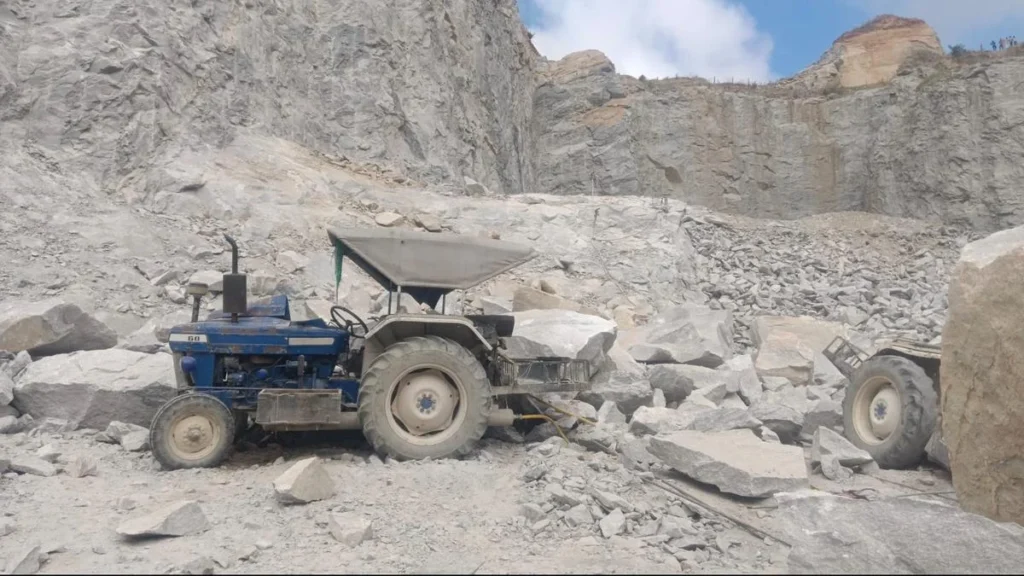
BENGALURU – A quiet morning in the peripheral village of Madapattana, located on the outskirts of Bengaluru, turned into a scene of unimaginable horror on July 2, 2026, when a massive boulder dislodged from a quarry face, crushing a tractor and burying a group of migrant labourers beneath tons of rock and debris.
The incident, which occurred at approximately 7:30 a.m. in the Bengaluru South taluk, has left at least seven workers dead and five others critically injured. As emergency response teams continue to sift through the unstable rubble, local authorities fear that the death toll may climb further, as several more workers remain unaccounted for.
The Morning of the Catastrophe: A Chronology of Events
The quarrying operations at the Madapattana site were in their early stages on Thursday morning. According to preliminary reports from the Tavarekere Police, approximately 20 workers—predominantly migrant labourers from Bihar and the Yadgir district of Karnataka—were stationed at the quarry floor. They were engaged in the routine task of loading crushed stones onto a tractor when the disaster struck.
Eyewitness accounts suggest a failure in standard safety protocols. Gopi, a worker from Tamil Nadu who narrowly escaped the path of the falling rock, recounted the harrowing moments leading up to the collapse. "A few workers were positioned at the top of the rock face, attempting to dislodge a boulder to facilitate the extraction process," Gopi told reporters. "The rock suddenly broke free and tumbled down from a height of over 40 feet. It struck the tractor and the workers with terrifying force. If they had sounded an alarm or informed us beforehand, many of these lives could have been saved."
The impact was catastrophic. The massive boulder essentially pinned the tractor and the workers beneath it, leaving them no chance of escape. Seven individuals were declared dead at the scene. Five survivors, suffering from severe crush injuries and fractures, were rushed by local residents and first responders to the Rajarajeshwari Hospital for emergency trauma care.
Official Response and Rescue Operations
Personnel from the Tavarekere Police Station arrived shortly after the collapse, cordoning off the site to facilitate a delicate rescue operation. Because the quarry face remains unstable, the recovery effort is being conducted with extreme caution to avoid triggering secondary slides.
"Our immediate priority is the rescue of those still trapped," a senior police official stated on-site. "We are coordinating with heavy machinery operators to clear the debris, but we must proceed carefully to ensure the safety of our rescue personnel."

The owner of the quarry, identified by authorities as Anandaswamy, has been taken into custody for questioning. The police are currently investigating whether the site was operating under the necessary safety permits and if the workers were provided with adequate protective gear. Initial investigations suggest that the deceased were daily wage labourers who had been employed at the site for over a year, residing in makeshift accommodations provided near the crusher unit.
The Human Cost: A Vulnerable Workforce
The tragedy in Madapattana has once again brought the plight of migrant labourers in the construction and mining sectors into sharp focus. For many of the workers from Bihar and North Karnataka, the quarry represented a primary source of income, albeit one fraught with invisible dangers.
Labour activists have long argued that such sites often operate in the "shadow economy," where safety regulations are routinely bypassed to maximize production. The fact that the workers were living in temporary shacks adjacent to the crusher unit highlights the precarious nature of their employment. "These workers are the backbone of Bengaluru’s infrastructure development, yet they are often the last to receive the benefits of occupational health and safety laws," noted a local social worker who arrived at the scene.
Implications: A Pattern of Negligence?
The July 2 incident is not an isolated event but rather the latest in a series of safety-related controversies surrounding quarries in the Bengaluru periphery. The regulatory environment has been under intense scrutiny following a similar incident just last month.
In early June 2026, the Avalahalli police registered a significant case against the management of a granite quarry in Yerapanahalli village. In that instance, authorities acted on credible information from local residents regarding the illegal storage and use of explosive materials. The subsequent police investigation led to the booking of five individuals, including the owner of the Venkateshwara Granite Crusher, under the Explosives Act and the Explosive Substances Act.
The recurring nature of these incidents—ranging from the illegal use of explosives to the lack of structural stability monitoring—suggests systemic lapses in oversight by the Department of Mines and Geology. Critics argue that the current inspection regime is insufficient, often failing to detect dangerous practices until a fatal accident forces intervention.
Addressing the Regulatory Gap
As the investigation into the Madapattana collapse unfolds, questions regarding government accountability are mounting. Under existing mining laws, operators are strictly mandated to maintain slope stability, implement buffer zones, and ensure that blasting operations are conducted by certified professionals.
Legal experts suggest that if the investigation confirms that the boulder collapse was caused by unscientific quarrying methods—such as improper cutting or the destabilization of the rock face—the owners could face charges of culpable homicide not amounting to murder, alongside violations of the Mines and Minerals (Development and Regulation) Act.

"The state government must move beyond mere post-incident inquiries," said an environmental advocate familiar with regional mining policies. "There needs to be a mandatory, independent audit of every active quarry site within a 50-kilometer radius of Bengaluru. We are seeing a pattern of ‘business as usual’ that is clearly costing lives."
Future Outlook and Community Impact
As the sun sets on Madapattana, the community remains in shock. The families of the victims, many of whom are located hundreds of miles away in Bihar and North Karnataka, are being contacted by the authorities. The local administration is expected to announce ex-gratia compensation for the families of the deceased, but for the survivors and the families of those lost, the trauma of the day will leave a lasting scar.
The police have confirmed that the investigation is ongoing, and they are currently reviewing the site’s mining lease documents to determine if the expansion of the quarry encroached on restricted areas.
In the coming days, the focus will shift to the recovery of the remaining bodies and the subsequent legal proceedings. However, the broader conversation regarding the safety of workers in India’s industrial outskirts is unlikely to fade. The Madapattana tragedy serves as a grim reminder that until rigorous safety standards are enforced with political will, the price of urban expansion will continue to be paid in human lives.
Timeline of Recent Quarry-Related Issues near Bengaluru:
- June 4, 2026: Police book owners of a granite quarry in Yerapanahalli for illegal storage and use of explosives.
- June 15, 2026: Public outcry begins regarding the lack of safety audits in Bengaluru South taluk quarries.
- July 2, 2026: Massive boulder collapse in Madapattana kills seven, injures five, with rescue operations ongoing.
This is a developing story. Further updates will be provided as more information becomes available from the site and official police briefings.