The Identity Tug-of-War: Why India Halted WhatsApp’s Username Rollout
In an era where digital identity is the currency of convenience, Meta’s latest attempt to redefine how we connect on WhatsApp has hit a significant regulatory roadblock in India. On June 29, 2026, the tech giant announced a global rollout of "usernames"—a feature designed to allow users to communicate via unique handles, effectively decoupling their identity from their personal phone numbers.
However, within 48 hours of the announcement, the Indian government’s Ministry of Electronics and Information Technology (MeitY) intervened, issuing an emergency directive to suspend the feature’s deployment across the country. This standoff highlights a fundamental friction between Silicon Valley’s push for privacy-centric innovation and the Indian government’s mandate to maintain security and traceability in a nation grappling with a burgeoning cybercrime epidemic.
A Chronology of the Conflict
The timeline of this digital standoff unfolded with lightning speed, reflecting the sensitivity of the issue in the world’s largest messaging market.
- June 29, 2026: Meta officially unveils the phased global rollout of the username feature. The feature was pitched as a revolutionary privacy upgrade, allowing users to choose an alphanumeric handle starting with an ‘@’ symbol. The goal: to facilitate communication without revealing the user’s primary phone number.
- June 30 – July 1, 2026: As international users began reserving their handles, reports of the feature’s potential security risks began circulating within Indian regulatory circles.
- July 1, 2026: MeitY issues a formal notice to Meta, demanding an immediate suspension of the rollout in India. The government further requested a detailed compliance report within 72 hours, outlining how the company intends to mitigate potential risks associated with the feature.
- July 2, 2026: The feature remains locked for Indian users, even as international rollouts continue. Simultaneously, reports indicate that MeitY has expanded its scrutiny, sending similar notices to other major messaging platforms, including Telegram and Signal, to ensure a uniform policy on digital identity across the sector.
The Rationale: Privacy vs. Accountability
Meta’s argument for the transition to usernames is rooted in the "privacy-first" narrative. For years, WhatsApp has been tethered to the phone number—a rigid, permanent, and highly sensitive piece of data.
The Argument for Usernames
According to Meta, the current system of mandatory phone number sharing is a privacy liability. It facilitates "phone-number harvesting," where bad actors scrape public groups or use automated tools to collect thousands of numbers for spam, harassment, or targeted phishing. By introducing usernames, Meta aimed to:
- Reduce Exposure: Users would no longer need to display their phone numbers to strangers in large group chats.
- Mitigate SIM-Swap Risks: By minimizing the public visibility of a phone number, the company hoped to limit the effectiveness of social engineering attacks that lead to SIM-swapping.
- Build a Unified Ecosystem: Strategically, usernames allow Meta to harmonize identity across its platforms—Facebook, Instagram, and WhatsApp—creating a seamless, integrated environment for commerce and social interaction.
The Government’s Security Concerns
The Indian government, however, views this "privacy layer" as a smokescreen that could facilitate criminal anonymity. MeitY’s notice explicitly warns that usernames could "materially increase the incidence of online fraud, phishing, digital arrest scams, and impersonation attacks."
From a regulatory standpoint, the phone number is a "hard" identifier linked to government-verified identity documents (such as Aadhaar or PAN in India). Replacing this with a "soft" identifier like a username—which can be created in seconds, abandoned, and replicated—poses a severe threat to law enforcement’s ability to track perpetrators of cybercrime.
Supporting Data: The Cybercrime Landscape in India
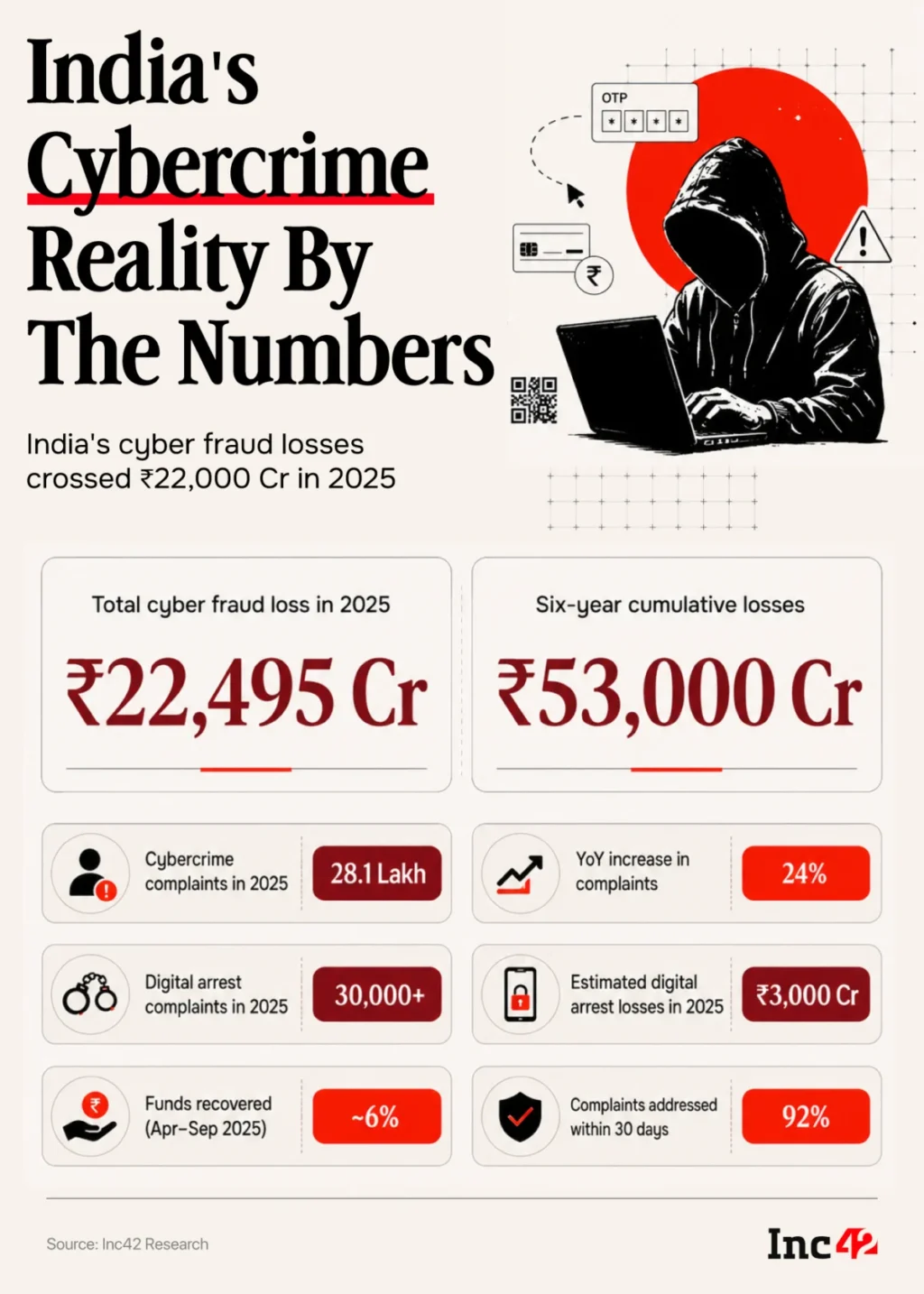
The government’s apprehension is not merely academic; it is driven by grim statistics. India’s cybercrime landscape is currently in a state of crisis. According to data from the Ministry of Home Affairs, Indians lost approximately ₹22,495 Cr (roughly $2.7 billion) to cyber-fraud in 2025 alone.

- Volume of Attacks: Complaint volumes have surged by 24% year-on-year, reaching 2.81 million reported cases.
- The "Digital Arrest" Menace: In 2025, over 30,000 cases of "digital arrests"—a sophisticated form of extortion where victims are kept on video calls and intimidated into paying ransoms—were recorded, resulting in losses of nearly ₹3,000 Cr.
- The Closed-Loop Fraud: Experts argue that WhatsApp is uniquely vulnerable because it combines communication with financial utility. As Ankush Tiwari, CEO of cybersecurity startup pi-labs, notes, the entire fraud loop—from establishing fake trust to sending a malicious link and initiating a UPI payment—now occurs within a single, encrypted environment.
Expert Analysis: Is Anonymity a Liability?
The debate among cybersecurity experts centers on whether the trade-off for privacy is worth the cost to public security.
The Traceability Gap
Kaushal Bheda, Director of GovTech at Pelorus Technologies, argues that while usernames protect individual privacy, they dismantle the accountability structure. "A phone number provides law enforcement with a verifiable, traceable link to an individual," Bheda explains. "If we move to a world where usernames mask these identifiers, we are effectively adding a layer of obfuscation that benefits the predator more than the user."
The Impersonation Threat
Malcolm Gomes, COO of Privy by IDfy, highlights the risk of "identity dilution." With businesses increasingly using WhatsApp for invoicing, recruitment, and customer support, the ability to create a username makes it trivial for criminals to impersonate legitimate entities. "Imagine receiving an invoice from a username that looks like a corporate account," Gomes says. "Without the underlying verified phone number, the ability of the average user to distinguish between a genuine business interaction and a phishing attempt drops significantly."
Broader Implications for the Tech Sector
The suspension of the username feature is a watershed moment for Meta in India. It signals that the government is no longer willing to allow "innovation" to supersede the mandate of national security, particularly in the context of digital infrastructure.
The "Infrastructure Layer" Problem
A decade ago, WhatsApp was a tool for personal messaging. Today, it is an essential piece of India’s economic infrastructure. It facilitates payments via UPI, connects small businesses to customers, and serves as a primary channel for professional communication. Because of this, the government treats WhatsApp with the same regulatory rigor as a bank or a telecommunications provider.
The Path Forward
For Meta, the challenge is clear: it must develop a mechanism that balances privacy with traceability. Potential solutions could involve:
- Hybrid Identification: Allowing usernames for public-facing profiles while maintaining a verified, encrypted link to a phone number that remains accessible to law enforcement upon valid legal request.
- Verification Tiers: Introducing "verified" status for businesses and high-profile users that explicitly displays their identity, while keeping personal accounts more private.
Conclusion
As the July 2026 deadline for Meta’s response passes, the company finds itself at a crossroads. The government’s move to pause the feature is not merely a bureaucratic hurdle; it is a declaration of intent. As India continues to digitize its economy, the pressure on messaging giants to balance global privacy features with local regulatory realities will only intensify.
If fraudsters are already exploiting phone numbers, as Meta argues, then the solution might not be to move away from them, but to make the existing system more resilient. Whether Meta can convince Indian regulators that their new username system is part of that solution—or part of the problem—remains the central question of the year. The "catch-22" of digital identity is far from solved, and for millions of Indian users, the outcome will define the future of their digital security.