India’s High-Speed Era: Inside the Transformative MAHSR Corridor
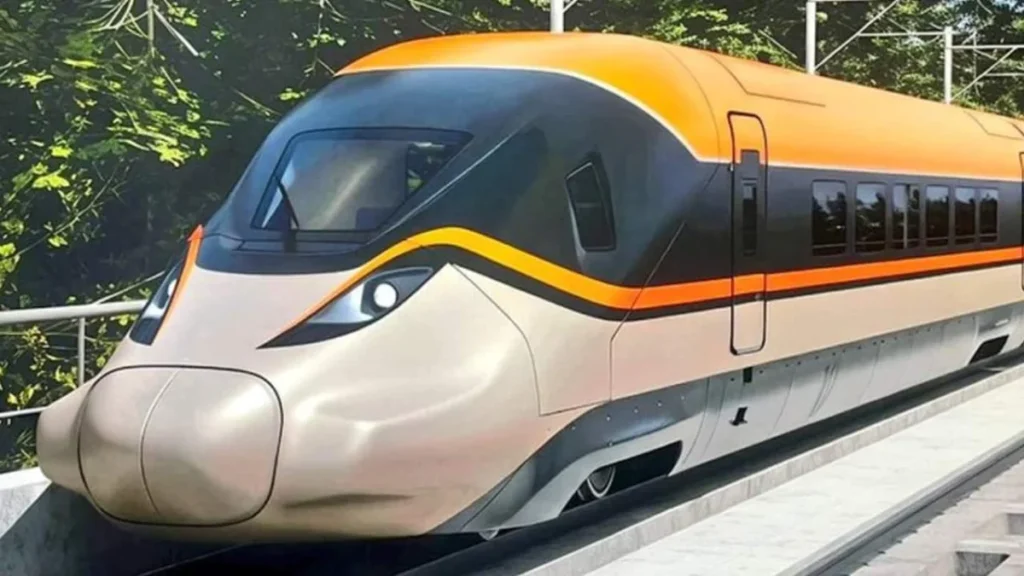
Mumbai, July 3, 2026 — As the sun sets on the traditional landscape of Indian rail travel, a new horizon emerges. The Mumbai-Ahmedabad High-Speed Rail (MAHSR) project, India’s ambitious maiden foray into bullet train technology, is nearing its final stages of completion. This corridor does not merely represent a track; it signifies a seismic shift in the country’s logistical and economic infrastructure, promising to bridge the commercial capital of Mumbai with the industrial hub of Ahmedabad in a record-breaking transit time of approximately one hour and 58 minutes.
As the nation looks toward a future of hyper-connectivity, the MAHSR project stands as a testament to engineering excellence, international collaboration, and a vision for a "New India."
The Vision: Defining the Speed of Progress
The MAHSR corridor is built upon a foundation of aggressive design parameters. While the current fastest trains in India operate at speeds significantly lower than global standards, the MAHSR is engineered for a design speed of 350 kmph. For daily operations, the train will maintain a consistent speed of 320 kmph.
To achieve these velocities, the project integrates the Japanese Shinkansen technology—a global gold standard for safety and efficiency. This system is supported by state-of-the-art rolling stock, cutting-edge signalling, and sophisticated train control systems designed to handle the complexities of high-speed maneuvers. This isn’t just a faster train; it is a synchronized dance of automated safety protocols, sensors, and structural integrity.
Chronology: A Decade of Determination
The journey to the MAHSR was neither short nor simple. It has been a decade-long saga of planning, negotiation, and Herculean construction efforts.
- 2015-2016: The formalization of the partnership between the Government of India and the Japan International Cooperation Agency (JICA). Feasibility studies confirmed the viability of a high-speed corridor connecting the two economic powerhouses.
- 2017: Prime Minister Narendra Modi and his then-Japanese counterpart Shinzo Abe laid the foundation stone in Ahmedabad, marking the formal commencement of the project.
- 2018-2020: The period of massive land acquisition and complex bureaucratic negotiations. Challenges in land procurement, particularly in the state of Maharashtra, necessitated extensive dialogue with stakeholders.
- 2021-2023: Construction intensified. The civil engineering phase saw the commencement of work on massive bridges, tunnels—including the ambitious undersea tunnel near Thane Creek—and the casting of thousands of girders.
- 2024-2025: Installation of the "J-Slab" track system and the arrival of the first E5 series Shinkansen-derived rolling stock. Rigorous testing of the traction systems and overhead equipment began.
- 2026 (Present): Final integration of the signalling and telecommunication networks. The project is currently in the phase of full-scale system integration and safety certification, with trial runs nearing completion.
Supporting Data: Engineering the Impossible
The scale of the MAHSR project can be described only as gargantuan. The corridor stretches across approximately 508 kilometers, traversing diverse terrain that requires bespoke engineering solutions.
Structural Highlights:
- The Undersea Tunnel: A 21-kilometer tunnel is a critical component of the corridor, with 7 kilometers running beneath the Thane Creek. This marks India’s first-ever undersea rail tunnel, a marvel of deep-sea engineering and seismic resilience.
- Viaducts and Bridges: Over 90% of the route is elevated on viaducts. This design choice was deliberate, aimed at minimizing land acquisition issues and preventing unauthorized crossings—a common cause of accidents on conventional Indian tracks.
- Rolling Stock: The trains are designed to be aerodynamic, featuring a "long nose" to mitigate the "tunnel boom" effect that occurs when high-speed trains enter tunnels. The interior is designed for premium comfort, noise insulation, and high-frequency travel.
Safety Metrics:
The MAHSR utilizes a "fail-safe" philosophy. If any component—from the tracks to the power supply—detects a deviation from the norm, the train is programmed to come to a controlled, immediate stop. Furthermore, the corridor is equipped with earthquake detection systems that will automatically cut power to the train in the event of seismic activity, ensuring passenger safety above all else.
Official Responses and Strategic Significance
Government officials and railway experts have frequently touted the MAHSR as the "template for future rails." According to a spokesperson for the National High-Speed Rail Corporation Limited (NHSRCL), the project is not merely about transportation; it is about "economic integration."
"By reducing the travel time to under two hours, we are effectively merging the labor markets and corporate ecosystems of Mumbai and Ahmedabad," the official stated. "This creates a ‘mega-region’ where professionals can live in one city and work in another, boosting the GDP of both states simultaneously."
International observers from Japan have praised the project’s adherence to global safety standards. "The transfer of technology is the most significant aspect of this collaboration," noted a lead engineer from the JICA advisory team. "India is not just buying a train; it is acquiring the capability to maintain and expand a high-speed rail network for the next century."
Economic and Social Implications
The implications of the MAHSR extend far beyond the tracks.
1. The Economic Corridor
The corridor passes through major industrial clusters, including Vapi, Vadodara, and Surat. By providing reliable, high-speed connectivity, the MAHSR will likely lead to the development of "Transit-Oriented Development" (TOD) zones around the stations. These hubs are expected to become new engines of commercial real estate growth, hospitality, and retail.
2. Environmental Impact
High-speed rail is significantly more carbon-efficient than short-haul aviation. By providing a viable alternative to flying between Mumbai and Ahmedabad, the MAHSR is expected to reduce the region’s carbon footprint. The electric propulsion system, coupled with the potential for sourcing power from renewable energy grids, aligns with India’s long-term net-zero climate goals.
3. Cultural and Social Mobility
The social impact of the MAHSR is profound. For the middle class and business travelers, it removes the friction of distance. It makes business meetings, medical visits, and family gatherings across state lines as simple as a local commute. It fosters a sense of national unity, where the geographical barriers that once separated these two major cities effectively vanish.
Future Outlook: Beyond Mumbai-Ahmedabad
The successful completion of the MAHSR serves as the pilot for the "Diamond Quadrilateral" project—a proposed high-speed rail network that would eventually connect the four major metros of India: Delhi, Mumbai, Kolkata, and Chennai.
The lessons learned from the challenges faced during the MAHSR construction—land acquisition, technical integration, and managing local environmental impacts—are currently being codified into a national framework. This will streamline the development of subsequent corridors, potentially reducing the lead time for future projects by years.
As we look toward 2030 and beyond, the MAHSR is not just a destination; it is the starting point. It proves that India is capable of executing complex, multi-billion-dollar infrastructure projects that stand on par with those of the most advanced economies in the world.
The train is ready, the tracks are set, and the nation is poised to board. The era of the Indian Bullet Train has officially arrived, promising a future that is faster, safer, and infinitely more connected.