Deepening the Strategic Shield: India and U.S. Align on Counter-Terrorism and Global Security
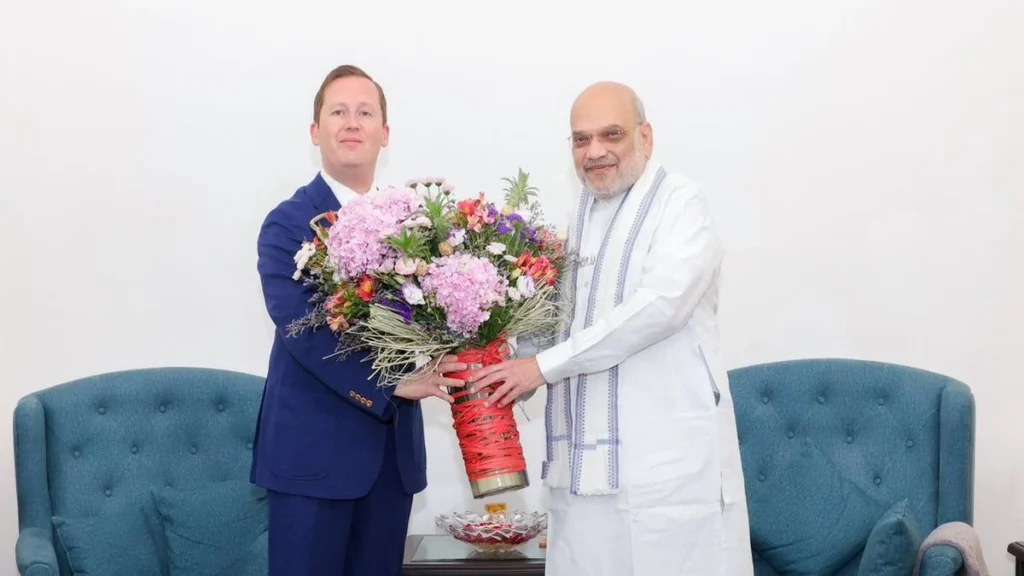
New Delhi, June 18, 2026 – In a move signaling the deepening geopolitical synergy between New Delhi and Washington, Union Home Minister Amit Shah hosted U.S. Ambassador to India, Sergio Gor, for high-level bilateral discussions on Thursday. The meeting, which took place in the national capital, served as a critical platform to consolidate the "Comprehensive Global Strategic Partnership" that defines the modern era of India-U.S. relations.
As both nations navigate a complex global security landscape—marked by emerging technological threats and persistent geopolitical volatility—the dialogue underscored a shared commitment to intelligence sharing, border integrity, and the dismantling of transnational criminal networks.
The Core Mandate: Strengthening the Security Architecture
The primary focus of the meeting between Minister Shah and Ambassador Gor was the operationalization of collaborative security frameworks. In an era where terrorism and narcotics trafficking have become increasingly globalized, the two leaders identified these as "priority areas" for bilateral intervention.
Minister Shah, taking to the social media platform X (formerly Twitter) following the session, emphasized that the conversation was wide-ranging and substantive. “Had a detailed discussion on further strengthening cooperation between India and the U.S. in the area of security, particularly in counter-terrorism and counter-narcotics,” Shah stated. He further reiterated the Modi administration’s resolve, noting that the government is “firmly committed to advancing the India-U.S. Comprehensive Global Strategic Partnership and ensuring that the people of both nations benefit from the bilateral relationship.”
Ambassador Gor, reflecting on the meeting, provided a nuanced perspective on the scope of the collaboration. He highlighted that the discussions aimed to “shield our people from narcotics and illicit drugs, secure our borders, and jointly bring criminals to justice in both nations.” This language signals a shift from purely diplomatic alignment to tactical cooperation, suggesting that law enforcement agencies from both countries may soon see increased operational integration.
Chronology of Escalating Engagement (2026)
The meeting between Shah and Gor is the latest in a rapid succession of diplomatic interactions that have defined the first half of 2026. The current administration in Washington and the Indian government have sought to accelerate their integration, moving beyond traditional trade talks into the sensitive domains of national security and technology transfer.
- June 2026 (Early): The G7 Summit provided the backdrop for a critical meeting between Prime Minister Narendra Modi and U.S. President Donald Trump. During this summit, the two leaders reaffirmed their commitment to the "Comprehensive Global Strategic Partnership," specifically discussing the safety of seafarers and broader maritime security in the Indo-Pacific.
- June 18, 2026: Union Home Minister Amit Shah hosts Ambassador Sergio Gor in New Delhi. The meeting marks a pivot toward domestic security and the harmonization of anti-narcotic policies.
- Late June 2026 (Upcoming): U.S. Trade Representative Jamieson Greer is scheduled to arrive in New Delhi. This visit is expected to focus on resolving long-standing trade grievances, market access issues, and tariff structures, aiming to complement the security progress with economic stability.
The Strategic Implications of the Security Pact
The "Comprehensive Global Strategic Partnership" is no longer just a diplomatic buzzword; it is now a functional reality that spans defense, technology, and internal security. The emphasis on counter-terrorism is particularly significant, as both India and the U.S. face evolving threats from decentralized extremist networks.

Counter-Terrorism and Intelligence Sharing
For India, the U.S. offers unparalleled technological prowess in signal intelligence and satellite surveillance. Conversely, India provides the U.S. with deep, localized intelligence regarding regional extremist movements in South Asia. By syncing their efforts, both nations aim to create a "zero-tolerance" environment for non-state actors that exploit jurisdictional gaps.
The War on Drugs: A Shared Burden
Ambassador Gor’s specific mention of "shielding our people from narcotics" points to a growing anxiety over the opioid epidemic and the influx of synthetic drugs like fentanyl. India, as a major pharmaceutical hub, and the U.S., as a primary consumer market, are uniquely positioned to work together on supply chain monitoring and the identification of illicit drug precursors. This cooperation is expected to involve increased participation from agencies like the Narcotics Control Bureau (NCB) of India and the U.S. Drug Enforcement Administration (DEA).
Supporting Data: The Economic and Security Context
The strength of the current relationship is backed by robust data. Trade between the U.S. and India has been on a consistent upward trajectory, with the U.S. remaining one of India’s largest trading partners.
However, the security dimension is where the growth is most qualitative. Over the last decade, India has pivoted away from its traditional reliance on Russian defense hardware, opting instead for a diverse portfolio that includes significant U.S. technology transfers. The 2026 focus on security reflects this shift, as the two nations integrate their digital infrastructure and communication protocols.
The upcoming visit of U.S. Trade Representative Jamieson Greer is expected to address the economic friction points that occasionally hinder this strategic alliance. Analysts suggest that for the security pact to be fully effective, it must be supported by a stable economic environment, free from the volatility of trade disputes regarding agriculture, data localization, and intellectual property.
Official Responses and Diplomatic Sentiment
The meeting was received with optimism in diplomatic circles in both New Delhi and Washington. While opposition voices in India often scrutinize the depth of the partnership, the current administration views the U.S. as an indispensable partner in maintaining the "rules-based international order" in the Indo-Pacific.
Ambassador Gor’s public statements reflect a high degree of confidence in the relationship. His direct, action-oriented language regarding the "joint pursuit of criminals" suggests that the U.S. is prepared to treat India as a primary partner in the fight against transnational crime.

From the Indian side, Minister Shah’s emphasis on the "leadership of PM Modi" highlights the top-down nature of this foreign policy, where the Prime Minister’s office remains the primary architect of the U.S.-India outreach. The focus on domestic security outcomes—specifically the safety of Indian citizens—is a strategic move to align the international partnership with domestic political priorities.
Future Outlook: Challenges and Opportunities
As the partnership matures, several challenges remain. The issue of human rights, the regulation of digital platforms, and differing perspectives on regional conflicts in Eastern Europe and the Middle East continue to be points of quiet negotiation.
However, the consensus among observers is that the foundational security requirements—securing borders and combating terrorism—have become so critical that they now outweigh the peripheral disagreements. As India prepares to host international summits and continues to assert its role as a regional leader, the alliance with the United States acts as a vital stabilizer.
The Path Forward
The coming months will be defined by the "Greer Visit" and the subsequent follow-up on the security agreements discussed by Shah and Gor. If these initiatives translate into tangible improvements—such as a decrease in illicit drug flows or improved intelligence-sharing protocols—the India-U.S. partnership will likely solidify into a formal, long-term alliance that dictates the security architecture of the 21st century.
The meeting on June 18 was not merely a diplomatic courtesy; it was a clear signal of intent. Both nations have acknowledged that in an increasingly dangerous world, their security is inextricably linked. As Minister Shah noted, the commitment is to ensure that the citizens of both countries are the ultimate beneficiaries of this alignment. Whether through the suppression of drug cartels or the neutralization of terror threats, the message is clear: India and the U.S. are standing together to face the challenges of the future.