Fortifying the Software Factory: AWS Unveils Major Advancements for the AWS Security Agent
In an era where the velocity of software development is matched only by the sophistication of emerging cyber threats, AWS has taken a definitive step toward closing the gap between rapid deployment and robust security. Following the initial preview at re:Invent 2025, the AWS Security Agent—a cornerstone of the broader AWS Continuum initiative—has evolved into a comprehensive, agentic platform designed to embed security intelligence directly into the development lifecycle.
Today’s announcement marks a significant expansion of the agent’s capabilities, introducing deep repository integrations, automated threat modeling, and seamless IDE-based remediation. By shifting security from a reactive "gatekeeper" function to a proactive "development partner," AWS is aiming to eliminate the friction that often forces developers to choose between speed and safety.
The Chronology of an Evolution: From Concept to Ecosystem
The journey of the AWS Security Agent reflects a strategic shift in how cloud providers approach DevSecOps.

- re:Invent 2025: AWS first introduced the Security Agent as a frontier agent capable of proactive security posture management. The focus was on "security by design," allowing developers to perform customized, on-demand penetration testing that verified vulnerabilities through real-world exploitability.
- Q1 2026 (March): AWS achieved a major milestone by moving on-demand penetration testing into General Availability (GA). This allowed teams to stress-test their applications in simulated environments before they hit production, reducing the reliance on third-party manual audits.
- Q2 2026 (May): The platform expanded into code analysis, launching the preview of "Full Repository Code Review." This moved beyond simple pattern-matching, utilizing context-aware reasoning to scan entire codebases for deep-seated security flaws.
- June 2026 (Current): AWS has now integrated these features into a unified, IDE-native experience, adding support for diverse version control systems (GitLab, Bitbucket) and sophisticated AI-driven remediation via the new "Kiro Power" and Claude Code plugins.
Technical Deep-Dive: What’s New?
The latest update is not merely a feature release; it is a fundamental shift in how security findings are ingested and addressed by engineering teams.
1. Expanded Repository Support and Contextual Analysis
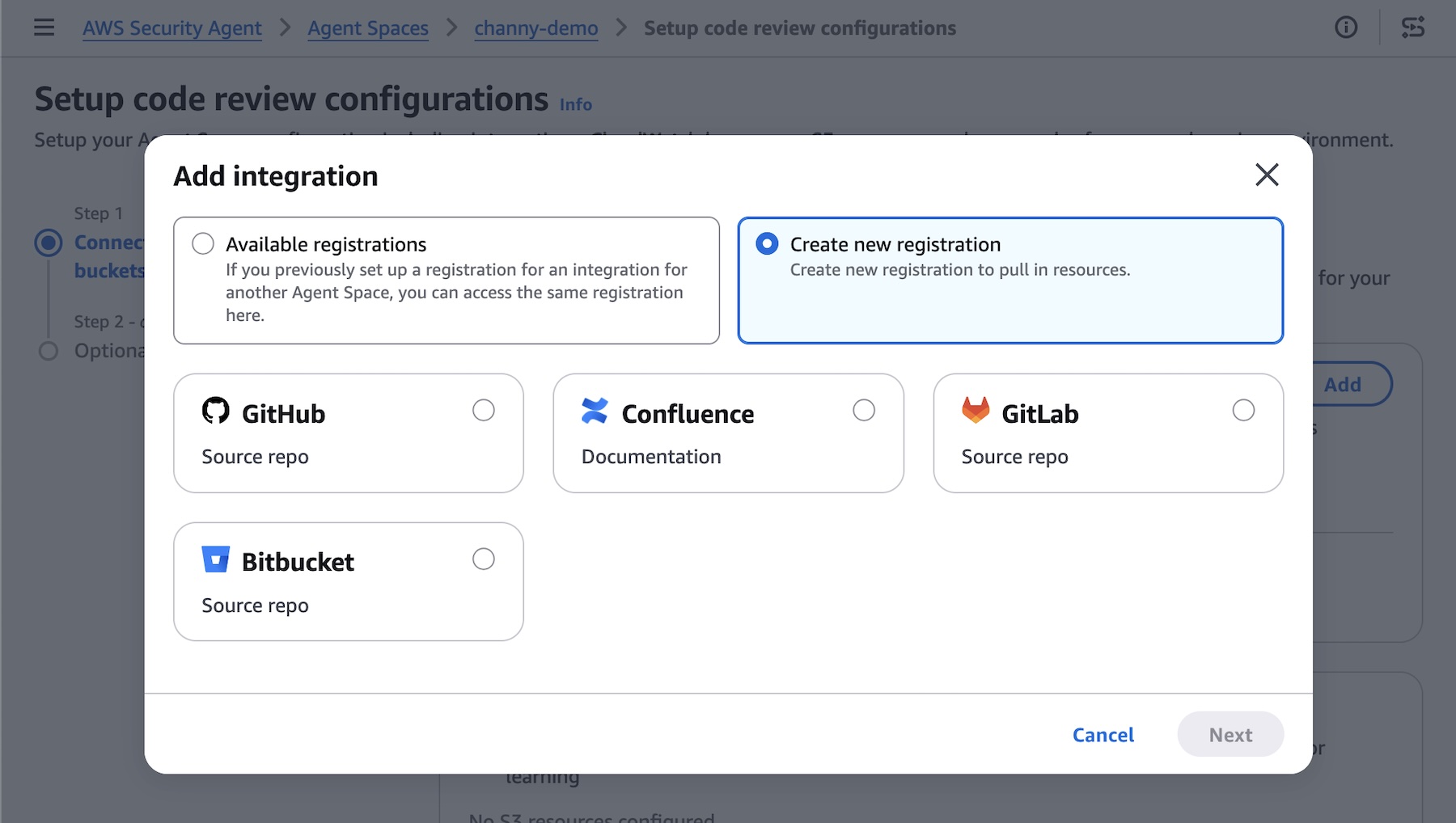
Previously limited to GitHub, the Security Agent now supports GitLab and Bitbucket, including both SaaS and self-hosted instances. This ensures that regardless of an organization’s infrastructure choices, they can leverage the Agent’s reasoning-based analysis.
Furthermore, the integration with Confluence allows the agent to ingest internal documentation. This is a game-changer: the agent no longer views code in isolation. By referencing your internal "source of truth" documentation, the agent can understand the intent behind the architecture, allowing it to distinguish between a legitimate security risk and an intentionally permissive configuration.

2. Automated Threat Modeling
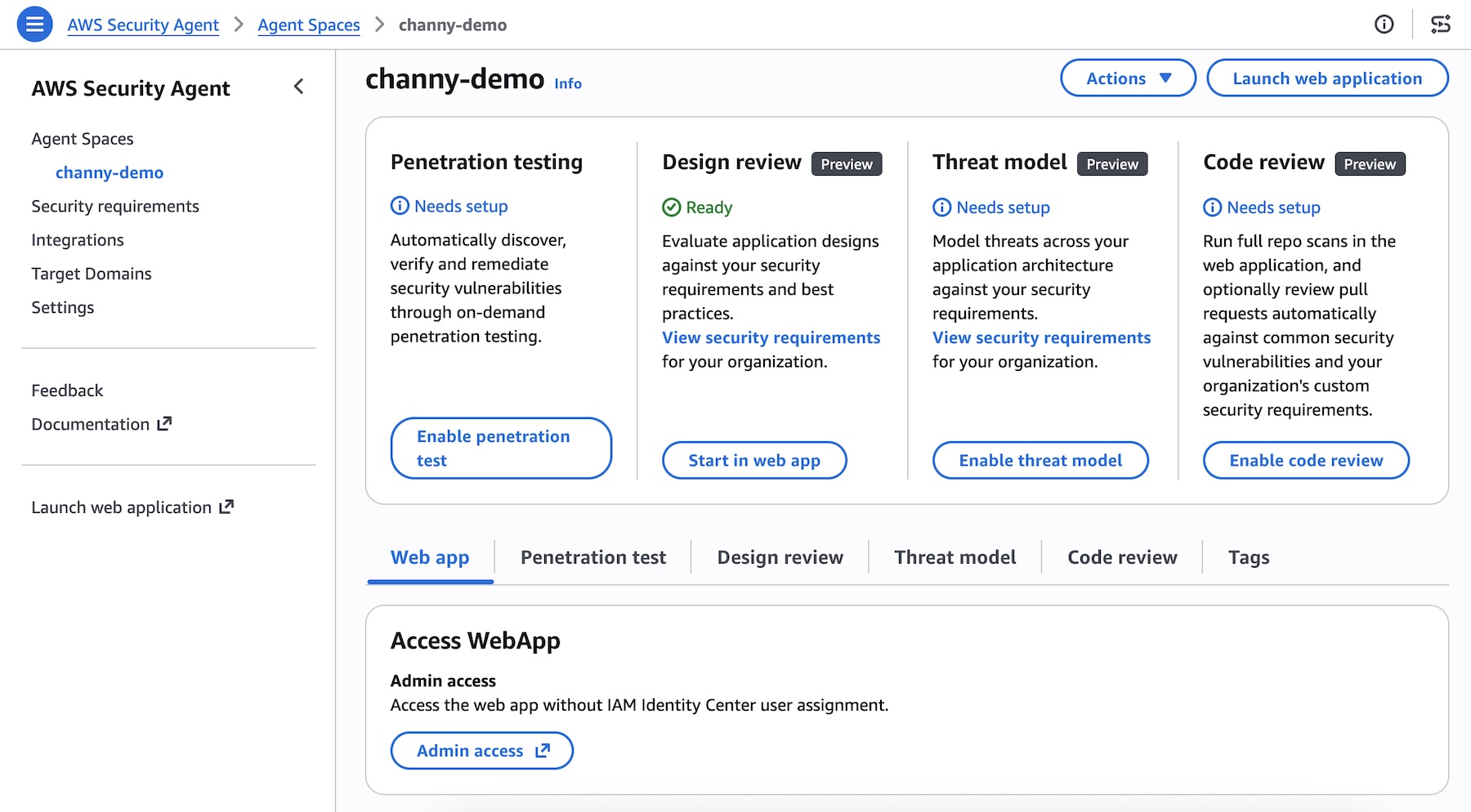
Threat modeling is historically the most neglected phase of the Software Development Life Cycle (SDLC) because it is time-intensive and requires specialized security expertise. AWS Security Agent automates this by:
- Mapping data flows and trust boundaries based on your design documentation.
- Identifying potential threat actors and specific attack vectors.
- Prioritizing risks, ensuring that developers focus their energy on the most critical vulnerabilities first.
3. The "Kiro Power" and IDE Integration
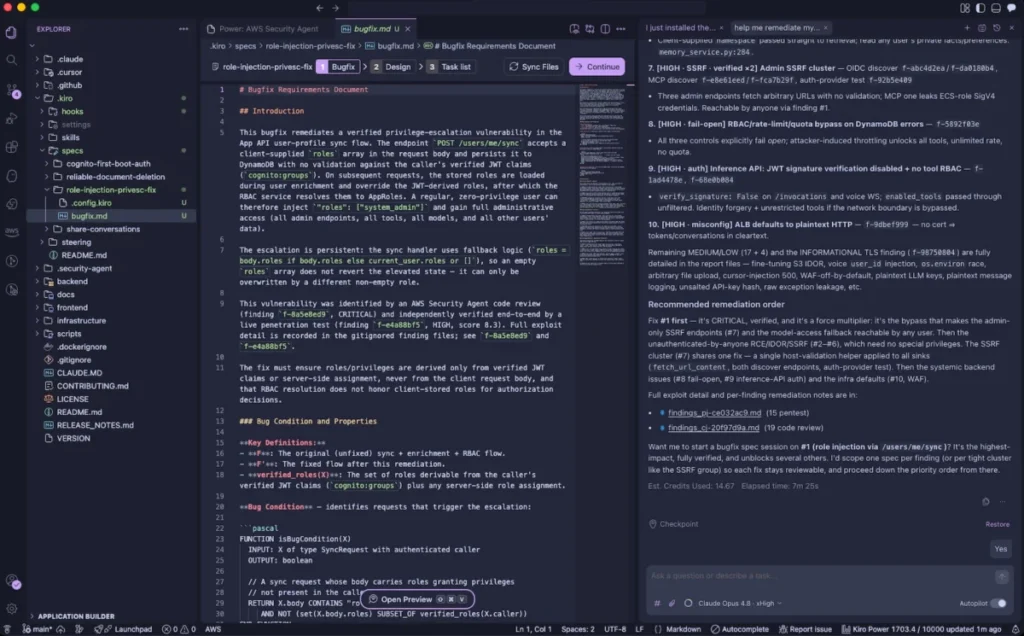
The introduction of Kiro Power—an AI-driven interface for the Security Agent—brings the security dashboard directly into the developer’s workflow. By utilizing the Model Context Protocol (MCP), developers can trigger scans, review threats, and even initiate remediation without ever leaving their IDE.
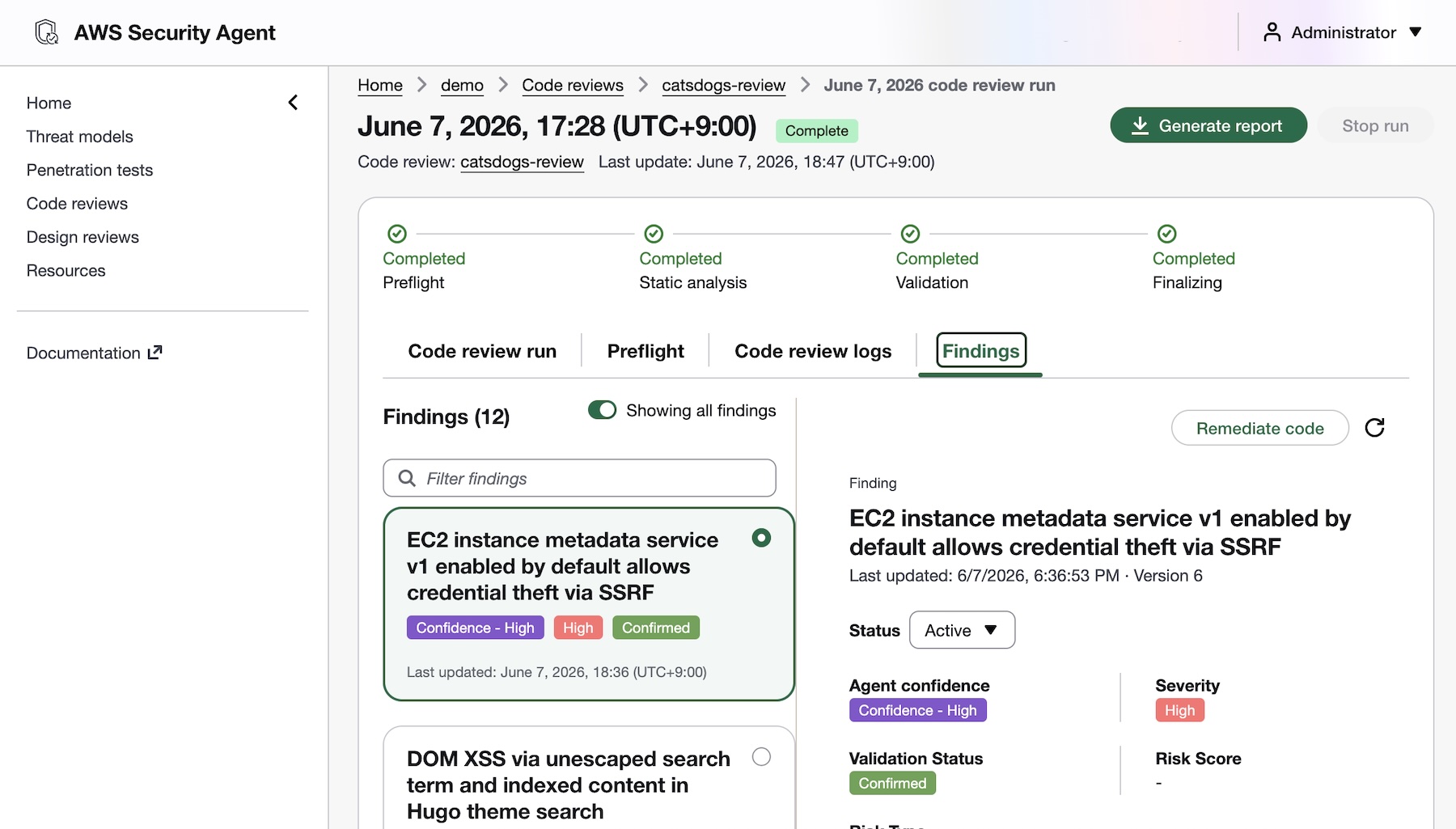
When a vulnerability is detected, the agent provides "fix commits." A developer can literally chat with their code, asking, "Help me remediate my findings." The agent then downloads the findings, prioritizes the critical ones, and offers to start a bugfix session. This is the definition of "shift-left" security: fixing a bug before the pull request is even merged.
Supporting Data: The Business Case for Agentic Security
The motivation behind these updates is driven by the increasing cost of "security debt." According to industry benchmarks, identifying a vulnerability during the design or coding phase is up to 100 times cheaper than identifying it during a production incident.
AWS Security Agent addresses three primary bottlenecks:
- Context Switching: By surfacing results inline in the IDE, the platform eliminates the need for developers to toggle between Jira, Snyk, and GitHub.
- False Positive Fatigue: Because the Agent validates findings in simulated environments, it provides "proof of exploitability." If the Agent reports a bug, it is because it successfully simulated an exploit, drastically reducing the time security teams spend triaging noise.
- Audit Readiness: With managed compliance packs for NIST CSF, PCI DSS, and the AWS Well-Architected Framework, the platform continuously validates that code remains compliant with organizational standards. Every finding is mapped back to the relevant compliance requirement, effectively automating the evidence-gathering process for auditors.
Official Responses and Strategic Implications
The industry response to these developments underscores a broader trend: the "agentification" of the enterprise stack.
"We are moving away from tools that simply flag errors and toward systems that understand the architecture of an entire application," noted Channy, an AWS evangelist, in the official announcement. "By embedding security expertise directly into the developer’s workflow via the Kiro power and Claude Code plugin, we are empowering teams to move faster while being inherently more secure."
Implications for the DevSecOps Market
- The Death of the "Security Bottleneck": Security teams have long been a bottleneck in the CI/CD pipeline. By providing developers with the tools to remediate issues themselves, AWS is decentralizing security responsibility.
- AI-Native Security: This release cements the role of LLMs in security. Traditional static analysis (SAST) tools rely on brittle pattern matching. The AWS Security Agent’s reliance on deep reasoning models allows it to understand complex, multi-step exploits that static tools would miss.
- Unified Visibility: By covering the entire lifecycle—from design review to deployment-time penetration testing—AWS is creating a "single pane of glass" that allows CSOs (Chief Security Officers) to see the security posture of an application from the moment it is a whiteboard sketch to the moment it is running in a VPC.
Conclusion: Preparing for Deployment
The AWS Security Agent is currently available in all commercial regions where the service is deployed. With a 2-month free trial offer currently in effect, AWS is clearly pushing for rapid adoption among enterprise clients.
For teams looking to integrate these tools, the path forward is clear: start by connecting your primary repositories and enabling the "Design Review" feature. As the Agent builds context, the power of the "Kiro" integration will become apparent, turning the security scan from a dreaded task into a seamless part of the daily commit cycle.
As organizations grapple with the dual pressures of digital transformation and an increasingly hostile threat landscape, tools that can provide "security at the speed of code" are no longer a luxury—they are a prerequisite for survival in the cloud-native economy.
For more information on pricing, regional availability, or to read the technical documentation, visit the official AWS Security Agent product page. Developers are encouraged to share their experiences and feedback via AWS re:Post.