AI-Powered Ad Creative: A Strategic Framework for Scaling High-Performance Marketing

In the modern digital advertising landscape, the pressure to produce a relentless volume of high-quality creative has reached a fever pitch. With Meta’s "Andromeda" update fundamentally altering how the platform’s algorithm consumes ad creative—effectively deprecating the strategy of flooding the system with hundreds of minor variations—marketers are forced to pivot. The new mandate is clear: deliver genuinely distinct, high-impact creative at a scale that once required massive agency teams and six-figure production budgets.
For small to mid-sized brands, this shift initially appeared to be an existential threat. However, as Fraser Cottrell, CEO of the direct-to-consumer creative agency Fraggell, argues, the convergence of generative AI and creative strategy offers a lifeline. By adopting a systematic, three-step approach to AI-assisted production, brands can now democratize high-end creative, producing studio-quality assets for pennies on the dollar.
The New Reality of Ad Creative
Two persistent myths continue to hinder the adoption of AI in marketing departments. The first is the belief that utilizing AI is a "lazy" substitute for human ingenuity. The reality, according to Cottrell, is quite the opposite: commanding an LLM to produce specific, brand-aligned creative requires a rigorous, iterative process of prompting and refinement.
The second myth concerns quality. While early generative models were often criticized for erratic outputs, contemporary models now produce static imagery that is virtually indistinguishable from professional photography. While video generation remains an area of active development, the barrier to entry for high-converting static ads has effectively evaporated. The competitive advantage no longer belongs to those with the largest budgets, but to those with the deepest brand context.
Phase 1: Deep Research and Knowledge Architecture
Before a single pixel is generated, a brand must establish a "knowledge base." Without this foundation, AI tools will default to generic, low-converting outputs that lack the psychological triggers necessary to drive consumer action.
The Deep Research Methodology
Cottrell advocates for a process of "Deep Research," utilizing LLMs like Google’s Gemini to synthesize vast amounts of internet data. Unlike a standard search, a deep research prompt instructs the AI to crawl forums, social media discussions, and review platforms to build an external profile of the brand.

The goal is to answer four critical questions:
- Who is the ideal buyer, and what is their primary motivation?
- Why do potential customers abandon the brand at the point of sale?
- What is the prevailing sentiment regarding the product on platforms like Reddit?
- Where is the customer base geographically and demographically concentrated?
To automate this, marketers can use voice-to-text tools like Whisper Flow to dictate requests to Claude, asking it to generate a sophisticated prompt for Gemini. Once the report is generated—often a multi-page document—it must be verified. A common technique involves feeding the research back into an AI and asking it to quiz the user on the accuracy of the findings. This iterative "fact-checking" loop ensures the foundation is built on truth rather than hallucination.
Integrating Proprietary Insights
The final stage of this phase involves injecting "tribal knowledge"—proprietary data that does not exist on the public web. This includes internal sales data, specific nuances of how the product functions, and anecdotal insights gathered from customer service calls. By blending AI-generated external research with internal institutional knowledge, the brand creates a comprehensive "source of truth."
Phase 2: Training a Dedicated AI Context
Once the research is validated, it should be housed in a "Project" environment—a feature currently available in platforms like Claude. A Project acts as a persistent memory bank that remains segregated from other conversations.
Essential Components of the Knowledge Base
To achieve professional-grade results, the Project should be seeded with the following:
- The Verified Deep Research Document: The foundation of the brand’s external identity.
- Voice-of-Customer Data: Exported reviews and testimonials. This is the most potent source of "ad copy" because it utilizes the exact language customers use to describe their problems and solutions.
- The Brand Bible: A document defining the brand’s voice, values, and the specific aesthetic criteria for what constitutes a "good" ad.
- Performance Metadata: Data from ad managers, paired with visual context.
For the latter, tools like Poppy can be utilized to analyze top-performing video ads, breaking down the pacing, hooks, and visual structure. By inputting these learnings into the Claude Project, the AI gains a benchmark for what has historically moved the needle for the brand.

Phase 3: Execution and Iterative Production
With a trained environment, the transition from strategy to execution becomes a repeatable, high-speed process.
The Hybrid Approach to Image Ads
Cottrell recommends a "hybrid" workflow: generate the visual asset via AI, but retain control over the copy. This allows for rapid A/B testing—swapping out headlines while keeping the visual constant—without the need to regenerate the entire image.
By prompting the AI within the Project, marketers can generate headlines that reflect the brand’s specific tone and customer-validated pain points. The AI learns over time; by providing feedback on which headlines resonate and which miss the mark, the system progressively tunes its output to the brand’s specific needs.
Image Generation and Visual Prompts
When it comes to imagery, specificity is paramount. Rather than generic prompts, marketers should describe the target persona, the desired emotional state, and the product context. If a brand has an existing aesthetic, dragging a product photo into the AI allows it to understand the physical constraints of the product, resulting in more realistic compositions.
For current production, tools like Nano Banana 2 Pro (via Gemini) provide high-fidelity outputs. By leveraging APIs through third-party platforms like Arcads, marketers can generate multiple variations simultaneously, facilitating the rapid testing required by modern ad algorithms.
Scripting and Ideation
While video generation is still maturing, AI is a powerful force multiplier for scriptwriting. By describing a scenario (e.g., "a UGC creator demonstrating a marathon running shoe"), the AI can generate a timestamped, detailed script in seconds.

It is important to note the human element: the AI-generated script serves as a "first draft" that provides 30% to 50% of the heavy lifting. A skilled creative human is still required to inject the final, subtle polish of humor, empathy, or conversational tone that AI currently struggles to master.
Implications for the Industry
The rise of AI-driven creative marks a definitive shift in the digital marketing ecosystem. We are moving away from the era of "brute force" creative—where brands simply outspent competitors on production—toward an era of "intelligent creative."
Competitive Advantage
The primary implication of this shift is the leveling of the playing field. Small brands with limited budgets can now achieve the creative volume and relevance that was once the sole domain of enterprise-level agencies. The ability to pivot creative strategy based on real-time feedback from the AI, combined with the ability to synthesize customer data, allows for a more responsive and efficient marketing machine.
The Future of the Creative Team
This technology does not replace the creative professional; it redefines them. The role of the designer and copywriter is evolving into that of a "Creative Strategist" or "AI Orchestrator." Success will be determined by the marketer’s ability to build sophisticated knowledge bases, ask the right questions, and curate the best outputs from a range of high-performance tools.
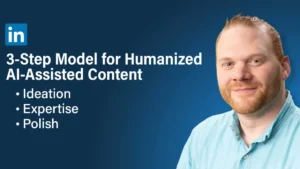
In summary, the brands that succeed in the coming years will be those that treat AI not as a shortcut, but as a sophisticated toolset that requires rigorous training, human-led verification, and a deep understanding of the customer. By embracing this three-step methodology—Research, Contextual Training, and Iterative Production—marketers can navigate the complexities of modern advertising algorithms and thrive in an increasingly automated environment.