AWS Summit NYC: Scaling AI-Native Development and the Future of FinOps
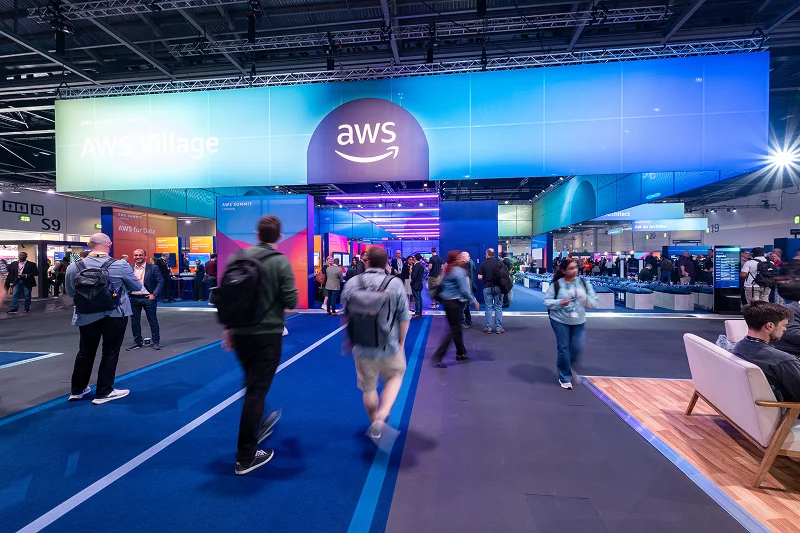
The cloud computing landscape shifted significantly this week as the Javits Center in New York City played host to the annual AWS Summit. The event, which brings together a global community of engineers, cloud architects, and business leaders, served as the launchpad for a series of high-impact announcements centered on agentic AI, developer productivity, and intelligent cost management.
While the event floor was bustling with live demonstrations and technical deep dives, the broader AWS ecosystem was focused on a central theme: the transition from "AI experimentation" to "AI-native production." From massive gains in development velocity to the introduction of autonomous financial operations, the week’s news underscores a pivot toward automated, agent-driven infrastructure.
Main Facts: A Shift Toward Agentic AI
The primary narrative emerging from this year’s Summit centers on the maturation of AI-native development workflows. In a landmark blog post published alongside the event, Dr. Swami Sivasubramanian, VP of Agentic AI at AWS, provided a detailed retrospective on how internal Amazon engineering teams have fundamentally transformed their development lifecycle.
The data presented by Amazon is staggering. By integrating AI agents into the development pipeline, internal teams have achieved productivity gains that were previously considered impossible. One standout project involved a six-engineer team that successfully rebuilt the Amazon Bedrock inference engine in just 76 days—a task that, under traditional development methodologies, was scoped for a team of 30 developers over a period of 12 to 18 months.
Chronology of the Summit and Key Announcements
The summit officially kicked off with a focus on the evolving role of the software engineer in an AI-augmented world.
The Evolution of "Frontier Teams"
Early in the week, the discourse centered on the definition of "frontier teams." These are units that have moved beyond merely using AI as a coding assistant to integrating it into the core logic of their software development lifecycle (SDLC). The findings, derived from hundreds of experiments across Amazon’s internal engineering teams, suggest that the bottleneck for software development is no longer human cognitive capacity, but rather the ability to structure workflows for AI agency.
The Launch of AWS FinOps Agent
Mid-week, AWS announced the preview release of the AWS FinOps Agent. Designed to address the growing complexity of cloud cost management, this tool acts as a specialized agent for engineering and financial operations teams. It represents a significant step forward in autonomous cloud governance, moving from passive cost reporting to active, intelligent cost remediation.
Supporting Data: The Productivity Revolution
The metrics shared during the AWS Summit reveal the efficacy of shifting toward AI-native development. According to Amazon’s internal benchmarks, the median productivity gain across structured pilots with Amazon Stores teams reached 4.5x in normalized deployment velocity. In high-performance scenarios, some teams reported gains exceeding 10x.
Key performance indicators (KPIs) shared by AWS include:
- Feature Velocity: The "Perfect Order Experience" project reduced its feature cycle from two weeks to a single afternoon.
- Documentation Efficiency: The WW Grocery team reduced the time required for design document creation from five days to just a few hours.
- Resource Optimization: The FinOps Agent allows for the automation of Jira ticket creation based on cost-saving recommendations from the AWS Cost Optimization Hub and AWS Compute Optimizer.
These data points serve as a blueprint for organizations struggling to quantify the ROI of their AI investments. By focusing on workflow structure rather than just code generation, these teams have effectively bypassed traditional scaling constraints.
Official Guidance: Five Practices for "Frontier" Success
To help the broader AWS community replicate these results, Dr. Sivasubramanian outlined five core practices that distinguish "frontier teams" from traditional development units.
- Invest in Agent Context: Before writing a single line of production code, teams must invest in "steering files," coding standards, and structured repositories. AI agents perform best when provided with a clear, well-documented set of constraints and expectations.
- Embrace the Initial Slowdown: The transition to AI-native workflows is not instantaneous. Teams should expect an initial dip in velocity as they restructure their workflows and refine their agentic processes. Pushing through this period is critical.
- Maintain a Steady Backlog: To maximize agentic efficiency, teams must keep a well-scoped backlog of tasks. This allows agents to operate in parallel without the need for constant human supervision.
- Make Intent Explicit: AI-driven code generation is only as good as the requirements provided. Frontier teams use structured specifications to define intent before generation begins, minimizing "hallucination" and errors.
- Shift Testing Left: By enabling agents to self-correct during the coding phase, teams can catch and resolve issues before code ever reaches the deployment pipeline.
Implications for the Industry
The developments showcased at the AWS Summit signal a broader industry trend: the death of the "manual" cloud lifecycle.
The Autonomous Enterprise
The introduction of the AWS FinOps Agent is particularly indicative of a shift toward the "Autonomous Enterprise." By automating the identification, investigation, and ticketing of cost anomalies, AWS is reducing the cognitive load on DevOps engineers. Instead of manually investigating why a bill spiked, engineers can now rely on agentic workflows to perform root-cause analysis and initiate remediation.
The Human-Agent Collaboration
A crucial takeaway from this week’s announcements is that "commit velocity" is only the beginning. As noted in the closing remarks of the Summit’s technical sessions, the next frontier for AWS will involve the automation of release management, security operations, and End-of-Life (EOL) upgrades. The role of the human engineer is evolving from "builder" to "orchestrator," where the primary responsibility lies in defining the guardrails and objectives for agents rather than writing every line of boilerplate code.

Security and Compliance Concerns
While the productivity gains are immense, the shift toward agentic AI introduces new security considerations. AWS emphasized that the next phase of their research will focus on the security implications of these workflows. As agents take on more authority—such as opening Jira tickets, managing infrastructure costs, and modifying code—the need for robust, audit-ready logging and secure authentication becomes paramount.
Conclusion: A New Era of Engineering
The AWS Summit in New York City has successfully framed the next phase of cloud evolution. By providing both the data-backed evidence of productivity gains and the practical tools to implement agentic workflows, AWS is positioning itself as the leader in the transition to AI-native development.
For organizations looking to compete in this new environment, the message is clear: the advantage will go to those who treat AI not as a tool for "shortcuts," but as a fundamental partner in the development lifecycle. As the industry moves forward, the focus will likely shift from the raw power of Large Language Models (LLMs) to the architectural sophistication of the agentic systems that harness them.
As the attendees return home from the Javits Center, the challenge for the global builder community is to translate these five "frontier practices" into their own specific domains. Whether it is in retail, finance, or logistics, the path to a 10x development velocity is open, provided teams are willing to rethink their workflows from the ground up.
For those who were unable to attend the keynote in person, the livestream featuring Dr. Swami Sivasubramanian and Chet Kapoor remains available through the AWS Cloud portal. It serves as a vital resource for developers looking to understand the technical nuances of the newly launched developer tools and AI infrastructure.