The Global Backbone of E-Commerce: How Spring GDS is Redefining Cross-Border Logistics
In the modern digital economy, the adage "the world is your marketplace" is no longer just a aspirational goal—it is the baseline expectation for every e-commerce entrepreneur. However, the bridge between a digital storefront and a satisfied customer on the other side of the globe is built entirely on the strength of logistics. Without the complex, invisible machinery of international shipping, the global e-commerce boom would have stalled in its infancy. As retailers look to scale, the search for a partner capable of navigating customs, local regulations, and last-mile delivery becomes the single most critical strategic decision.
Enter Spring GDS, an international logistics powerhouse that has emerged as a cornerstone for businesses aiming to transcend borders. By blending the institutional stability of a legacy postal giant with the agile, tech-driven requirements of the modern online retailer, Spring GDS provides a comprehensive ecosystem for global expansion.
The Genesis and Evolution: A Chronology of Reliability
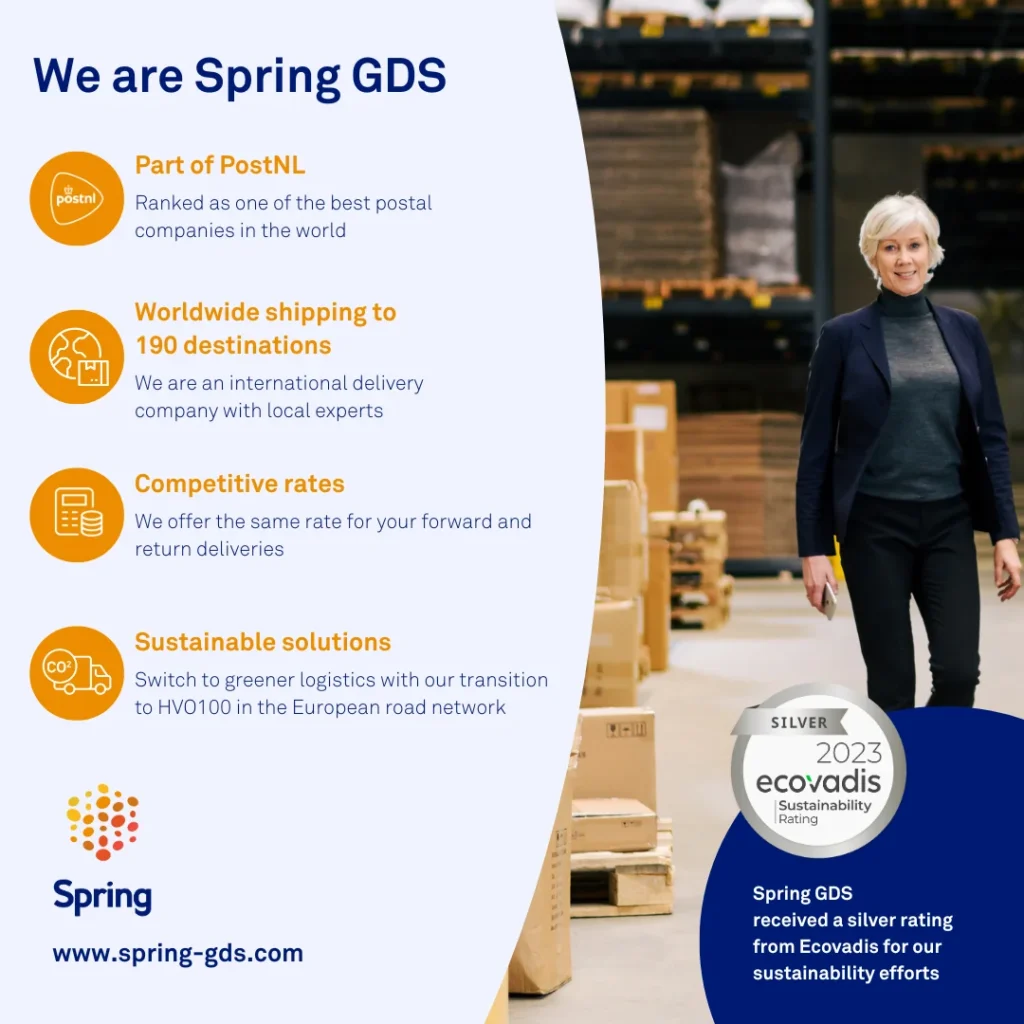
To understand the efficacy of Spring GDS, one must first look at its lineage. Spring GDS is the international subsidiary of PostNL, the Dutch postal and parcel corporation that stands as a pillar of the European logistics infrastructure.
- The Foundation: As part of the PostNL Group, which is listed on the Euronext Amsterdam stock exchange, Spring GDS inherits a legacy of reliability and operational excellence that spans decades.
- Global Recognition: The Universal Postal Union (UPU)—the United Nations specialized agency for postal services—consistently ranks PostNL among the top ten postal companies worldwide. This ranking is not based merely on volume, but on the ability to maintain service standards across diverse international jurisdictions.
- Strategic Expansion: Over the last decade, Spring GDS has systematically expanded its footprint, moving beyond its European roots to establish 18 dedicated operation centers across three continents. This geographic diversification allows them to function as a "glocal" player: maintaining a global vision while executing with local precision.
- Sustainability Milestones: In recent years, the company has pivoted aggressively toward green logistics, culminating in a 2023 Silver Medal from EcoVadis. This assessment confirms that their growth is not just rapid, but responsible.
Supporting Data: Infrastructure and Reach
The true measure of a logistics provider is its capacity to turn "international shipping" from a complex headache into a seamless utility. Spring GDS manages this through an expansive network and a sophisticated IT architecture.
The Network Advantage
Spring GDS operates through a collaborative network of over 230 international logistics partners. This massive web grants e-commerce merchants access to 190 destinations worldwide. By leveraging existing local postal infrastructures—often the most reliable way to complete the "last mile" in remote or dense urban regions—Spring GDS ensures that packages reach their final destination with minimal friction.
The XBS Platform: IT at the Core
Modern logistics is as much about data as it is about physical delivery. Spring GDS’s proprietary IT platform, XBS (Cross Border Shipping), serves as the central nervous system for their operations. Key features of this integration include:
- Real-time Visibility: Merchants can track shipments with granular precision, providing transparency that directly improves customer satisfaction.
- Automated Customs Compliance: Navigating the labyrinth of international duties and taxes is often the biggest barrier to entry for small businesses. XBS streamlines the digital documentation required for smooth customs clearance, reducing the risk of border delays.
- Seamless API Integration: The platform is designed to plug directly into major e-commerce storefronts, ensuring that inventory management, shipping labels, and tracking updates are synchronized automatically.
The Green Mandate: Sustainability as a Business Strategy
In an era where consumers are increasingly conscious of their carbon footprint, sustainability is no longer a corporate social responsibility (CSR) "nice-to-have"—it is a competitive necessity. Spring GDS has embedded this mandate into its organizational DNA.
The company’s commitment is best illustrated by its alignment with the Paris Climate Agreement. With a stated goal of achieving net-zero emissions by 2040, Spring GDS is actively decarbonizing its supply chain.
Circular Logistics
One of the most innovative approaches taken by Spring GDS is the implementation of circular material management. By sharing resources among their network of 230+ partners, they have drastically reduced the reliance on single-use shipping materials. Replacing traditional carton pallet boxes and wooden pallets with durable, reusable alternatives minimizes waste at the source.
The EcoVadis Validation
The 2023 EcoVadis Silver Medal is a testament to the fact that these aren’t just empty promises. EcoVadis evaluates companies based on environmental impact, labor and human rights, ethics, and sustainable procurement. By achieving this status, Spring GDS provides their clients with the assurance that their supply chain partner is actively mitigating the ethical and environmental risks associated with global shipping.
Official Perspectives: The Value of Partnership
For the e-commerce merchant, the choice of a logistics provider is, in effect, a choice of business partners. When a brand chooses Spring GDS, they are not just buying shipping labels; they are buying entry into a mature, stable, and forward-thinking ecosystem.
Industry analysts note that the primary strength of Spring GDS lies in its "Local Expertise, Global Vision" philosophy. Because the company operates 18 centers across three continents, they are uniquely positioned to understand local requirements—such as regional delivery preferences, cultural expectations regarding packaging, and specific local customs regulations—while maintaining the overarching management structure of a multinational corporation.
This hybrid approach addresses the "logistics paradox": the need for big-company resources paired with the need for small-company attentiveness. Whether a merchant is a boutique fashion label in Europe trying to enter the Asian market or a consumer electronics firm in North America expanding into the EU, Spring GDS provides the localized support necessary to ensure that the cross-border journey is invisible to the end customer.
Implications for the Future of E-Commerce
As we look toward the future, the implications of partnering with a provider like Spring GDS are significant for the trajectory of any e-commerce business.
1. The Scaling Imperative
The ability to scale internationally without needing to build physical infrastructure in every target country is a game-changer. By using Spring GDS, merchants can test new markets with a lower capital investment. The infrastructure is already there, waiting for the merchant to tap into it.
2. The Customer Experience (CX) Standard
In the age of Amazon-prime expectations, the post-purchase experience is critical. If a package is delayed, damaged, or held up in customs, the brand takes the hit to its reputation. Spring GDS’s focus on reliable cross-border transit times and clear, automated tracking helps maintain the high standards of customer experience required to thrive in a crowded market.
3. Regulatory Resilience
With international trade laws constantly shifting—from new VAT regulations in Europe to changing import duties in the Americas—staying compliant is a full-time job. The IT integration provided by XBS acts as a buffer, helping merchants navigate these regulatory shifts without needing to become customs experts themselves.
4. Ethical Brand Alignment
Consumers are voting with their wallets, increasingly favoring brands that demonstrate environmental stewardship. By partnering with a logistics provider that is committed to a net-zero future, e-commerce retailers can confidently market their supply chain as an ethical component of their brand identity.
Conclusion: A Strategic Foundation for Growth
Logistics is the silent partner of every successful e-commerce transaction. It is the force that turns a digital order into a physical reality, bridging the vast distances between creators and consumers.
Spring GDS stands out not because they are the largest player, but because they are one of the most stable and forward-looking. By leveraging the deep institutional knowledge of PostNL, the agility of a global network of partners, the technological sophistication of the XBS platform, and a genuine commitment to a sustainable future, Spring GDS offers more than just shipping. They offer a strategic advantage.
For the e-commerce merchant, the question is no longer whether to go global, but who to go global with. In a landscape defined by volatility and complexity, choosing a partner like Spring GDS—backed by a market leader, rooted in innovation, and committed to the planet—is a decision that builds the trust, efficiency, and reliability necessary to scale for the long term. As the digital marketplace continues to evolve, those who anchor their logistics in such a solid foundation will undoubtedly lead the way.