A New Era for WordPress Swag: Inside the Architectural Evolution of Mercantile
The official WordPress merchandise store, Mercantile, has officially unveiled a complete digital overhaul. More than just a simple cosmetic refresh, the new storefront serves as a flagship demonstration of the modern WordPress and WooCommerce ecosystems. By blending high-performance engineering with the project’s deep-rooted cultural identity, the redesign offers a masterclass in how open-source philosophy can manifest in a commercial storefront.
The Main Facts: A Modernized Shopping Experience
The most immediate change for visitors to Mercantile is the shift in architectural focus. The catalog now sits front and center, designed with a fluid, responsive layout that maintains its integrity across every device—from high-resolution ultrawide monitors to the smallest mobile handsets.
Beyond the aesthetics, the user experience has been sharpened through thoughtful micro-interactions. For instance, if a specific product variant is the final one in stock, the system automatically selects it, reducing friction in the purchasing journey. Furthermore, the store has overhauled its transactional communications; order confirmation emails now mirror the store’s visual identity, creating a cohesive brand experience from the initial click to the final receipt.
A Cultural Tapestry: Visualizing the WordPress DNA
What distinguishes the new Mercantile from a standard e-commerce site is its deep integration of WordPress history. The design language is a love letter to the project’s contributors and users. Careful observers will notice subtle visual nods to the familiar UI of the WordPress dashboard, including stylistic references to the iconic metaboxes and the administrative bar.
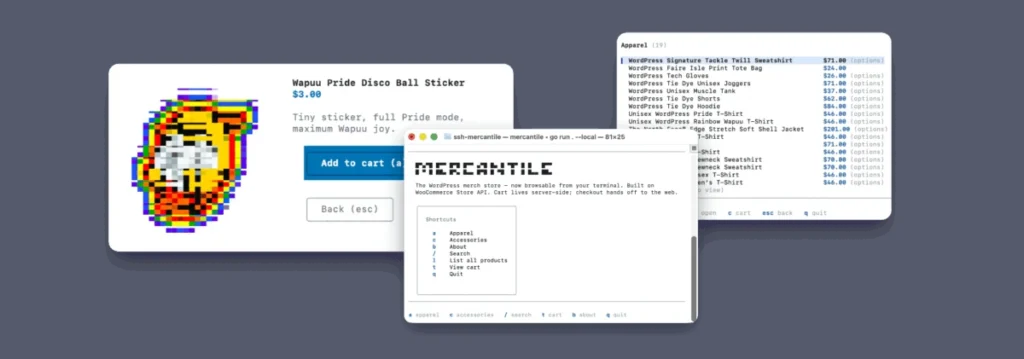
The store’s mascot, Wapuu, makes frequent, playful appearances throughout the site, serving as a reminder of the project’s community-driven spirit. For those deeply embedded in the open-source world, the site is peppered with “Easter eggs”—small code snippets and references that reward the tech-savvy user. The objective was not merely to sell apparel, but to build a digital environment that feels, fundamentally and uniquely, like WordPress.
Under the Hood: The Technological Foundation
The technical architecture of the new Mercantile is a showcase of the latest WordPress 7.0 capabilities. The storefront is built almost entirely using blocks, marking a transition away from traditional theme templates.
The Block-Based Revolution
Every critical component of the shopping experience—including the cart, the checkout flow, the mini-cart, and order confirmation pages—is powered by custom blocks. This modular approach allows for unprecedented agility in site management and design updates.
Interactivity and Performance
To power the dynamic elements of the site, such as catalog navigation and complex modal states, the development team utilized the Interactivity API. This allows for lightning-fast, state-driven transitions without the need for page reloads.

A Commitment to Accessibility
In alignment with the project’s broader mission to "democratize publishing," accessibility was a primary design constraint rather than an afterthought. The site adheres to rigorous color contrast standards and is fully optimized for users with reduced-motion preferences. Furthermore, product transparency has been improved; every item page now provides granular details—including material composition, sizing charts, and care instructions—ensuring that shoppers are fully informed before finalizing their purchase.
Chronology: From Concept to WordCamp Europe
The path to this launch was marked by a rigorous cycle of development and real-world stress testing.
- Early 2026: The design team initiated the project with the goal of aligning the store’s architecture with the capabilities of WordPress 7.0.
- Spring 2026: Development focused on building custom blocks and integrating the Interactivity API to ensure a performant, modern frontend.
- June 2026: The store served as the technological backbone for the Mercantile booth at WordCamp Europe. This was the ultimate testing ground. To facilitate in-person sales, the team implemented a local pickup option at checkout and introduced event-exclusive merchandise.
- The Results: During the event, the platform successfully processed 50 in-person orders, validating the stability of the new checkout flow in a high-traffic, real-world retail environment.
Supporting Data and Future Horizons
The project is far from static. The team behind Mercantile views this as a "living" repository of best practices.
The Command Line Experiment
In a nod to the developers who form the backbone of the WordPress ecosystem, a unique feature is currently in development: a text-based, command-line interface (CLI) version of the store. This playful, experimental layer will allow power users to browse and interact with the catalog using terminal commands. While currently under wraps, subtle breadcrumbs will appear on the main site to guide curious users once the feature goes live.
Statistical Impact and Sustainability
The significance of Mercantile extends beyond technology. As a non-profit initiative, every purchase made on the site directly supports the WordPress Foundation. As a 501(c)(3) organization, the Foundation’s mission is to ensure the longevity of WordPress as a free, open-source software project. By choosing to purchase official swag, community members are directly contributing to the preservation and continued development of the software that powers nearly half of the internet.
Official Perspectives: A Collaborative Effort
The redesign of Mercantile was not the work of a single developer or designer, but the culmination of a massive, distributed effort. Contributors from across the globe collaborated to design, test, and refine the interface.
"The goal was to prove that you don’t need to sacrifice beauty or performance to have a store that truly reflects the culture of an open-source project," said a spokesperson for the development team. By utilizing a "blocks-first" approach, the team successfully demonstrated that WordPress 7.0 is as capable of handling high-end e-commerce as it is at powering blogs and enterprise news sites.
Implications: Setting the Standard for the Ecosystem
The successful launch of the new Mercantile has profound implications for the WordPress community and the broader web development industry.

1. Proof of Concept for E-commerce
By building a major, high-traffic store entirely on blocks and the Interactivity API, WordPress has provided a blueprint for developers. It signals that WooCommerce, when paired with the latest WordPress core features, is a robust, enterprise-grade solution that eliminates the need for bloated third-party plugins.
2. Standardizing the "WordPress Feel"
The store sets a new aesthetic benchmark. By leaning into the "WordPress-ness" of the UI, the project is reinforcing its brand identity. It suggests a future where WordPress sites are no longer just generic templates, but highly customized, performant experiences that communicate the philosophy of the software itself.
3. Community Engagement
The inclusion of experimental features like the CLI store demonstrates an understanding of the user base. It highlights that the project values its technical contributors as much as its casual users, fostering a sense of ownership and pride within the community.
4. Financial Sustainability
In an era where open-source projects often struggle with funding, the Mercantile redesign serves as a model for sustainable support. By creating an engaging, functional, and modern shopping experience, the Foundation is incentivizing contributions through commerce, creating a virtuous cycle where users get quality goods, and the software receives the funding necessary for future innovation.
Conclusion: A Call to Action
The new Mercantile is more than a destination for t-shirts and stickers; it is a manifestation of the WordPress project’s maturity. It represents a synthesis of high-level engineering, historical appreciation, and a commitment to accessibility that defines the project’s future.
As the team continues to iterate—adding new features and refining the existing block-based architecture—Mercantile will remain a vital indicator of where WordPress is heading. For those who believe in the mission of democratizing publishing, a visit to the new store is not just a shopping trip; it is an act of support for the infrastructure of the open web.
We invite you to explore the catalog, experience the new interface, and perhaps find a piece of the WordPress legacy to call your own. Whether you are a developer, a designer, or a lifelong user, the new Mercantile stands as a testament to what we can achieve when we build together.