Beyond the Prompt: Mastering OpenAI’s Codex to Revolutionize Business Automation

The landscape of professional productivity is undergoing a tectonic shift. For years, the narrative surrounding Artificial Intelligence—and specifically OpenAI’s suite of tools—has focused on content generation: writing emails, drafting blogs, or summarizing meetings. However, a new paradigm is emerging that moves beyond mere text production. Enter OpenAI’s Codex, a powerful desktop environment that transforms AI from a reactive chatbot into a proactive, autonomous digital employee capable of managing complex, multi-step business workflows without a single line of code.
The Paradigm Shift: What is OpenAI’s Codex?
The most pervasive misconception regarding Codex is that it is a tool strictly for software engineers. Karl Yeh, an expert in AI-driven business operations, argues that this misapprehension is the single greatest barrier preventing business owners and marketers from achieving true operational efficiency.
To understand Codex, one must first demystify the relationship between models and interfaces. Think of ChatGPT’s various models—such as the "Thinking" or "Instant" variants—as the "brain." In the standard web-based ChatGPT, that brain is housed within a browser-based harness. Codex is a separate, dedicated desktop application (available for PC and Mac) that serves as a much more robust "robot" for that brain.
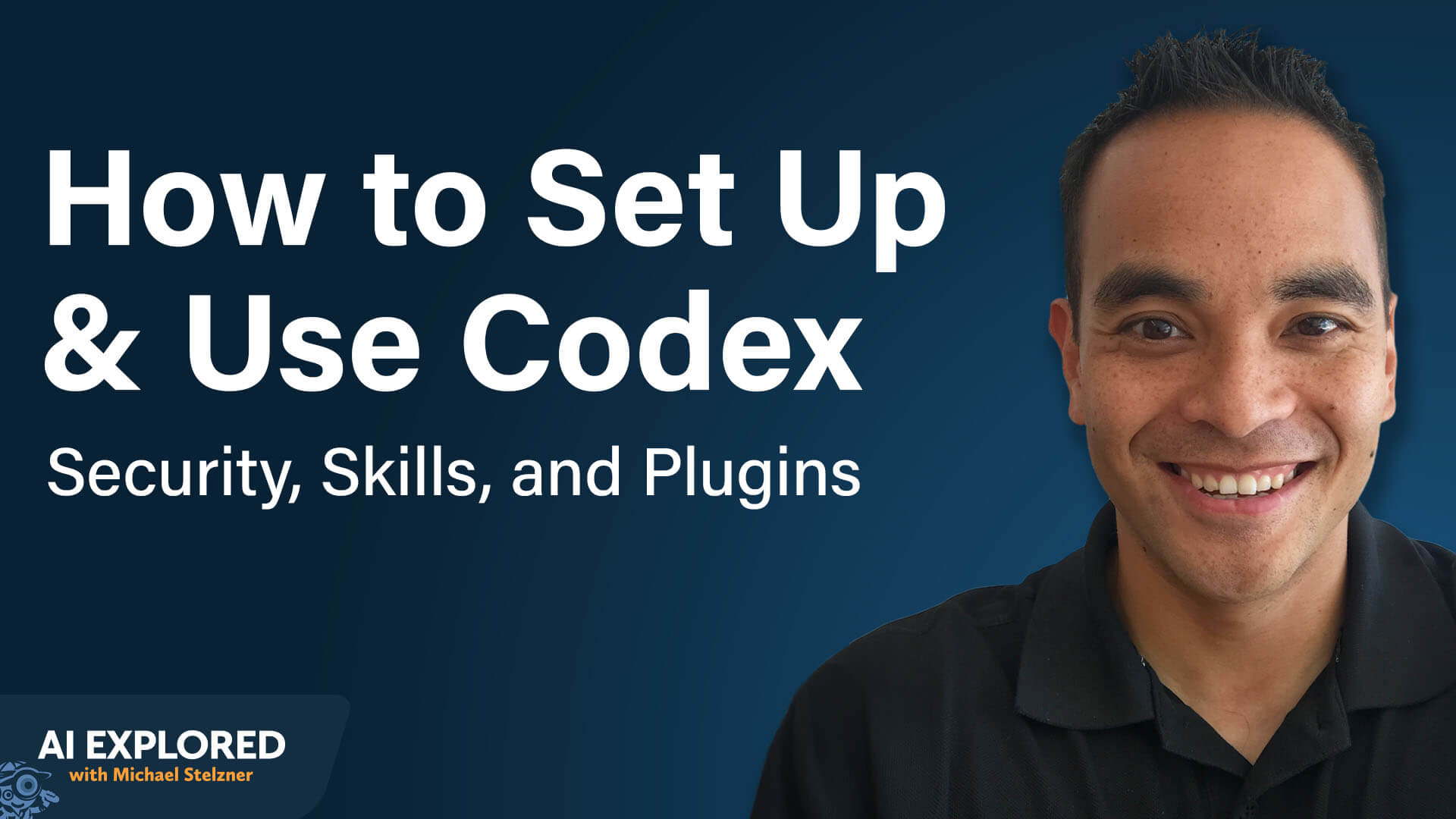
While the interface will feel familiar to those accustomed to ChatGPT’s sidebar of chat threads, the utility is fundamentally different. When utilizing Codex, you are no longer just prompting a model to write text; you are deploying an agent that interacts directly with your local file system, network folders, and installed applications. It is, by all accounts, ChatGPT evolved into an autonomous agentic framework.
The Chronology of Deployment: Getting Started
Transitioning to an agent-based workflow requires a structured approach to ensure security and scalability.
1. Strategic Installation: The first step is the download of the dedicated Codex desktop application. Users must avoid confusing this with the "lite" versions found within paid web subscriptions. Once installed, the application acts as the command center for your digital ecosystem.
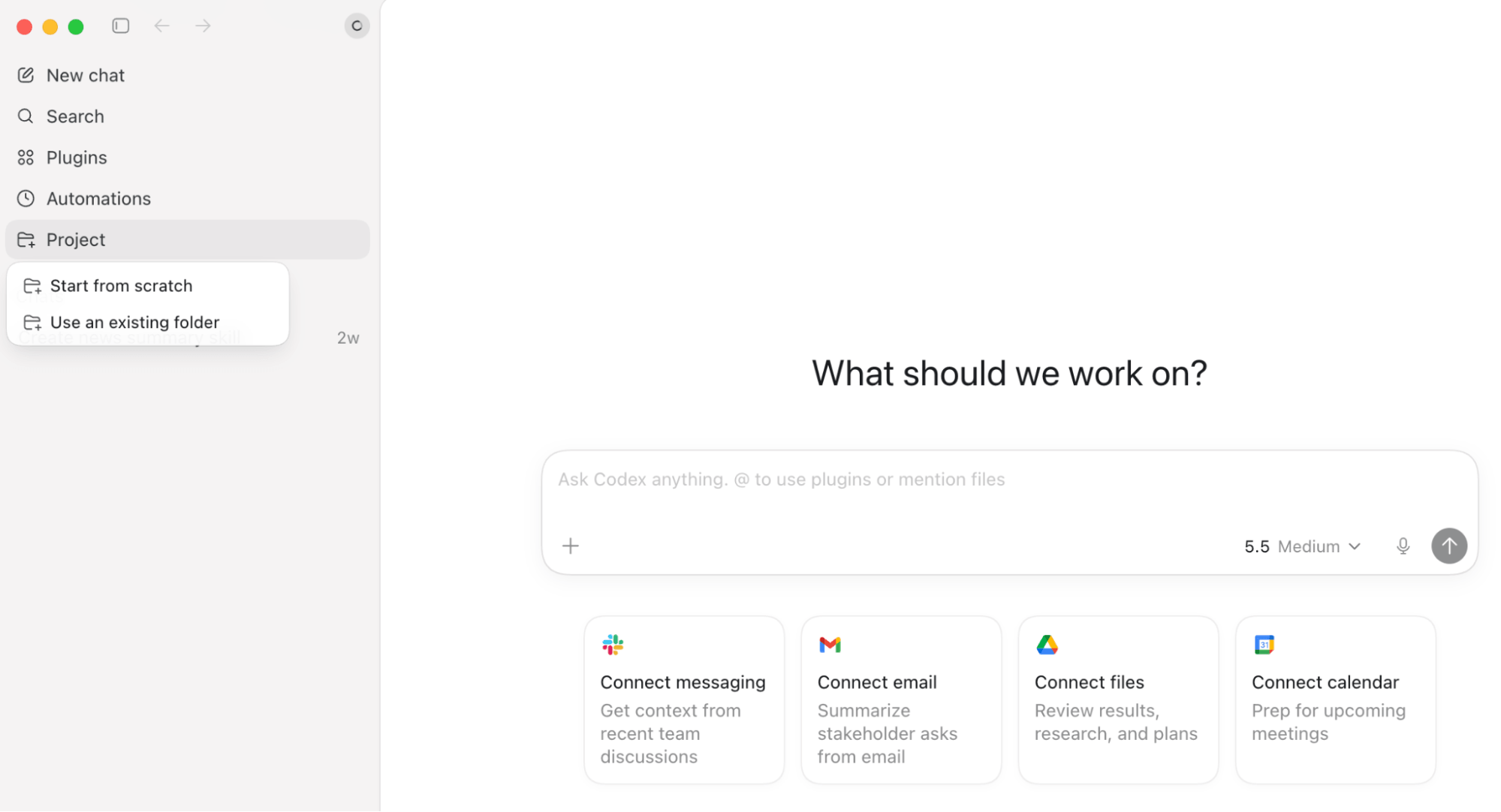
2. Scoping the Environment: Upon launch, users define which folders Codex can access. This is the cornerstone of its value. By pointing Codex to a specific project folder, you grant it the authority to read, modify, and create files within that directory. This effectively bridges the gap between the AI and your actual business data.
3. Integration of the Tech Stack: Beyond local files, Codex acts as a bridge to your broader enterprise software. For users in a Microsoft ecosystem, this includes seamless integration with Outlook, Teams, SharePoint, and OneDrive. Google Workspace users enjoy similar connectivity with Gmail, Calendar, and Drive. The platform also supports integrations with productivity mainstays like Notion and Slack.
Supporting Data and Security Protocols
The power to manipulate files comes with a mandate for rigorous security. Karl Yeh emphasizes that the most critical mistake a new user can make is connecting Codex to a root directory.

- The Principle of Least Privilege: Users should always create a "dedicated sandbox" folder for Codex operations. By limiting the scope of the AI’s access, you protect your broader network from potential unintended interactions.
- Permission Management: Codex operates with tiered permission levels. It is recommended that users begin with default, restricted permissions, gradually expanding access only as the specific requirements of the workflow are validated.
- The Threat of Prompt Injection: As agents gain the ability to browse the web, they become vulnerable to "prompt injection." This occurs when external websites embed hidden, malicious instructions designed to override your agent’s directives. To combat this, experts recommend a "separation of duties" framework: one agent gathers raw data from the web, a second agent verifies the integrity of that data, and only then is the information passed to the internal workflow agent for execution.
Operational Efficiency: Skills, Plugins, and Automations
The true potential of Codex lies in its ability to execute recurring business processes through three distinct mechanisms: Skills, Plugins, and Automations.
Using Skills to Standardize Quality
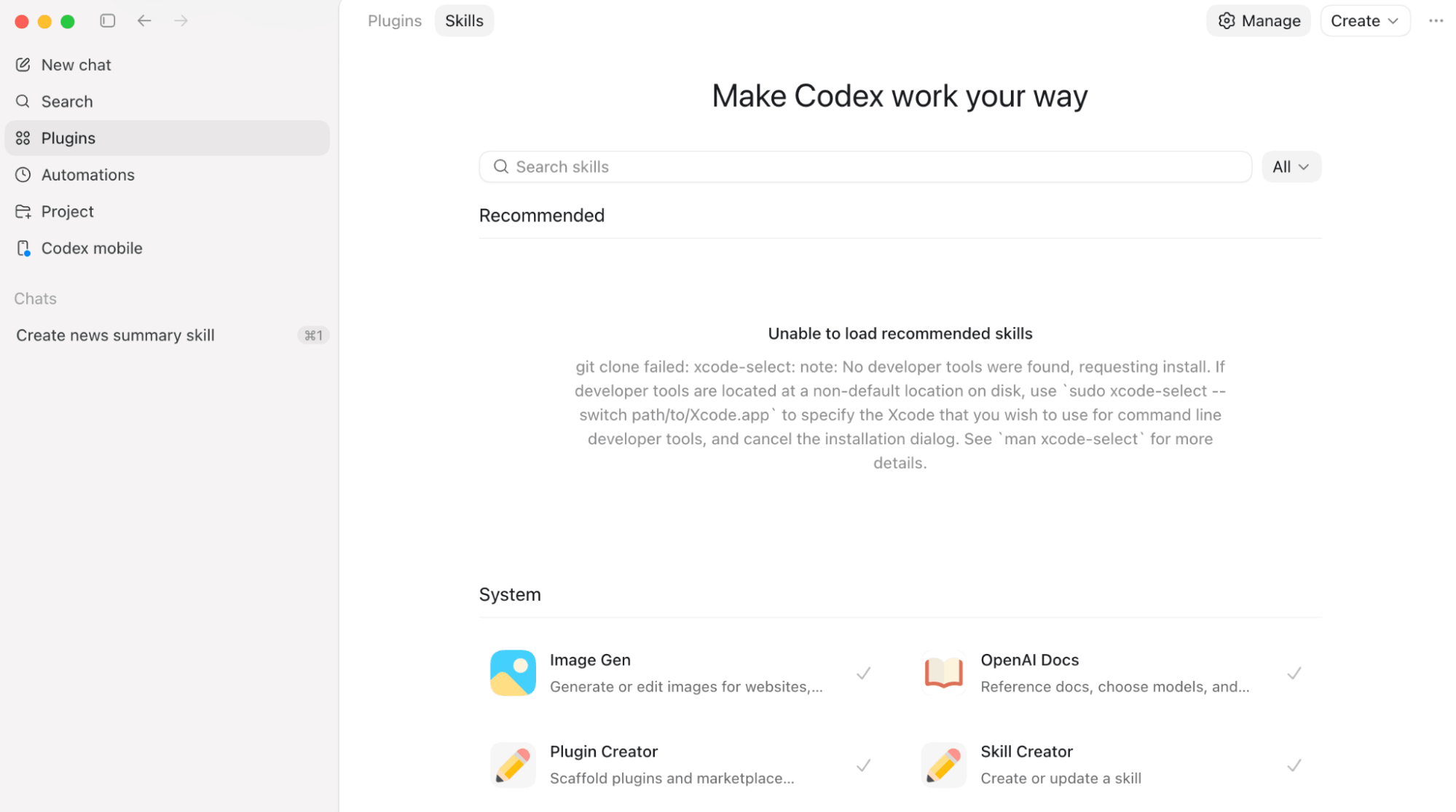
A "Skill" is essentially a codified instruction set that teaches Codex how to execute a specific task. By using the Skill Creator, business owners can convert institutional knowledge—such as a brand voice guide or a technical reporting format—into a reusable asset. Once a skill is created, it eliminates the variance inherent in manual prompting. Every team member can apply the same "Brand Voice" skill to their AI output, ensuring consistency across the entire organization.
Plugin Power: Bridging Legacy Gaps
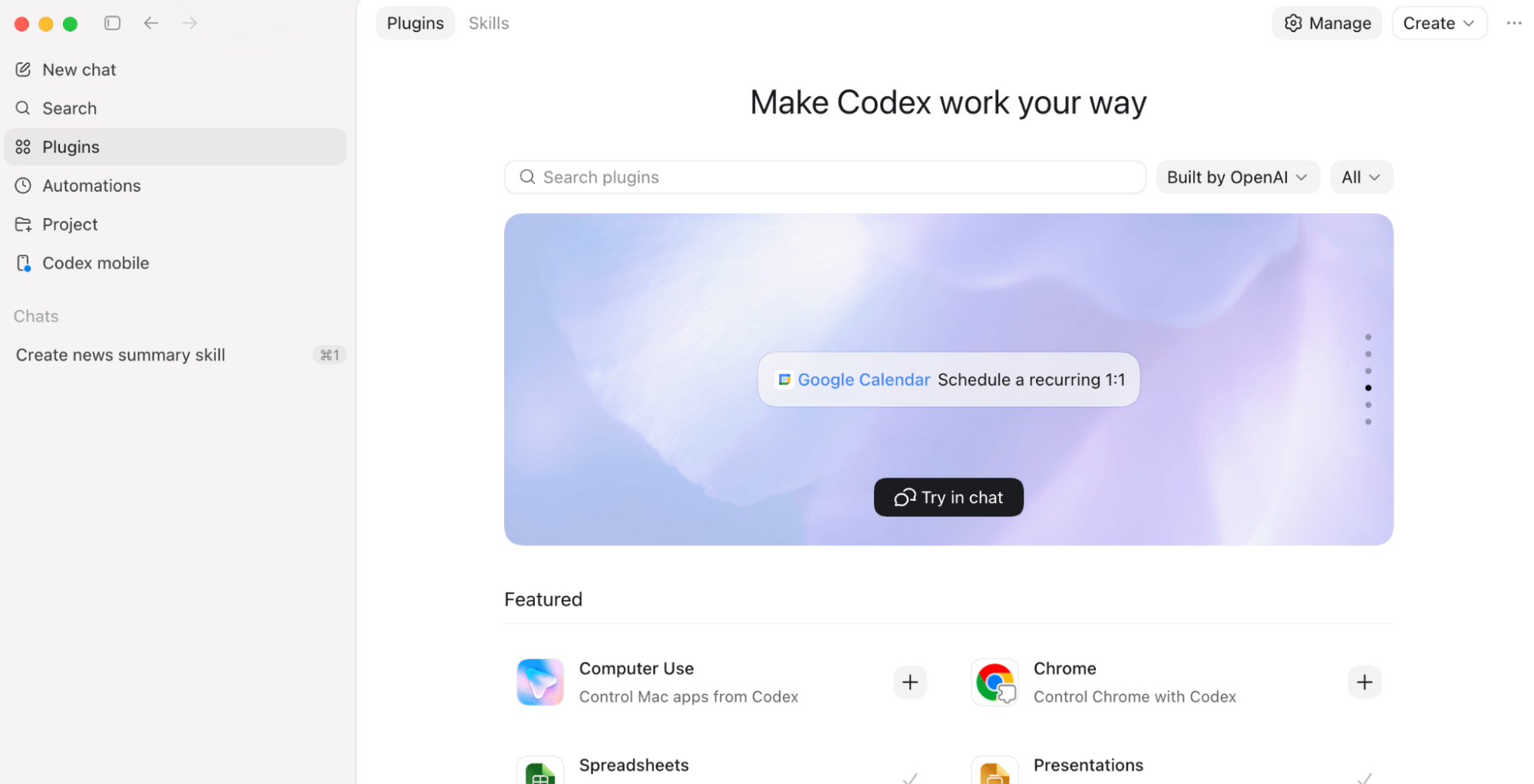
Plugins provide the connective tissue between Codex and the external tools it needs to operate. The recently launched Chrome Plugin is perhaps the most significant tool in the library. By allowing Codex to navigate the browser—clicking buttons, filling forms, and managing tabs—it enables automation for legacy software that lacks a modern API. Furthermore, the "Computer Use" plugin allows Codex to take control of desktop applications, enabling it to perform tasks like opening a Notion database, parsing content, and sending a summary via iMessage without human intervention.
The Architecture of Automation: Goals and Heartbeats
For recurring tasks, users can deploy the /goal command, which allows the AI to work independently for hours, iterating through steps until the objective is met.
For scheduling, Codex employs two patterns:
- Thread-based Automation: Each execution creates a new record, which is ideal for financial reconciliations or reports where a clean audit trail is required.
- Heartbeats: These are recurring check-ins that run within the same thread. This allows the AI to retain context over time. For example, a "Heartbeat" can be set to monitor an email inbox every three hours, summarizing new correspondence and alerting the user only to high-priority items.
Real-World Implications: Case Studies in Efficiency
The impact of these tools is best illustrated through practical application. A recent deployment for a construction firm demonstrates the shift from manual labor to automated oversight.

Previously, the firm’s team spent three days a month manually reconciling vendor invoices. By creating five "sub-agents"—one for each vendor folder—the firm configured Codex to run an automated reconciliation process every Sunday night. The system now executes in 15 minutes, with the master summary ready by Monday morning.
Similarly, a manual process involving legacy project management software—which required eight minutes per field log—was replaced by a three-agent workflow. One agent navigates the web interface, a second manages the Excel exports, and a third performs the data comparison. This sequence runs unattended, saving hundreds of hours of administrative time annually.
Future-Proofing Your Business
The rise of Codex and agentic AI marks the end of the "copy-paste" era of AI adoption. The future belongs to those who view AI not as a text generator, but as a silent, digital force multiplier.
As these tools continue to mature, the implications for the workforce are profound. Business leaders are no longer tasked with managing people to perform rote, repetitive tasks; they are tasked with "programming" agents to execute complex workflows. This shift necessitates a new set of skills: clear instruction, rigorous data security, and an architectural understanding of business processes.
The path to digital transformation is no longer paved with complex coding languages or expensive, custom-built software suites. It is paved with natural language, clearly defined goals, and the intelligent application of autonomous agents. For the modern enterprise, the message is clear: the future of business is not just about using AI, but about building an AI-native ecosystem that runs while you sleep.
For those interested in exploring this frontier further, the "AI Explored" podcast, hosted by Michael Stelzner, provides ongoing, expert-led training on the evolving AI landscape. Staying informed is the first step in ensuring your organization remains competitive in this rapidly shifting environment.