Bridging the Automation Gap: AWS Certificate Manager Introduces ACME Support
In an era where digital security is the bedrock of global commerce, the lifecycle management of Transport Layer Security (TLS) certificates has emerged as a significant operational burden for IT departments. As security standards evolve to meet the threats of a more sophisticated cyber-landscape, the industry is moving toward shorter certificate validity periods—a shift that makes manual renewal processes a relic of the past. Today, Amazon Web Services (AWS) has taken a decisive step toward mitigating this complexity by announcing native support for the Automatic Certificate Management Environment (ACME) protocol within AWS Certificate Manager (ACM).
The Main Facts: A New Era for Managed PKI
The integration of the ACME protocol into ACM represents a fundamental shift in how organizations handle public TLS certificates. Previously, AWS customers often operated in a fragmented ecosystem, utilizing ACM for some certificates while relying on external certificate authorities (CAs) and third-party tools for ACME-based automation. This fragmentation created blind spots in visibility, governance, and auditability.

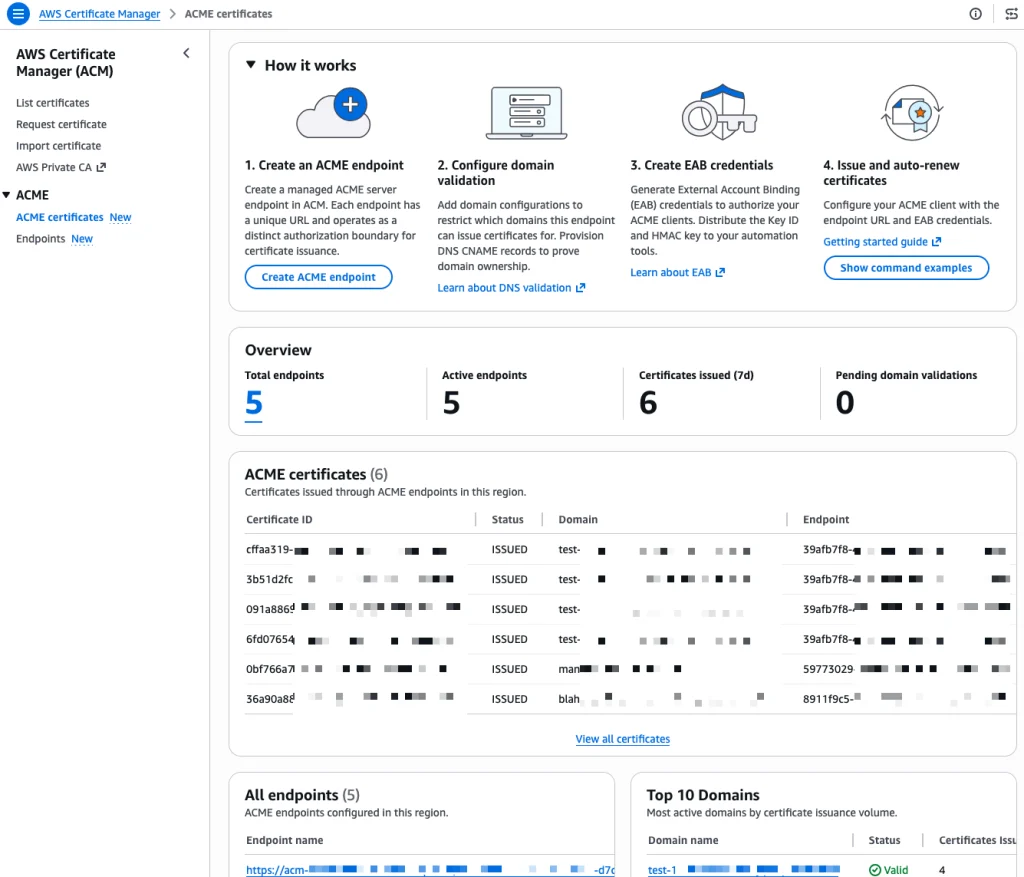
By providing a fully managed ACME server endpoint, AWS is enabling organizations to consolidate their Public Key Infrastructure (PKI) management. This endpoint is compatible with industry-standard ACMEv2 clients—including Certbot, cert-manager for Kubernetes, and acme.sh—allowing developers to automate certificate lifecycle management without abandoning their preferred toolsets. Certificates issued through this service are backed by Amazon Trust Services, ensuring they are trusted by all major browsers and operating systems by default.
Chronology of a Changing Landscape
The urgency behind this development is driven by the global push for shorter certificate lifespans. For years, the standard validity period for a TLS certificate was three years, later reduced to two, and then to one year. However, the Certification Authority/Browser (CA/B) Forum—the governing body that sets the rules for the web’s trust infrastructure—has set an aggressive roadmap for further reduction.

- March 2027: The CA/B Forum mandates a reduction in maximum certificate validity to 100 days.
- 2029: The mandate tightens further, requiring maximum validity to be capped at 47 days.
As these windows shrink, the human-centric model of "track, request, install, and renew" becomes mathematically impossible for large-scale enterprises. If an organization manages thousands of endpoints, a 47-day cycle would require near-constant manual intervention, leading to inevitable outages due to expired certificates. AWS’s decision to integrate ACME into the core ACM console is a direct response to this looming industry "expiration crisis."
Supporting Data and Technical Architecture
The technical architecture of the new ACM ACME support is designed to balance developer agility with centralized security control. Central to this design is the use of External Account Binding (EAB).
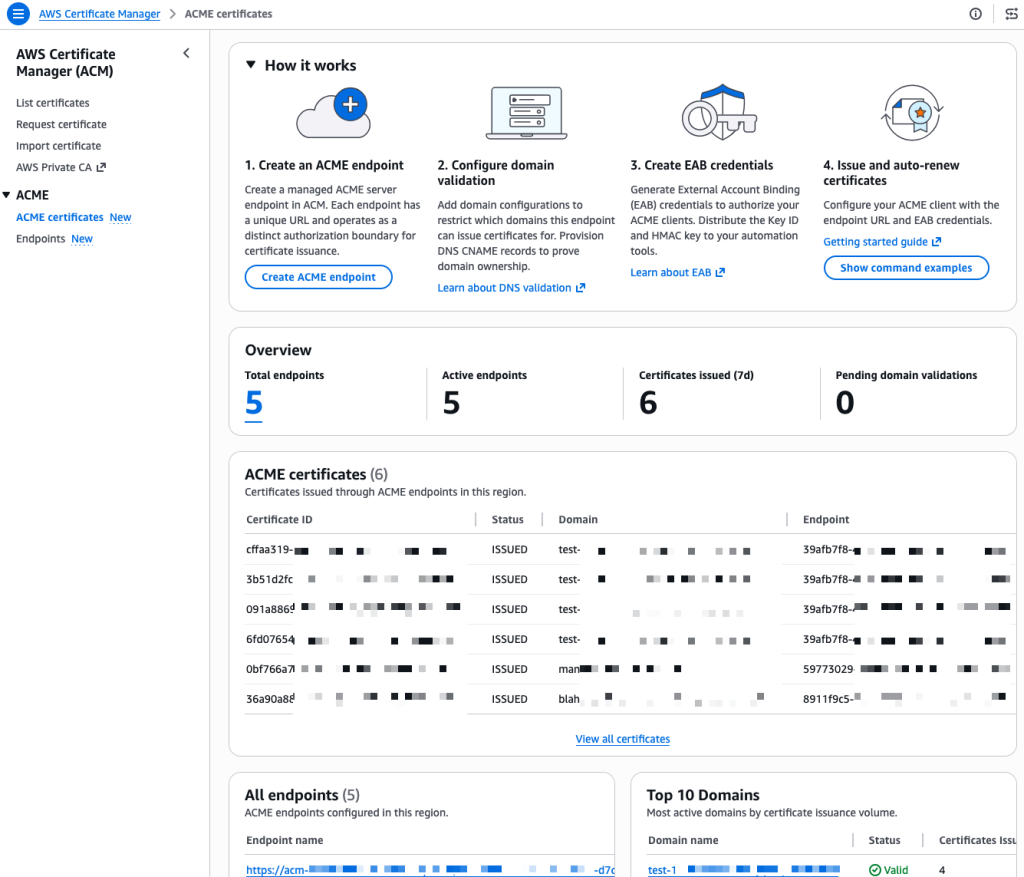
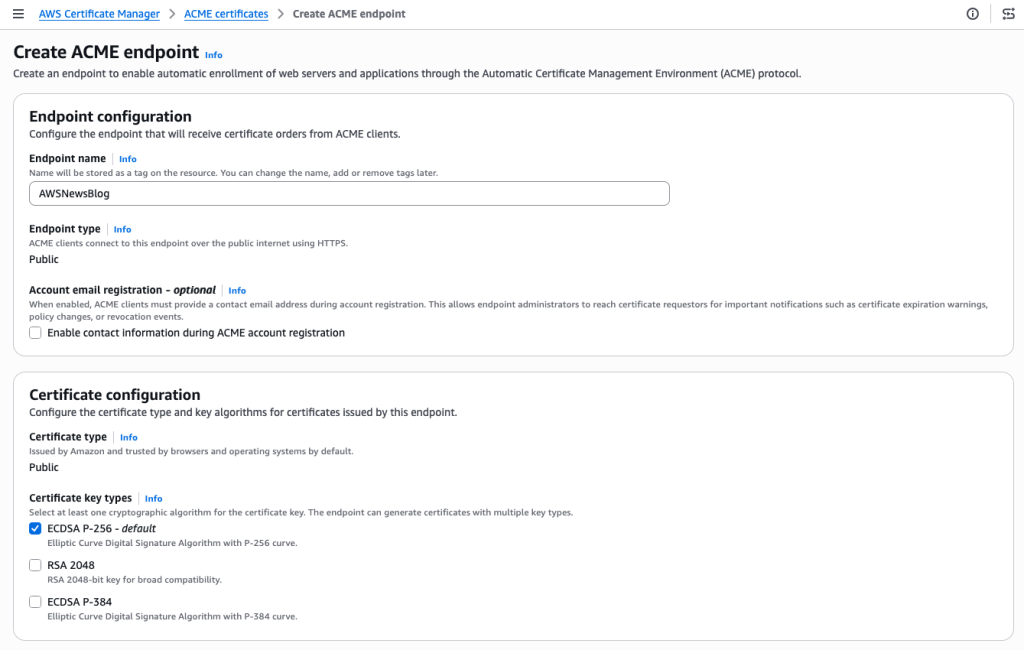
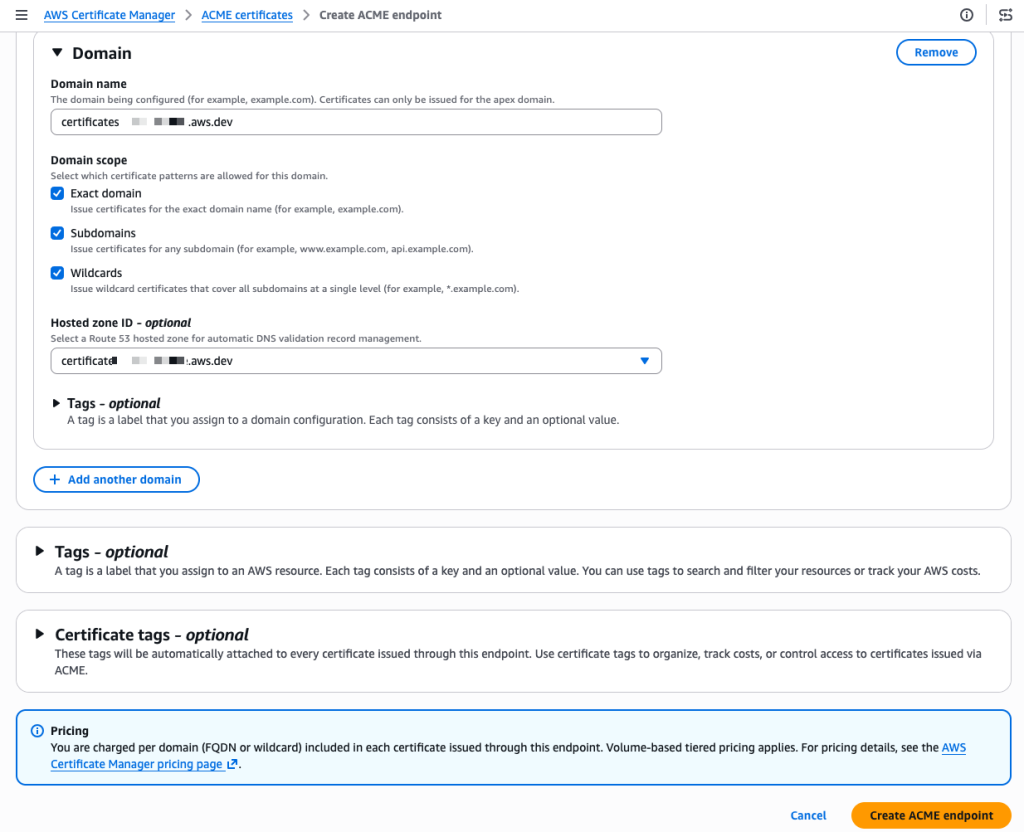
In a traditional ACME setup, clients often manage their own domain validation. In the new AWS model, a PKI administrator creates an ACME endpoint within ACM and defines the permissible domain scope. This scope acts as a guardrail, dictating whether a client can request a certificate for an exact domain, a subdomain, or a wildcard entry.
Key Technical Pillars:
- Centralized Governance: Administrators define domain scopes at the endpoint level. This prevents rogue certificate issuance, as the client can only request what the administrator has explicitly permitted.
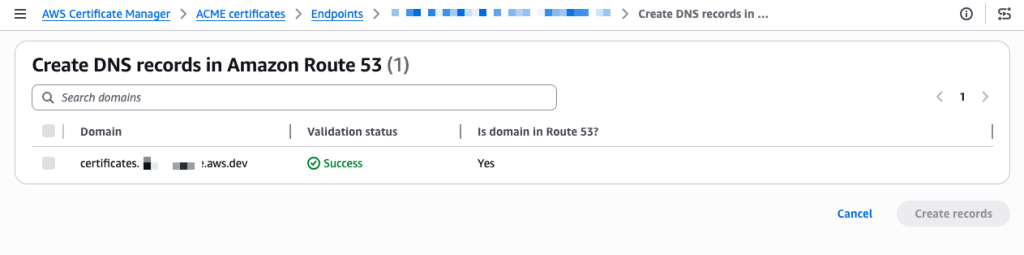
- Decoupled Validation: The PKI administrator handles the initial DNS validation using Route 53 or other DNS providers. Once the domain is validated at the endpoint level, application developers can request certificates without needing access to sensitive DNS credentials or administrative keys.
- Auditability: Every request is logged via AWS CloudTrail, and operational metrics are surfaced through Amazon CloudWatch. This provides the compliance visibility required by modern enterprise security teams.
- Versatility: The service supports multiple key types, including ECDSA P-256, ECDSA P-384, and RSA 2048, ensuring that legacy and modern applications remain compatible.
Implications for Enterprise Security and DevOps
The implications of this update extend beyond mere convenience; they represent a fundamental change in the relationship between security teams and application developers.
Empowering DevOps
For DevOps teams, the integration is a game-changer. By using standard ACME clients like cert-manager for Kubernetes, developers can now trigger certificate issuance as part of their CI/CD pipelines. The automation ensures that certificates are always current, effectively eliminating "expired certificate" downtime, which remains one of the most common causes of site outages.
Reducing "Shadow PKI"
Security teams have long struggled with "Shadow PKI"—the practice where developers or third-party vendors spin up their own certificate management solutions to avoid the overhead of corporate processes. By bringing ACME into the native AWS console, organizations can provide a path of least resistance. When the official, approved, and monitored method is also the easiest method to use, compliance rates naturally rise.
Financial Efficiency
The cost of managing certificates has historically been twofold: the price of the certificates themselves and the massive operational cost of engineering and maintaining custom automation scripts. By providing a managed, scalable ACME server, AWS reduces the need for expensive third-party lifecycle management software or the internal engineering hours required to build and maintain custom "glue" code.
Official Perspective and Implementation
While AWS has not issued a singular press statement beyond the technical documentation, the move aligns with their broader philosophy of "undifferentiated heavy lifting"—the idea that AWS should take on the burdens that do not provide a competitive advantage to the customer.
For those looking to implement this, the process is streamlined:
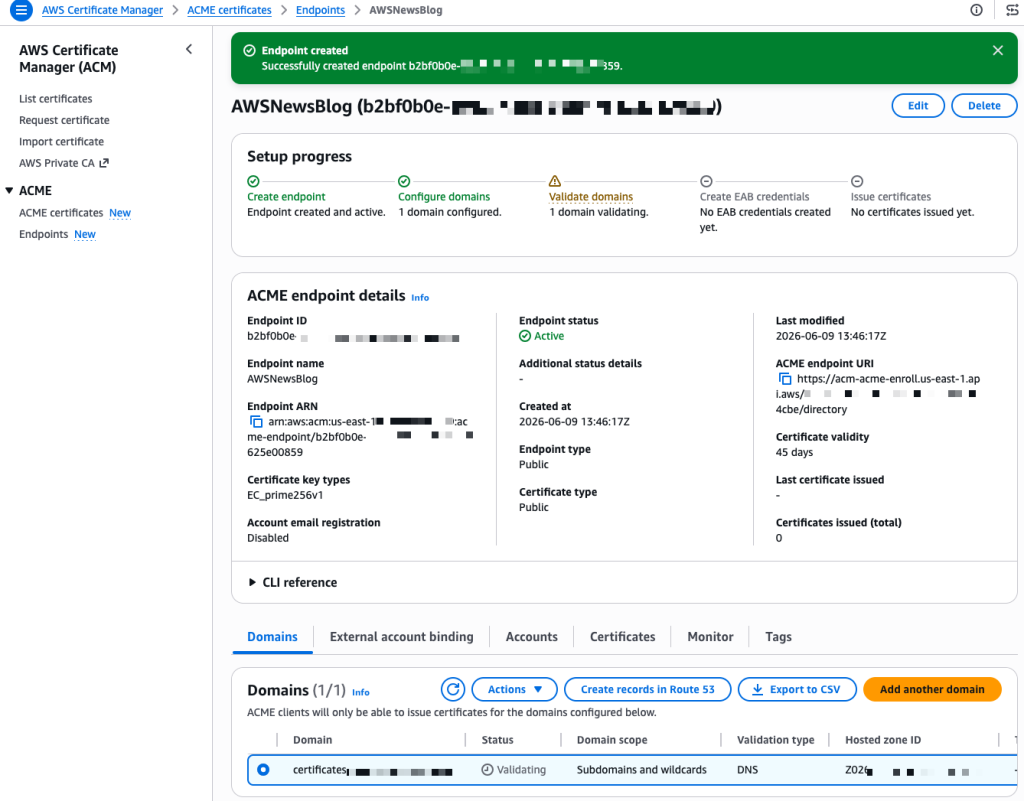
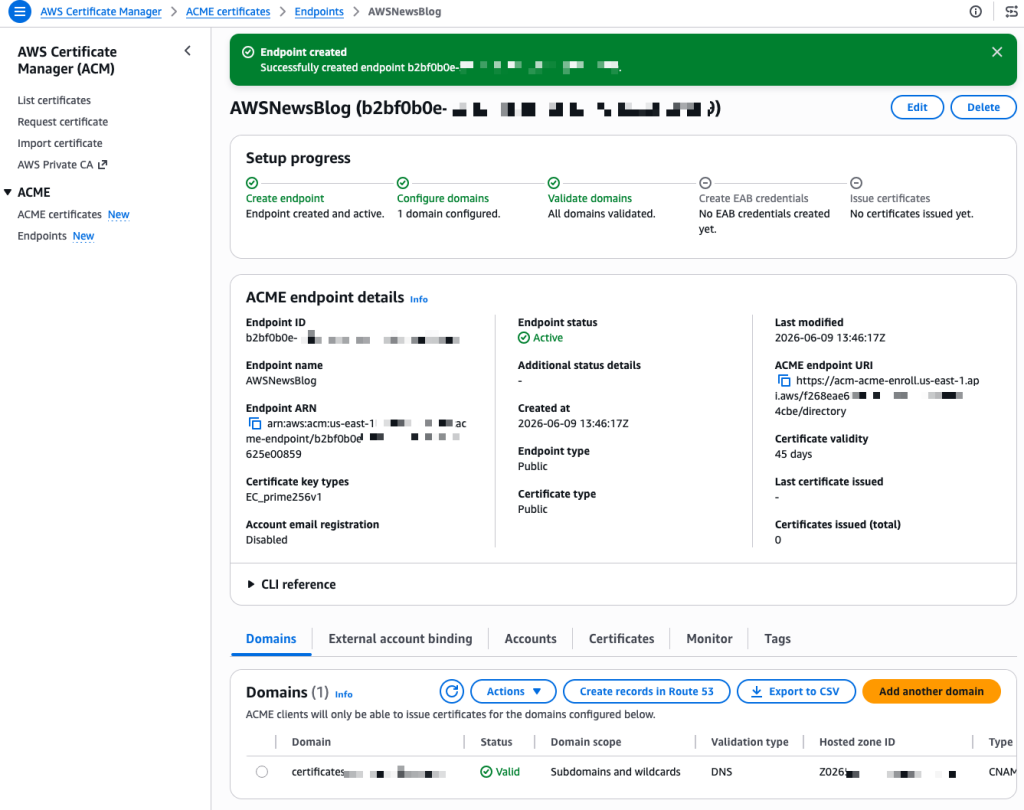
- Create the Endpoint: Navigate to the ACM console and configure a new ACME endpoint.
- Configure EAB: Generate Key IDs and HMAC keys for client authentication.
- Authorize: Use DNS validation to prove ownership of the domain.
- Deploy: Configure your ACME client to point to the AWS-provided directory URL, inputting the EAB credentials.
The service is currently available across all commercial AWS regions. While support for AWS GovCloud (US), China, and the AWS European Sovereign Cloud is scheduled for a later date, the rollout signals a clear priority to bring this capability to the widest possible range of regulated environments.
Conclusion: A Proactive Stance on Web Security
The transition to a 47-day certificate lifecycle by 2029 is not merely a change in policy; it is a change in the fundamental mechanics of the internet. By embracing the ACME protocol, AWS is effectively future-proofing the infrastructure of its users.
For the average enterprise, the ability to centralize control while decentralizing execution is the "holy grail" of IT management. The integration of ACME into AWS Certificate Manager does exactly that: it provides the control that security officers demand and the seamless automation that developers require. As the industry marches toward the 2027 and 2029 deadlines, organizations that adopt this managed automation will find themselves resilient and secure, while those clinging to manual processes will face an increasingly fragile digital existence.
In the final analysis, this is not just about issuing certificates; it is about establishing a robust, automated foundation for a secure, modern, and high-availability digital economy.