Baruipur Rape-Murder Case: Accused Cremated by Administration as Family Shuns Remains Amid Public Fury
By Editorial Desk
July 9, 2026
Introduction: A Somber End to a Brutal Chapter
In a stark reflection of the intense social and moral outrage surrounding the brutal rape and murder of an 11-year-old girl in West Bengal’s South 24 Parganas district, the mortal remains of the primary accused, Prabhas Mondal, were cremated by the local administration on Thursday, July 9, 2026. The disposal of the body followed a total abandonment of the accused by his own kin, who refused to claim him, citing the heinous nature of his alleged crimes.
Mondal, who was killed in a controversial police encounter on Wednesday, July 8, became a pariah even within his own household. His death, while serving as a flashpoint for debates regarding police procedure and extrajudicial actions, has been largely met with public apathy—or in some quarters, approval—due to the barbaric nature of the crime that gripped the Baruipur region.
Chronology of a Tragedy
The events leading up to the cremation have been rapid and emotionally charged, unfolding over five days of intense public distress:
- July 4, 2026: An 11-year-old girl goes missing in the Baruipur area. CCTV footage obtained by investigators later reveals the girl in the company of Prabhas Mondal shortly before her disappearance, marking him as the primary suspect.
- July 5, 2026: The victim’s body is recovered from a pond in the Surjyapur Haat area, stuffed into a sack. Preliminary reports suggest she was raped and murdered, sparking immediate and violent protests across the district.
- July 6-7, 2026: Law enforcement faces mounting pressure to deliver swift justice as local citizens blockade roads and demand the death penalty for the perpetrator.
- July 8, 2026: During a crime scene reconstruction exercise, police allege that Mondal attempted to escape custody by snatching a firearm from an officer. In the ensuing exchange, Mondal is killed in an encounter.
- July 9, 2026: Following the refusal of his wife and mother to claim the body, the Baruipur local administration conducts the last rites after fulfilling all legal mandates.
The Burden of Guilt: Family Rejection
Perhaps the most telling aspect of this case is the absolute dissociation expressed by the family of the accused. In a society where family ties are often deeply prioritized, the public statements from Mondal’s mother, Sandhya Mondal, underscored the gravity of his alleged actions.

"The little girl died after suffering immense pain. My son got what he deserved for what he did," Sandhya told reporters. Her refusal to collect her son’s remains at the Baruipur Sub-Divisional Hospital was not merely a personal choice but a public denunciation of the violence inflicted upon a child.
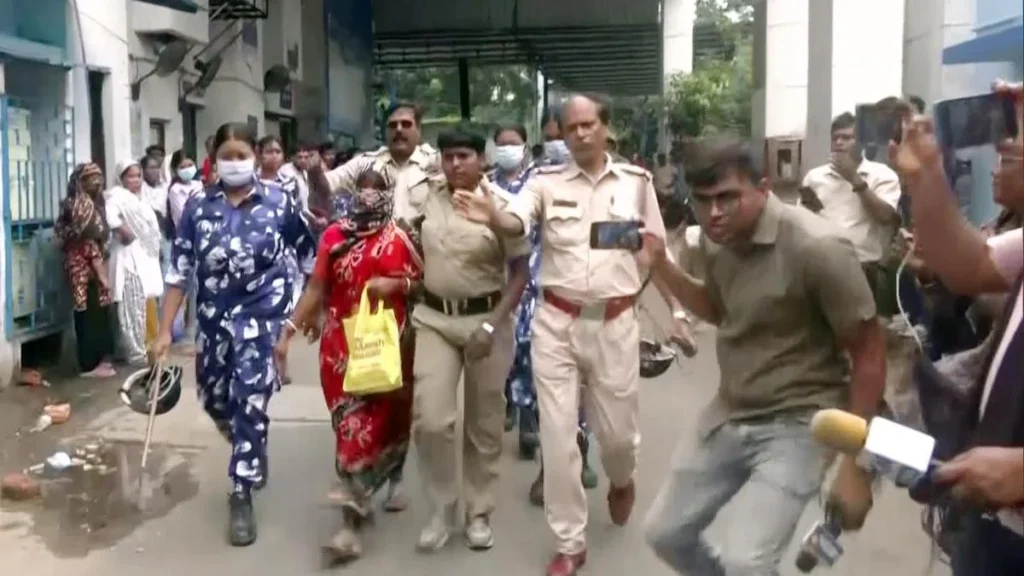
Similarly, Mondal’s wife, who had endured years of domestic abuse at his hands, refused to be associated with his burial rites. Her refusal highlights the secondary trauma experienced by the family of an offender, further isolating the accused in his final hours. The local administration, acting as the state’s instrument, ultimately took responsibility for the cremation, ensuring that all legal and sanitation protocols were observed in the absence of next-of-kin.
Official Response and the "Encounter" Controversy
The killing of Prabhas Mondal marks the first major encounter-style police action since the Bharatiya Janata Party (BJP) government assumed office in West Bengal in May 2026. The incident has placed the administration in the crosshairs of both human rights activists and those demanding a "hard-on-crime" approach.
A senior police officer briefed the media, stating, "The last rites were performed under the supervision of the local administration after completing all required formalities. As there were no family members willing to step forward, the state performed its duty."
Regarding the encounter, the official police version remains consistent: Mondal was being taken for a reconstruction of the crime scene when he seized a firearm. The police contend that the use of lethal force was a reactive measure taken to prevent the escape of a dangerous suspect. However, legal experts point out that such "encounter killings" often invite intense scrutiny from the National Human Rights Commission (NHRC) and judiciary, as they bypass the traditional judicial process of trial and sentencing.

The Climate of Public Outrage
The Baruipur incident is not an isolated case but rather a catalyst for a larger conversation about the safety of women and children in West Bengal. The sheer brutality—the victim being stuffed into a sack and dumped in a pond—served as a rallying cry for local protesters.
For several days, the Baruipur area was paralyzed by protests. The public’s frustration was directed at the perceived sluggishness of the justice system in previous cases, leading to a climate where police encounters are sometimes celebrated as "instant justice." This shift in public sentiment poses a significant challenge for the state’s law enforcement agencies, who must balance the public’s demand for vengeance with the constitutional mandate of the rule of law.
Implications for Law and Order
The death of Prabhas Mondal leaves several questions unanswered. With the prime suspect dead, the possibility of a full trial—which would have provided the victim’s family with a formal verdict—is now closed.
1. The Justice Gap
Without a trial, the legal system loses the opportunity to definitively establish the sequence of events and ensure that all accomplices (if any) are identified. While the evidence against Mondal was deemed strong by local authorities, the lack of a judicial verdict leaves a vacuum in the record of the crime.
2. Policing Standards
The incident raises concerns regarding the safety of suspects in police custody. While the government may view this as a deterrent, critics argue that the normalization of encounters could lead to procedural shortcuts, where evidence gathering is sacrificed for the expediency of violence.

3. Social Stigma
The total abandonment of the accused by his family serves as a sociological case study. The refusal of a mother and wife to perform last rites is a rare social phenomenon, signaling that the moral weight of the crime was too heavy for even the closest blood relations to bear.
Conclusion: A Community in Mourning
As the smoke clears from the cremation site in Baruipur, the community remains in a state of somber reflection. The death of the 11-year-old victim has left an indelible mark on the region, and the swift, violent end of the man accused of taking her life has done little to soothe the trauma of the loss.
The administration’s decision to perform the rites ensures that the physical remains of the accused did not linger, effectively closing the chapter on his existence. However, the questions surrounding the police encounter and the systemic failures that allowed such a crime to occur will likely continue to resonate in the political and social landscape of West Bengal for months to come.
For now, the people of Baruipur are left to grapple with the tragedy, hoping for a future where such horrors do not become the norm, and where justice is served not through the barrel of a gun, but through the due process of a fair and transparent legal system. The case of Prabhas Mondal will remain a haunting reminder of the intersection between horrific crime, public rage, and the state’s complex response to both.