The Battle for Memory: Political Firestorm Erupts Over Film ‘Satluj’
By Editorial Desk
Updated: July 09, 2026
The political landscape of Punjab has been thrust into turmoil following the abrupt removal of the biographical film Satluj from a major OTT platform. The controversy surrounding the movie—which chronicles the life and work of human rights activist Jaswant Singh Khalra during the turbulent era of militancy—has ignited a fierce war of words between the Shiromani Akali Dal (SAD) and the ruling Aam Aadmi Party (AAP). As the film becomes a flashpoint for historical narratives, the state finds itself debating the boundaries of censorship, the preservation of memory, and the role of political entities in shaping the public’s perception of the past.
The Genesis of the Conflict: A Film Under Scrutiny
Originally titled Punjab ’95, the film serves as a cinematic portrayal of the life of Jaswant Singh Khalra, a tireless campaigner who exposed the systemic disappearance of hundreds of individuals during the militancy period in Punjab between the mid-1980s and the early 1990s. The film aims to document the "dark decade" of the state, focusing on the state-sponsored repression and the personal costs of seeking truth.
After facing significant hurdles in its path to release, the film finally premiered on the streaming platform ZEE5 on July 3, 2026, under the new title Satluj. The release was seen by many as a watershed moment for historical accountability. However, the victory was short-lived. Days after its debut, the film was pulled from the platform, triggering immediate outrage among civil society groups, historians, and political observers.

For many, the removal of Satluj is not merely a technical or commercial decision but a deliberate attempt to suppress a narrative that challenges the official record of the era. The vacuum left by the film’s disappearance has now been filled by a high-stakes political confrontation.
Chronology of a Controversy
- Mid-1980s–Early 1990s: The period of intense militancy and counter-insurgency operations in Punjab, during which activist Jaswant Singh Khalra conducts his investigations into mass cremations and custodial deaths.
- Production Phase: The film Punjab ’95 undergoes multiple revisions to satisfy the Central Board of Film Certification (CBFC), eventually finding a path to release under the new title Satluj.
- July 3, 2026: Satluj is released in its uncut version on ZEE5, sparking widespread interest and debate across Punjab.
- July 7, 2026: Reports emerge that the film has been removed from the OTT platform, leading to immediate speculation regarding external pressure.
- July 8, 2026: SAD president Sukhbir Singh Badal declares a statewide campaign to screen the film independently, effectively turning the movie into a tool for political mobilization.
- July 8, 2026: The Aam Aadmi Party (AAP) launches a counter-offensive, accusing the Badal family of hypocrisy and alleging their complicity in the film’s suppression.
The SAD Mandate: A Challenge to Censorship
In a move that has surprised many political analysts, SAD president Sukhbir Singh Badal has issued a directive to his party’s cadre. He has instructed every worker, office bearer, and party leader to facilitate the screening of Satluj in every village, town, and city across the state.
"The aim is to ensure that today’s youth and our coming generations know about the unspeakable tragedy and repression during the then-Congress governments," Badal stated during a press conference. He argued that the film acts as a vital historical record of the agony of Punjab, and that the current attempts to remove it from the digital sphere constitute an act of "erasing history."
Badal’s rhetoric frames the SAD as a protector of the Sikh narrative. By taking the film to the grassroots level, the party is positioning itself as a resistance force against what it describes as "the suppression of truth." According to the SAD leadership, the party will not remain a "mute witness" to the injustice of preventing Punjabis from engaging with their own history.

The AAP Rebuttal: Allegations of Hypocrisy
The Aam Aadmi Party, currently in power in Punjab, has responded with stinging accusations. AAP’s Chief Spokesperson, Kuldeep Singh Dhaliwal, redirected the spotlight back onto the SAD leadership, specifically targeting the Badal family.
The core of the AAP’s argument rests on a claim made by Paramjit Kaur Khalra, the widow of the late Jaswant Singh Khalra. According to Dhaliwal, Mrs. Khalra has alleged that Sukhbir Singh Badal had previously written to the Central government requesting a ban on the film.
"If this is true, nothing can be more shameful," Dhaliwal remarked in a press statement. "This exposes the Badal family’s real face before the Sikh community and the people of Punjab."
AAP’s stance is that the political establishment—comprising the Congress, the BJP, and the SAD—has historically colluded to hide the truth about the events of the 1980s and 90s. By accusing the SAD of double standards, the AAP is attempting to discredit the Akali Dal’s newfound commitment to the film, suggesting that the party’s current activism is merely a performative attempt to salvage its political standing within the Sikh community.

Implications: The Politics of Memory
The Satluj controversy raises profound questions about the nature of democracy and the power of cinema as a medium for social commentary.
1. The Power of the "Untold" Story
The film represents a rare attempt to mainstream a narrative that has long been relegated to the fringes of academic research or activist reports. By bringing the story of Jaswant Singh Khalra to a wider audience, Satluj challenges the state-sanctioned versions of the militancy era. The fact that the film was removed from a major streaming service suggests that the historical memory of this period remains highly sensitive and potentially volatile.
2. Political Opportunism
There is a clear tactical dimension to the current row. For the SAD, the film provides a platform to reconnect with its core base and highlight the "anti-Sikh" policies of the Congress and, by extension, the current central government. For the AAP, the situation serves as an opportunity to expose the inconsistencies in the SAD’s past actions and present it as an unreliable guardian of Sikh interests.
3. The Digital Battlefield
The removal of the film from an OTT platform highlights the vulnerability of digital content. Unlike physical media, which is harder to suppress once distributed, digital content is subject to the platform’s policies, which can be influenced by state regulations, corporate interests, or legal threats. This incident serves as a case study in how "digital censorship" can become a tool of political control.

4. Societal Impact
Beyond the political theater, the youth of Punjab are the intended audience for these screenings. For a generation that did not experience the trauma of the 80s and 90s firsthand, films like Satluj serve as essential educational tools. Whether this will lead to a deeper understanding of history or further polarization remains to be seen. The state government’s reaction, or lack thereof, to the upcoming independent screenings will be a critical indicator of how it intends to manage public discourse in the coming months.
Conclusion
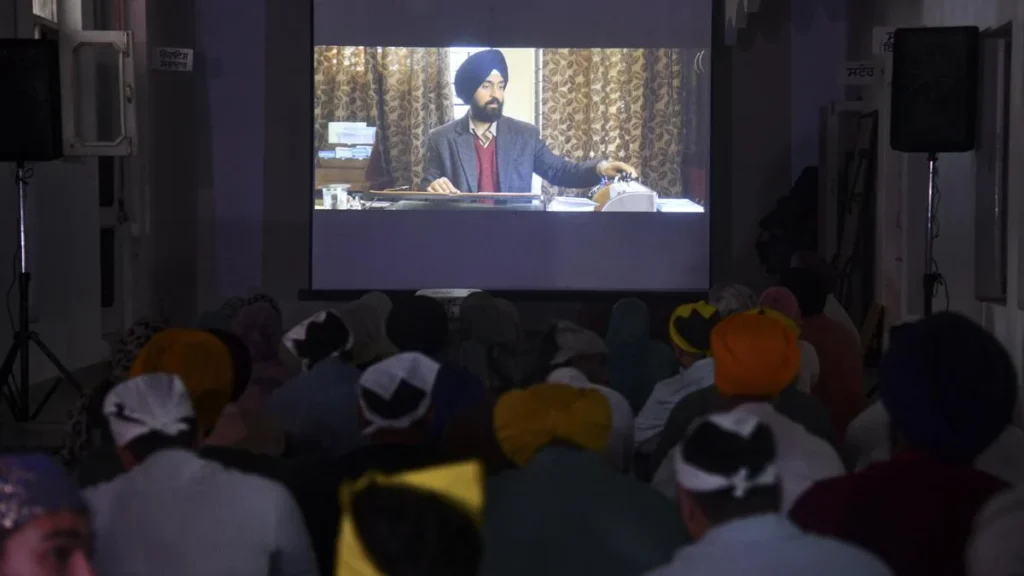
As the Shiromani Akali Dal prepares for its series of independent screenings and the Aam Aadmi Party continues to push its narrative of collusion and betrayal, the film Satluj has achieved in its absence what it might have struggled to do in its presence: it has become the central focus of a statewide debate on the past.
The tragedy of the militancy era in Punjab remains a raw nerve, and the battle over Satluj proves that historical memory is not a static archive but a living, breathing, and highly contested field. As the dust settles on this initial confrontation, the ultimate question remains: who has the right to curate the history of Punjab, and will the truth eventually be allowed to reach the public, or will it continue to be caught in the crossfire of political survival?
For now, the people of Punjab are left to navigate between the competing narratives of political giants, while the story of a man who gave his life for the truth remains, ironically, more visible than ever.