The Reverse Logistics Revolution: Navigating the E-commerce Returns Landscape in Europe
In the modern digital economy, the completion of an online transaction is no longer marked by the "purchase confirmation" email. Instead, for the contemporary e-commerce merchant, the true end of the sales cycle occurs only when the customer is satisfied with the product in their hands. If that satisfaction is not met, the process triggers a complex, costly, and critical phase: reverse logistics.
As e-commerce continues to mature across the European continent, returns have transitioned from a nuisance to a central pillar of business strategy. With return rates climbing and consumer expectations for "frictionless" experiences at an all-time high, merchants are forced to reconcile the paradox of offering generous return policies while protecting their bottom line and environmental reputation.
1. The Anatomy of European E-commerce Returns: Current Facts
The European e-commerce market is not a monolith; it is a tapestry of diverse consumer behaviors, regulatory frameworks, and logistical hurdles. However, across all member states, the return rate remains a significant KPI that dictates profitability.
The Statistics of Scale
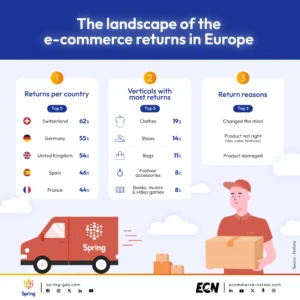
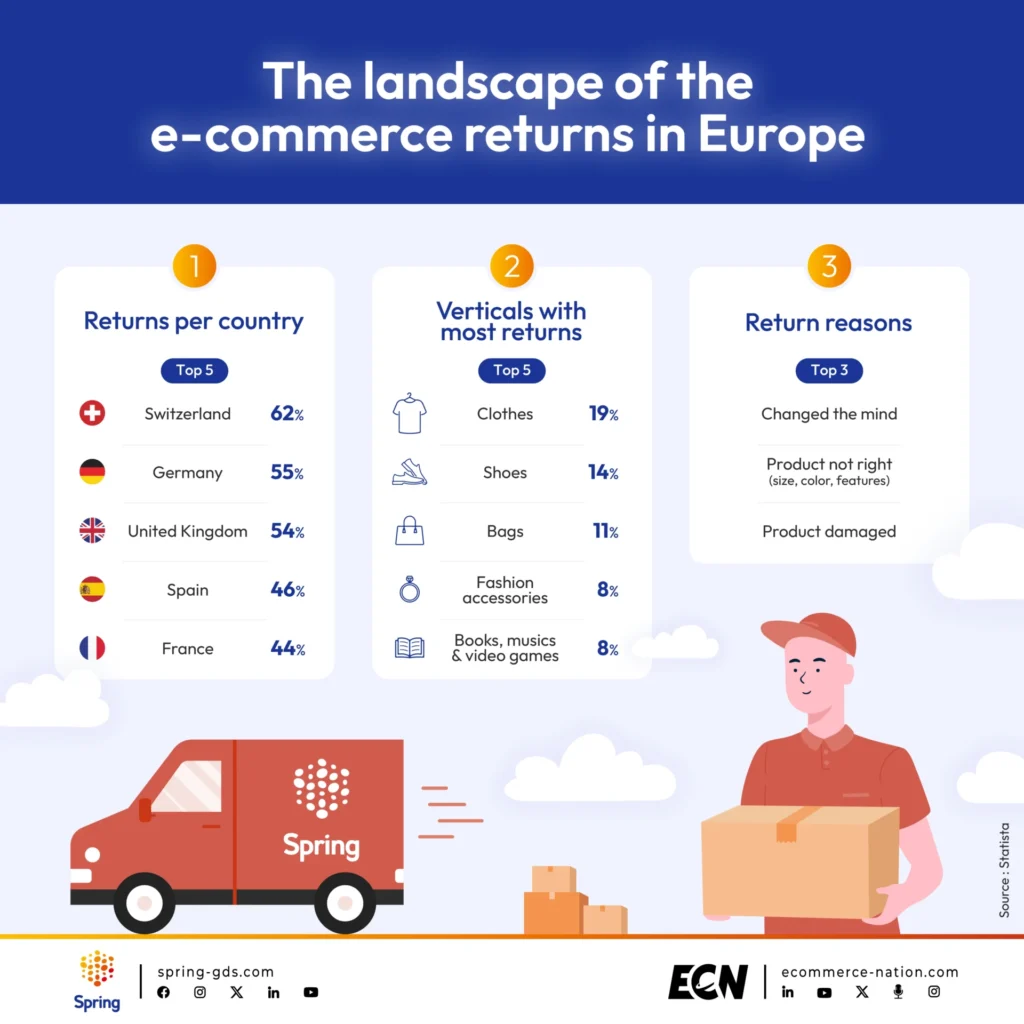
Data from 2023 underscores the magnitude of this phenomenon. The average return rate in Europe fluctuates between 30% and 40%, but these figures mask extreme outliers. Switzerland leads the continent with a staggering 62% return rate per online buyer, followed closely by Germany (55%) and the United Kingdom (54%).
These high figures are not merely a product of indecisive consumers; they are a direct result of "bracketing"—a practice where shoppers order multiple sizes or colors of the same item with the full intention of returning most of them. This behavior has shifted the retail paradigm from "buying to keep" to "buying to try," fundamentally altering the operational requirements of European logistics providers.
Chronology of the Shift
- The Early 2010s: Returns were largely treated as a customer service cost center, with little strategic oversight.
- The Mid-2010s: The rise of "free returns" as a marketing tool. Retailers, led by fashion giants, used generous return policies to acquire market share.
- 2020–2022: The pandemic-fueled e-commerce boom led to a surge in volume, exposing massive inefficiencies in manual returns processing.
- 2023–Present: A period of "Correction." Faced with inflationary pressures and rising shipping costs, major brands have begun to revoke free return policies, testing the elasticity of customer loyalty.
2. Sector-Specific Challenges: Why Products Come Back
While no category is immune, the impact of returns varies drastically across sectors.
Fashion and Apparel: The Complexity of Fit
Fashion remains the most heavily impacted sector. Because online shopping lacks the tactile "fitting room" experience, return rates in apparel frequently exceed 40–50%. The primary drivers are size discrepancies, fabric quality misalignments, and the subjective nature of style.
Electronics and Home Goods
Electronic products and household appliances face a lower volume of returns (hovering around 6%), but the financial impact per unit is substantially higher. Returns in this sector are often triggered by technical incompatibility, complex assembly requirements, or perceived manufacturing defects. Unlike a t-shirt, an electronic device requires rigorous testing, re-packaging, and potential refurbishment before it can be returned to inventory.
3. The Multi-Layered Challenges of Reverse Logistics
Managing the flow of goods back to the warehouse is a logistical tightrope walk.
The Cross-Border Regulatory Maze
For merchants operating across the European Union, the legal landscape is fraught with complexity. While the EU provides a harmonized framework for consumer rights, local nuances regarding refund windows, return shipping liabilities, and VAT recovery on returned goods create friction.
A merchant shipping from France to a customer in Poland must navigate different customs protocols (for non-EU countries) and varying interpretations of the "Right of Withdrawal." Failure to manage these complexities can lead to stranded inventory, where the cost of shipping an item back exceeds its actual resale value.
The Financial Balancing Act
The costs associated with returns are hidden but lethal. They include:
- Direct Costs: Shipping, courier fees, and labor for inspection.
- Operational Costs: Warehousing, cleaning, and re-packaging.
- Revenue Loss: The "depreciation" of the product. Once a box is opened, the item often cannot be sold at full price.
- Opportunity Cost: The time the item spends in transit is time it is not available for sale to another customer.
4. Ecological Implications: The "Hidden" Cost of Returns
The environmental footprint of e-commerce returns is a growing concern for both regulators and consumers. The carbon emissions generated by the "reverse journey"—often involving long-haul transport back to a central hub—are substantial.
Furthermore, the waste generated from single-use packaging during the return process is increasingly under the microscope. Retailers are now facing pressure to implement circular economy models. Reports indicate that when returns are deemed "too damaged" or "too costly to process," some goods are sent to landfill rather than being resold. This has sparked a backlash, forcing companies to look toward secondary markets, liquidators, or professional refurbishment services to maintain their ESG (Environmental, Social, and Governance) commitments.
5. Strategic Optimization: The Path Forward
To thrive in this environment, merchants must stop viewing returns as a failure and start viewing them as an optimization opportunity.
Leveraging Data for Predictive Insights
Data analysis is the most potent weapon in a merchant’s arsenal. By integrating returns data into a Business Intelligence (BI) suite, companies can:
- Identify "Serial Returners": Adjust policies or provide better sizing guidance to specific segments.
- Improve Product Descriptions: If a specific product is returned for "fit," the data suggests the sizing chart on the product page is likely inaccurate or confusing.
- Quality Control: If electronics are returned for "defect," it serves as an early-warning system for supply chain quality failures.
Technological Infrastructure
Investing in automated return management systems (RMS) is no longer optional for scaling businesses. These platforms allow for:
- Real-time Tracking: Providing customers with visibility into their refund status, which significantly reduces "Where is my refund?" support tickets.
- Smart Routing: Automatically directing returns to the nearest processing center or local hub to minimize shipping costs.
- Automated Refund Triggers: Improving customer trust by processing money back to the cardholder the moment the tracking is updated at the carrier facility.
The "Eco-Friendly" Pivot
Merchants can mitigate the environmental impact by:
- Batch Shipping: Incentivizing customers to use a single return point rather than individual courier pickups.
- Sustainable Packaging: Moving toward reusable packaging that can be used for both outbound delivery and the return journey.
- Educational Campaigns: Communicating the impact of returns to the consumer, which often nudges them to make more considered purchases.
6. Conclusion: Turning Returns into Retention
The European e-commerce landscape is shifting toward a model where returns are managed with the same precision as the initial sale. The goal is to move from a reactive, cost-heavy process to a proactive, customer-centric experience.
By implementing clear policies, investing in robust logistical technology, and using data to identify the root causes of returns, merchants can reduce the financial burden of the "reverse journey." Ultimately, a seamless return process—even when it involves a cost to the consumer—is a powerful tool for brand loyalty. In an era where trust is the most valuable currency, a company that makes returning an item as easy as buying it is a company that will earn the long-term commitment of the European consumer.
The future of retail is not just about the sale; it is about the entire lifecycle of the product, and in this, the return is the final, decisive chapter.