GoKwik Joins Growing List of AI-Driven Restructurings: Startup Cuts Over 100 Jobs
By Business Desk
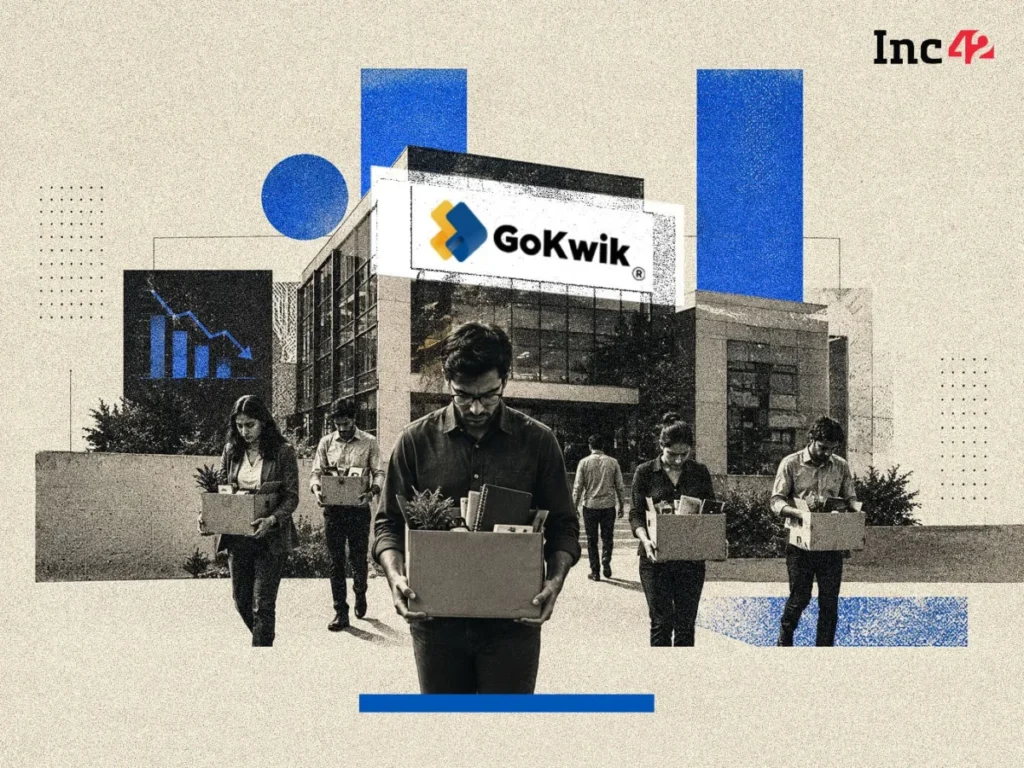
In a move that underscores the accelerating shift toward automation within India’s burgeoning startup ecosystem, ecommerce enablement platform GoKwik has confirmed a significant reduction in its workforce. Sources familiar with the matter have revealed that the company has laid off between 100 and 120 employees over the past several weeks as part of a strategic restructuring exercise aimed at integrating artificial intelligence (AI) deeper into its operational core.
The layoffs, which have rippled across various departments, represent a pivotal moment for the Sequoia-backed firm, which had, until recently, been on an aggressive growth and acquisition trajectory. As GoKwik pivots toward an "AI-first" model, the human cost of this technological transition has sparked a broader conversation about the future of labor in the Indian tech sector.
The Scope of the Restructuring
According to reports from insiders, the layoffs were not isolated to a single division. While the company has maintained a degree of secrecy regarding the specific headcount affected, the cuts were broad-based. Teams tasked with customer onboarding, implementation, and core technology were identified as being the most heavily impacted by the downsizing.
For a startup that prides itself on helping ecommerce brands streamline their checkout processes, reduce return rates, and automate customer engagement, the decision to trim these specific departments signals a fundamental shift in how GoKwik intends to manage its client lifecycle. By automating the onboarding and implementation phases, the company is effectively seeking to reduce its dependency on human intervention, aiming for a more scalable, software-defined operational framework.
Despite multiple requests for comment sent to GoKwik’s leadership team, the company had not provided a formal statement by the time of publication.
A Chronology of Growth and Pivot
To understand the gravity of these layoffs, one must look at the meteoric rise of the startup over the last four years. Founded in 2020 by industry veterans Chirag Taneja, Vivek Bajpai, and Ankush Talwar, GoKwik emerged during the ecommerce boom of the pandemic era. Its value proposition was clear: provide a robust software stack that acts as a multiplier for online brands, helping them optimize conversion rates—a perennial pain point for the D2C (Direct-to-Consumer) segment.
The Funding Journey
GoKwik’s growth has been fueled by significant capital injections. The company has raised a total of $68 million to date. A critical juncture in its history occurred just last year, when the firm secured $13 million in a funding round led by RTP Global, with notable participation from Z47, Peak XV Partners, and Think Investments. At the time, the leadership team spoke optimistically about building an integrated, AI-led suite of solutions. Investors bought into the vision that GoKwik would become the backbone of India’s digital retail infrastructure.
The Expansionist Phase
Before the current restructuring, GoKwik was in full acquisition mode. In 2023, the startup made headlines by acquiring Return Prime, a global returns management application for Shopify. This move was explicitly designed to facilitate an international expansion, allowing GoKwik to penetrate markets in the United States, the United Kingdom, and Europe. The acquisition was intended to scale their merchant base to over 10,000 clients.
Prior to the Return Prime deal, the company had also absorbed Tellephant, a chat commerce startup, for an undisclosed sum. These acquisitions were intended to diversify GoKwik’s product offerings, transitioning the firm from a simple checkout tool to an end-to-end commerce enablement powerhouse.
The AI Push: A Double-Edged Sword
The stated reason for the current layoffs—the push toward AI-led automation—is becoming a recurring theme in the Indian startup landscape. As the "growth at all costs" era of 2021-2022 gives way to a "profitability and efficiency" era in 2024, founders are increasingly viewing AI not just as a product feature, but as a mechanism to optimize headcount.
Industry Benchmarks
GoKwik is far from alone in this transition. The Indian tech sector has witnessed a wave of AI-driven restructuring this year:
- Livspace: The home interiors platform laid off roughly 1,000 employees earlier this year, citing the need for AI-led efficiency.
- Innovaccer: The health-tech unicorn cut 350 jobs as it transitioned to an "AI-native" operational structure.
- Acko: The IPO-bound insurance giant trimmed approximately 5% of its workforce, positioning the move as part of a wider AI-led organizational refinement.
For GoKwik, the strategy appears to be a consolidation of resources. By reducing the headcount in "implementation" and "onboarding"—roles that are historically labor-intensive—the company is betting that its proprietary AI tools can replicate these functions at a fraction of the cost, thereby expanding its margins in an increasingly competitive ecommerce enabler market.
Implications for the Ecommerce Enabler Space
The broader implication of GoKwik’s downsizing is the validation of a new industry standard. Ecommerce enablement is no longer just about offering a dashboard; it is about providing autonomous solutions that work in the background to increase sales without human oversight.
The Future of Human-AI Collaboration
While AI promises increased efficiency, the impact on employee morale and industry reputation remains a concern. The sudden nature of these layoffs often leaves a void in institutional knowledge. For a company that relies heavily on customer relationships—which is the case for an "enabler" like GoKwik—the loss of experienced account managers and implementation specialists could pose a risk to client satisfaction in the short term.
Furthermore, the pressure on startups to demonstrate "AI-native" capabilities to venture capitalists has created a unique incentive structure. Founders are incentivized to present leaner, more automated organizations to justify higher valuations in a tightening funding environment. Whether these AI-led pivots will yield the promised long-term profitability remains to be seen.
The Path Ahead: Challenges and Opportunities
As GoKwik moves forward, it faces a dual challenge. On one hand, it must successfully integrate its recent acquisitions—Return Prime and Tellephant—into its core stack while simultaneously navigating the cultural and operational shifts caused by the recent layoffs. On the other, it must ensure that its AI tools can actually handle the complexities of global retail, where consumer behavior varies significantly across borders.
The international foray into the US and European markets is particularly ambitious. These regions are dominated by established players and sophisticated merchants who demand high-touch support. If GoKwik automates too much, too soon, it risks losing the "service" element of its "software-as-a-service" (SaaS) model.
Strategic Outlook
The next twelve months will be a litmus test for the company. Investors will be watching closely to see if the cost savings from the workforce reduction translate into improved unit economics and a faster path to IPO or sustained profitability.
For the employees who remain, the mission is clear: prove that the GoKwik platform can function as a self-sustaining engine. For the startup ecosystem at large, GoKwik serves as a case study in the rapid evolution of the "Enabler" economy—a sector that is moving toward a future where human effort is increasingly replaced by algorithmic precision.
As the company settles into this new phase, the silence from its leadership suggests that the transition is currently the top priority. Whether this leaner, AI-augmented GoKwik can maintain its reputation for customer-centric innovation will be the defining narrative of its next chapter.
Summary of Key Data Points
- Total Layoffs: 100–120 employees.
- Impacted Areas: Customer onboarding, implementation, and tech teams.
- Total Funding to Date: $68 Million.
- Key Acquisitions: Return Prime (2023), Tellephant (previous).
- Primary Drivers: AI-led automation and operational streamlining.
- Founding Year: 2020 (Founders: Chirag Taneja, Vivek Bajpai, Ankush Talwar).
As the dust settles, the industry waits to see if this pivot toward AI will indeed provide the competitive edge GoKwik requires to dominate the global ecommerce enablement landscape, or if the loss of human capital will create gaps that automation cannot yet fill.