The AI Revolution: Redefining the Digital Landscape for Modern Business
Artificial Intelligence (AI) has transcended the boundaries of science fiction to become the bedrock of modern professional infrastructure. As language models and machine learning algorithms evolve with unprecedented speed, the integration of AI is no longer a luxury for the tech-forward; it is an operational imperative. From automating mundane administrative tasks to generating complex creative assets, AI is fundamentally altering how businesses conceive of productivity, strategy, and market engagement.
The State of Play: Main Facts and Current Adoption
The shift toward AI-centric operations is quantifiable and profound. Recent data from AuthorityHacker indicates that 35% of companies have already fully integrated AI into their core business processes. Perhaps more telling is the sentiment among industry leaders: 90% of organizations now view AI-assisted workflows as a definitive competitive advantage.
This is not merely a corporate trend; it is a technological ubiquity. Approximately 77% of consumer and professional devices now incorporate AI functionalities, from predictive text on smartphones to complex data analysis tools in enterprise resource planning (ERP) systems. As we move deeper into 2024, the "AI gap"—the distance between those who leverage machine intelligence and those who rely on legacy processes—is widening.
A Chronology of the AI Surge
To understand where we are, we must look at the rapid acceleration of the last decade:
- 2014–2017: The Era of Specialization. AI was primarily confined to data analytics, predictive maintenance, and basic chatbots. It was a "behind the scenes" technology used by data scientists.
- 2018–2020: The Rise of Natural Language Processing (NLP). The introduction of sophisticated architectures allowed machines to better understand context. Businesses began using basic AI for customer service automation.
- 2021–2022: The Generative Leap. The public release of transformative models like DALL-E and ChatGPT shifted the paradigm. AI moved from "analyzing" data to "creating" content, designs, and code.
- 2023–2024: The Integration Phase. The current epoch is defined by the democratization of AI. Developers are embedding APIs into standard SaaS platforms, making advanced machine learning accessible to small business owners, bloggers, and solopreneurs.
Supporting Data: Why AI is Winning
The economic implications of AI adoption are supported by shifting capital flows and efficiency metrics. Companies that have successfully implemented AI-driven marketing strategies report an average reduction in content production time of 60%. Furthermore, in the realm of e-commerce, AI-driven personalization engines have been shown to increase conversion rates by up to 15% by tailoring the user journey to specific customer behaviors.
The data suggests that the "understanding of the ins and outs" of AI is the new digital literacy. As the barrier to entry lowers, the challenge shifts from accessing tools to mastering the prompt engineering and workflows that drive high-quality results.
Official Industry Perspectives: The Strategic View
Industry experts, including those from the AuthorityHacker research group, emphasize that AI should be viewed as a "co-pilot" rather than a replacement. The prevailing professional consensus suggests that the most successful organizations are those that employ a "Human-in-the-Loop" (HITL) strategy.
In this model, AI handles the heavy lifting of data synthesis, initial content drafting, and pattern recognition, while human professionals provide the nuance, ethical oversight, and strategic direction. Official statements from major tech consultancies underscore that the primary risk to businesses today is not the potential failure of AI, but the "cost of inaction"—the risk of losing relevance in a market that is increasingly optimized by algorithmic precision.
Strategic Pillars: Where AI is Transforming Business
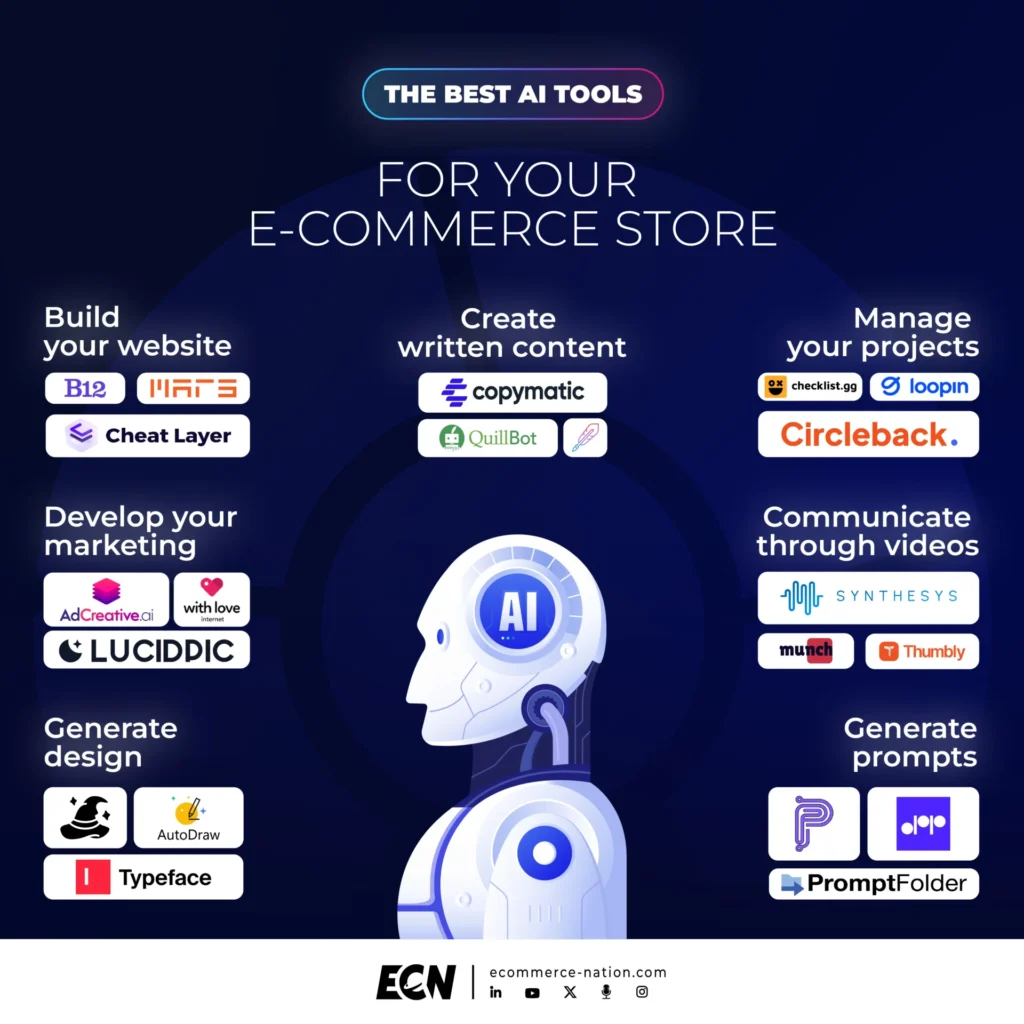
For those looking to optimize their online store, blog, or internal processes, the ecosystem of tools can be categorized into seven strategic pillars:
1. Web Development and Site Architecture
Modern AI-driven website builders are moving beyond simple drag-and-drop interfaces. They now utilize machine learning to predict user behavior patterns and suggest layout optimizations that maximize engagement and SEO performance in real-time.
2. Marketing and Brand Strategy
AI has revolutionized market segmentation. Instead of broad-stroke demographics, AI tools now allow for "micro-segmentation," where marketing messages are hyper-personalized based on real-time browsing habits and past purchasing data, significantly increasing ROI on ad spend.
3. Multimedia and Video Communication
The production of high-quality video—once a resource-heavy endeavor—is being democratized. From AI-driven script writing to text-to-video generation and automated voice-over synthesis, businesses can now maintain a consistent, high-frequency video marketing presence without the overhead of a full production studio.
4. Project and Workflow Management
Project management is shifting from static boards to dynamic, AI-optimized systems. These tools can now predict project bottlenecks, suggest reallocations of human resources, and automate status reporting, ensuring that teams focus on high-value cognitive work rather than administrative maintenance.
5. Prompt Engineering
As the primary interface for AI becomes the "prompt," the ability to craft effective queries is becoming a core professional skill. Specialized prompt generation tools now help users iterate their inputs to get the most accurate, high-quality outputs from Large Language Models (LLMs).
6. Content Strategy and Copywriting
The creation of written content is no longer a linear process. AI assists in everything from SEO keyword clustering to long-form blog post drafting. By leveraging AI for the "first draft," content marketers can scale their output while maintaining a focus on brand voice and strategic intent.
7. Design and Visual Assets
Graphic design is seeing a shift toward generative AI. Tools that convert text descriptions into high-fidelity images allow for rapid prototyping, social media asset creation, and branding experiments that would previously have taken days to complete.
The Implications: A New Era of Professionalism
The widespread adoption of AI brings with it profound implications for the future of work.
Ethical Considerations: As businesses rely more on AI, the issues of bias in algorithms and data privacy become paramount. Organizations must establish clear governance frameworks to ensure that their AI tools remain compliant with evolving regulations like the EU AI Act.
The Skill Shift: The value of "technical execution" is decreasing, while the value of "strategic oversight" is increasing. Professionals who learn to navigate these AI tools will find themselves in a position to manage larger portfolios of work, essentially becoming "managers of machines."
Sustainable Growth: For e-commerce businesses, AI provides a pathway to sustainable growth. By automating the friction points of the customer journey—such as inventory management, personalized recommendations, and query resolution—businesses can scale without a linear increase in operational costs.
Conclusion: Embracing the Future
The integration of artificial intelligence is not a distant goal; it is a present reality. Whether you are managing an online store, running a content-heavy blog, or seeking to streamline your corporate operations, the tools available today offer a unique opportunity to achieve a level of efficiency previously reserved for large enterprises.
Understanding these tools is the first step. The second is integrating them into your specific workflow in a way that respects your brand’s integrity while maximizing your output. As the landscape continues to evolve, the businesses that thrive will be those that view AI not as a replacement for human ingenuity, but as the ultimate force multiplier for it.
To help you navigate this transition, we invite you to review the infographic provided in this article, which details the specific tools that can best support your unique business objectives. In an era of rapid technological change, the most significant risk is not experimentation, but stagnation. Start your AI journey today to ensure your business remains at the cutting edge of the digital revolution.