The Great Public Pivot: How India’s Startup Ecosystem is Defining a New Era of Market Maturity
For years, observers of the Indian technology landscape have watched the startup ecosystem evolve from a fledgling collection of ambitious ideas into a robust, adult market. Today, the most definitive marker of this evolution is not just the valuation of private unicorns, but the accelerating migration of these entities onto the public bourses. The transition from private ownership to a public listing has become more than a financial milestone; it is a critical "rite of passage" that signifies operational transparency, institutional viability, and the ultimate maturation of the Indian digital economy.
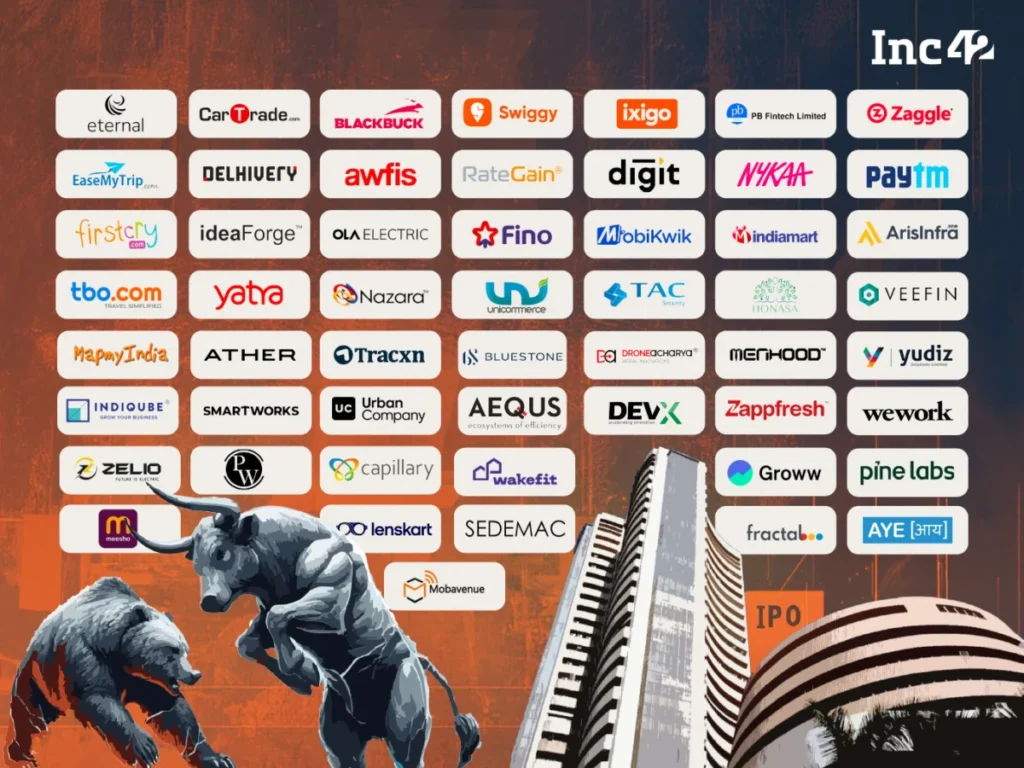
As of mid-2026, the data paints a clear picture: the Indian startup IPO wave is no longer a trickle—it is a surge. With over 60 new-age tech companies now trading on public exchanges and at least 15 more in active stages of their IPO journey, the Dalal Street "startup experiment" has officially become a mainstay of the broader financial market.
The Evolution of the IPO Wave: From Growth to Governance
Historically, Indian startups were defined by a "growth-at-all-costs" mentality. During the funding boom of 2020–2022, market share was the only currency that mattered. However, the onset of the funding winter in 2022 served as a brutal, necessary reality check. Capital became expensive, and investors pivoted their expectations from rapid user acquisition to sustainable, bottom-line profitability.
This shift in sentiment acted as a catalyst for the current IPO wave. Companies that once ignored margins were forced to demonstrate a path to sustainability. The result is a cohort of companies that are entering the public markets with more disciplined financial models. Today, approximately 64% of listed new-age tech companies—a total of 41 firms—are operating in the green.

The momentum is undeniable. In 2024, 13 startups made their market debut. By the end of 2025, that figure had climbed to 18, including high-profile names like Meesho, Ather Energy, Urban Company, Lenskart, and PhysicsWallah. As of July 2026, the trend shows no sign of slowing, with players like Kissht, Aye Finance, Fractal Analytics, and Shadowfax already listed, and others like Turtlemint queuing for their debut.
Sectoral Dominance: Fintech and Enterprise Tech Lead the Charge
The distribution of these IPOs is not accidental; it mirrors the private funding trends of the last decade. The sectors that received the most venture capital—Fintech, Ecommerce, and Enterprise Tech—are naturally the ones producing the most listed entities.
Fintech leads the pack with 13 listings, underscoring the deep integration of digital financial services in the Indian economy. Enterprise Tech and Ecommerce follow closely, with 12 and 11 listings respectively. These sectors have benefited from the digital transformation of Indian SMEs and the rapid adoption of e-commerce in Tier-2 and Tier-3 cities.
The dominance of these sectors is expected to persist. Market watchers are closely tracking upcoming potential listings from industry giants like PhonePe, Zepto, and OYO, which could redefine market capitalization benchmarks for the sector. Furthermore, as the digital ecosystem expands, secondary sectors are gaining ground. For instance, the Real Estate Tech segment is seeing a surge in activity, with six listed companies and more, such as Infra.Market, waiting in the wings with confidential filings already submitted to the Securities and Exchange Board of India (SEBI).

Geography of Success: The Rise of Delhi NCR
While Bengaluru is widely considered the "Silicon Valley of India," the geographical center of gravity for listed tech companies has shifted toward the North. The Delhi NCR region (Delhi, Gurugram, and Noida) has emerged as the clear leader in producing public-market-ready startups.
With 25 listed new-age tech companies, Delhi NCR significantly outpaces Bengaluru’s 17 and Mumbai’s 11. Gurugram, in particular, has become a hub for consumer-facing giants, housing 15 listed entities including Delhivery, Eternal, and Lenskart. Noida has successfully positioned itself as a major base for fintech and infrastructure players like Paytm and Indiqube.
This regional dominance is reflected in the market capitalization contribution: Delhi NCR contributes approximately $90.9 billion to the cumulative $148 billion market cap of the listed new-age tech cohort. This concentration suggests that the regulatory and infrastructural support within the national capital region has created an ecosystem conducive to the long-term governance requirements of a public company.
Chronology of Market Entry and The "Time-to-Market" Metric
A fascinating aspect of this transition is the duration of the journey from founding to listing. Data from the Inc42 Listed New-Age Tech Company Tracker reveals that the median time taken for a startup to reach the public markets is 11 years.
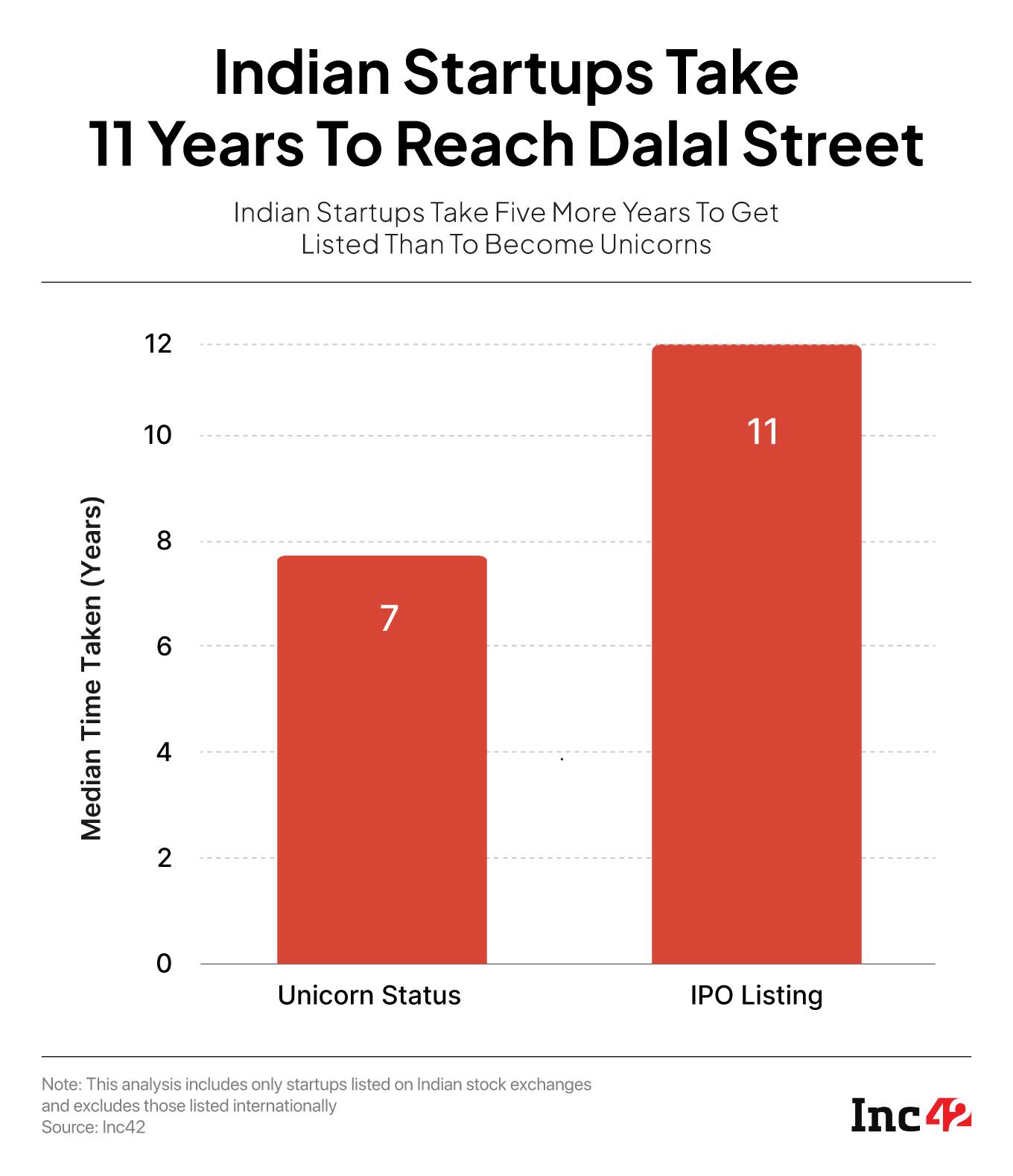
However, there are significant outliers. Companies like ixigo and Fino Payments Bank took nearly two decades to reach the bourse, reflecting a more traditional, gradual growth strategy. Conversely, companies like ArisInfra have disrupted this timeline, moving from incorporation to IPO in just four years. This variance suggests that there is no single "correct" speed for an IPO; rather, it depends on the capital intensity of the business model and the founders’ strategic vision.
Financial Performance: The Profitability Threshold
The "Profitability First" mandate has fundamentally altered how startups prepare for their public debut. Modern entrants are increasingly turning profitable in the quarters immediately preceding their IPO filing.
Take the case of Lenskart, which performed a remarkable turnaround, posting a net profit of approximately ₹297 Cr in recent quarters, a sharp contrast to the losses seen in FY24. This trend highlights the "pre-IPO discipline" that is now expected by public market investors.
However, the road to profitability remains volatile. Urban Company provides a stark reminder of the challenges inherent in public markets; despite posting a consolidated net profit of ₹240 Cr in FY25, the company slipped back into a loss-making position in FY26, despite a 36% year-on-year revenue growth. This volatility underscores that public listing is not the "end" of the journey but rather the beginning of a higher level of scrutiny, where investors prioritize consistent, long-term operational efficiency over sporadic profitable quarters.

Implications for the Indian Economy
The maturation of these companies has profound implications for the Indian economy:
- Wealth Creation and Exit Liquidity: Public listings provide the much-needed liquidity for early-stage venture capital and private equity investors. This liquidity is recycled back into the ecosystem, fueling the next generation of startups.
- Increased Regulatory Oversight: Moving from private to public forces companies to adopt higher standards of financial reporting, corporate governance, and transparency. This "institutionalization" of the startup sector is essential for maintaining investor confidence.
- Broadening the Investor Base: The inclusion of startups on the NSE and BSE allows retail investors to participate in the growth of the digital economy—an opportunity previously reserved for elite VC firms.
- Market Resilience: With a combined market capitalization now exceeding $163 billion, the listed tech sector is becoming a significant component of the Indian stock market’s total valuation, forcing traditional analysts and mutual funds to deepen their understanding of tech-driven business models.
Conclusion: The Path Ahead
As we look toward the remainder of 2026 and into 2027, the "Startup IPO Wave" is clearly transitioning into a "Startup Market Maturity" phase. The initial hype has been replaced by cold, hard data. Investors are no longer just looking at user growth; they are looking at EBITDA margins, customer acquisition costs, and long-term sustainability.
The companies that have successfully crossed the threshold—from Info Edge’s legacy success to the rapid ascent of newer players—have set a precedent for the next generation of Indian entrepreneurs. For those still in the private domain, the message is clear: the path to the public market is paved with transparency, fiscal discipline, and a demonstrable ability to create value that goes beyond the balance sheet.
As the Inc42 Listed New-Age Tech Company Tracker continues to record these movements, one thing is certain: the Indian startup ecosystem has grown up. It is now a critical pillar of the nation’s financial future, and the world is watching to see how this uniquely Indian breed of tech companies performs under the relentless gaze of the public market.