Scaling the Final Frontier: Dhruva Space Secures Landmark Investment from IN-SPACe’s Antariksh Fund
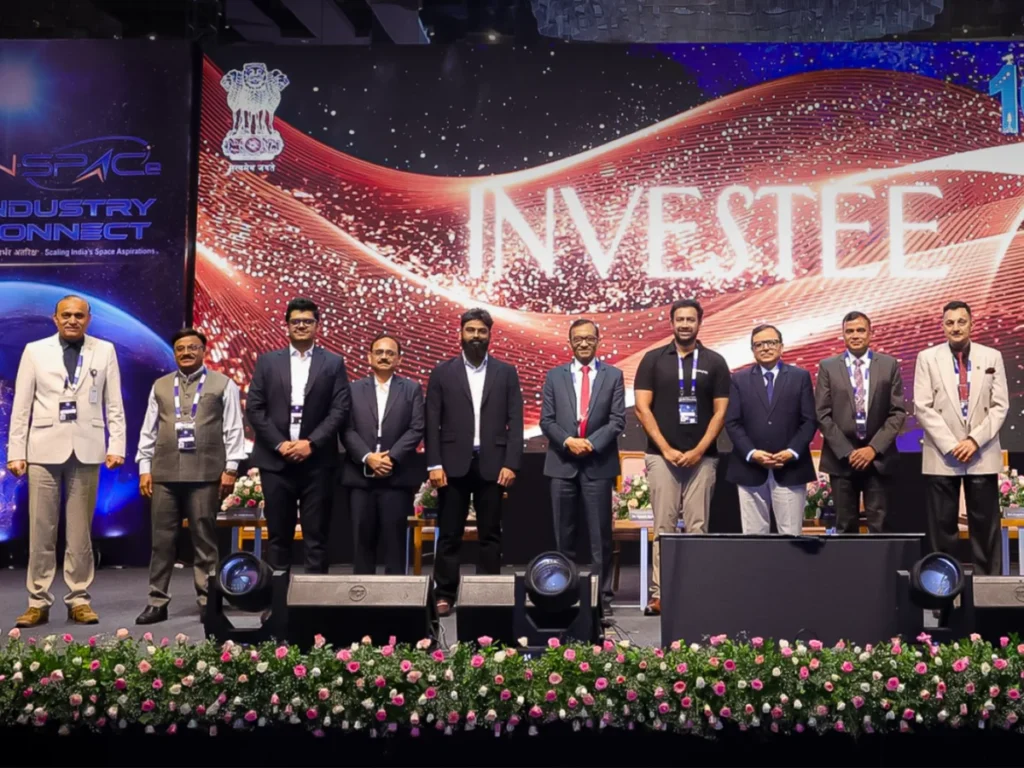
In a significant milestone for India’s burgeoning space economy, Hyderabad-based space technology startup Dhruva Space has secured ₹60 crore ($6.3 million) in funding from the Antariksh Venture Capital Fund (AVCF). This transaction represents the maiden deployment of the newly commissioned, SIDBI-managed fund, which is anchored by a ₹1,000 crore commitment from the Indian National Space Promotion and Authorisation Centre (IN-SPACe).
This infusion of capital is a critical component of Dhruva Space’s ongoing pre-Series B funding round, which has now reached an impressive total of ₹275 crore, split between ₹150 crore in equity and ₹125 crore in debt financing. As the Indian government continues to aggressively catalyze private sector participation in the space domain, this deal serves as a bellwether for the maturation of the domestic spacetech ecosystem.
The Strategic Importance of the AVCF Investment
The Antariksh Venture Capital Fund (AVCF) is not merely another financial instrument; it is a policy-driven engine designed to institutionalize support for India’s private space sector. Launched following its announcement in the Union Budget 2024, the Category II Alternative Investment Fund (AIF) aims to aggregate a total corpus of ₹1,600 crore.
Why Dhruva Space?
The selection of Dhruva Space for the inaugural investment underscores the startup’s operational maturity. By choosing a company that provides comprehensive end-to-end space engineering solutions—ranging from satellite manufacturing to ground station support—the AVCF has signaled its intent to back "full-stack" players capable of competing on a global scale.
The capital is earmarked for four strategic pillars:
- Manufacturing Expansion: Scaling up high-volume satellite assembly lines.
- Infrastructure Development: Enhancing the physical ground-based hardware required for mission support.
- Technological R&D: Advancing critical space-grade technologies to reduce import dependency.
- Program Execution: Fulfilling a robust and growing order book that currently exceeds ₹500 crore.
A Chronology of Growth: From Vision to Industrialization
Dhruva Space’s trajectory reflects the broader evolution of the Indian space industry from a state-led endeavor to a public-private partnership model.
- 2012: The Foundation: The company was established by a team of visionary engineers—Sanjay Nekkanti, Chaitanya Dora Surapureddy, Abhay Egoor, and Krishna Teja Penamakuru. Their goal was to democratize access to space by developing modular satellite platforms.
- 2022-2023: Proof of Concept: The company successfully demonstrated its satellite deployment capabilities in orbit, transitioning from a design house to an active space-hardware manufacturer.
- 2024: The Strategic Pivot: The company received a major boost through the government’s Research, Development & Innovation Fund (RDIF). Under the banner of "Project Garud," Dhruva secured ₹105 crore in grant support. This project is specifically designed to enable the high-volume manufacturing of 500–600 satellites annually, a move intended to shift India from a satellite-importing nation to a satellite-exporting global hub.
- Q3 2024: Institutional Validation: The current ₹60 crore injection from AVCF serves as a vote of confidence from the state’s regulatory and investment arm, bridging the gap between early-stage innovation and large-scale industrialization.
The Broader Landscape: India’s Spacetech Opportunity
The Indian space economy is currently experiencing a "Goldilocks moment." With the market projected to reach a valuation of $77 billion by 2030, the government has been systematically dismantling barriers to entry.
The Role of IN-SPACe
IN-SPACe serves as the single-window interface between the Indian Space Research Organisation (ISRO) and private players. Its efforts have expanded beyond just the AVCF. For instance, in June 2024, the organization funded three other promising startups—Astrobase Space Technologies, SatSure Analytics, and TakeMe2Space—under its Technology Adoption Fund (TAF) scheme. This multi-pronged approach ensures that innovation occurs at every layer of the value chain: from satellite analytics to launch vehicle propulsion.
The Macro-Economic Context
India’s emergence as a "spacefaring nation" is no longer just a national pride project; it is a commercial imperative. The global demand for Earth observation, secure communication, and satellite-based internet is skyrocketing. Dhruva Space, by positioning itself as an end-to-end solution provider, is effectively capturing the demand from commercial, government, and academic clients who require shorter lead times and lower costs than traditional space agencies can provide.
Official Perspectives: The Path Forward
Commenting on the funding, Chaitanya Dora Surapureddy, co-founder of Dhruva Space, emphasized the alignment between the company’s growth and the national interest:
"As demand for space-based solutions continues to grow globally, this capital will enable us to accelerate infrastructure development, scale manufacturing, and execute on our growing order book while contributing meaningfully to India’s emergence as a leading Space industrialization hub and spacefaring nation."
The sentiment is echoed by policy analysts who note that the AVCF mandate is specifically to nurture startups through their most vulnerable "valley of death" phase—the transition from prototype to mass production. By investing in about 35 startups over the next five years, the AVCF intends to build a self-sustaining ecosystem where private companies like Dhruva Space become the primary vendors for both the Indian government and international satellite operators.
Implications: Building a Resilient Space Ecosystem
The implications of this investment are manifold, affecting everything from sovereign security to global trade.
1. Reducing Strategic Dependency
"Project Garud" is perhaps the most significant implication of Dhruva’s recent funding. By aiming for a capacity of 600 satellites per year, the company is directly addressing the issue of supply chain resilience. Historically, India’s dependence on foreign satellite buses and components left the nation vulnerable to geopolitical shifts. Domestic manufacturing ensures that India can maintain its strategic assets in orbit without external dependencies.
2. Job Creation and Skill Development
The transition to "high-volume manufacturing" requires a highly skilled workforce. Dhruva Space’s expansion will likely act as a magnet for aerospace, mechanical, and software engineering talent in Hyderabad and across India, effectively cementing the country’s reputation as a global talent hub for deep-tech.
3. Investor Confidence
For the broader venture capital community, the entry of a state-anchored fund like AVCF serves as a "de-risking" signal. When the government demonstrates clear, long-term financial commitment to a sector, private equity and venture capital firms are significantly more likely to follow suit, leading to an overall increase in liquidity for the spacetech sector.
Looking Ahead: The Future of Dhruva Space
As Dhruva Space moves forward, the challenges will be technical and operational. Scaling from a boutique satellite manufacturer to a mass-production facility is fraught with hurdles, including rigorous space-grade certification standards and the management of a complex global supply chain.
However, with a current order book of over ₹500 crore and a solid foundation of both government grants and institutional venture funding, the company is well-positioned to maintain its momentum. The success of this pre-Series B round not only secures the company’s future but also provides a blueprint for how Indian spacetech startups can navigate the path from niche innovation to industrial-scale delivery.
In the coming years, as the Antariksh Venture Capital Fund begins to deploy the remainder of its ₹1,600 crore corpus, we can expect to see an even greater density of activity within the Indian space sector. Dhruva Space, by acting as the pathfinder for this fund, has effectively set the standard for what a modern, competitive, and state-backed Indian space company looks like in the 21st century.
The frontier is no longer just for government agencies; it is increasingly becoming an industrial landscape, and companies like Dhruva Space are building the infrastructure upon which that future will be written.