The State of Blogging: Why Effort, Strategy, and "Rented Land" Define Modern Content Success
For over a decade, blogging has been the cornerstone of B2B and B2C digital strategy. It is the engine that drives search engine optimization (SEO), establishes thought leadership, and provides the essential information that guides customers through the marketing funnel. However, the digital landscape is not static. As algorithms evolve and generative AI reshapes the way content is produced, the traditional "publish and pray" approach is yielding diminishing returns.
To understand how to navigate this shifting terrain, we turn to the 11th Annual Blogger Survey by Orbit Media. This longitudinal study, widely considered the gold standard for blogging benchmarks, offers a reality check for content marketers. We sat down with Andy Crestodina, CMO and co-founder of Orbit Media, to dissect these findings and determine what they mean for the future of your content strategy.
The Core Reality: Time Investment and the AI Paradox
One of the most pressing questions heading into 2024 was whether the widespread adoption of generative AI would collapse the time required to produce high-quality content. With 80% of bloggers now utilizing AI in some capacity—up from virtually zero in 2022—one might expect a dramatic reduction in production hours.
The data, however, tells a different story.

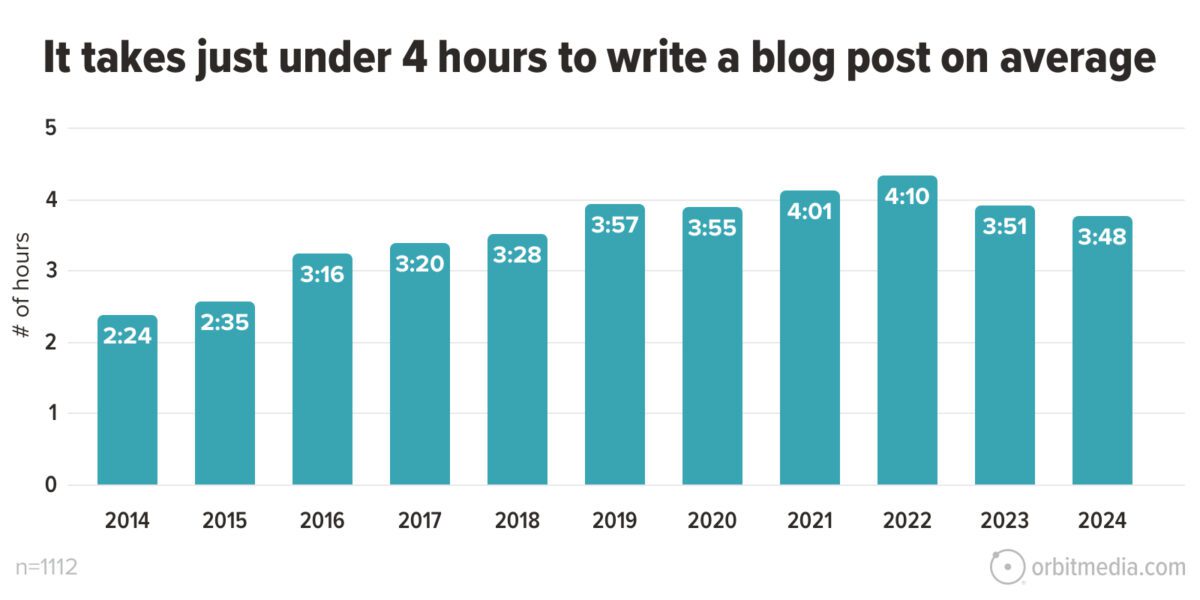
The average blog post today takes three hours and forty-eight minutes to write—a mere three-minute decrease from the previous year. This resilience in production time highlights a critical realization: while AI can assist in brainstorming, outlining, and drafting, it cannot replace the strategic oversight, factual verification, and unique creative voice required to produce content that actually moves the needle.
Why Quality Still Demands Time
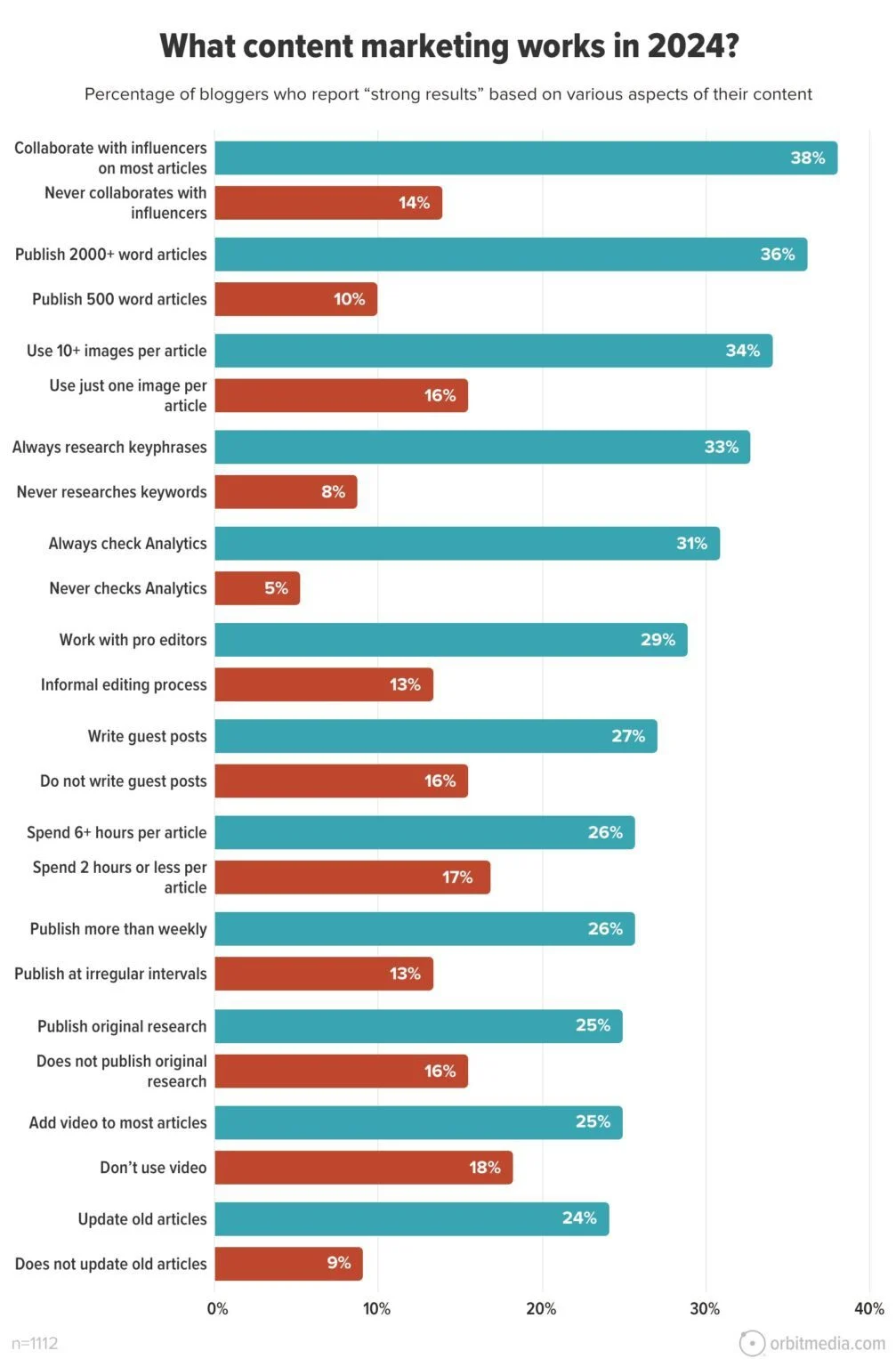
The survey reveals a persistent truth: high-effort content yields superior results. Bloggers who consistently produce long-form articles (2,000+ words) and dedicate more than four hours per post are significantly more likely to report "strong results."
This suggests that the market is increasingly saturated with "average" content. As AI makes it easier to produce generic text, the "human premium"—the depth, expertise, and storytelling that only a subject matter expert can provide—becomes the primary differentiator.
Strategy and Cadence: Thinking Like a Media Company
If you want to achieve top-tier performance, you must stop thinking like a blogger and start thinking like a social media platform. Modern audiences have high expectations; they are no longer satisfied with sporadic, shallow updates.
The Bi-Weekly Minimum
The data suggests that a bi-weekly publishing cadence is the minimum threshold for sustained performance. Consistency serves two purposes: it trains your audience to expect your content, and it provides search engines with a steady stream of fresh signals.
The Social Feed Approach
The most successful blogs today mirror the architecture of high-engagement social media streams. This involves:
- Visual Storytelling: Using custom charts, videos, and infographics to break up text.
- User-Centric Design: Prioritizing readability and mobile optimization.
- Collaborative Content: Engaging with industry experts to lend authority and reach to your pieces.
The AI Reality Check: Tool vs. Strategy
While AI adoption is ubiquitous, there is currently no direct statistical correlation between AI usage and superior marketing outcomes. This is not to say AI is ineffective; rather, it is a tool, not a strategy.
Top performers are using AI as a force multiplier—to handle research tasks or generate first drafts—but they are investing their saved time back into the editorial process. They are focusing on:

- Strategic Direction: Ensuring the content aligns with business objectives.
- Accuracy Checks: Auditing AI output to prevent hallucinations and maintain brand integrity.
- Creative Infusion: Adding personal anecdotes and unique viewpoints that AI cannot replicate.
Insights from the Source: Q&A with Andy Crestodina
To provide context on these findings, we spoke with Andy Crestodina about how these trends translate into actionable business strategy.
Q: What research findings were the most surprising to you personally?
Crestodina: "The data is telling us, year after year, that big efforts drive big outcomes. It’s not surprising in theory, but seeing the side-by-side performance of low-effort versus high-effort programs is stark. What is surprising is how many marketers continue to stick with the same low-effort, short-form, monthly cadence. They aren’t doing research, they aren’t collaborating, and they aren’t using video. If you don’t put in the work, you should set your expectations low."
Q: The data suggests podcasters are twice as likely to report strong results. Why?

Crestodina: "It tracks perfectly with other findings. Podcasters are rarely ‘going it alone.’ They are collaborating with guests, hitting the record button, and creating audio content that builds a deeper, more intimate relationship with their audience. They are doing the hard things that others avoid, and the results reflect that."
Q: The report notes that the most visible metrics—like traffic—are the least important. How should we measure success?
Crestodina: "There is an inverse relationship between the visibility of a metric and its importance. Traffic is easy to track, but it’s often a vanity metric. With search traffic declining and ‘zero-click’ searches becoming the norm, we have to look deeper. We should be measuring lead quality, word-of-mouth growth, and bottom-of-funnel engagement. The most important outcomes in marketing are often the hardest to measure."
Implications for 2025: Adapting to the New Reality
For content marketing leaders, the implications are clear: the era of easy, search-driven traffic is waning. The rise of zero-click searches and the saturation of the web mean that your blog can no longer rely solely on SEO to survive.

1. Embrace "Rented Land"
One of the most controversial but necessary shifts is the move toward platform-native content. Crestodina notes that Orbit Media began shifting its focus to LinkedIn newsletters. "We broke the old rule of ‘don’t build on rented land,’" he explains. "By publishing directly to LinkedIn, we aligned ourselves with their goal of keeping users on the platform. In return, they promoted our content to millions. The low-traffic future of the traditional blog isn’t a problem if you go where your audience is already spending their time."
2. Redefine Success Metrics
Move beyond "pageviews." Focus on metrics that indicate depth of engagement:
- Time on page: Are they actually reading?
- Conversion rates: Are they moving from a blog post to a demo or newsletter signup?
- Referral traffic: Is your content being shared and discussed?
3. Prioritize Original Research and Collaboration
Data is the currency of the future. By conducting your own surveys, creating proprietary case studies, or co-authoring content with industry peers, you create assets that cannot be replicated by AI or competitors. This builds the "top-of-mind" awareness that Crestodina emphasizes as a critical, albeit intangible, goal.
Conclusion: The Path Forward
The 11th Annual Blogger Survey serves as a definitive roadmap for the year ahead. The takeaway is not that blogging is dead; it is that "average" blogging is dead.

To succeed, you must commit to a higher level of effort. You must marry the speed and efficiency of AI with the irreplaceable depth of human expertise. You must prioritize building an audience on platforms where they live, rather than hoping they stumble upon your website through a decaying search landscape.
As we look toward 2025, the brands that thrive will be those that view content as a strategic asset—a vessel for original thought, collaboration, and meaningful connection. The data is clear: the effort you put in is the exact measure of the success you will receive. It’s time to stop chasing the vanity of traffic and start building the authority of a true media leader.