Hazard Lights in the Rain: A Safety Necessity or a Dangerous Misconception?
By Lakshya Rana
Updated: July 14, 2026
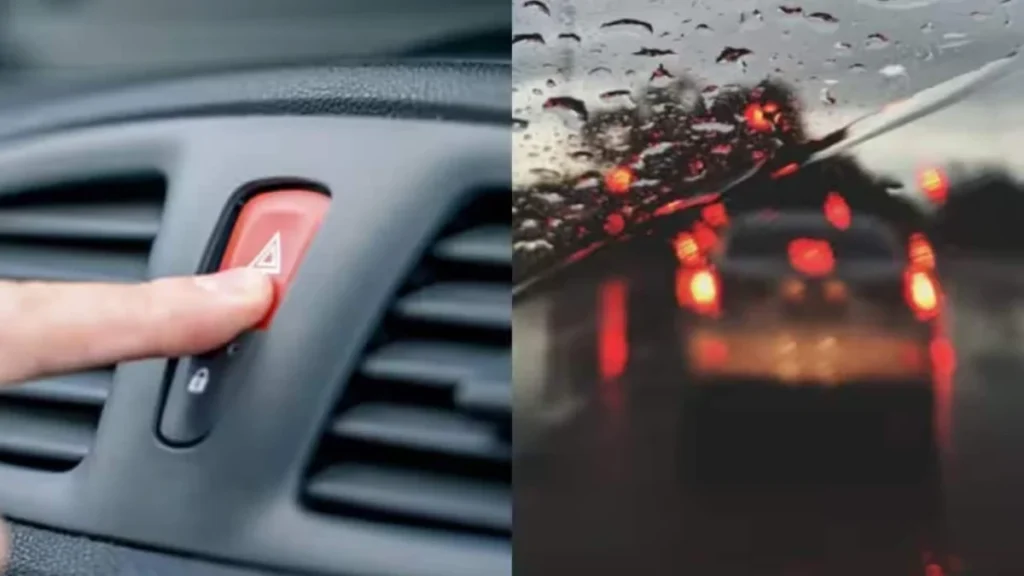
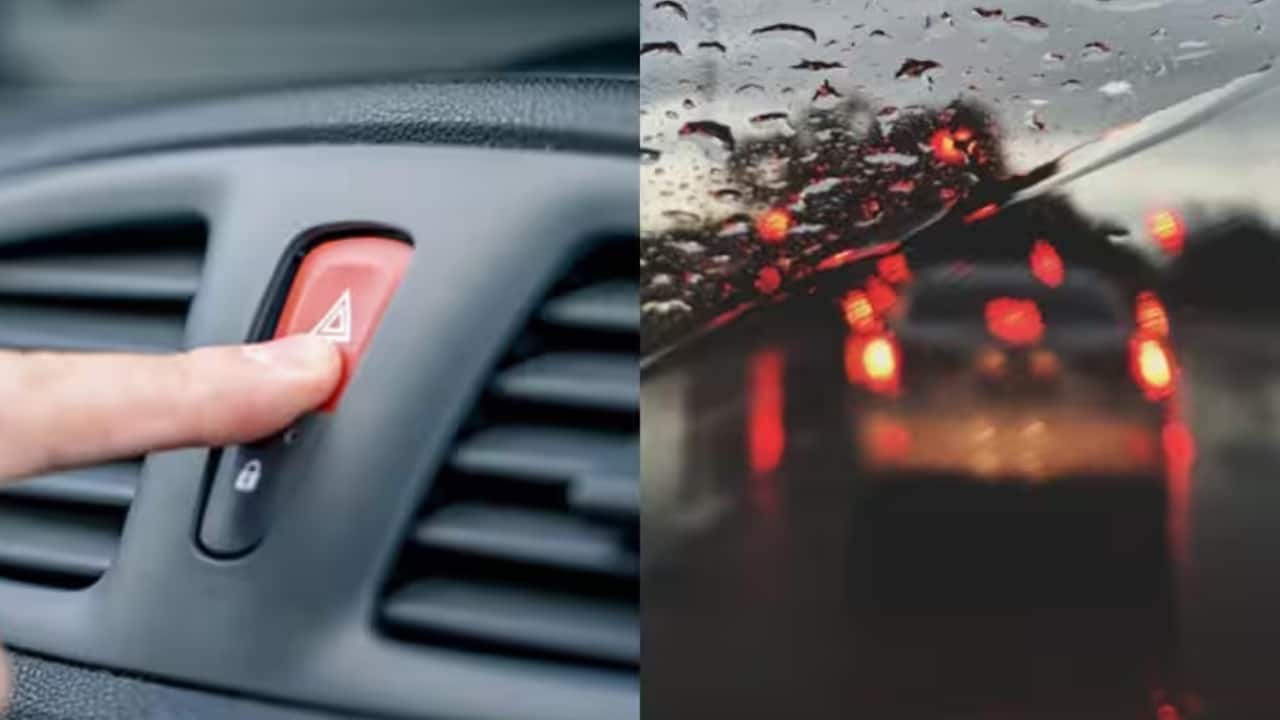
Every driver has experienced the scenario: the sky darkens, the clouds open up, and within minutes, the highway becomes a blur of grey mist and shimmering asphalt. Suddenly, like a synchronized dance, a significant portion of the traffic flicks on their hazard lights. For many, this feels like an intuitive act of caution—a signal to fellow motorists that visibility is poor and caution is required. However, traffic safety experts and law enforcement agencies have long debated this practice, with a growing consensus suggesting that this "polite" habit may actually be a significant safety hazard in itself.
Is using hazard lights during a downpour a smart defensive driving maneuver, or does it inadvertently create more danger on the road?
The Main Facts: Understanding the Function of Hazard Lights
To understand why using hazard lights in the rain is often discouraged, one must first understand their intended purpose. Hazard warning lights—often referred to as "flashers"—are designed specifically to indicate that a vehicle is stationary or poses an immediate threat to the flow of traffic. In almost every vehicle manual, the hazard light system is reserved for emergencies: a vehicle breakdown, a collision, or a situation where the car is traveling significantly below the speed limit due to a mechanical failure.
When a driver activates their hazard lights while the vehicle is in motion, they effectively send a confusing message to the rest of the fleet. The primary purpose of brake lights is to signal a reduction in speed or a full stop. By turning on hazard lights, a driver masks their vehicle’s ability to signal directional changes (turn signals) and potentially confuses the perception of other drivers regarding whether the vehicle is moving or stalled.
Chronology of the Debate: How the Trend Became Normalized
The trend of driving with hazards on during inclement weather has gained traction over the last two decades. While there is no single "patient zero" for this behavior, it appears to have evolved from a collective social response to high-stress driving environments.
- Early 2000s: As high-speed highway travel became more common, drivers began using hazards during heavy fog to increase their vehicle’s "conspicuity."
- 2010s: The habit transitioned from fog-specific usage to rain-specific usage. The logic was that if people use them in fog, they should use them in rain to be "more visible."
- 2020s: With the advent of social media and driving forums, the debate reached a boiling point. Despite warnings from authorities, the behavior became a self-reinforcing norm; when a driver sees others using hazards, they feel compelled to do the same to avoid appearing "reckless" by not being as visible as their peers.
Today, we are at a crossroads where the visual noise caused by these flashing lights has become a distraction that complicates high-speed highway maneuvering.
Supporting Data: The Physics of Perception
Why do safety experts advise against this? It comes down to human cognitive load and the physics of light perception.
1. The Disabling of Turn Signals
The most significant technical drawback is the functionality of the electrical system. In many vehicles, activating the hazard lights overrides the turn signal. If a driver needs to change lanes to avoid a puddle or an obstacle, they cannot signal their intent. This leaves surrounding drivers guessing about the vehicle’s next move, which is a recipe for high-speed collisions.
2. The "Moth Effect"
Psychological studies on driver behavior have identified a phenomenon known as the "Moth Effect." In low-visibility conditions, drivers have a subconscious tendency to steer toward light sources. When a road is filled with dozens of flashing amber lights, it creates a chaotic visual environment that can lead to target fixation. Instead of focusing on the lane ahead, drivers may inadvertently gravitate toward the flashing vehicles, increasing the risk of sideswipe accidents.
3. Masking Brake Lights
The human eye is highly sensitive to changes in lighting. A steady red light followed by an increase in intensity is the primary cue that a car is braking. When a vehicle is already flashing, the sudden illumination of the brake lights is less conspicuous against the background of the hazard lights. Research suggests that the reaction time for a driver behind a car with hazards on is marginally slower than for a car with standard low-beam headlights, because the brain must process the flashing pattern before recognizing the braking action.
Official Responses: What the Authorities Say
Across the globe, transportation departments and traffic safety organizations have been increasingly vocal about this issue.
In the United States, the National Highway Traffic Safety Administration (NHTSA) has maintained a long-standing position that hazard lights should only be used when a vehicle is disabled or creating a hazard for others. Several states, including Florida and Virginia, have gone as far as enacting legislation that prohibits the use of hazard lights while driving, except in specific emergency conditions or when traveling below a certain speed on limited-access highways.
Similarly, in Europe and parts of Asia, driving instructors emphasize that headlights and fog lights are the correct tools for rain. Headlights illuminate the road and make the vehicle visible to others, while rear fog lights provide a steady, high-intensity red glow that is easily distinguishable from brake lights. The consistent message from authorities is clear: Hazard lights are for stationary vehicles; headlights are for moving vehicles.
Implications for Modern Driving
The widespread misuse of hazard lights highlights a broader issue in modern mobility: the lack of standardized driver education regarding vehicle safety systems. As we move toward an era of Advanced Driver Assistance Systems (ADAS), the interaction between human drivers and vehicle technology becomes even more critical.
The Role of Technology
Modern vehicles are increasingly equipped with "Auto-Headlight" features that detect low light and precipitation. However, these systems often do not automatically activate hazard lights, which serves as a technological hint that they are not designed for active driving. Manufacturers have designed vehicles to be visible through high-intensity tail lamps and reflective surfaces, negating the need for the flashing lights that are reserved for emergencies.
The Psychological Aspect
The implication of this behavior is also social. Drivers often feel "safer" when they see lights flashing, mistaking the visual clutter for safety. To combat this, public awareness campaigns must focus on the "why." Drivers need to understand that being "seen" does not always mean being "safe." Clarity of intent—signaling turns, maintaining distance, and using the correct lighting—is far more effective at preventing accidents than creating a visual spectacle.
Expert Recommendations for Driving in the Rain
If hazard lights are not the answer, what should a responsible driver do during a downpour?
- Use Low-Beam Headlights: This ensures that your tail lights are illuminated, making you visible from behind, while the low beams help you see the road without the glare associated with high beams in rain.
- Use Fog Lights (If Available): Rear fog lights are designed to cut through heavy rain and mist without the blinding effect of hazards or high beams.
- Increase Following Distance: The most effective safety measure is not a light, but distance. Doubling your following distance provides the extra reaction time needed to handle hydroplaning or sudden stops.
- Avoid Cruise Control: In wet conditions, cruise control can be dangerous. If the car hydroplanes, the system may accelerate to maintain the set speed, causing a loss of control.
- Know When to Pull Over: If the rain is so heavy that you feel compelled to turn on your hazards, it is likely a sign that the conditions are unsafe for driving. In such cases, the safest move is to pull over to a safe area, wait for the downpour to subside, and then continue your journey.
Conclusion: A Call for Clarity
The habit of flicking on hazard lights during a rainstorm is a well-intentioned error, but it is an error nonetheless. By cluttering the visual landscape and obscuring turn signals, this practice undermines the very safety it aims to promote.
As motorists, our goal should be to communicate our intent clearly to those around us. By reserving hazard lights for their true purpose—emergencies—and relying on proper lighting and defensive driving techniques, we can make the roads safer for everyone. The next time you find yourself caught in a deluge, resist the urge to join the flashing parade. Trust your headlights, increase your distance, and keep your signals clear. In the world of driving, sometimes the best way to be safe is to ensure that your signals are as clear as the road you hope to travel.