Lakshadweep MP Seeks Strategic Partnership with Kerala to Address Healthcare, Infrastructure, and Security Crises
By Editorial Desk
July 15, 2026
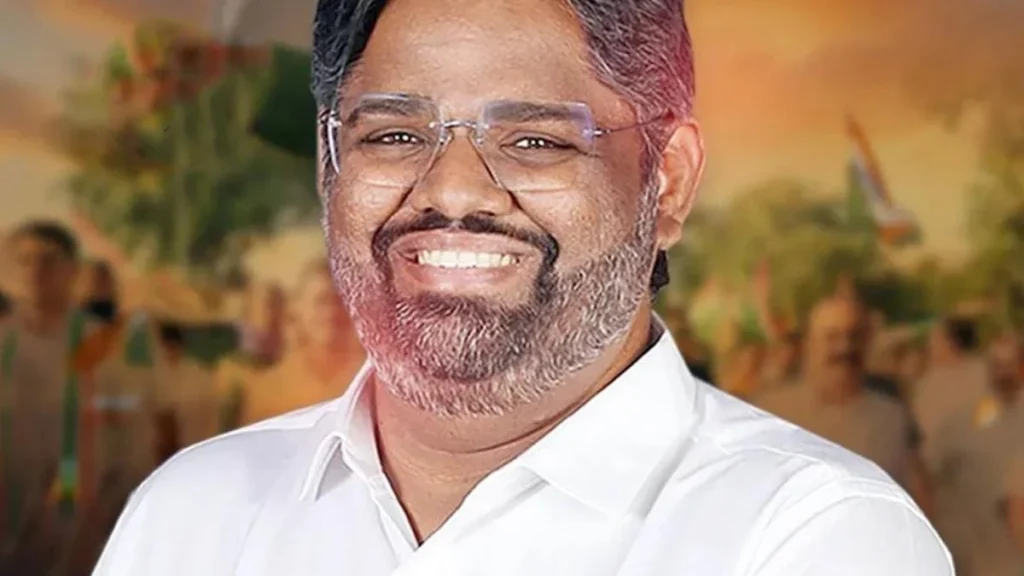
In a significant diplomatic outreach that underscores the deep-rooted socio-cultural and economic ties between mainland India and its island territories, Lakshadweep’s lone Lok Sabha representative, Muhammed Hamdullah Sayeed, has formally petitioned the Kerala government for urgent intervention. Mr. Sayeed, who also serves as the President of the Lakshadweep Pradesh Congress Committee, has addressed a detailed memorandum to Kerala Chief Minister V.D. Satheesan, outlining a multi-pronged strategy to address the existential challenges currently facing the archipelago’s inhabitants.
The petition highlights a critical need for Kerala’s support in four primary areas: advanced healthcare access, emergency temporary accommodation, maritime connectivity, and the integration of the islands into regional anti-narcotics intelligence frameworks.
The Core Issues: A Lifeline Under Pressure
For decades, the people of Lakshadweep have looked to Kerala—specifically the urban hubs of Ernakulam, Kozhikode, and Kottayam—as their primary gateway for survival, education, and advanced medical care. However, as the logistical challenges of island life grow more complex, the existing infrastructure has begun to fray.
Mr. Sayeed’s correspondence highlights that for the average islander, a medical emergency is not merely a health crisis; it is a logistical nightmare. When specialized care is required—be it for oncology, cardiology, neurology, or nephrology—patients are often forced to undertake arduous sea journeys to the Kerala mainland. Once they arrive, they are frequently met with the challenges of navigating an unfamiliar administrative system while under severe financial and physical duress.
Healthcare: The "Nodal Center" Proposal
The MP has specifically requested the establishment of dedicated help desks or "nodal facilitation centers" at major government hospitals in Kerala, such as the Medical College in Kalamassery and facilities in Ernakulam and Kozhikode. The goal is to provide a seamless transition for patients arriving from the islands.
"We are not asking for a new system, but for the optimization of the existing one," a source close to the MP’s office noted. "A patient arriving with a cardiac emergency shouldn’t be hunting for a bed; they need an integrated system where the Lakshadweep administration and Kerala’s health department communicate in real-time." Mr. Sayeed has further urged the state government to ensure reserved ICU capacities and priority bed allocation for patients referred from the islands.
Chronology of Discontent and Infrastructure Decay
The current appeal follows years of mounting frustration regarding the privatization of state-run guest houses. Historically, the Lakshadweep administration maintained several guest houses in Kerala to provide affordable shelter for students, low-income workers, and families of patients during their stay on the mainland.
In recent years, many of these facilities have been outsourced to private operators. This shift has rendered them inaccessible to the most vulnerable, who are now frequently priced out of the market during their times of greatest need. Mr. Sayeed points out that this has become especially dangerous during the monsoon season. When cyclones or high-sea conditions disrupt maritime travel, hundreds of islanders—including students and laborers—find themselves stranded in Kerala without a safety net.
The Beypore Bottleneck
The connectivity between the Beypore port in Kerala and the Lakshadweep islands remains the lifeblood of the union territory. Beypore serves as the primary transit point for essential food supplies, medical oxygen, and construction materials. Mr. Sayeed’s letter emphasizes that the current port infrastructure is woefully inadequate for modern cargo handling. Furthermore, the discontinuation of the direct Beypore-Lakshadweep passenger vessel service has caused widespread social disruption, effectively isolating students and elderly citizens who rely on the service for affordable transit.

Implications for Regional Security and the "Operation Toofan" Model
Perhaps the most forward-looking aspect of Mr. Sayeed’s request is his proposal to extend Kerala’s successful "Operation Toofan"—a robust anti-narcotics initiative—to the Lakshadweep archipelago.
Maritime routes have, in recent years, become targets for drug trafficking syndicates looking to exploit the vast, porous boundaries between the mainland and the islands. The lack of coordinated intelligence between the Kerala Police, the Excise Department, and the Lakshadweep administration has created a "security vacuum" that traffickers are actively exploiting.
Mr. Sayeed’s proposal is for a unified, intelligence-sharing grid. By integrating the islands into the existing Kerala surveillance framework, the MP believes that the authorities can dismantle trafficking networks before they reach the fragile ecosystem of the islands. This is not merely a law-and-order request; it is an attempt to protect the youth of the islands from the rising tide of substance abuse.
Supporting Data and Socio-Economic Context
The relationship between Kerala and Lakshadweep is unique in the Indian union. Culturally and linguistically linked, the islands have long been considered a natural extension of Kerala. However, the economic disparity has widened.
- Healthcare Dependency: Nearly 70% of tertiary medical cases from Lakshadweep are referred to Kerala.
- Economic Impact: The restoration of the Beypore-Lakshadweep vessel service is projected to reduce the cost of essential goods on the islands by approximately 15-20% due to more efficient supply chain logistics.
- Tourism Potential: By including the islands in the proposed port-to-port cargo and passenger connectivity initiative, the region stands to benefit from increased tourism revenue, which remains a cornerstone of the islands’ long-term economic development strategy.
Official Responses and The Road Ahead
While the office of the Kerala Chief Minister has yet to issue a formal press release regarding the specifics of the letter, sources within the state government have acknowledged the receipt of the communication. The request comes at a delicate time for the state government, which is currently managing its own budgetary constraints.
However, political analysts suggest that Mr. Sayeed, as the sole Lok Sabha representative of the Union Territory, holds significant moral leverage. His appeal to the "long-standing tradition" of Kerala’s support for the islanders puts the current government in a position where ignoring the request would be politically costly.
Looking Toward Cooperation
The path forward, as envisioned by the MP, involves a tripartite coordination between the Union Ministry of Ports, Shipping and Waterways, the Lakshadweep administration, and the Government of Kerala.
If successful, this initiative could serve as a template for how India’s coastal states interact with their offshore territories. By shifting from a model of "administrative isolation" to one of "regional integration," the islanders may finally find the stability they have been advocating for.
Mr. Sayeed’s final plea to the Chief Minister is one of urgency: "The bond between Kerala and Lakshadweep is not just a line on a map; it is a lifeline. We look to the Chief Minister to ensure that this lifeline remains robust, accessible, and secure for generations to come."
As the administration reviews these requests, the people of Lakshadweep wait with cautious optimism. Whether these proposals will be translated into concrete policy remains to be seen, but the dialogue has certainly shifted from passive complaint to active, structured advocacy. The coming months will be critical in determining whether the "long-standing tradition" of cooperation can overcome the modern hurdles of bureaucracy and logistical neglect.