The Rise of the Autonomous Enterprise: Emergent Joins the Billion-Dollar Club
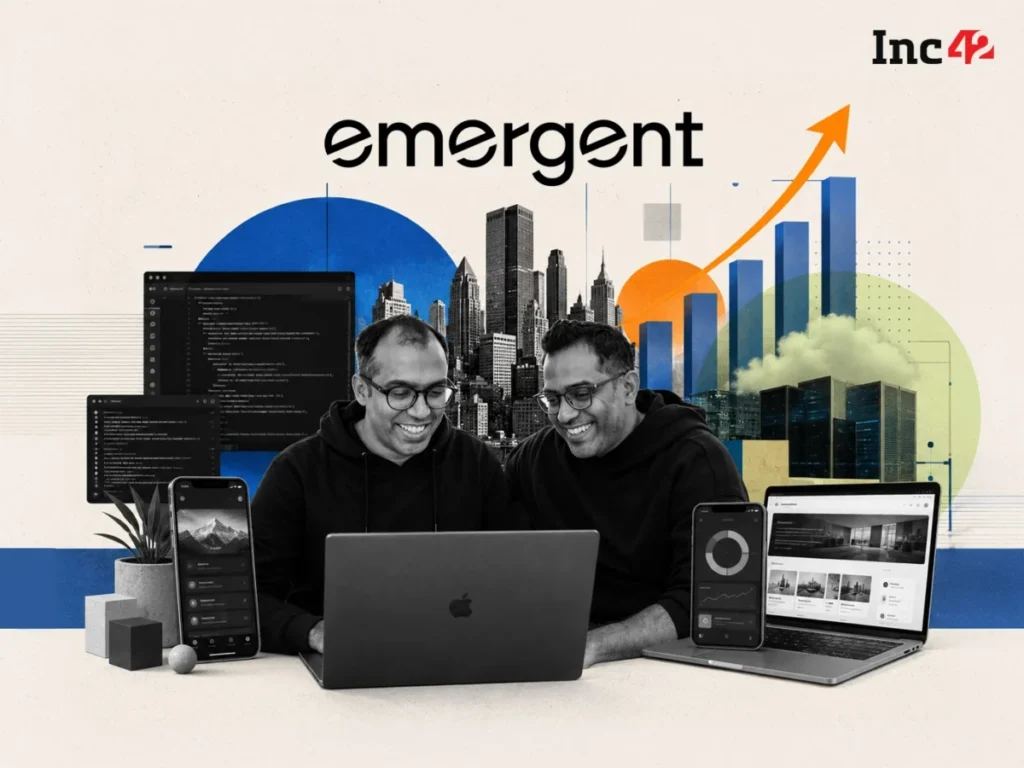
In a landscape defined by rapid technological disruption, India’s startup ecosystem has struck gold once again. Less than a month after proptech major Square Yards attained its unicorn status, AI software creation platform Emergent has officially crossed the $1 billion valuation threshold. By securing $130 million in its Series C funding round, Emergent has cemented its position as India’s sixth unicorn of 2026 and the third homegrown AI powerhouse to join the prestigious club, following in the footsteps of Krutrim and Sarvam.
This milestone is not merely a testament to the surging global interest in Artificial Intelligence; it is a definitive marker of a shift toward "vibe coding"—a paradigm where intent, rather than technical syntax, drives the creation of enterprise-grade software.
The Financial Trajectory: A Meteoric Ascent
The $130 million Series C round was spearheaded by Creaegis, with strategic participation from MNI Ventures (Claypond Capital) and Sentinel Global. The capital injection also saw strong support from heavyweights including Khosla Ventures, SoftBank Vision Fund 2, Lightspeed, and Y Combinator. This latest infusion brings Emergent’s total funding to $230 million and values the company at a staggering $1.5 billion.
Emergent’s journey to this valuation has been nothing short of breakneck. Founded in 2024 by Dunzo co-founder Mukund Jha and his brother Madhav Jha, the company achieved unicorn status in less than two years—a rare feat in an industry where scaling usually demands much longer gestation periods.
Chronology of Capital Infusion
The company’s rapid growth is mirrored by a disciplined, aggressive fundraising schedule:
- Seed Stage: The journey began with a $7 million infusion from Y Combinator and Together Fund, providing the necessary runway to build the initial "prompt-to-app" framework.
- Series A (September 2025): Lightspeed led a $23 million round, signaling institutional confidence in the platform’s potential to disrupt traditional software development.
- Series B (Early 2026): Five months prior to the current round, SoftBank Vision Fund 2 and Khosla Ventures poured $70 million into the company, fueling the rapid adoption of its AI agents.
- Series C (July 2026): The $130 million Series C round catapulted the valuation to $1.5 billion, cementing its status as a market leader in the AI-agent space.
Bridging the Gap: The "Vibe Coding" Philosophy
At its core, Emergent democratizes software creation. The platform empowers entrepreneurs, small business owners, and non-technical users to build production-ready web and mobile applications through conversational AI. According to the company, over 12 million applications have been generated on the platform across 190 countries. Crucially, approximately 70% of these creators possess zero prior coding experience.
Mukund Jha, the visionary behind the platform, describes the startup’s mission as becoming the "operating system for small businesses." With roughly 400 million small businesses worldwide—entities that account for nearly 50% of global GDP and 70% of total employment—the market opportunity is vast. "This segment has remained underserved by traditional software," Jha noted. "Our goal is to provide the autonomous layer that allows these businesses to compete on a global scale."
Growth Metrics That Sealed the Deal
In a climate where venture capitalists have become increasingly cautious, scrutinizing burn rates and unit economics over speculative "potential," Emergent’s valuation is backed by tangible performance indicators. Jha revealed that the startup has recorded a 4X increase in both revenue and active paying users since its Series B round.
Key Financial Pillars:
- Revenue Run Rate: The company has reached an annualised revenue run rate of approximately $120 million, demonstrating a steady 20% growth quarter-over-quarter.
- Global Diversification: The revenue footprint is impressively distributed: one-third originates from North America, one-third from Europe, and the remainder from the rest of the world. India currently accounts for 6-7% of total revenue.
- Operational Efficiency: Despite the rapid scale, customer acquisition costs (CAC) have trended downward, while gross margins have expanded.
While enterprise interest is mounting, Emergent remains strategically focused on the SMB segment, with enterprise clients currently accounting for less than 5% of revenue. Jha emphasized that the company plans to solidify its product-market fit (PMF) within the SME sector before executing a larger, more aggressive pivot toward enterprise-grade deployments.
Beyond "Prompt-to-App": The Era of "Prompt-to-Operations"
The most significant evolution in Emergent’s roadmap is its shift from building static software to enabling autonomous business operations. The recently launched Wingman platform signifies this pivot. Rather than simply generating code, Wingman allows users to automate complex, repetitive workflows—such as lead generation, appointment scheduling, and CRM management—without manual intervention.

"We are moving from just building software to helping businesses build agents that run the business," Jha explained. "We want to be the autonomous layer for every SME."
To support this ambitious scale, Emergent has invested heavily in internal infrastructure. Currently, over 95% of the company’s own internal code is written using its AI agents. Furthermore, its software stack—encompassing orchestration, model routing, and memory systems—is entirely home-grown.
Strategic Outlook and Market Implications
The fresh capital is earmarked for three primary pillars: aggressive global expansion, deep-tech open-source AI research, and high-level engineering talent acquisition.
Scaling Operations
Emergent is in the process of scaling its San Francisco headquarters, which currently houses an eight-member team, and is actively evaluating a physical footprint in Europe. Simultaneously, the company is ramping up its engineering and research teams in India to sustain its competitive edge in model optimization.
The Open Source Bet
While Emergent currently leverages high-end models from Anthropic, OpenAI, and Google’s Gemini, Jha is a vocal proponent of an open-source-first strategy. "We are investing heavily in open source because it reduces dependence on any single model provider while significantly lowering operating costs for our customers," he stated. As reasoning capabilities in open-source models reach parity with closed-source alternatives, Emergent aims to migrate more production workloads to these proprietary-independent stacks.
The Broader AI Ecosystem in India
Emergent’s unicorn status arrives at a time of unprecedented capital flow into the Indian AI sector. According to the Indian Tech Startup Funding Report (H1 2026), AI startups raised $676 million across 57 deals in the first half of 2026. This represents a staggering 4X increase compared to the same period in 2025.
The trend is clear: investors are pivoting away from general-purpose tech and toward platforms that solve specific, high-frequency operational pain points. With other players like Sarvam and Rocket (currently in talks for fresh funding) making headlines, India is increasingly being viewed not just as a consumer of AI, but as a critical hub for AI innovation and infrastructure development.
Conclusion: The Path Ahead
Emergent’s trajectory serves as a blueprint for the next generation of Indian startups. By combining a global-first approach with a deep understanding of the SME sector’s untapped potential, the company has proven that the "vibe coding" revolution is more than just hype—it is a functional, scalable, and highly profitable reality.
As the company transitions from a developer-tool platform to an autonomous operational layer, its success will depend on its ability to maintain its agile roots while scaling to meet the demands of a global client base. If the last two years are any indication, Emergent is well-positioned to not only redefine how software is built but to fundamentally alter how businesses operate in the AI-native age.