The Strategic Migration: Modernizing Data Infrastructure from Oracle to BigQuery
In the current landscape of enterprise data management, the ability to derive real-time, actionable insights is the primary differentiator between market leaders and those trailing behind. For years, Oracle has served as the backbone for transactional processing—the gold standard for maintaining the integrity of day-to-day operations. However, as data volumes grow and the demand for advanced analytics intensifies, many organizations are hitting a "performance wall" with their legacy systems.
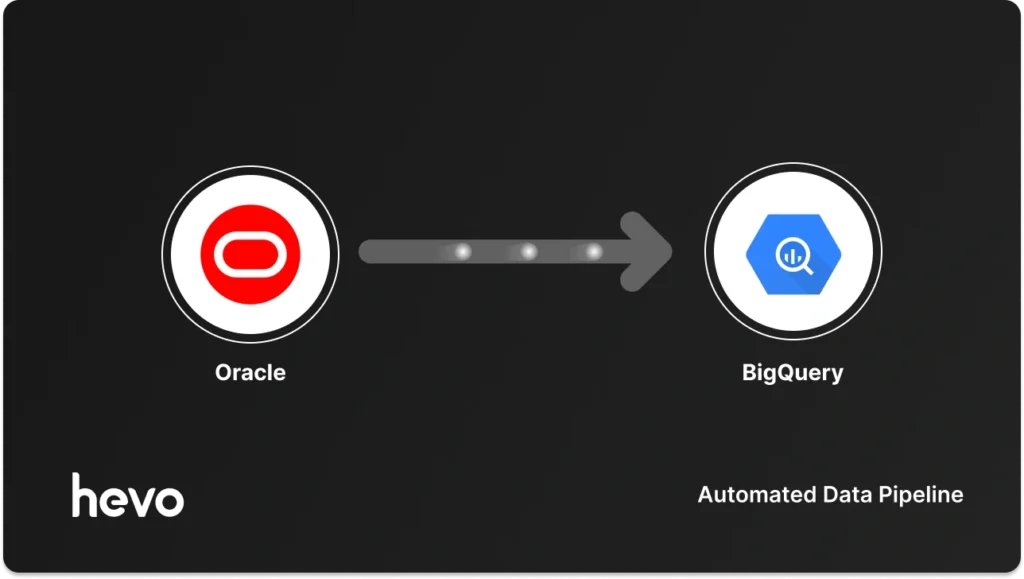
The transition from an on-premises Oracle database to Google BigQuery represents more than a simple platform migration; it is a fundamental shift from a transactional focus to an analytical one. This guide explores the strategic necessity of this migration, the technical methodologies available, and the long-term implications for your business intelligence strategy.
The Strategic Imperative: Why Move to BigQuery?
Oracle databases are masterpieces of ACID compliance and transactional consistency. However, they are not inherently optimized for the complex, large-scale analytical queries required by modern BI tools. When analysts run heavy aggregation queries against an operational database, they risk impacting production performance—a trade-off no business should have to make.
BigQuery, Google Cloud’s fully managed, serverless data warehouse, is built for the opposite purpose. It utilizes a decoupled storage and compute architecture, allowing it to scan petabytes of data in seconds. By migrating to BigQuery, organizations unlock:
- Elastic Scalability: Scale compute resources independently of storage, ensuring performance remains consistent regardless of query complexity.
- Operational Decoupling: Move heavy reporting loads away from your production Oracle instance, effectively isolating "OLTP" (Online Transactional Processing) from "OLAP" (Online Analytical Processing).
- Seamless Cloud Integration: Gain native access to Google’s AI/ML ecosystem, Vertex AI, and Looker, creating a holistic data environment.
- Cost Efficiency: Eliminate the burden of over-provisioning hardware for peak usage; with serverless architecture, you pay only for what you query.
Methods of Migration: A Comparative Analysis
There is no "one-size-fits-all" solution for migrating data. Your choice of migration vehicle determines the level of "technical debt" and maintenance overhead your engineering team will inherit.

1. Automated Migration (Managed Platforms)
Platforms like Hevo represent the modern standard for data integration. These tools provide a no-code interface that handles the complexities of Change Data Capture (CDC), schema mapping, and automated retry logic.
- Best for: Organizations that value developer bandwidth and require real-time, near-zero-latency data availability.
- Key Advantage: It bypasses the need for custom Python or Java development, allowing teams to focus on analytics rather than pipeline maintenance.
2. Manual Migration (Native Utilities)
Google offers native connectors and tools like the BigQuery Data Transfer Service. While these are "free" in terms of licensing, they require significant configuration and manual oversight.
- Best for: Small, one-time migrations or scenarios with very specific, highly customized compliance requirements.
- Key Advantage: Full control over the environment without third-party dependencies.
Detailed Chronology: Executing the Automated Path
For organizations prioritizing efficiency, the automated approach involves a structured sequence of operations to ensure data integrity during transit.
Phase 1: Establishing the Connection
Before data can flow, the source environment must be prepared. This involves creating a dedicated user in Oracle with sufficient privileges.
- Permissions: You must grant
CREATE SESSION,SELECT ANY DICTIONARY, and specific table-level select permissions. - LogMiner Configuration: For real-time replication, the Oracle instance must be in
ARCHIVELOGmode. Supplemental logging must be enabled for all columns to ensure the tool can track updates, inserts, and deletes.
Phase 2: Pipeline Configuration
Once the source is prepped, the integration platform connects to the database via its host, port, and service name. The platform performs an initial "historical load"—a snapshot of existing data—followed by a transition to real-time CDC, which continuously polls the Redo Logs to stream updates as they happen.

Phase 3: Staging and Finalization
Data is typically staged in a Google Cloud Storage (GCS) bucket before being loaded into BigQuery. This ensures that even if a network interruption occurs, the integrity of the data remains intact. Once the mapping of data types (e.g., mapping Oracle NUMBER to BigQuery NUMERIC or FLOAT64) is confirmed, the pipeline is activated.
Supporting Data: The Manual Alternative
When an automated tool is not an option, engineers must turn to manual workflows. This process is generally broken down into the "Export-Load" cycle:
- Extraction: Using tools like SQL Developer, data is exported into structured formats like Parquet (recommended) or CSV.
- Staging: Files are uploaded to Google Cloud Storage.
- Ingestion: The
bq loadcommand or the BigQuery UI is used to ingest the files.
Comparison Table: Migration Strategies
| Feature | Automated (e.g., Hevo) | Manual (Native/CLI) |
|---|---|---|
| Setup Time | Minutes | Days/Weeks |
| Maintenance | Zero/Minimal | High (Requires custom scripts) |
| Real-time CDC | Built-in | Extremely difficult to build |
| Scalability | Automatic | Manual intervention required |
Official Perspectives: The "Buy vs. Build" Dilemma
Industry experts at Google and leading data engineering firms consistently emphasize the "Total Cost of Ownership" (TCO). While the initial cost of an automated tool may seem higher than "free" manual scripts, the TCO for manual pipelines is often significantly higher once you factor in:
- Engineering Hours: The cost of developers writing, testing, and debugging data pipelines.
- Downtime: The cost of data missing or stale due to broken manual scripts.
- Opportunity Cost: The value lost when data teams spend 40 hours a month maintaining infrastructure rather than generating insights.
Implications for the Enterprise
The shift from Oracle to BigQuery is not just a migration; it is a transformation of the corporate data culture.

- Democratization of Data: Once data is in BigQuery, it becomes accessible to business users via intuitive SQL interfaces and BI tools, reducing the reliance on IT departments for custom report generation.
- Performance Optimization: By offloading complex queries, the production Oracle database experiences reduced contention, extending the life of existing legacy assets.
- Future-Proofing: Moving to a cloud-native architecture prepares the enterprise for the next wave of data innovation, including predictive modeling and real-time streaming analytics, which are difficult to implement on legacy, on-prem hardware.
Conclusion
Migrating from Oracle to BigQuery is a milestone that marks the maturity of a data-driven organization. While the path of least resistance involves leveraging automated integration platforms, the manual route remains a viable—albeit labor-intensive—option for specific use cases.
The most successful companies are those that view data as an asset rather than a liability. By automating the "plumbing" of data movement, these organizations ensure that their most valuable resource—their data—is always available, accurate, and ready to fuel the business decisions of tomorrow.
Whether you choose the hands-on approach of custom scripts or the streamlined efficiency of an automated pipeline, the ultimate goal remains the same: transforming raw data into a competitive advantage.
Frequently Asked Questions (FAQs)
1. How do I handle differences in SQL syntax?
BigQuery uses Standard SQL. While many functions are compatible with Oracle, you must map specific functions, such as replacing NVL() with IFNULL() and ensuring data types are aligned correctly (e.g., VARCHAR2 to STRING).
2. Is there downtime during the migration?
If you utilize CDC (Change Data Capture), you can perform the historical load while the Oracle database remains online, resulting in zero to minimal downtime.

3. What is the biggest risk in manual migration?
The biggest risk is "schema drift." As your Oracle database evolves, manual scripts often break, leading to incomplete data sets or pipeline failures that require constant manual intervention to repair.