The Agentic Shift: AWS Unveils Next-Generation AI Capabilities at New York Summit
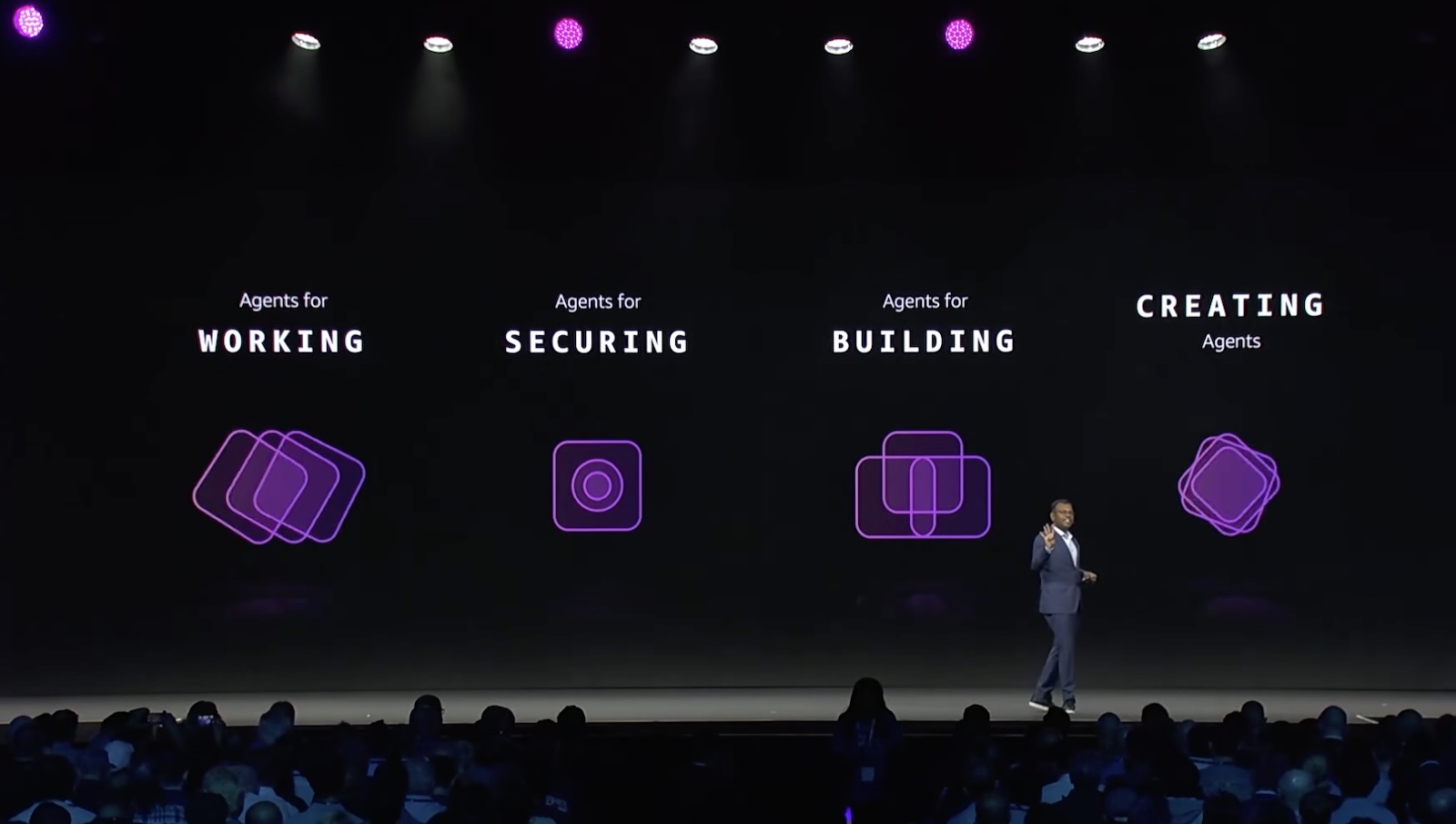
NEW YORK CITY — The landscape of enterprise artificial intelligence shifted significantly today as Amazon Web Services (AWS) took the stage at the Javits Center for the annual AWS Summit in New York City. In a keynote address that underscored a strategic pivot toward "Agentic AI," Swami Sivasubramanian, AWS VP of Agentic AI, unveiled a suite of tools designed to transform AI from a passive chatbot into an active, autonomous workforce.
The announcements center on a core thesis: the future of cloud computing is not just about generating text or images, but about executing complex, multi-step workflows that bridge the gap between organizational data and real-world outcomes.
Main Facts: The Rise of Agentic Intelligence
The core of the day’s announcements focused on the evolution of Amazon Bedrock AgentCore and the introduction of Amazon Quick autonomous agents. These releases represent a fundamental shift in how AWS customers will interact with generative AI.
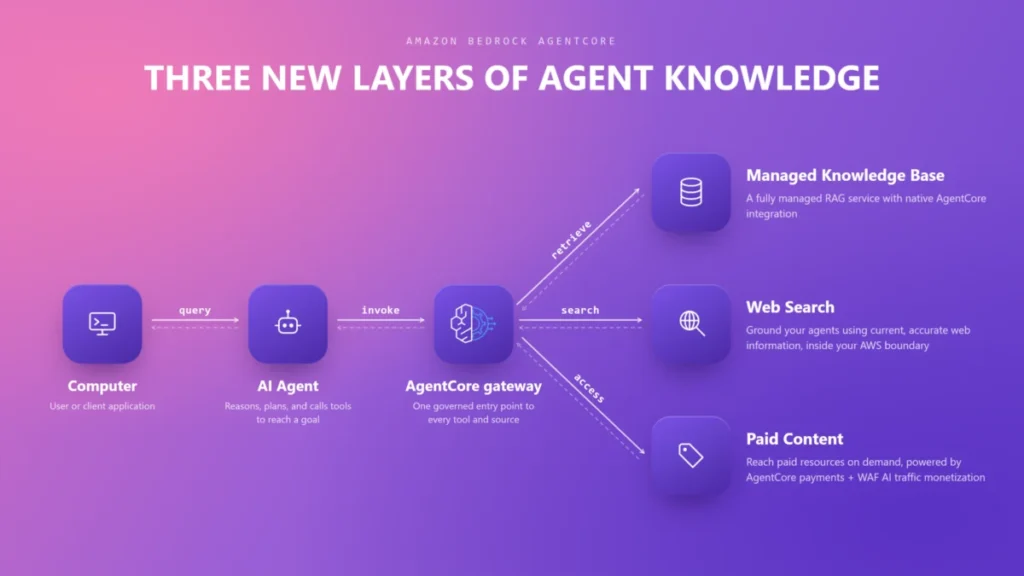
Rather than relying on human-in-the-loop triggers for every task, the new Bedrock capabilities allow agents to autonomously access organizational data, web-based intelligence, and third-party knowledge repositories. By integrating these "knowledge layers," agents can now troubleshoot production environments, suggest code fixes, and enforce governance policies that scale alongside the complexity of the enterprise’s AI deployment.
Furthermore, the launch of autonomous agents within Amazon Quick marks a departure from traditional business intelligence tools. These agents are designed to operate in the background, performing specialized tasks ranging from automated financial order processing to high-level CRM monitoring and proactive sales follow-ups.
Chronology of the Transformation
The evolution of AWS’s AI strategy has been a deliberate, multi-year process, culminating in this week’s high-profile revelations.
- Pre-2023: AWS focused primarily on foundational model hosting and infrastructure (EC2, Trainium, and Inferentia), positioning itself as the "plumbing" of the AI revolution.
- Late 2023: The launch of Amazon Bedrock provided a managed service for accessing leading foundation models, allowing developers to build generative AI applications with ease.
- Early 2024 to 2025: AWS began emphasizing RAG (Retrieval-Augmented Generation) and the importance of connecting models to private data.
- June 16–18, 2026 (The Current Summit): AWS signaled the "Agentic Era." By moving beyond simple text generation to autonomous reasoning and task execution, AWS has transitioned into the orchestration layer for enterprise AI.
- June 18, 2026: Additional technical launches were added to the AWS portfolio, further expanding the capabilities of the agentic ecosystem for developers and IT operations teams.
Supporting Data: The Power of Autonomous Agents
The integration of these tools is not merely an incremental update; it is an attempt to address the "last mile" problem of enterprise AI. According to internal AWS benchmarks presented during the keynote, the new agentic framework significantly reduces the time-to-resolution for common production issues.
The Agentic Ecosystem:
- Bedrock AgentCore: Now features enhanced "Knowledge Layers." This allows developers to plug in proprietary organizational data, web-scraped market intelligence, and paid subscription data to ground AI decisions.
- Amazon Quick Autonomous Agents: These tools operate with distinct "personas." For example, a Finance Agent is programmed with specific constraints regarding regulatory compliance and budgetary limits, while a Sales Agent is optimized for sentiment analysis and high-velocity communication.
- The Unified Activity Feed: Perhaps the most user-centric announcement, the new activity feed consolidates fragmented communication channels—email, Slack, calendar, and task management—into a prioritized "workstream." This feed utilizes machine learning to prioritize tasks based on individual user behavior, effectively automating the "to-do list" management that consumes hours of administrative time each week.
Official Responses and Strategic Vision
During his keynote, Swami Sivasubramanian emphasized that the "agentic" approach is about building trust and reliability. "We are moving from a world where you ask an AI a question to a world where you give an AI a mission," Sivasubramanian noted.
The focus of the AWS engineering teams over the last year has been on "governance that scales." A primary concern for enterprise clients—ranging from financial institutions to healthcare providers—is the lack of control over autonomous AI. By baking governance and continuous monitoring into the Bedrock AgentCore architecture, AWS is attempting to alleviate these fears.
"Our goal is not just to make agents faster, but to make them safer and more accountable," said a senior AWS spokesperson during the press briefing. "If an agent is going to draft a follow-up email to a client or flag a financial risk, the enterprise must know exactly how that decision was reached and that it falls within established corporate guardrails."

Implications: The Future of Enterprise Work
The implications of these announcements for the labor market and enterprise productivity are profound.
1. A Shift in Developer Focus
Developers are moving away from writing scripts for every potential outcome. With the new AgentCore capabilities, developers are now "architects of agency," setting parameters and goals for agents, then providing them with the tools and knowledge required to succeed. This reduces the technical debt associated with maintaining rigid automation flows.
2. The Death of the "Busy Work" Paradigm
The consolidation of tasks via the Amazon Quick activity feed addresses the "context-switching" tax that plagues modern knowledge workers. By automating the triage of emails and Slack messages, AWS is effectively reclaiming hours of lost time, allowing employees to focus on high-value, creative, and strategic tasks.
3. Operational Resilience
In production environments, the ability for an agent to "find and fix what is going wrong" represents a shift toward self-healing systems. As agents grow more capable, IT operations teams will likely transition from manual troubleshooting to the role of "AI oversight," ensuring that agents are correctly diagnosing issues and following standard operating procedures during incidents.
4. Regulatory and Ethical Considerations
As agents gain more autonomy, the regulatory environment will likely tighten. AWS’s focus on built-in controls is a preemptive strike against the skepticism of auditors. However, the onus remains on the user to define these controls. The "agentic" future requires a new level of data literacy and ethical AI framework design at the organizational level.
Conclusion: A New Chapter for AWS
The AWS Summit in New York City has made one thing abundantly clear: the period of experimental, conversational AI is drawing to a close. We are entering a phase of industrial-grade, agentic automation.
By providing the infrastructure for agents to learn continuously and work autonomously across diverse enterprise applications, AWS is positioning itself as the indispensable foundation for the future of business operations. As these tools roll out to customers, the market will be watching closely to see if the promise of "hours regained" translates into tangible ROI and improved operational efficiency.
The integration of Bedrock AgentCore and Amazon Quick is not just a feature release; it is an invitation for organizations to rethink the very nature of their internal workflows. As we move through the remainder of 2026, the success of this vision will depend on the ability of enterprise leaders to balance the speed of automation with the necessity of human oversight.
For those interested in exploring these capabilities, AWS has published extensive documentation and a dedicated demo series, signaling a clear roadmap for mass adoption over the coming months. The era of the agent is here, and for AWS, the challenge now lies in execution.