The Digital Trail of ‘The Gentlemen’: How an Amateur Hacker Became a Ransomware Kingpin
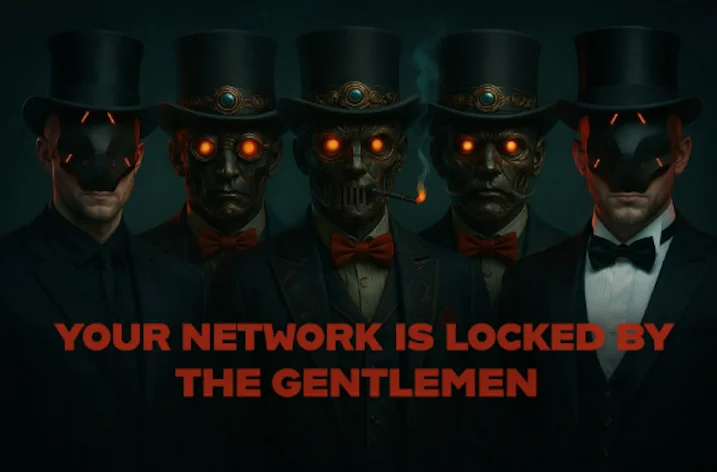
In the shadowy corners of the dark web, a new ransomware syndicate known as "The Gentlemen" has ascended with alarming velocity. Since its emergence in mid-2025, the group has cemented its position as the second most active ransomware operation globally by victim count. According to data from security firm Check Point Software, the gang has claimed over 332 victims since its inception, with more than 240 of those attacks occurring in 2026 alone.
Behind the sophisticated "Ransomware-as-a-Service" (RaaS) model lies a central administrator who operates under the monikers "Zeta88" and "Hastalamuerte." While ransomware operators typically cloak their identities behind layers of encryption and obfuscation, a trail of breadcrumbs—ranging from reused email addresses to leaked Russian government databases—has led researchers to a startling conclusion: the mastermind behind this global criminal enterprise appears to be a 36-year-old marketing professional based in Izhevsk, Russia.
The Mechanics of a RaaS Disruptor
The Gentlemen have distinguished themselves from established cartels like LockBit or BlackCat not through superior technology alone, but through a radical financial incentive structure. While the industry standard for RaaS affiliate programs typically involves an 80/20 split—where the affiliate keeps 80 percent of the ransom and the core group takes 20—The Gentlemen offer a 90/10 split.
This aggressive compensation model has acted as a catalyst for growth, drawing experienced hackers away from competing programs. By positioning themselves as the most lucrative partners in the ecosystem, The Gentlemen have rapidly expanded their operational capacity.
Technically, the group focuses on the low-hanging fruit of corporate security: internet-facing devices. They prioritize the exploitation of VPNs and firewall vulnerabilities to gain initial access. Once inside a network, their tooling is designed for speed, often encrypting entire corporate infrastructures within hours of the initial breach. Recent intelligence from the security firm PRODAFT suggests that the group’s administrator has even begun integrating artificial intelligence to automate the development of malware and streamline post-exploitation maneuvers.
A Chronology of a Cyber-Identity
The journey of the individual behind "The Gentlemen" provides a rare, longitudinal look at how amateur hackers evolve into systemic threats.
2019–2020: The Formative Years
The digital persona "Hastalamuerte" first appeared on cybercrime forums in 2019. Early records from platforms such as Nulled and Exploit show a user who was, by all accounts, a novice. In June 2020, logs reveal the user participating in a penetration testing training program, where they frequently struggled with basic tools. The user’s early activity was marked by a lack of operational security (OPSEC), including the use of an email address, [email protected], which contained a numeric reference associated with white supremacist ideology.
2022–2024: Scaling Up
As the user’s technical skills sharpened, so did their presence on high-profile forums like Breachforums and Ramp_V2. During this period, the persona "Zeta88" emerged, registering on the English-language forum Breached from an IP address in Izhevsk. This individual began managing the backend infrastructure of the burgeoning ransomware operation, assembling the locker software and managing the payment portals that would eventually facilitate millions of dollars in illicit transactions.
2025–2026: The Rise of The Gentlemen
By mid-2025, the operation was fully operational. A breach of the group’s internal backend infrastructure, analyzed by threat intelligence providers, confirmed that the administrator was the same person operating as Hastalamuerte and Zeta88. This individual was responsible for orchestrating the RaaS panel, maintaining the ransomware code, and collecting the 10 percent "administrator fee" from every successfully extorted ransom.
The Forensic Breadcrumbs
The process of de-anonymizing a sophisticated threat actor often relies on the "human factor"—the inevitable mistakes made when digital lives intersect with physical realities. The investigation into the identity of the administrator involved multiple layers of cross-referencing:
- The Telegram Connection: The user Hastalamuerte publicly shared a contact handle,
@hastalamuerte18, on Nulled in 2020. Intelligence firm Flashpoint identified this handle as associated with a unique Telegram ID. - The Phone Number Pivot: That same Telegram ID was linked to the Russian phone number
79127650004. When queried against leaked Russian government databases, the number was found to be registered to Alexander Andreevich Yapaev. - Digital Footprints: Further investigation by Constella Intelligence showed the same phone number was used to register accounts on the Russian social media site Pikabu under the handle "4apai18." The moniker "4apaev" (a play on the Russian "Chapaev") was also linked to a GitHub account, "SantaMuerte," which hosted various exploit development projects.
- The Professional Mask: Perhaps most damning is the link between the alias and a verified LinkedIn profile. The email address
[email protected], used by the hacker for various forum registrations, is linked to a LinkedIn account for an Alexander Yapaev, who is employed as the head of B2B marketing for Uralenergo Udmurtia, a prominent supplier of electrical and lighting equipment in Russia.
Official Responses and Industry Impact
As of the date of this report, Alexander Yapaev has not responded to multiple requests for comment sent via his professional and personal contact channels.
Security researchers at PRODAFT, who have published a comprehensive report on the "Phantom Mantis" operation—the internal moniker for the group’s activity—have corroborated these findings with "high confidence." They note that the administrator’s move toward AI-assisted malware development signals a new phase of efficiency in ransomware operations.
The security community has expressed concern that the integration of AI will lower the barrier to entry for even less-skilled criminals, potentially leading to a surge in ransomware volume throughout the remainder of 2026.
Implications: The Reality of "Safe Havens"
The case of The Gentlemen highlights a persistent and troubling dynamic in modern cyber warfare: the "safe haven" phenomenon. Why would a man with a steady corporate career in a major Russian company operate a multi-million dollar ransomware syndicate under his own digital nose?
The answer lies in the geopolitical environment. Russian cybercriminals are generally permitted to operate with impunity provided they adhere to two unwritten rules: do not target Russian entities, and do not travel to countries with extradition treaties with the United States or the European Union. Within these bounds, hackers are effectively shielded from domestic law enforcement.
This environment fosters a lack of urgency regarding personal security. Many cybercriminals begin their paths as curious teenagers or underemployed individuals looking for a side income. As they scale, they often fail to shed the habits of their amateur days, such as using the same phone numbers for criminal activities and social media, or failing to sanitize their professional digital footprints.
Ultimately, The Gentlemen represent the maturation of the RaaS economy. It is no longer just a business of coding; it is a business of recruitment, marketing, and affiliate management. The transition of Alexander Yapaev from a struggling student in a penetration testing camp to the administrator of a global ransomware threat is a stark reminder that the biggest threat to corporate security often comes from individuals who have successfully commodified the tools of their trade, aided by a system that finds it convenient to turn a blind eye.