Beyond the Air Fryer: How upliance.ai is Revolutionizing the Indian Kitchen with AI-Driven Hardware
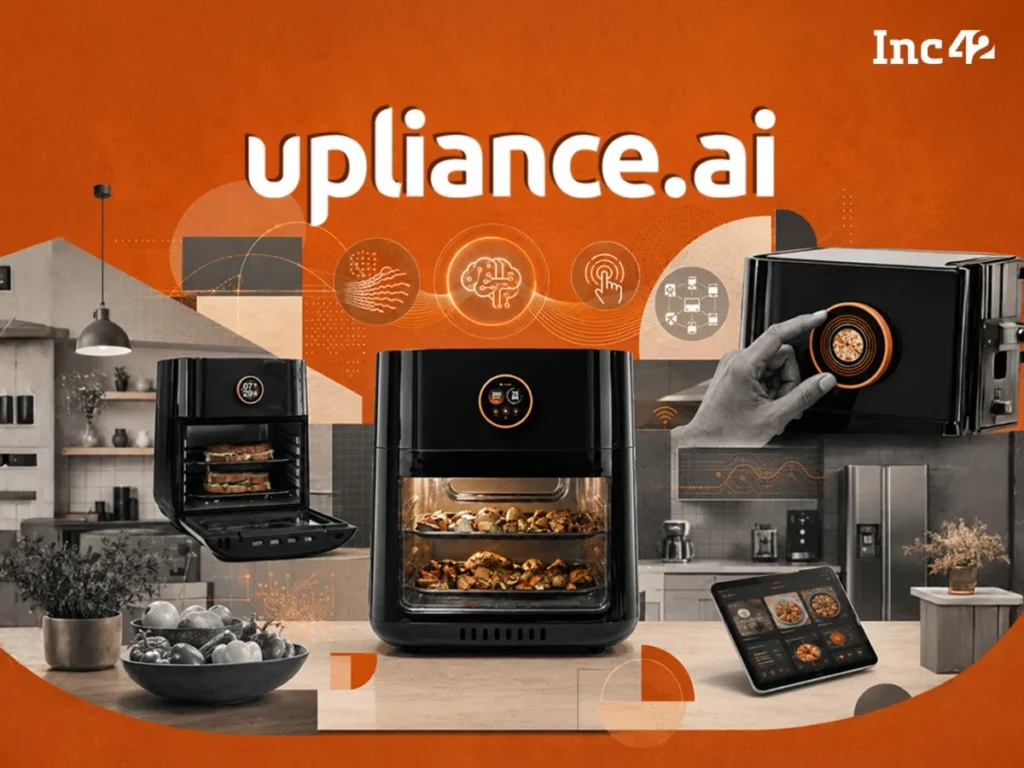
In the rapidly evolving landscape of smart home appliances, the kitchen has historically been a graveyard for "smart" gadgets that offer little more than Wi-Fi connectivity and a shiny interface. Most manufacturers have relied on off-the-shelf designs from Original Design Manufacturers (ODMs), simply rebranding existing hardware. However, Bengaluru-based startup upliance.ai is bucking this trend. By vertically integrating hardware, firmware, and proprietary software, the company is attempting to transform the kitchen from a place of manual labor into an intelligent, data-driven environment.
This week, upliance.ai announced a significant milestone in its growth strategy: the launch of its 12L Smart Air Fryer Oven. This move signals the startup’s transition from catering to individual, compact cooking needs to addressing the complex, high-volume requirements of the modern Indian family.
Main Facts: The 12L Smart Air Fryer Oven
The new 12L Smart Air Fryer Oven is not merely a larger iteration of the company’s previous 5L and 6L models. It is a sophisticated, AI-powered culinary appliance designed to replace the conventional, guesswork-heavy approach to domestic cooking.
Core Features and Specifications
- Proprietary Texture Control: Replacing the antiquated reliance on fixed time and temperature dials, this technology manages internal heat curves. It intelligently adjusts the thermal environment to achieve specific textures, preventing the common issue of burnt exteriors and undercooked interiors.
- AMOLED Interface: The unit features a high-resolution touchscreen that serves as the command center for the device’s "unified kitchen OS."
- Capacity and Versatility: Designed for the large-family segment, the 12L capacity allows for simultaneous cooking of multiple dishes. It includes a rotating skewer and rotating basket system, enabling functions ranging from full-scale roasting to complex baking.
- The "Claude Code" Philosophy: The company describes its AI cooking assistant as "Claude Code for food." Unlike general-purpose LLMs, this AI is context-aware, possessing specific data regarding the device’s power output, thermal efficiency, and internal geometry.
Priced at ₹15,999, the unit is currently available for purchase through the company’s official website, Amazon, and select offline retail partners across India.
Chronology: From Personal Gadgets to Family Staples
The journey of upliance.ai is one of rapid iteration driven by consumer feedback loops.
- February 2026 (The Foundation): The startup gained initial traction with the launch of its 5L and 6L air fryers. While these devices achieved a stellar 4.8-star rating on major e-commerce platforms, the company’s internal analytics revealed a "capability gap."
- The Usage Pattern Discovery: Data gathered from thousands of cooking sessions indicated that urban professionals were pushing these smaller units to their physical limits. Users were attempting to perform complex bakes and whole-roasts that the smaller baskets were never designed to handle.
- The Engineering Pivot: Recognizing the frustration of urban users attempting to replicate social-media-inspired recipes with inconsistent results, the company shifted its R&D focus toward a larger, more robust hardware form factor.
- The Present: With the launch of the 12L model, upliance.ai is scaling its operations, aiming to reach one million cooking sessions within the next six months.
Supporting Data: Why In-House IP Matters
In the consumer electronics world, white-labelling is the standard. It is cost-effective and low-risk. However, upliance.ai’s co-founder, Mahek Mody, believes this model is the primary reason for the stagnation of kitchen innovation.
"Everybody has access to what the ODMs build," Mody noted in an interview. "If you buy an off-the-shelf design, you are selling the same box as everyone else with a different colour and logo on top."
By building its hardware and software in-house, upliance.ai has been able to leverage data from lakhs of domestic cooking sessions. This data is not just stored; it is used to refine the machine’s algorithms. The platform receives over-the-air (OTA) updates, with major system upgrades deployed two to three times annually. This ensures that the device a consumer buys today is, in theory, more capable a year from now—a stark contrast to the static nature of traditional kitchen appliances.
Official Responses and Strategic Vision
The vision for upliance.ai is rooted in the belief that the "average home cook" does not think in degrees Celsius or Fahrenheit.
"A home cook doesn’t think in degrees, so they set it to max because that is what ‘frying’ means in their head," Mody explained. "This is why you get burnt surfaces and rubbery, moisture-depleted vegetables."
The company’s approach is to bridge the gap between human intent and machine execution. When a user uploads a photo of their dish mid-cook through the companion app, the AI performs a visual analysis of the surface browning. It then calculates the necessary adjustment to the heat curve to achieve the desired result.
This innovation has attracted significant investor interest. Backed by Khosla Ventures, along with support from Rukam Capital, Draper Associates, and Rainmatter, the company is currently well-capitalized to push its "software-first" approach into the mass market.
Implications: A New Era for Indian Kitchens
The launch of the 12L Smart Air Fryer Oven has several profound implications for the domestic appliance industry.
1. The Death of Guesswork
The "Texture Control" feature represents a fundamental shift in cooking technology. By focusing on the outcome (the texture of the food) rather than the process (the temperature), upliance.ai is effectively lowering the barrier to entry for complex cooking. This caters specifically to a generation of urban professionals who value high-quality meals but lack the time or training to master manual temperature regulation.
2. The Rise of the "Software-Defined Kitchen"
For decades, kitchen appliances were purely mechanical. The success of upliance.ai suggests that the future of this sector lies in software-defined hardware. By treating the appliance as a platform that evolves through OTA updates, the company is creating a "sticky" ecosystem. Users are not just buying a machine; they are subscribing to a cooking methodology that gets smarter over time.
3. Challenging the Status Quo
By rejecting ODM designs, upliance.ai is forcing a conversation about intellectual property in the consumer appliance space. If successful, this model could trigger a wave of "Made in India" smart appliances that prioritize proprietary software over mere cost-cutting measures. It poses a direct challenge to legacy players who have relied on incremental design changes while ignoring the underlying technological limitations of their products.
4. Changing Usage Patterns
The shift to a 12L model suggests that the company is moving toward the center of the kitchen. With the capacity to handle family-sized meals, the appliance is positioned to become the primary cooking device in an urban household, potentially displacing the traditional microwave or even the stove for certain cooking tasks.
Conclusion
As upliance.ai sets its sights on the one-million-session milestone, the broader industry will be watching closely. If a startup can successfully convince the Indian consumer that an AI-driven, software-updated oven is a necessity rather than a luxury, the kitchen as we know it may be on the verge of a total technological overhaul. The 12L Smart Air Fryer Oven is not just an appliance; it is a manifestation of the shift from manual "cooking by intuition" to "cooking by computation."