Fortifying the Development Lifecycle: AWS Expands the Capabilities of its Frontier Security Agent
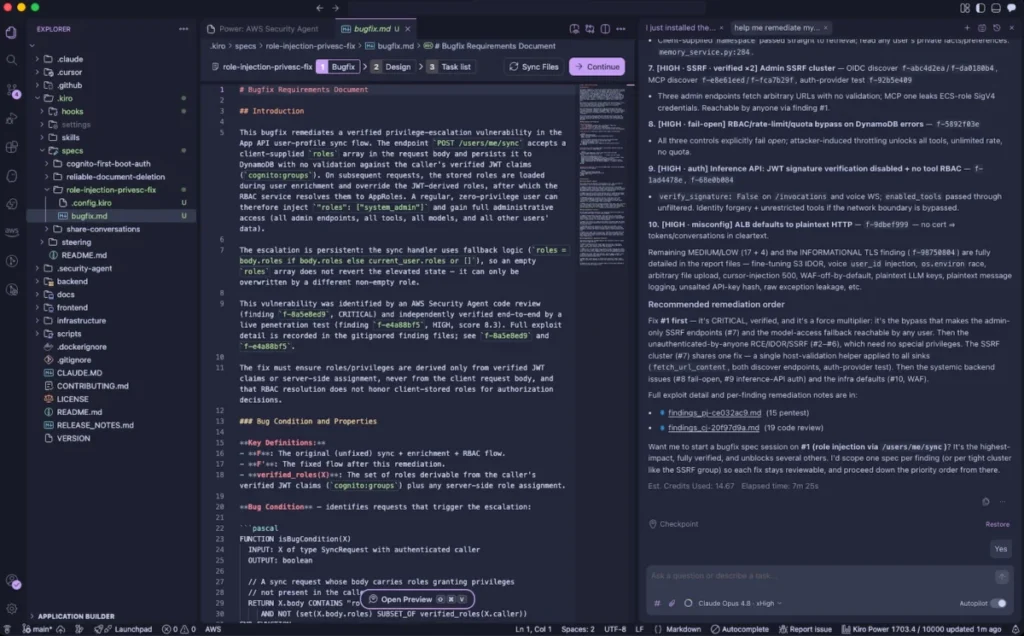
In an era where software supply chain vulnerabilities and sophisticated cyber threats are evolving at an unprecedented pace, Amazon Web Services (AWS) has taken a decisive step toward "shifting left" with a comprehensive, agentic approach to security. Originally previewed at re:Invent 2025 as a proactive security layer, the AWS Security Agent—now a cornerstone of the broader AWS Continuum—has undergone a massive expansion.
With today’s announcement, AWS is moving beyond simple vulnerability detection, introducing deep-context code reviews, automated threat modeling, and seamless IDE integration. This evolution marks a significant departure from traditional, reactive security tools, aiming instead to secure applications proactively from the initial design phase through to final deployment.
The Core Philosophy: Security as a Continuous Fabric
The fundamental problem facing modern DevOps teams is "context fragmentation." Developers use one tool for code linting, another for penetration testing, and a third for compliance checks, often resulting in silos where security context is lost.

The AWS Security Agent acts as a unified, intelligent layer that understands the entire software development lifecycle (SDLC). By leveraging frontier models to perform reasoning-based analysis rather than mere pattern-matching, the Agent identifies complex, logic-based vulnerabilities that legacy tools frequently miss. Whether it is verifying the exploitability of a potential bug or ensuring that a new microservice architecture aligns with organizational compliance standards, the Agent provides actionable, verified remediation.
Chronology: From Concept to Intelligent Automation
The journey of the AWS Security Agent reflects the rapid maturation of AI-driven security operations:
- re:Invent 2025 (The Preview): AWS unveiled the AWS Security Agent as a frontier agent designed to provide proactive security across disparate development environments.
- March 2026 (General Availability): AWS formally launched on-demand penetration testing, allowing users to perform security drills customized to their specific application architecture.
- May 2026 (Code Analysis Expansion): The company introduced a preview of full repository code review, moving beyond individual commits to assess the security posture of an entire codebase.
- June 2026 (The Current Evolution): AWS has expanded repository support (GitLab, Bitbucket), integrated AI-powered IDE plugins (Kiro and Claude Code), and launched automated threat modeling.
Deep-Dive: The Latest Feature Enhancements
1. Expanded Ecosystem Support for Code Reviews
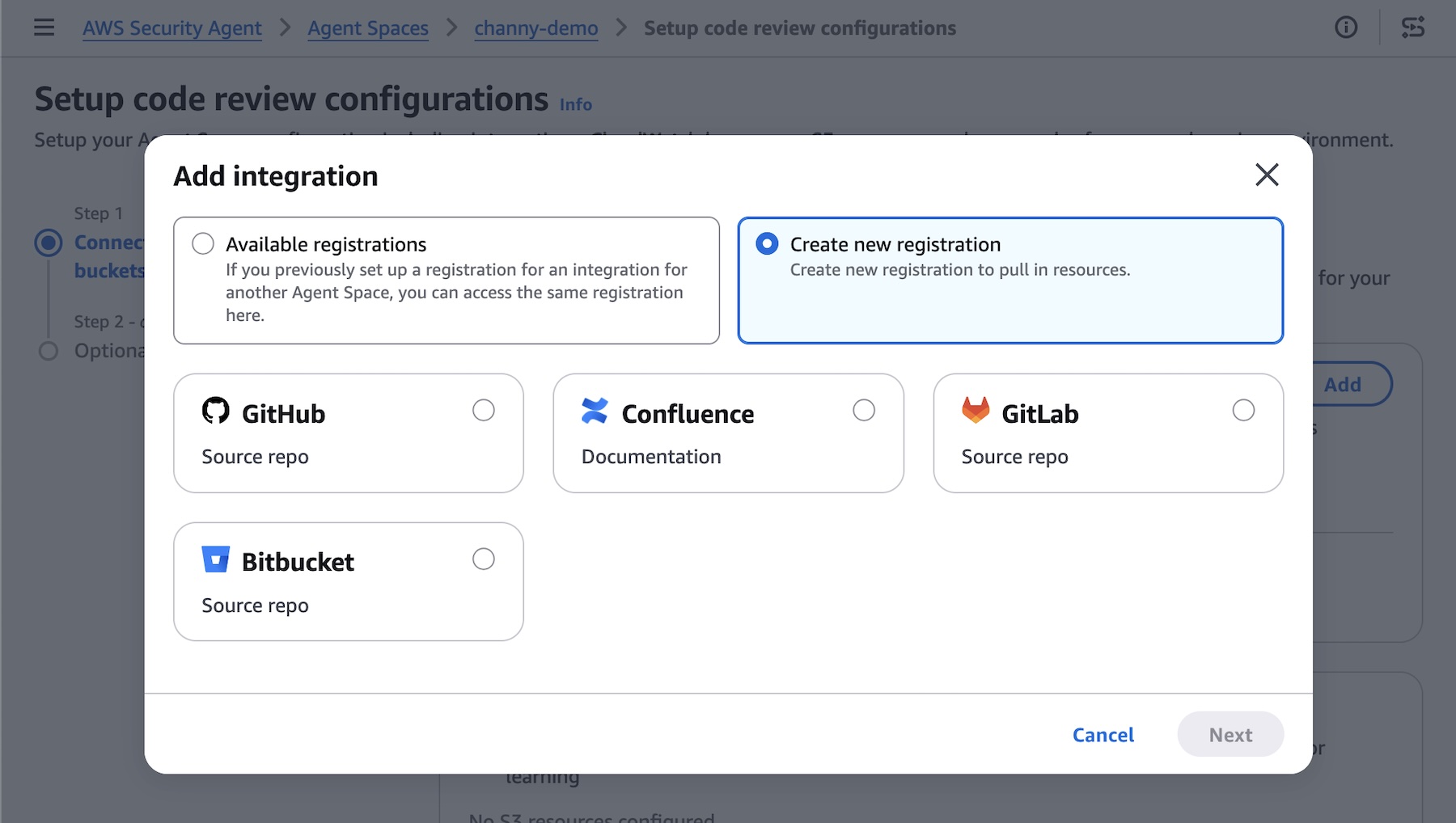
Recognizing that enterprise codebases are rarely confined to a single platform, AWS has extended its code review capabilities. The Agent now natively connects to GitLab and Bitbucket, supporting both SaaS and self-hosted instances.

Perhaps more importantly, AWS has introduced Confluence integration. By linking internal documentation to the scanning process, the Security Agent can now reference architectural decisions, business logic, and security protocols documented in Confluence. This provides the AI with the necessary context to understand why a piece of code was written a certain way, significantly reducing false positives and helping developers understand the "business intent" behind security findings.
2. Automated Threat Modeling
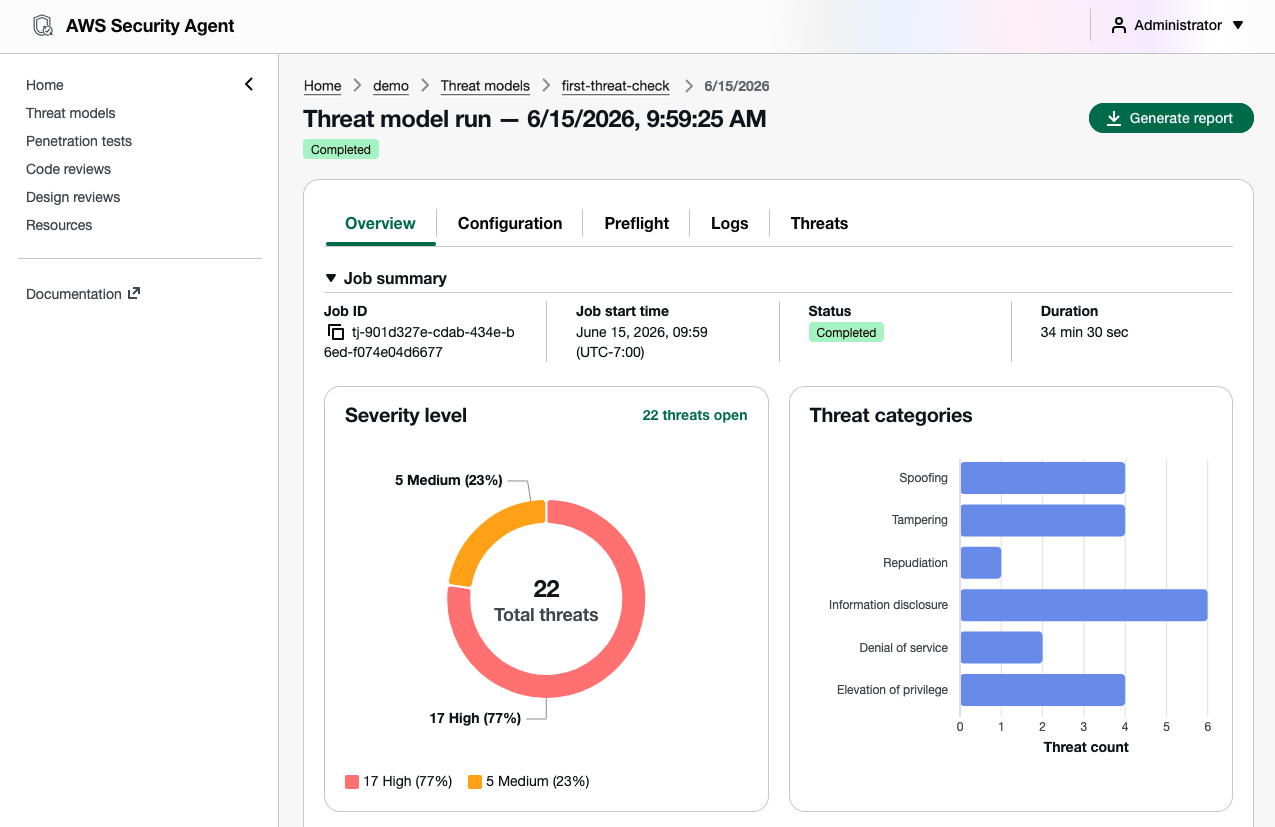
One of the most labor-intensive tasks in security engineering is manual threat modeling. AWS is automating this process by having the Security Agent analyze design documentation and repository structures. The tool automatically generates comprehensive models that include:
- Data Flow Mapping: Visualizing how data moves between services.
- Trust Boundary Identification: Highlighting where security controls are most critical.
- Attack Vector Analysis: Pinpointing potential threat actors and their likely paths of entry.
- Prioritization: Assigning risk scores to threats so security teams can focus their resources on the most critical vulnerabilities first.
3. Kiro Power and Claude Code Integration
Perhaps the most significant shift for developer experience is the introduction of Kiro power and the Claude Code plugin. By utilizing an open Model Context Protocol (MCP) server, the Security Agent is now accessible directly within the developer’s Integrated Development Environment (IDE).
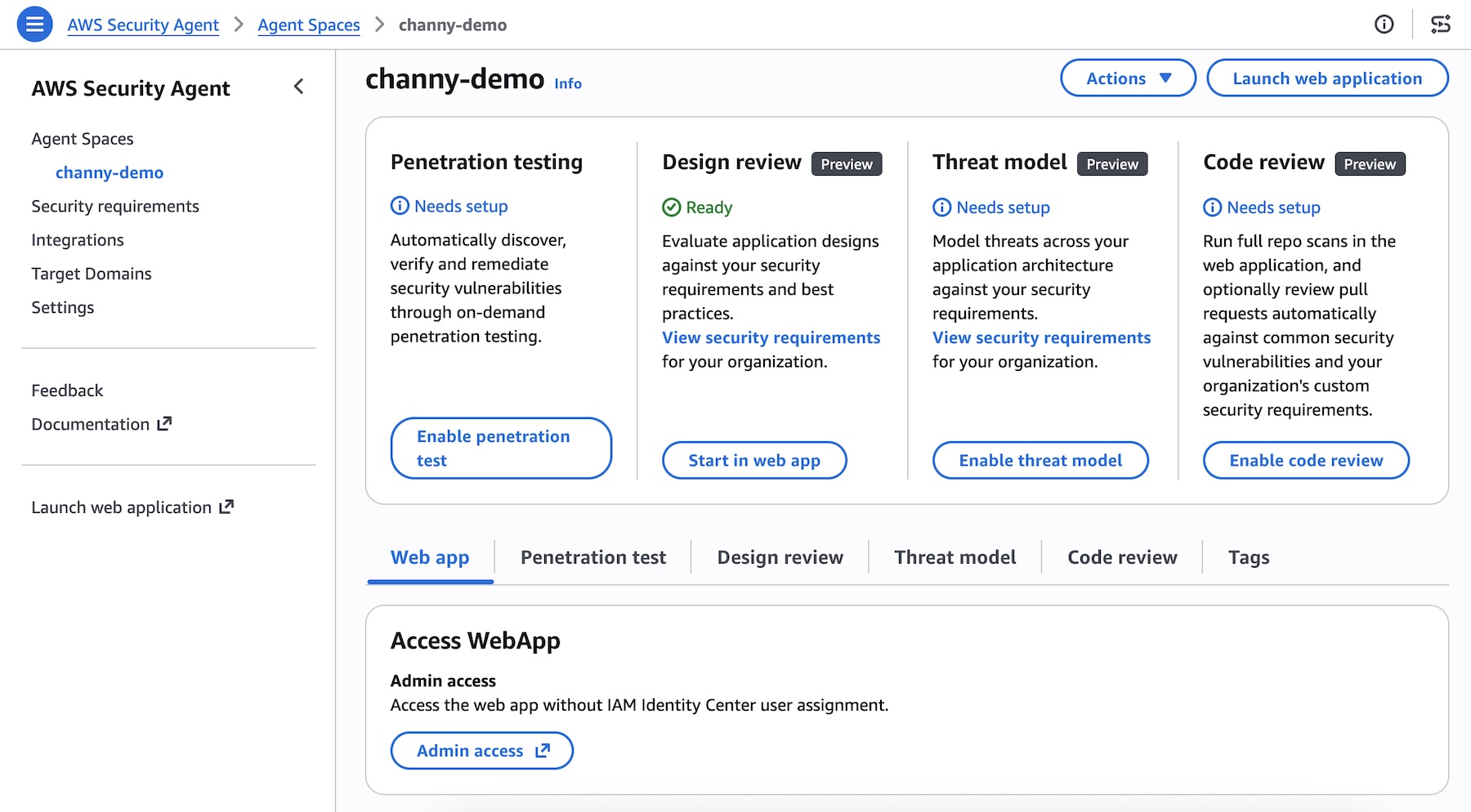
Developers no longer need to navigate to a separate console to check their security posture. Instead, they can use natural language prompts directly in their IDE:
- "Run a full security scan on this repository."
- "Build a threat model for this application."
- "Help me remediate these findings."
The Agent doesn’t just identify problems; it generates "fix commits" and remediation guidance, which the developer can review and apply with a single click. This creates a tight feedback loop that minimizes context switching and allows developers to maintain their flow state while remaining secure.
Supporting Data: The Value of Verified Findings
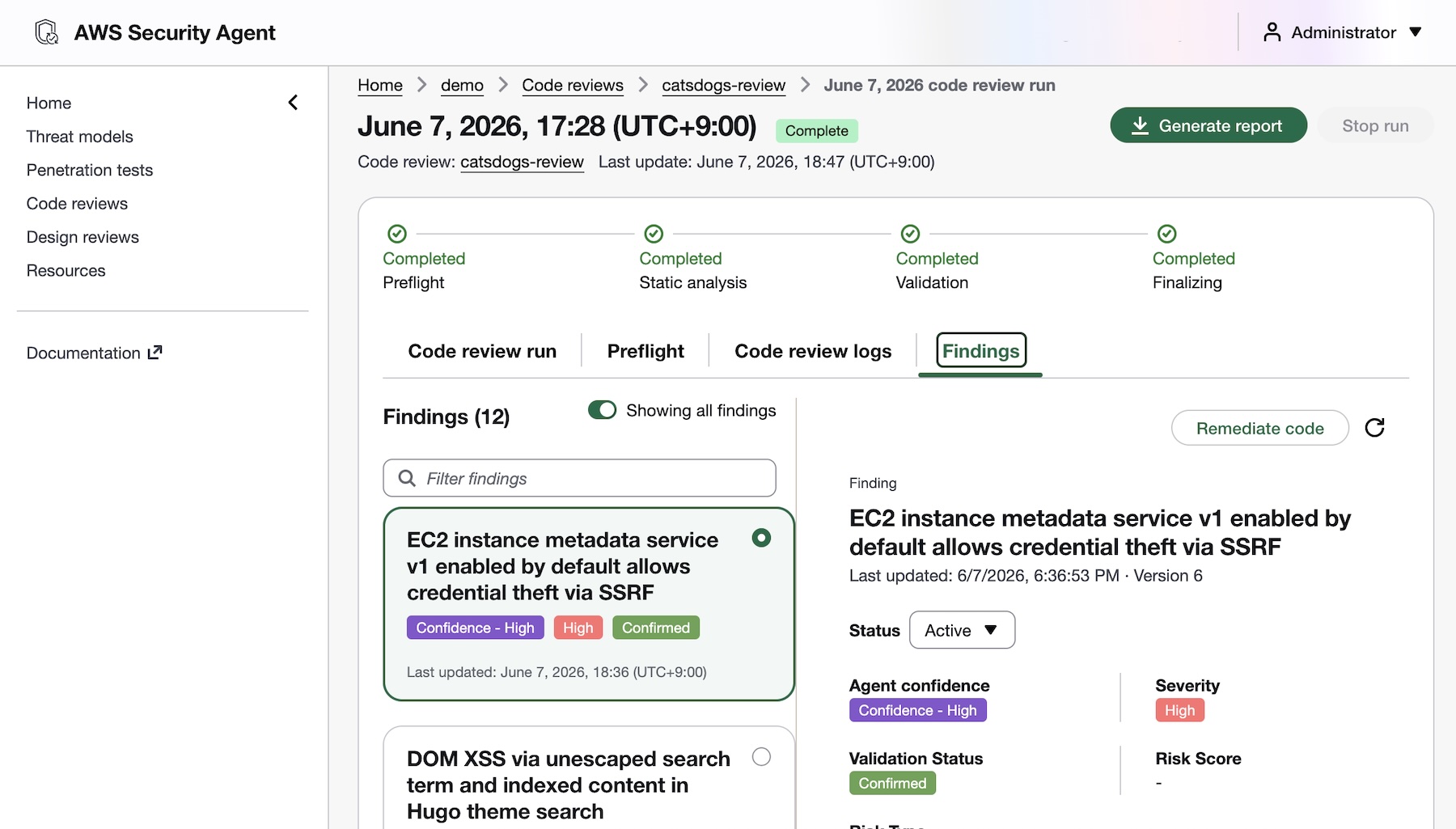
A critical differentiator for the AWS Security Agent is its ability to perform exploitability testing. Traditional scanners often produce a long list of theoretical vulnerabilities, leading to "alert fatigue."
The AWS Security Agent validates its findings in simulated environments. When the agent reports a vulnerability, it provides a proof-of-exploitability, effectively saying, "This is not just a theoretical risk; here is how an attacker could leverage this, and here is the exact code fix to stop them." By reducing the noise of non-exploitable vulnerabilities, the Agent enables security teams to focus on the issues that pose a real-world risk to the organization.
Implications for Enterprise Security
The integration of these features has profound implications for the industry:
The "Security-as-Code" Shift
By enabling teams to import their own organizational requirements—such as NIST CSF, PCI DSS, or internal compliance standards—directly into the Agent, security becomes a part of the code itself. Every pull request is checked against these requirements in real-time, ensuring that compliance is not a quarterly "check-the-box" activity but a continuous, automated process.
Reducing Development Latency
Security has historically been a bottleneck in the CI/CD pipeline. By providing developers with immediate, IDE-based feedback and automated remediation, AWS is helping organizations reduce the time-to-market for secure software. When security is embedded into the developer’s workflow, it transforms from a "gatekeeper" function into an "accelerator" function.
A Unified DevSecOps Future
The integration of the Claude Code plugin and the Kiro power suggests that AWS is moving toward a future where the AI agent is a member of the engineering team. By handling the tedious aspects of threat modeling and code auditing, the agent allows human engineers to focus on higher-level architectural challenges, confident that the underlying security foundation is being monitored by an intelligent, context-aware system.
Looking Ahead: Official Guidance
AWS has emphasized that these features are currently available in all commercial regions where the AWS Security Agent is active. Organizations looking to adopt these tools can take advantage of the 2-month free trial offer to assess how the Agent fits into their existing CI/CD workflows.
For security leaders, the message is clear: the era of reactive, perimeter-based security is waning. The future belongs to integrated, agentic systems that can reason about code as deeply as the developers who write it. By consolidating design, development, and deployment security into one unified platform, AWS is providing the tools necessary for enterprises to build faster, while staying inherently more resilient.
As Channy, a leading voice in the AWS community, noted during the latest update, the launch of the AWS Agents for DevSecOps is not merely an incremental improvement; it is a fundamental shift in how we conceive of security in the cloud-native age. Whether you are a small startup or a global enterprise, the ability to weave security expertise into every repository is no longer a luxury—it is the new baseline for professional software development.