China Asserts Global AI Leadership with Launch of Shanghai-Based WAICO, Targeting the Global South
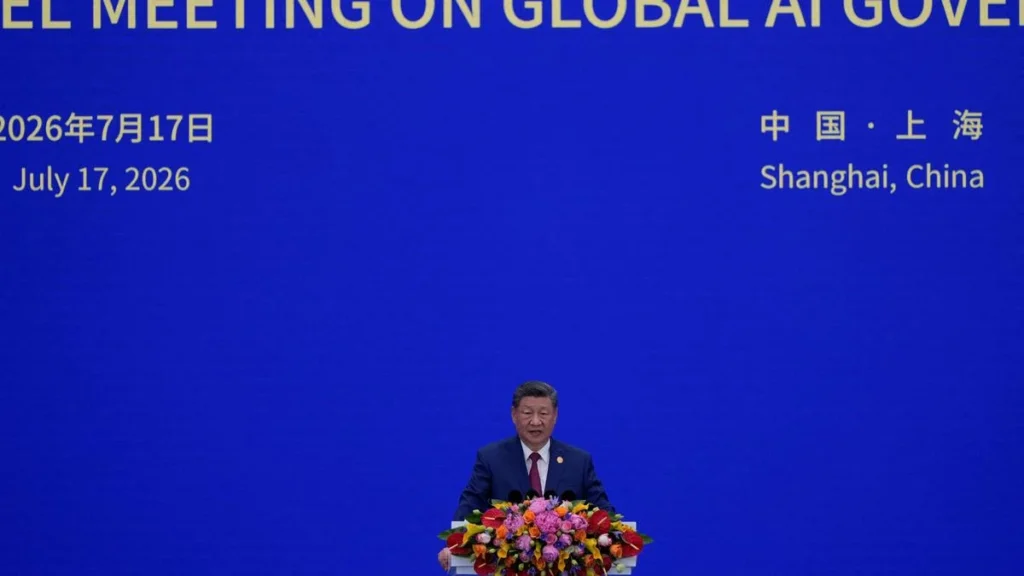
SHANGHAI — In what represents the most decisive move yet by Beijing to contest Western dominance in the technological frontier, Chinese President Xi Jinping has unveiled a sweeping global Artificial Intelligence (AI) governance initiative. Delivered at the opening ceremony of the World AI Conference (WAIC) in Shanghai on July 17, 2026, the announcement marks the formal establishment of the World Artificial Intelligence Cooperation Organisation (WAICO).
Headquartered in Shanghai, the newly minted multilateral body comprises China and 29 other founding member states, drawing its support almost entirely from the Global South. By offering open-source technological alternatives, extensive training programs, and joint research centers, Beijing is positioning itself as the primary technology partner for developing nations across Asia, Africa, and Latin America. This strategy aims to challenge the hegemony of Silicon Valley giants and bypass U.S.-led technology restrictions.
Main Facts: The Genesis of WAICO and Beijing’s Global South Coalition
The establishment of WAICO represents a institutionalized effort by China to build a parallel track for global AI development and governance. The organization’s founding charter has been signed by 30 countries, uniting a formidable block of emerging economies.
Key Elements of the Announcement:
- The Coalition: The 30-member bloc includes prominent Global South actors such as Brazil, Russia, South Africa, Indonesia, Kazakhstan, Kenya, Malaysia, Pakistan, Uzbekistan, and Venezuela.
- Capacity Building Commitments: President Xi announced that over the next five years, China will provide developing nations with 5,000 training opportunities through specialized AI seminars and educational programs.
- Institutional Expansion: China will establish dedicated joint AI application cooperation centers in partnership with major regional and international organizations, including:
- The Association of Southeast Asian Nations (ASEAN)
- The League of Arab States
- The African Union (AU)
- The Community of Latin American and Caribbean States (CELAC)
- The Shanghai Cooperation Organisation (SCO)
- The BRICS bloc
- The Indian Abstention: Despite sending a high-level diplomatic delegation led by a Joint Secretary, India chose not to join WAICO. This decision makes India the sole founding member of the BRICS group to opt out of the initiative, highlighting growing geopolitical divisions over technology standards within the bloc.
Chronology: The Road to China’s Parallel AI Ecosystem
The launch of WAICO is the culmination of a multi-year technological and geopolitical standoff between Washington and Beijing.
[October 2022 – late 2025]
U.S. imposes strict export controls on advanced AI semiconductors (Nvidia A100/H100/B200 chips) to curb China's military and technological development.
       │
       ▼
[2024 – 2025]
Chinese tech firms shift focus toward algorithmic efficiency, open-source models, and domestic semiconductor manufacturing (SMIC).
       │
       ▼
[Early 2026]
Chinese AI firms gain global traction by releasing highly efficient, low-compute models that lower deployment costs for developing countries.
       │
       ▼
[July 16, 2026]
Moonshot AI launches "Kimi K3," a landmark open-source model featuring 2.8 trillion parameters, demonstrating China's ability to match Western scale.
       │
       ▼
[July 17, 2026]
President Xi Jinping officially launches WAICO at the World AI Conference in Shanghai, formalizing China's AI leadership of the Global South.
Supporting Data: The Tech Landscape and the Rise of Open-Source Alternatives
A key pillar of China’s appeal to the Global South is its focus on open-source AI models. Western giants like OpenAI (creators of ChatGPT) and Anthropic (creators of Claude) rely primarily on proprietary, closed-source architectures. These models require expensive API access and robust internet infrastructure, making them cost-prohibitive for many developing economies.
In contrast, China is positioning itself as a champion of "technological democratization" through open-source software. Just one day prior to the WAICO launch, Beijing-based AI pioneer Moonshot AI released its Kimi K3 model.

Key Specifications of Kimi K3:
- Parameters: 2.8 trillion parameters.
- Architecture: Open-source, allowing developers globally to download, modify, and host the model locally.
- Significance: It is the first Chinese open-source model to reach this scale, proving that Chinese developers can build top-tier systems despite Western chip restrictions.
By promoting open-source models like Kimi K3 and those developed by DeepSeek, Beijing offers developing countries a clear alternative: affordable, customizable AI that does not require reliance on American technology.
Official Responses: Geopolitical Friction and Ideological Sovereignty
In his address to the Shanghai summit, President Xi Jinping outlined a vision of global AI development that contrasts sharply with the Western approach.
"AI development should not be a solo performance by a single country, but a symphony of international cooperation," Xi declared. "We should jointly oppose overstretching the national security concept in the field of AI and placing one country’s security over that of others."
While Xi did not name the United States directly, his comments targeted Washington’s use of export controls, blacklists, and investment curbs to isolate China’s tech sector.
The Battle Against "Ideological Infiltration"
Beyond security and economic concerns, Chinese officials have raised alarms over the cultural and ideological values embedded in Western AI models. Beijing argues that Western platforms reflect liberal-democratic biases, which could erode the cultural and political sovereignty of non-Western states.
Xi addressed these concerns by calling on nations to protect their cultural identity:

"We should tend to the garden of civilisations with great care to ensure that the beauty of each civilisation is appreciated and shared. As we often say in China, ‘A single string cannot make music, and a single tree does not make a forest.’"
India’s Diplomatic Balancing Act
India’s decision to attend the summit but decline WAICO membership highlights New Delhi’s delicate position. While India actively participates in BRICS and the SCO, it remains wary of Chinese dominance in critical infrastructure and technology standards.
Indian diplomatic sources suggest that New Delhi is reluctant to endorse a technological framework that could be used to project Chinese soft power or establish Beijing-controlled digital standards across the developing world.
Implications: A Bifurcated Global AI Landscape
The launch of WAICO and China’s outreach to the Global South have deep implications for the future of the global technology sector, international diplomacy, and digital governance.
1. The Realignment of the Global South
By offering free training, joint research centers, and open-source models, China is filling a critical technology gap for developing nations. For many countries in Africa and Latin America, the choice is pragmatic: adopt Chinese-supported, low-cost AI infrastructure today, or wait for expensive, restricted Western alternatives. This dynamic could lock these countries into Chinese technological ecosystems for decades, shaping their telecommunications, cloud computing, and software standards.
┌──────────────────────────────────────────────────────────────────────────┐
│                      THE BIFURCATED AI ECOSYSTEM                         │
├─────────────────────────────────────────┬────────────────────────────────┤
│             WESTERN MODEL               │         CHINESE MODEL          │
│         (U.S. / Western Europe)         │     (WAICO / Global South)     │
├─────────────────────────────────────────┼────────────────────────────────┤
│ • Proprietary & Closed-Source           │ • Open-Source & Collaborative  │
│ • High-Cost APIs                        │ • Low-Cost / State-Subsidized  │
│ • Western Democratic Values Alignment   │ • Ideological Sovereignty Focus│
│ • Strict Export Controls & Sanctions    │ • Broad Tech Transfer & Access │
└─────────────────────────────────────────┴────────────────────────────────┘
2. The Splinternet of Artificial Intelligence
The global tech landscape is splitting into two distinct spheres of influence:

- The Western Bloc: Led by the U.S. and its allies, characterized by proprietary models, strict data privacy regulations, and security-driven export controls.
- The WAICO Bloc: Led by China, characterized by open-source systems, state-subsidized infrastructure, and a focus on national sovereignty over liberal-democratic alignment.
This division will complicate international efforts to establish unified safety standards for AI, particularly in sensitive areas like autonomous systems, biosecurity, and military applications.
3. Pressure on Multilateral Organizations
China’s plan to integrate WAICO initiatives into BRICS and the SCO will test the cohesion of these organizations. For countries like India, which seek to maintain strategic autonomy, China’s aggressive push to set technology standards within these forums presents a challenge. New Delhi will have to work hard to present its own digital public infrastructure (DPI) model as a viable alternative to Beijing’s state-backed AI pipeline.
Conclusion
With the launch of WAICO, China is no longer just defending its domestic market against Western tech restrictions; it has gone on the offensive. By framing AI as a shared tool for the Global South rather than a geopolitical weapon for the West, Beijing is building a formidable coalition. The success of this initiative could shift the global balance of technological power, making Shanghai—not Silicon Valley—the primary hub for the next wave of global AI adoption.