Jio Platforms Q1 FY27 Results: Navigating Growth and Preparing for a Landmark IPO
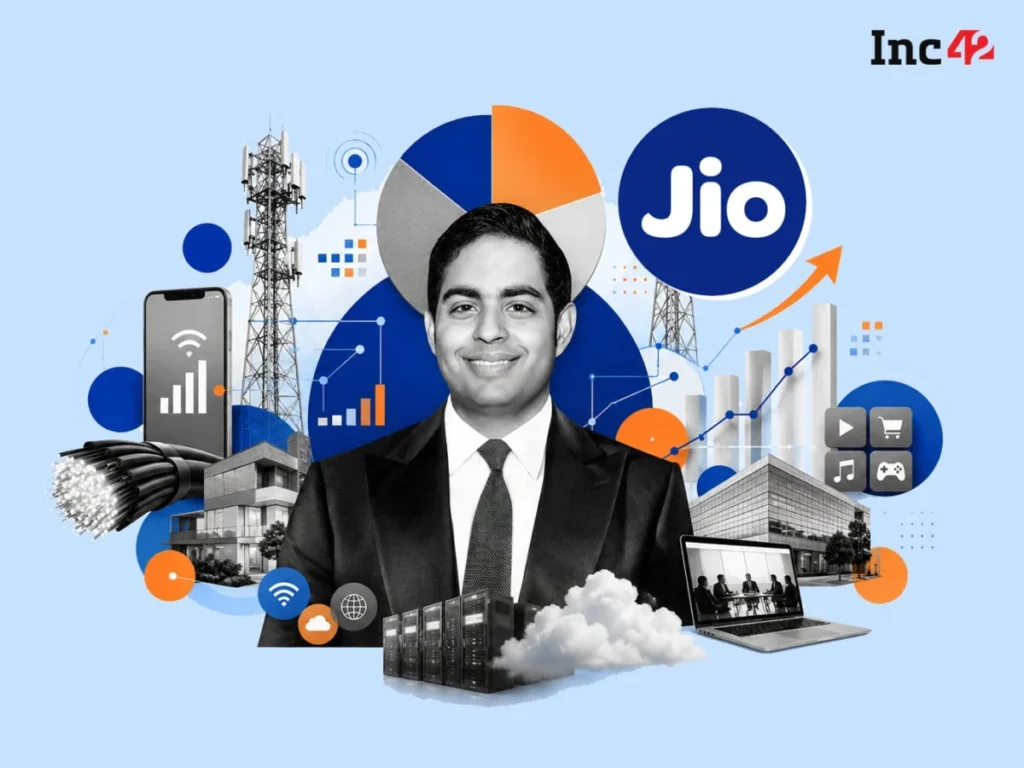
Jio Platforms, the digital powerhouse under the Reliance Industries (RIL) umbrella, has released its financial results for the first quarter of the fiscal year 2027 (Q1 FY27). As the company inches closer to its highly anticipated initial public offering (IPO), the latest figures paint a picture of a business transitioning from a traditional telecom operator to a diversified deep-tech conglomerate. Despite a minor sequential dip in net profit, the company’s sustained double-digit growth in EBITDA and revenue underscores its dominant market position and the efficacy of its aggressive expansion into digital services.
Main Facts: A Balanced Financial Performance
In the quarter ended June 30, 2027, Jio Platforms reported a consolidated Profit After Tax (PAT) of ₹7,764 Cr. While this represents a robust 9.2% increase on a year-on-year (YoY) basis, it reflects a 2.2% decline when compared to the previous quarter (Q4 FY26), which stood at ₹7,935 Cr. Market analysts attribute this marginal sequential contraction primarily to rising finance costs linked to the capitalization of 5G infrastructure, an essential investment for the company’s long-term competitive edge.
On the revenue front, the company demonstrated steady momentum. Operating revenue climbed to ₹39,173 Cr, marking a 2.4% rise sequentially and an 11.8% increase compared to the same period last year. Gross revenue saw a similar upward trajectory, jumping 12% YoY to reach ₹45,961 Cr. The EBITDA (Earnings Before Interest, Taxes, Depreciation, and Amortization) stood at a formidable ₹20,865 Cr, reflecting a 15.1% YoY growth and a 4% improvement quarter-on-quarter. Notably, the EBITDA margin expanded to 53.3%, up 90 basis points from the previous quarter, signaling operational efficiency gains even as the company scales its complex digital ecosystem.
Chronology: The Evolution of Jio’s Digital Hegemony
Jio’s journey has been defined by rapid infrastructure rollouts and strategic diversification.
- Foundation Phase: Following its disruptive entry into the Indian telecom sector, Jio prioritized aggressive subscriber acquisition through data-heavy, low-cost plans.
- Diversification Phase: Over the last few years, the company shifted its focus from being a pure-play connectivity provider to a digital service ecosystem, integrating content streaming, cloud computing, IoT (Internet of Things), and enterprise managed services.
- The 5G Pivot: The capitalization of 5G assets in recent quarters has been a strategic turning point. While this has momentarily increased finance costs, it has cemented Jio’s lead in the Fixed Wireless Access (FWA) market, where it currently commands over 78% of the market share.
- The IPO Roadmap: Having filed its Draft Red Herring Prospectus (DRHP) earlier this year, the company is now in the regulatory scrutiny phase. The IPO, which proposes a fresh issue of 27 crore shares, aims to raise approximately $4 billion (₹34,000 Cr), a significant portion of which is earmarked for the debt reduction of its subsidiary, Reliance Jio Infocomm Ltd (RJIL).
Supporting Data: Operational Metrics and Subscriber Growth
The strength of Jio’s financials is anchored in its massive, growing user base. As of Q1 FY27, Jio Platforms serves over 533 million subscribers. The quality of this subscriber base is equally impressive, with approximately 285 million users now on the 5G network, underscoring the successful migration of users to next-generation technology.
The Connectivity Engine
The company added 8.9 million net subscribers during the quarter. The Average Revenue Per User (ARPU)—a critical metric for telecom health—saw a healthy uptick, rising to ₹215.6 per month from ₹214 in the preceding quarter and ₹208.8 in the year-ago period. This consistent growth in ARPU is a direct result of Jio’s ability to upsell data packages and migrate users toward premium 5G plans.
Data Consumption Trends
Data consumption remains the backbone of Jio’s demand cycle. Total data traffic on the network rose 26.9% YoY to reach 69.4 exabytes. On an individual level, average monthly data consumption per user surged to 43.7 GB, one of the highest globally. This massive consumption is supported by the rapid adoption of fixed broadband, with 2.9 crore connections now active, including 14 million JioAirFiber home connections.
Digital Services vs. Connectivity
Perhaps the most significant highlight in the Q1 report is that revenue from digital services grew by 20% YoY, outperforming the core connectivity business. This shift validates the company’s strategy of leveraging its connectivity infrastructure to cross-sell value-added services such as cloud computing and enterprise IoT solutions, effectively creating multiple revenue streams that are less susceptible to the volatility of the retail telecom market.
Official Perspectives: The Vision for a Publicly Listed Future
Addressing shareholders and the market, Akash Ambani, Managing Director of Jio Platforms, articulated a vision that moves beyond traditional telecom metrics.
"Jio has established itself as a deep-tech company and demonstrated the velocity of innovation across multiple advanced technologies," Ambani noted. He emphasized that the company’s global recognition for its patent portfolio serves as a testament to its technical prowess. Regarding the upcoming IPO, Ambani reiterated the commitment to democratizing digital access: "As we embark on our next phase of the journey to be a publicly listed company in India, we will continue to maintain our deep-tech focus and democratize access to digital connectivity and digital services in India and globally."
The leadership’s narrative is clear: Jio is positioning itself not just as an Indian telecom giant, but as a global technology innovator. The focus on "democratizing" digital access is intended to appeal to both retail investors in India and global institutional investors looking for exposure to the country’s burgeoning digital economy.
Implications: Market Positioning and Future Outlook
The implications of these results are twofold: they reflect current operational resilience and set the stage for a massive liquidity event.
1. The Debt-Reduction Strategy
The planned utilization of IPO proceeds is a key signal to investors. By allocating ₹27,500 Cr from the $4 billion raise toward the prepayment of RJIL’s borrowings, Jio is prioritizing a cleaner balance sheet. This move is designed to reduce interest outflows and improve net profit margins in the post-IPO quarters, making the company more attractive to conservative long-term institutional investors.
2. Market Dominance and Competition
With a 66.43% stake held by Reliance Industries and significant minority stakes held by global tech giants like Meta (9.98%) and Google (7.73%), Jio’s ownership structure is a strategic asset. The synergy with these partners continues to drive the innovation cycles in content, digital payments, and cloud computing. The 53.3% EBITDA margin suggests that Jio is successfully capturing the "operating leverage" of its network; as more users move to 5G and consume higher volumes of data, the incremental cost of serving those users decreases, leading to higher margins.
3. Challenges Ahead
Despite the positive outlook, challenges remain. The high finance costs are a byproduct of the heavy capital expenditure required for 5G deployment. Additionally, as the company enters the public market, it will face heightened scrutiny regarding its ability to sustain double-digit growth in the digital services segment. The competition in the fixed broadband space is also intensifying, and Jio will need to maintain its 78% FWA market share against emerging players.
Conclusion
Jio Platforms’ Q1 FY27 results provide a clear roadmap of a company in transition. By balancing the stability of its massive connectivity business with the explosive growth of its digital and enterprise services, Jio has insulated itself against the traditional boom-and-bust cycles of the telecom sector. As the company prepares for its landmark IPO, the primary focus for stakeholders will be whether this momentum can be sustained in an increasingly complex macroeconomic environment. For now, the combination of a record subscriber base, rising ARPU, and an expanding EBITDA margin suggests that Jio is well-equipped to handle the rigors of public life.