The Tech Landscape Shifts: Massive Batteries, Strategic Withdrawals, and Flagship Leaks Redefine the Industry
The global consumer electronics landscape is currently undergoing a period of profound transformation. From the aggressive hardware innovation coming out of China to the calculated strategic retreats of major smartphone manufacturers, the industry is witnessing a divergence in priorities. As flagship release cycles accelerate and new architectural shifts—such as Google’s move to 2nm silicon—approach, consumers are left to navigate a rapidly evolving ecosystem of high-capacity power cells, foldable innovations, and significant regional market restructuring.
I. Powering the Future: Xiaomi’s Battery Breakthrough
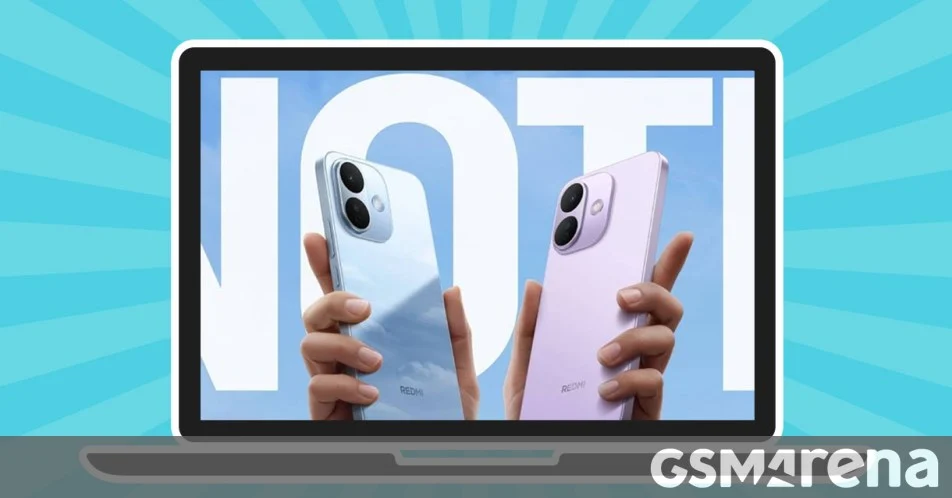
The hardware arms race has reached a new zenith with the official unveiling of the Redmi Note 17 and Redmi Note 17 Pro in China. Xiaomi has once again pivoted toward the "power-user" demographic, prioritizing raw capacity over mere thinness.
The standard Redmi Note 17 features an industry-leading 8,000 mAh battery, a specification that would have been considered impossible for a standard smartphone form factor just a few years ago. The Pro variant pushes the boundary even further, integrating a staggering 9,000 mAh cell. To put this in perspective, these devices offer nearly double the battery life of typical current-generation flagships.
Key Specifications and Pricing
Beyond the battery, the duo brings a premium feature set to the mid-range market:
- Display: Both models feature 120Hz OLED panels, ensuring high-refresh-rate fluidity.
- Durability: The series introduces IP69 dust and water resistance, a rarity in this price bracket.
- Software: The devices launch with Android 16, skinned with the latest iteration of HyperOS.
- Camera: The Note 17 Pro distinguishes itself with a 200 MP primary sensor and 67W fast charging.
With a starting price of CNY 1,199 ($167) for the base model and CNY 1,599 ($223) for the Pro, Xiaomi is positioning itself to dominate the value-to-performance segment. While international availability remains unconfirmed, the sheer density of these batteries marks a significant shift in mobile hardware engineering.
II. Samsung’s Galaxy Unpacked: A Leaked Roadmap
As the July 22 Galaxy Unpacked event nears, the "surprise" element has been almost entirely dismantled by a barrage of official-looking renders. Samsung appears to be doubling down on its foldable dominance, preparing to unveil a comprehensive suite of hardware.
The Foldable Lineup
The leaks confirm a diversified approach to the foldable market:
- Galaxy Z Fold8: Rumored to feature a wider cover screen, addressing the long-standing criticism that previous generations were too narrow for comfortable typing.
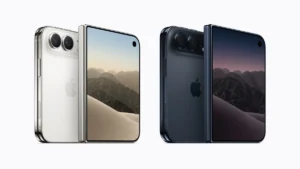
- Galaxy Z Fold8 Ultra: Positioned as the ultimate productivity machine, the Ultra boasts a larger display, a 200 MP main camera, and a substantial 16 GB of RAM.
- Galaxy Z Flip8: Retains its iconic clamshell aesthetic with refined colorways.
Design Evolution and the S27 Ultra
Perhaps the most notable revelation concerns the future of the Galaxy S series. Recent rumors suggesting a design departure—specifically the abandonment of individual camera rings in favor of a horizontal bar—have been debunked. Industry insiders now suggest that the Galaxy S27 Ultra will maintain the iconic design language established by the S26 Ultra, favoring continuity over radical aesthetic shifts.
III. Market Realignment: The OnePlus Exit
In a move that has sent shockwaves through the tech community, OnePlus has confirmed its formal withdrawal from the North American and European markets. After more than a decade of establishing a presence as a "flagship killer," the brand is effectively retreating to its core strongholds in China and India.
Implications for Existing Users
OnePlus has attempted to mitigate consumer anxiety by confirming that current devices in these regions will continue to receive software updates and after-sales support. However, no new hardware will be sold through official channels in the West.
Strategic Shift
The company’s decision reflects a broader consolidation strategy. By focusing on high-growth regions like India and China, OnePlus intends to streamline operations. Market analysts suggest that Oppo, which shares close corporate ties and supply chain infrastructure with OnePlus, will likely fill the void in Western markets, effectively absorbing the brand’s target demographic while operating under a more consolidated corporate structure.
IV. Google’s Strategic Gamble: The Pixel 11 Series
Google is preparing for a high-stakes launch on August 12, with the Pixel 11 series leaked in near-complete detail. The leaks suggest a premium price floor, with the base model starting at $899 for the 256GB storage variant.
The 2nm Revolution
The most significant change lies beneath the chassis. The Pixel 11 family is expected to be the first to feature the 2nm Tensor G6 chipset, developed in conjunction with a new MediaTek-manufactured modem.
Why this matters:
- Efficiency: Moving to a 2nm process node is a massive leap for mobile silicon, promising superior thermal management and battery efficiency.
- AI Performance: Google is banking on the Tensor G6 to solidify its lead in on-device generative AI, which has become the primary differentiator for the Pixel brand.
- Connectivity: The new MediaTek modem aims to resolve the persistent cellular connectivity issues that have plagued the Pixel line since the transition to Tensor in the Pixel 6.
With a lineup comprising the Pixel 11, 11 Pro, 11 Pro XL, and the 11 Pro Fold, Google is attempting to cover every niche in the premium smartphone market.
V. Chronology of Developments
- July 15: Xiaomi officially launches the Redmi Note 17 series in China, sparking discussions on battery capacity standards.
- July 18: Leaked renders of the entire Samsung Galaxy Z lineup (Fold8, Flip8, Watch9) circulate, confirming design choices ahead of the July 22 event.
- July 19: OnePlus officially announces its departure from North America and Europe, signaling a shift in global market focus.
- July 20: Retailer listings for the Google Pixel 11 surface, revealing a shift toward a 2nm Tensor G6 processor and higher base pricing.
- July 22 (Upcoming): Samsung Galaxy Unpacked event.
- August 12 (Upcoming): Google "Made by Google" hardware event.
VI. Implications: What This Means for the Consumer
The confluence of these events paints a clear picture of where the smartphone industry is heading in late 2025 and beyond.
The Battery Plateau Ends
With Xiaomi introducing 9,000 mAh capacities, the industry is entering a new phase where battery anxiety could effectively be eradicated. If other manufacturers follow suit, we may see a shift away from the "thin-is-better" mantra that has dominated the last decade of design.
The Cost of Innovation
Simultaneously, the price floor for "premium" devices is rising. Google’s $899 starting price for a base-model Pixel 11 highlights the increasing cost of advanced silicon, such as the 2nm Tensor G6. Consumers are being asked to pay more for hardware that relies heavily on AI-integrated software features rather than just traditional physical hardware upgrades.
The Consolidation of Choice
The exit of OnePlus from Western markets is a sobering reminder of the volatility of the global smartphone sector. While the market remains competitive, we are seeing a reduction in the diversity of brands available to Western consumers, leaving the field increasingly dominated by a handful of massive conglomerates like Samsung, Google, and the Oppo-Vivo-Xiaomi ecosystem.
As we look toward the upcoming official events from Samsung and Google, the focus will remain on whether these hardware improvements—ranging from the Tensor G6’s efficiency to the Z Fold8’s ergonomics—can justify the increasing costs and satisfy a consumer base that has become increasingly discerning in a crowded, yet consolidating, market.