WhatsApp Brings Scheduled Messaging to iOS Beta: A Deep Dive into the Platform’s Newest Productivity Tool
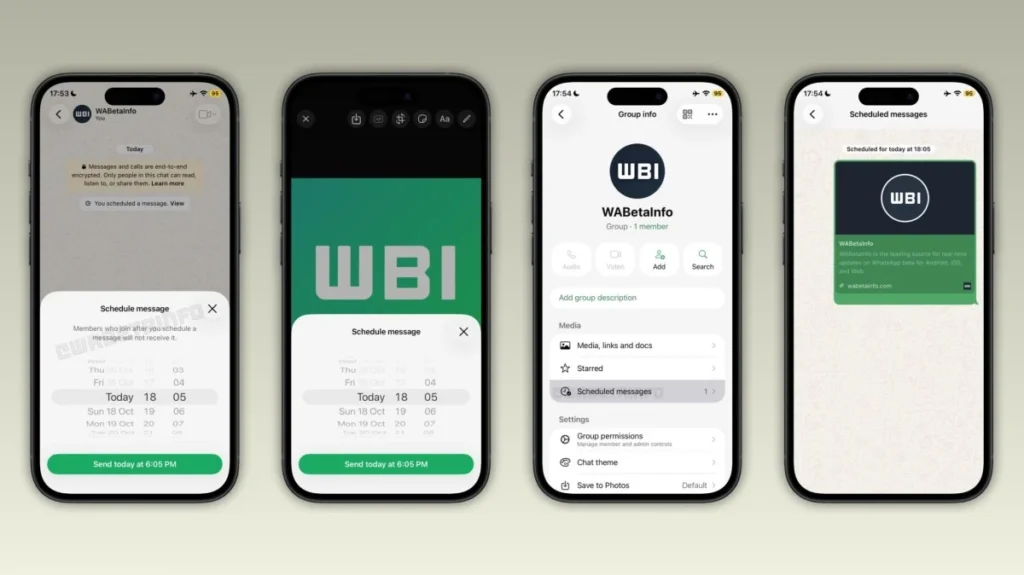
After months of anticipation and rigorous internal development, Meta’s WhatsApp is finally expanding its highly requested "Scheduled Messages" feature to the iOS ecosystem. Following a successful rollout to Android beta testers earlier this month, the feature has officially arrived on TestFlight for select iOS users under version 26.42.10.19. This expansion marks a significant milestone in WhatsApp’s evolution from a simple real-time messaging app into a sophisticated communication hub capable of managing complex scheduling needs for both personal and professional use.
Main Facts: How the Feature Operates
The implementation of scheduled messaging on iOS mirrors the intuitive design language found in the Android beta. The process is streamlined to minimize friction, ensuring that users can queue messages without disrupting their workflow.
The Mechanism of Scheduling
To schedule a message, a user simply types their content as they normally would. Instead of a standard tap on the "send" arrow, the user performs a long-press on the send button. This action triggers a date and time picker overlay. Users can then select their preferred delivery window, confirming the request via a prominent green button that displays the precise time of dispatch.
Temporal Constraints and Delivery Logic
WhatsApp has implemented specific constraints to ensure server stability and user experience:
- Minimum Lead Time: Messages cannot be scheduled for immediate delivery; the earliest a message can be queued is 10 minutes from the current time.
- Maximum Horizon: The system allows for scheduling up to two weeks in advance.
- Offline Reliability: A critical feature for mobile users is the platform’s handling of connectivity. Once a message is scheduled, it is offloaded to WhatsApp’s servers. Consequently, the message will be dispatched at the designated time regardless of whether the user’s device is online or offline, or even if the handset is powered down.
- Privacy of Intent: The confirmation of a scheduled message remains strictly private. The recipient has no indication that a message is pending, and the confirmation visual within the chat interface is visible only to the sender.
Multimedia Support
The functionality extends beyond plain text. Users can attach links, photos, and videos to their scheduled queues. In the drawing editor—the screen where users can add captions or edits to media—a long-press on the send button allows for the scheduling of a single image or video clip.
Chronology: The Road to Implementation
The journey toward this feature has been a protracted one, reflecting Meta’s cautious approach to updating the world’s most popular messaging application.
Early Development (February 2026)
Reports regarding the internal development of scheduled messaging first surfaced in February 2026. At that time, code snippets and preliminary UI mockups suggested that Meta was looking to bridge the feature gap between WhatsApp and other enterprise-focused communication platforms like Slack or Telegram, which have long offered native scheduling capabilities.
Android Testing (Early October 2026)
The feature transitioned from internal testing to public beta testing on Android earlier this month. This initial rollout allowed the development team to stress-test the server-side architecture. By observing how Android users interacted with the date-picker UI and how the backend handled the queuing of millions of messages, Meta gathered the telemetry necessary to refine the process for a broader launch.
The iOS Milestone (Late October 2026)
As of the latest TestFlight build (version 26.42.10.19), iOS users have been invited into the testing cohort. The release confirms that Meta intends to maintain feature parity across both major mobile operating systems, a strategy that has become increasingly important as the app faces stiff competition from cross-platform messaging rivals.
Supporting Data and Technical Nuances
To understand the complexity of this update, one must look at the technical architecture surrounding the feature.

Encryption and Security
A primary concern for any new WhatsApp feature is the maintenance of end-to-end encryption (E2EE). WhatsApp has confirmed that scheduled messages are fully encrypted. Because the message is stored on the server side to ensure delivery during offline periods, the company has had to ensure that these stored packets remain unreadable to any unauthorized party, including Meta employees.
The Chat Info Screen
Users can manage their queued messages through a dedicated section within the chat info screen. This dashboard serves as a central hub for:
- Monitoring: Viewing all upcoming messages scheduled for that specific contact or group.
- Editing/Deletion: Users retain full control. A scheduled message can be deleted at any time before it is sent. Notably, this deletion happens silently; the recipient will never know a message was intended for them, effectively preventing any awkward social or professional repercussions.
Group Chat Dynamics
The handling of group chats presents unique challenges. WhatsApp has specified that a scheduled message will only be delivered to participants who were members of the group at the time the message was originally scheduled. This prevents "late-joiners" from receiving context-sensitive messages that may no longer be relevant or appropriate for them, preserving the integrity of group conversations.
Official Responses and Industry Context
While Meta has not issued a formal, verbose press release detailing the release cycle, developers close to the WABetaInfo project—who have been tracking the rollout—suggest that the current beta phase is designed to "iron out the kinks" in the user interface.
Industry analysts observe that this move is part of a broader "productivity pivot." WhatsApp has historically been a tool for real-time social connection. However, as the app becomes a staple in the workplace, the demand for asynchronous communication tools has surged. By allowing users to schedule messages, WhatsApp is effectively acknowledging that its user base is increasingly utilizing the app for professional coordination, where timing—such as sending a follow-up email during business hours—is paramount.
Implications: The Future of WhatsApp
The introduction of scheduled messages holds significant implications for the future of the platform and the messaging market at large.
Enhancing Asynchronous Communication
The modern professional is often overwhelmed by the expectation of immediate availability. By providing a native scheduling tool, WhatsApp is empowering users to manage their communication flow. A user can now prepare messages during their productive hours and ensure they reach their target audience at the optimal time, whether that is early in the morning or during a specific time zone window. This reduces the pressure for "always-on" availability.
Competitive Positioning
WhatsApp has long been criticized for its "feature lag" compared to competitors like Telegram, which has offered message scheduling for years. This update signals a shift in strategy. Meta is no longer content to just provide a basic messaging interface; they are actively seeking to retain power users who might otherwise migrate to alternative platforms for better productivity features.
The Road to Public Release
While the feature is currently confined to beta testers, the trajectory is clear. The company is in a phase of data collection and bug squashing. Once the latency issues between the local client and the server are fully optimized, a public rollout is expected to follow. Based on the current pace of testing, users can likely expect a stable version of this feature to hit the App Store and Google Play within the next few months.
Conclusion
As WhatsApp continues to iterate on its core functionality, the "Scheduled Messages" feature stands out as one of the most practical additions to the app’s history. It balances the need for convenience with the sanctity of user privacy, all while maintaining the robust encryption standards that have become the platform’s hallmark. Whether for sending birthday greetings at midnight, or managing professional reminders, this update effectively bridges the gap between the immediacy of instant messaging and the deliberate nature of planned communication. As the beta period progresses, the industry will be watching closely to see if this feature achieves the seamless reliability that users have come to expect from the world’s most prominent messaging service. We will continue to monitor the development and provide updates as soon as a broader public release date is finalized.