Zepto’s IPO Strategy: Navigating the Valuation Gap in a Maturing Quick Commerce Market
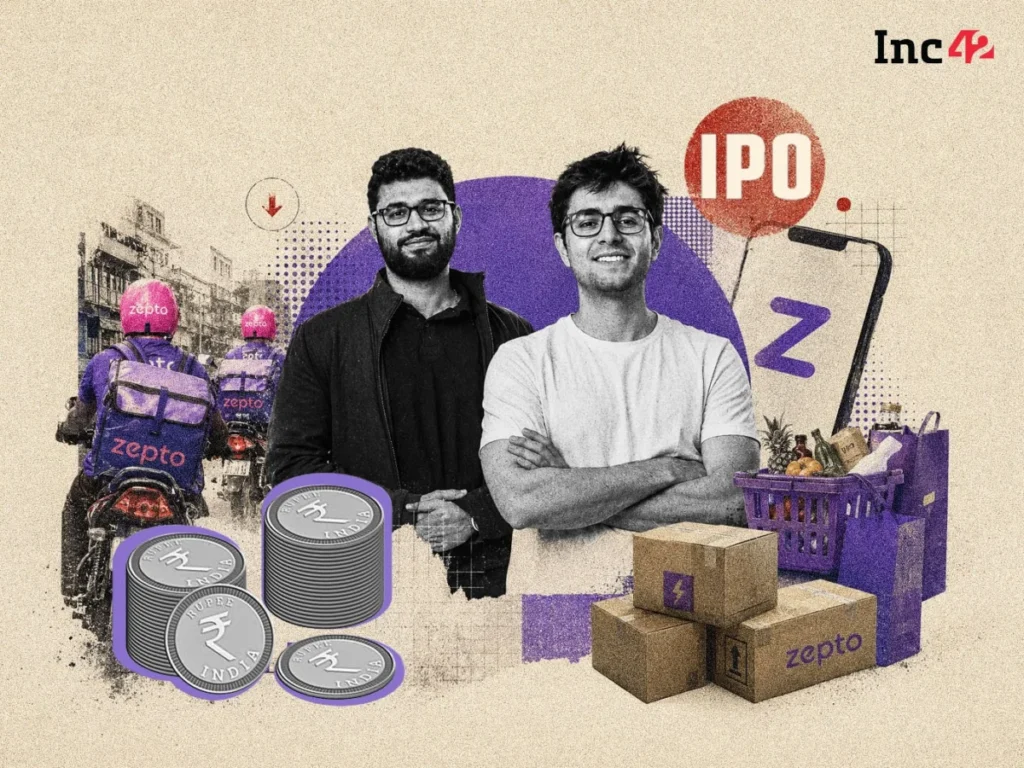
The Indian quick commerce landscape is at a defining crossroads. As the sector matures from a "growth-at-all-costs" phase to one defined by fiscal discipline and unit economics, Zepto—the Mumbai-based unicorn that revolutionized the 10-minute delivery model—is preparing for a landmark stock market debut. However, the path to the bourses is proving to be a complex exercise in recalibrating investor expectations.
Recent reports indicate that Zepto is poised to launch its Initial Public Offering (IPO) at a valuation that reflects a significant discount from its peak private market highs. As the company moves toward finalizing its anchor book, the narrative surrounding the startup has shifted from pure expansion to the long-term sustainability of its business model.
The Valuation Paradox: A Reset of Expectations
In the hyper-charged environment of private equity, Zepto reached a staggering valuation of $7 billion during its recent funding rounds. However, as the company prepares to transition into the public markets, the pricing reality has been tempered by a more cautious investor sentiment.
Current feedback from foreign institutional investors suggests a pre-money valuation of approximately $4.5 billion, which implies a post-money valuation of roughly $5.1 billion. This valuation, while robust by any traditional standard, represents a notable "valuation haircut" compared to the company’s peak private valuation.
Market analysts suggest that this shift is not necessarily a reflection of failure, but rather a correction in the face of macroeconomic headwinds. Investors are currently hyper-focused on the path to profitability, cash burn ratios, and the impact of geopolitical instability on supply chains. In an era where "profitability is the new growth," public market investors are demanding a higher margin of safety, moving away from the lofty multiples previously commanded by high-growth, loss-making tech firms.
Despite this discount, the demand for Zepto’s shares remains high. Sources close to the development indicate that the anchor book is nearing completion, bolstered by strong institutional interest. Notably, Norway’s sovereign wealth fund, Norges, and the domestic investment firm Motilal Oswal are expected to anchor the IPO, potentially accounting for 40% to 45% of the anchor allocation. This heavy institutional backing serves as a vote of confidence in Zepto’s market position, even if the valuation is more conservative than initial private market peaks.
Chronology: The Road to the Public Market
Zepto’s journey to the IPO has been marked by rapid scaling and strategic pivots. Having established itself as a category leader in quick commerce, the company filed its updated Updated Draft Red Herring Prospectus (UDRHP) last month, outlining a clear roadmap for its next phase of growth.
The proposed IPO consists of a fresh issue of shares totaling ₹8,010 crore, complemented by an Offer for Sale (OFS) of up to 11.35 crore shares. This dual-pronged approach is designed to provide necessary capital for infrastructure expansion while offering an exit route for early investors.
The company’s internal roadmap is heavily skewed toward long-term asset creation. Zepto has earmarked ₹1,629 crore specifically for the development of 1,904 new "dark stores" by the fiscal year 2030. This aggressive physical footprint expansion is complemented by an additional allocation of ₹1,734.9 crore for lease payments, signaling a commitment to dominating the hyper-local delivery ecosystem.
Beyond physical infrastructure, the company is doubling down on its digital backbone. A significant allocation of ₹1,324.8 crore has been set aside for technology and cloud infrastructure, while ₹520 crore is designated for marketing efforts via its marketplace subsidiary. The remaining capital is reserved for potential strategic acquisitions and general corporate purposes, providing Zepto with the financial flexibility to consolidate its position or explore adjacent market opportunities.
Financial Performance and Operational Efficiency
The UDRHP disclosures provide a granular look at the financial health of the company. In FY26, Zepto reported a net loss of ₹5,095 crore, up from ₹4,697 crore in the previous year. While a widening loss typically raises alarms, the context of this growth is critical. During the same period, the company’s operating revenue nearly doubled to ₹22,624 crore, indicating that the scale of operations is expanding at a pace that outweighs the incremental increase in losses.
Crucially, the metrics surrounding unit economics show a marked improvement. The adjusted EBITDA loss per order narrowed significantly to ₹79 from ₹136 in FY25. Similarly, the free cash flow burn per order saw a decline to ₹68 from ₹161. These efficiency gains are being driven by three primary levers:
- Increased Order Density: As Zepto deepens its presence in existing markets, the cost per delivery decreases, improving the overall efficiency of its dark store network.
- Dark Store Productivity: Improved logistics and inventory management have allowed individual fulfillment centers to process higher volumes with less overhead.
- High-Margin Revenue Streams: The company’s advertising business has emerged as a powerhouse, generating ₹1,636 crore in FY26. By leveraging its platform for brands to advertise directly to high-intent grocery shoppers, Zepto has unlocked a scalable, high-margin revenue stream that provides a cushion against the lower margins inherent in retail.
However, the path to profitability remains a work in progress. With a free cash flow deficit of ₹4,330 crore, the company still requires significant capital infusion to maintain its growth trajectory. The IPO, therefore, is not just a mechanism for liquidity; it is a critical requirement to sustain the operational expansion planned for the next five years.
Strategic Initiatives: Staying Competitive
In the face of intensifying competition from players like Blinkit and Swiggy Instamart, Zepto is not resting on its laurels. The company is actively diversifying its service offerings to boost both top-line revenue and customer retention.
The recent launch of "Zepto Club," an invite-only membership program, marks the company’s latest attempt to build recurring revenue. Priced at an introductory rate of ₹99 per month, the subscription offers tangible benefits, including 5% cashback in "Z-Coins," free deliveries, and priority service. This program replaces previous iterations like "Zepto Pass" and "Zepto Daily," reflecting a more refined approach to customer loyalty.
Furthermore, reports suggest that Zepto is exploring a premium grocery service—tentatively dubbed "Select"—which would cater to a more affluent demographic. By offering imported gourmet foods and premium staples, the company aims to increase the average order value (AOV), which is a key metric in achieving sustainable unit economics.
Implications for the Indian Tech Ecosystem
The outcome of Zepto’s IPO will likely serve as a litmus test for the broader Indian tech sector. If Zepto succeeds in garnering strong public support at a $5 billion valuation, it will validate the "quick commerce" model as a legitimate, long-term retail channel rather than a pandemic-era fad.
However, the "valuation haircut" also serves as a warning for other late-stage startups. The era of unchecked valuation growth based solely on Gross Merchandise Value (GMV) is effectively over. Public market investors are signaling that they are willing to back growth, but only if that growth is accompanied by a transparent, achievable, and aggressive plan for cash flow positivity.
As of now, the company remains tight-lipped regarding specific valuation negotiations. A spokesperson for Zepto, when reached for comment, maintained that the valuation remains fluid until the final price band is announced. The final pricing will ultimately be determined by the confluence of anchor investor appetite, retail demand, and the prevailing sentiment in the Indian stock market during the IPO window.
For investors, analysts, and competitors alike, the Zepto IPO is the next major event to watch. It is a story of a startup attempting to transition from a venture-backed disruptor to a publicly traded market leader, all while navigating the complexities of one of the most competitive retail markets in the world. Whether the market accepts the proposed valuation or demands further concessions, one thing is certain: the era of "quick commerce" is now entering its most critical, and most public, phase of accountability.