The Architecture of Resilience: Building Portable AI Workflows for the Post-Platform Era

In the rapidly evolving landscape of generative artificial intelligence, a dangerous trend has emerged among marketers and business operations: platform monogamy. As organizations integrate tools like OpenAI’s ChatGPT, Anthropic’s Claude, or Google’s Gemini into their daily operations, they often inadvertently build "walled gardens" around their proprietary workflows. If a chosen platform suffers an outage, implements a massive price hike, or degrades in output quality—a phenomenon often referred to as "model drift"—the business processes tethered to it can ground to a halt.
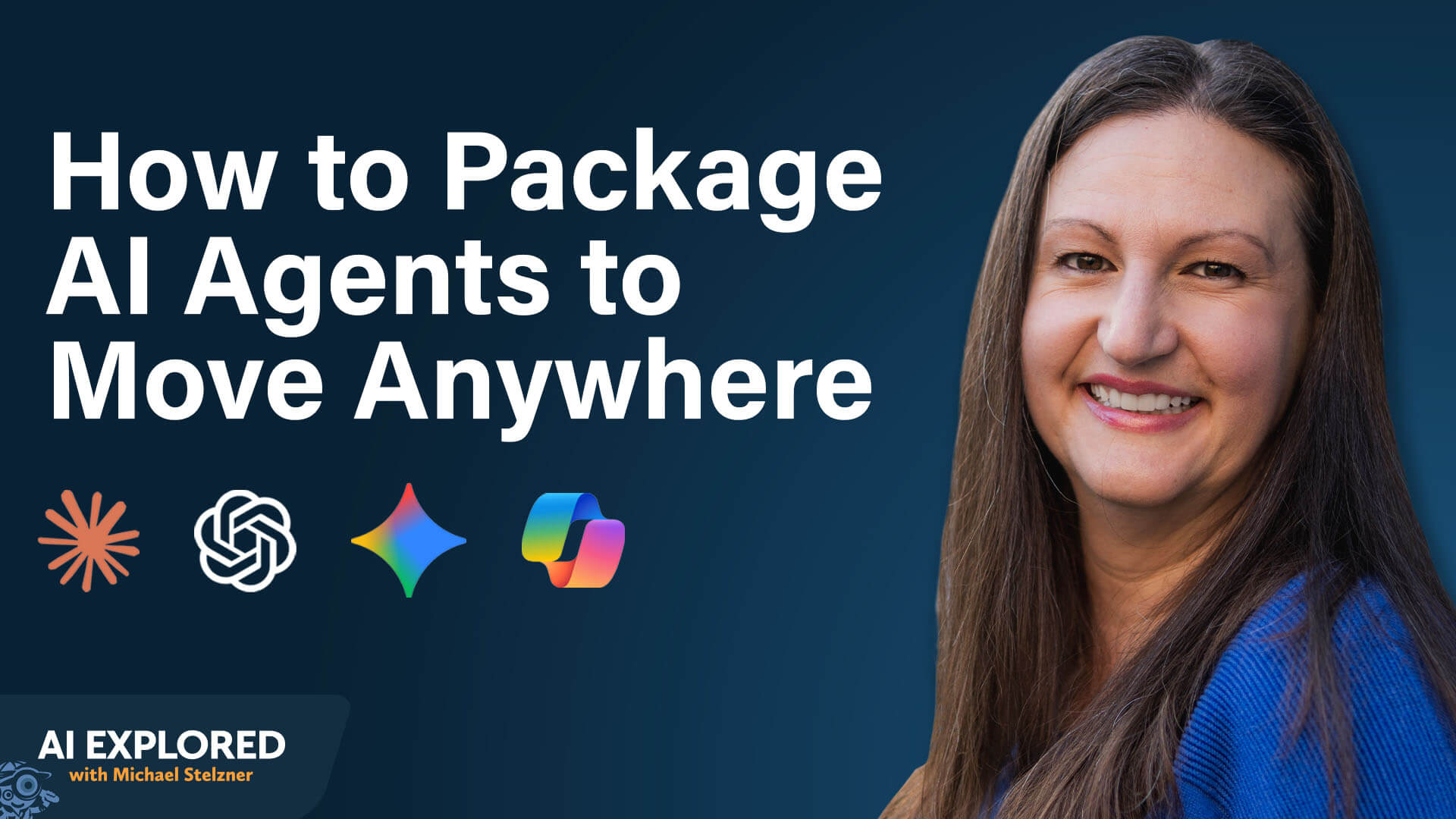
Recent insights from AI experts Nicole Leffer and Michael Stelzner suggest that the next frontier of professional AI use is not about mastering a single tool, but about building "portable workflows." By decoupling instructions, context, and data from specific platforms, businesses can create a resilient infrastructure that remains functional regardless of which AI provider is leading the market.
Main Facts: The Case for Platform Agnosticism
The shift toward portable AI workflows is driven by four primary pressures: stability, performance, cost, and functionality.
- Operational Stability: AI platforms are not immune to downtime. For a business that relies on a specific GPT for customer service or content production, a three-hour outage is not merely an inconvenience; it is a halt in production. Portability ensures that a backup model can take over the workload in minutes.
- Performance Volatility: AI models are frequently updated. These updates can sometimes result in "regression," where a model becomes less capable at a specific task it previously mastered. Portable workflows allow users to "hot-swap" models when one begins to underperform.
- Financial Leverage: Currently, AI providers are in a "land grab" phase, keeping prices artificially low to gain market share. As the industry matures, pricing structures will likely shift. Organizations locked into a single ecosystem lose the leverage to negotiate or migrate when costs become prohibitive.
- Functional Specialization: No single AI is the best at everything. While Claude might excel at nuanced creative writing, ChatGPT often leads in data analysis or image generation via DALL-E. A portable workflow allows a professional to move the "brain" of their project to the tool best suited for the immediate task.
Chronology: The Evolution of a Portable Strategy
The transition from platform-dependent to platform-agnostic AI usage typically follows a three-stage progression.
Phase 1: Decoupling Storage
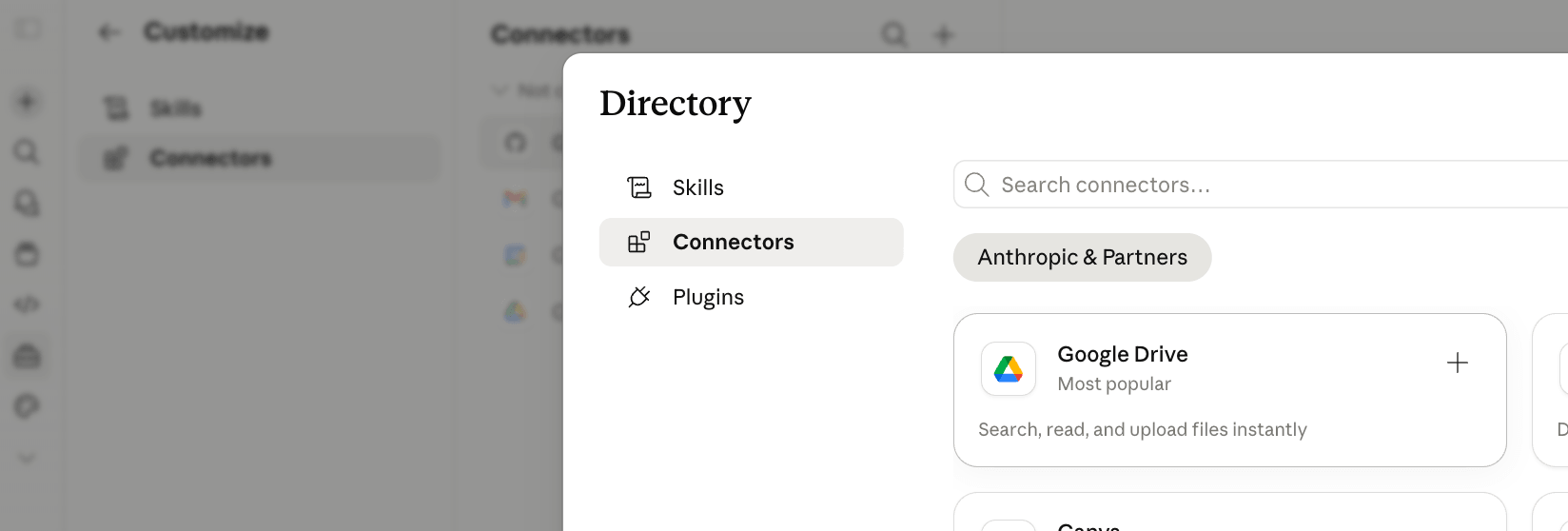
The first step in the chronology of portability is moving the "memory" of the AI out of the platform. Instead of relying on the internal "Projects" feature in Claude or "GPTs" in ChatGPT, users are now utilizing Model Context Protocol (MCP) connectors. These act as bridges (APIs) that allow various AI models to access a centralized external repository, such as Google Drive, Dropbox, or a secure SharePoint folder. By storing brand guidelines, data sets, and templates externally, the user ensures that the "context" is never trapped behind a single login.
Phase 2: The Standardization of "Skills"
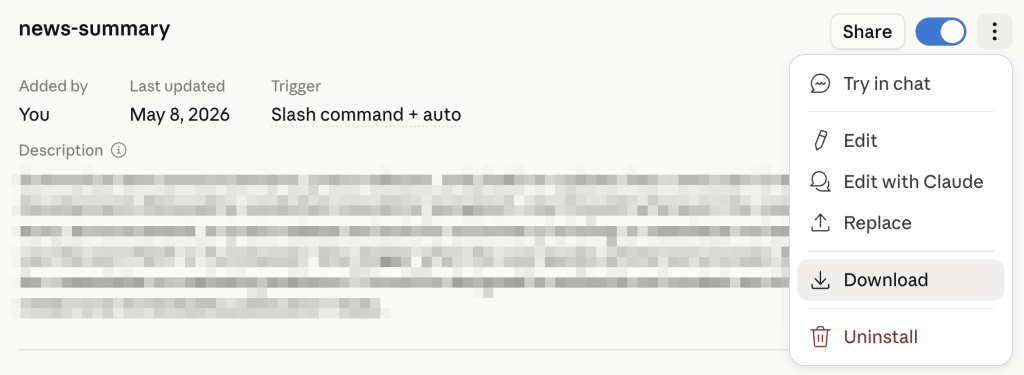
Once storage is externalized, the next step involves standardizing instructions. This is achieved through the creation of "Skills"—portable packages of instructions formatted in Markdown (.md). Rather than copy-pasting prompts, users develop a SKILL.md file. This file acts as a universal set of directions that any high-level LLM (Large Language Model) can interpret. This phase transforms the AI from a tool you "talk to" into a machine you "program" with standardized instruction sets.
Phase 3: The Deployment of Portable Agents
The final stage is the creation of self-contained, portable agents within ubiquitous software like Microsoft Excel. In this stage, the instructions, the history of the work, and the data all live within a single file (like an .xlsx workbook). By using AI plugins for Excel from multiple providers (Claude, ChatGPT, and Copilot), the workbook becomes a living environment where different AI "agents" can be summoned to perform tasks based on instructions embedded directly within the spreadsheet’s tabs.
Supporting Data: The Technical Pillars of Portability
To achieve true portability, three technical components must work in tandem: External Context, Markdown Instruction Sets, and Cross-Platform Plugins.
The Role of Markdown (.md)
Markdown is the "lingua franca" of portable AI. It is a lightweight markup language that provides structure to plain text. AI models process Markdown more efficiently than standard prose because it uses clear headers, bullet points, and code blocks to denote hierarchy. A portable skill is essentially a .zip file containing a SKILL.md file and any necessary assets (logos, JSON data, or scripts).
Curated Context vs. Massive Libraries
A common data-related misconception is that "more context is better." However, technical testing reveals that AI performance degrades when forced to sift through massive document libraries. Supporting data suggests that curated context—pointing an AI to a specific folder containing only the five most relevant documents—yields a higher accuracy rate than connecting it to an entire company drive.
The Excel Plugin Ecosystem
The most robust current example of portability is the integration of AI within Microsoft Excel. By activating the Claude for Excel, ChatGPT for Excel, and Microsoft Copilot plugins simultaneously, a user creates a multi-engine environment.
- Claude for Excel: Favored for its aesthetic output and nuanced formatting.
- ChatGPT for Excel: Leveraged for complex logical reasoning and data manipulation.
- Microsoft Copilot: Used for deep integration with other Microsoft 365 data.
Official Responses and Expert Insights
Nicole Leffer, a leading voice in AI business integration, emphasizes that portability is a mindset shift. "A skill works like Neo downloading martial arts in The Matrix," Leffer explains. "You hand it to an AI, and it immediately knows how to perform the task."

However, experts also issue a stern warning regarding the "Public Skill" market. As users begin to share and sell portable skills on platforms like GitHub, a significant security risk emerges.
The Security Verdict
Unlike a simple text prompt, a "Skill" can include executable code or instructions that command the AI to interact with external systems. "A skill can contain a virus or code that instructs the AI to connect to your CRM, extract customer data, and send it to an external destination without you knowing," Leffer warns. The official recommendation from industry leaders is to only use skills created internally or sourced from verified providers like Anthropic, OpenAI, or Google.
Michael Stelzner, founder of Social Media Examiner, notes the collaborative benefits of this approach. By "zipping up" a skill, a manager can hand a complex workflow to a team member who can then deploy it in their own AI environment without needing shared account access, preserving both security and individual customization.
Implications: The Future of the AI-Agnostic Professional
The move toward portable workflows has profound implications for the future of work and the AI economy.
1. The Rise of the "AI Architect"
The role of the prompt engineer is evolving into that of an AI Architect. These professionals will not be judged by their ability to "talk" to an AI, but by their ability to build durable, portable systems that can survive the obsolescence of any single platform.
2. Commodity Models
As workflows become more portable, AI models themselves become "commoditized." If it is easy to switch from OpenAI to Anthropic, the providers will be forced to compete more aggressively on price and reliability rather than on user lock-in. This is a win for business consumers but a challenge for the "moats" of tech giants.
3. The "Self-Briefing" Document
We are entering an era of the "self-briefing" document. In the example of the portable Excel workbook, the document contains its own history and its own instructions. This means that as the document moves through a company, the AI attached to it always knows exactly what has been done and what needs to happen next. This reduces the "onboarding" time for both humans and machines.
4. Resilience as a Competitive Advantage
In an era of digital volatility, resilience is a competitive advantage. Companies that invest the time to build platform-agnostic workflows today will be the ones standing when the "AI bubble" shifts or when major platforms undergo significant structural changes.
Conclusion
Building portable AI workflows is an exercise in future-proofing. By leveraging external storage, standardized Markdown instructions, and multi-platform integrations like Excel, marketers and business owners can ensure their operations remain agile. As Nicole Leffer suggests, the goal is not to avoid using the best tools available, but to ensure that no single provider holds your business infrastructure hostage. In the world of AI, the ultimate power is the ability to take your work anywhere.