The Future of Digital Engagement: Defining the Marketing Landscape for the Coming Year
Marketing, much like the dynamic e-commerce ecosystem it supports, is in a state of perpetual metamorphosis. Every year, the industry witnesses the emergence of transformative trends—some birthed from the daring strategies of global titans, others catalyzed by agile agencies testing the limits of promotional creativity. As we navigate the current landscape, it is evident that marketing is no longer just about selling a product; it is about facilitating a connection.
The last few years have ushered in a fundamental shift: communication and promotion are now tethered to social interaction. Whether through the rapid-fire feedback loops of social media or the emotive power of video, consumers are demanding dialogue rather than monologue. Consequently, investments in digital marketing have reached record highs. Both organic and paid strategies now require significant capital and time, reflecting a sophisticated effort to reach the right consumer on the right channel at the exact moment of intent.
In this comprehensive analysis, we examine the pivotal marketing trends emerging for the coming period and discuss the implications for businesses looking to remain competitive in a saturated digital market.
1. Responsible Artificial Intelligence: The New Ethical Frontier
The integration of Artificial Intelligence (AI) into marketing has moved beyond mere automation; it is now an ethical imperative. Responsible AI refers to the transparent, equitable, and socially conscious deployment of machine learning algorithms.
The Pillars of Ethical AI
As brands deploy AI to manage customer data and generate content, they face mounting pressure to uphold the following principles:
- Data Privacy and Consent: AI systems must be built on a foundation of "privacy-by-design," ensuring that user data is collected ethically and stored securely.
- Algorithmic Transparency: Companies must be able to explain how their AI models reach conclusions. The "black box" approach is no longer acceptable to consumers or regulators.
- Bias Mitigation: AI models must be audited regularly to ensure they do not perpetuate societal biases regarding race, gender, or socioeconomic status.
Implications for the Brand
The shift toward responsible AI is not merely a legal requirement; it is a brand-building exercise. Companies that prioritize ethical AI foster deeper trust with their audience. When a brand demonstrates that it uses data to improve the user experience rather than to exploit it, customer loyalty increases.
2. Sustainability: From Niche Value to Core Strategy
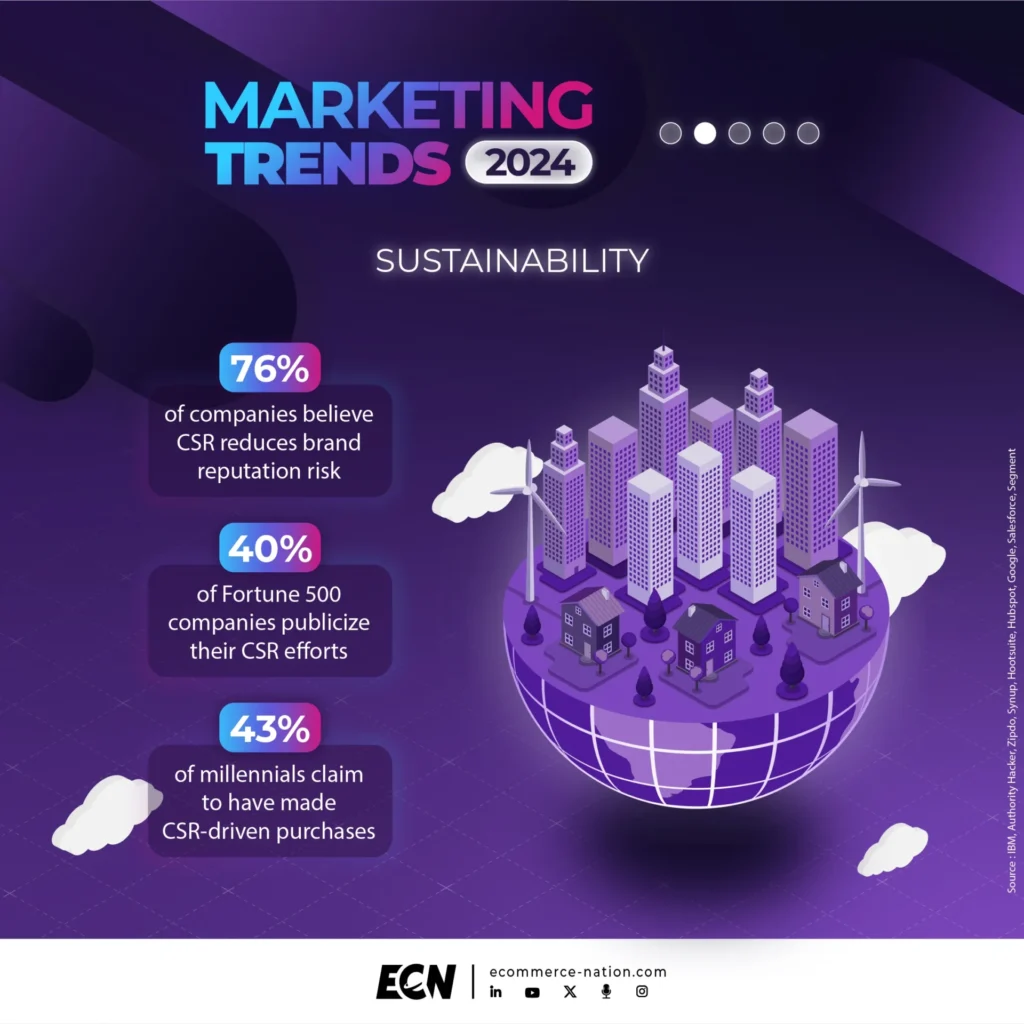
Sustainability has evolved from a "nice-to-have" CSR initiative into a primary driver of consumer purchasing decisions. In the digital marketing sphere, this means moving beyond greenwashing toward transparent, action-oriented communication.
Communicating Sustainable Value
Brands must now articulate their environmental footprint with clarity. This involves showcasing eco-friendly production methods across social media, blogs, and video campaigns. Consumers are increasingly adept at identifying authentic commitment versus performative marketing; thus, the message must be backed by evidence.
Technology as a Tool for Traceability
One of the most exciting developments is the use of blockchain for supply chain transparency. By allowing customers to track the lifecycle of a product—from raw material to the final shelf—brands provide the ultimate form of reassurance. Furthermore, mobile applications that calculate the carbon footprint of a purchase are becoming essential tools for the environmentally conscious shopper.
Engagement through Social Responsibility
Sustainability offers a unique opportunity for community building. By inviting followers to participate in recycling programs, carbon-offsetting initiatives, or educational webinars, companies transform passive consumers into active brand advocates. Collaborating with influencers who authentically embody these values further amplifies the brand’s mission, bridging the gap between corporate goals and consumer lifestyles.

3. The Conversational Search Revolution
The way consumers interact with the internet is changing, moving away from fragmented, keyword-heavy queries toward natural, conversational language. This shift is driven by the ubiquity of voice search and the rising sophistication of AI-powered smart assistants like Siri, Alexa, and Google Assistant.
The Shift to Semantic Search
Traditional SEO strategies centered on stuffing keywords into text are rapidly losing efficacy. Today’s search engines prioritize "intent." When a user asks their smart speaker, "Where can I find organic coffee beans near me that offer sustainable packaging?" they expect a conversational, direct answer.
Marketers must optimize their content to address these complex, long-tail queries. This requires a transition to semantic search—structuring data so that search engines understand the context, relationship, and intent behind the user’s question.
The Role of AI in Anticipatory Marketing
Smart assistants are becoming increasingly proactive. They don’t just answer questions; they anticipate needs. For a business, this means appearing in "featured snippets" or "position zero" results. By providing high-quality, authoritative answers to common questions within their industry, brands can position themselves as the go-to source, effectively capturing the user at the beginning of their customer journey.
4. The Power of Short-Form and Immersive Content
In an era of dwindling attention spans, video content has become the undisputed king of digital engagement. However, the nature of this content is diversifying into two specific categories: hyper-concise social clips and high-immersion interactive experiences.

The Dominance of Short-Form Media
Platforms like TikTok, Instagram Reels, and YouTube Shorts have conditioned the modern consumer to digest information in under 30 seconds. To succeed, brands must master the "hook"—capturing interest within the first three seconds through storytelling, humor, or high-contrast visuals. These formats are not just for entertainment; they are highly effective vehicles for product launches, customer testimonials, and time-sensitive promotional offers.
Immersive Experiences: AR and VR
Beyond the screen, brands are using Augmented Reality (AR) and Virtual Reality (VR) to bridge the gap between the digital and physical worlds. Retailers, for example, are deploying AR filters that allow customers to "try on" glasses, makeup, or even see how furniture looks in their living rooms. By reducing the uncertainty associated with online shopping, these tools significantly improve conversion rates and decrease return rates.
5. Hyper-Personalization: The New Standard
Hyper-personalization is the culmination of data analytics and machine learning. It is the practice of moving beyond "Hello [Name]" emails toward creating highly customized journeys for every single user.
Data-Driven Segmentation
By leveraging AI to analyze vast datasets—including past purchase history, browsing behavior, and even local weather patterns—brands can deliver dynamic content that feels custom-built.
Key Strategies for Hyper-Personalization:
- Dynamic Website Content: Displaying products, banners, and offers based on the user’s specific interests.
- Predictive Recommendations: Using machine learning to suggest the next logical purchase before the customer even realizes they need it.
- Behavioral Triggering: Sending personalized push notifications or emails based on real-time actions, such as abandoning a cart or viewing a specific product category repeatedly.
The goal of hyper-personalization is to remove friction. When a customer feels that a brand truly "knows" them, the psychological barrier to purchase is significantly lowered, fostering a sense of loyalty that is difficult for competitors to disrupt.

Implications and Future Outlook
As we analyze these trends, the overarching implication for businesses is clear: the divide between technology and human connection is closing.
Chronology of Adoption:
- Phase One (Early Adoption): Brands experiment with AI and VR to gain a "first-mover" advantage.
- Phase Two (Mainstream Integration): These tools become standard requirements for market entry.
- Phase Three (Optimization): Companies refine their use of data and sustainability initiatives to build long-term, high-value customer relationships.
Supporting Data and Official Responses:
Recent industry reports indicate that companies investing in personalization see an average of 15% to 20% higher conversion rates. Furthermore, surveys from consumer advocacy groups reveal that over 70% of Gen Z and Millennial shoppers are willing to pay a premium for products from brands that demonstrate a genuine commitment to sustainability.
The Road Ahead:
The marketing landscape for the coming period will be defined by those who can successfully balance the efficiency of automation with the warmth of authentic human connection. Responsible AI, sustainability, conversational search, interactive video, and hyper-personalization are not just fleeting trends—they are the new building blocks of digital commerce.
To thrive, businesses must move away from the "one-size-fits-all" approach and embrace a model that is inherently responsive, ethical, and immersive. By aligning these trends with a coherent brand strategy, marketers will not only capture attention but will also earn the long-term trust of an increasingly discerning global audience.