The Dawn of Connected AI: How the Model Context Protocol (MCP) is Reshaping Marketing
The digital marketing landscape is undergoing a seismic shift, accelerated by the pervasive influence of artificial intelligence. What was once a multi-step, deliberative buyer journey has collapsed into a mere two-step interaction, driven by AI assistants that instantly recommend solutions. In this hyper-efficient, AI-first world, a brand’s survival and success hinge on its ability to be not just present, but preferred by these intelligent gatekeepers. Enter the Model Context Protocol (MCP), a revolutionary open standard poised to redefine how marketers connect their brands to the AI systems now dictating consumer choices.
Main Facts: The AI-Driven Buyer Journey and MCP’s Emergence
The traditional buyer journey, a winding path of discovery, comparison, and deliberation, has fundamentally transformed. For years, consumers navigated a landscape that involved numerous steps: searching a category on Google, clicking through multiple results, comparing providers, checking reviews, and iterating their search until a shortlist emerged. This exhaustive process could easily span ten distinct interactions. Today, the modern consumer bypasses much of this complexity. They simply ask an AI assistant – be it ChatGPT, Claude, Gemini, or Copilot – "What’s the best option for me?" and almost instantaneously, a concise list of recommendations appears. The implication for brands is stark: if your company isn’t featured prominently in that three- or four-name shortlist, you haven’t just lost a potential deal; you were never even in the race.
This dramatic acceleration of the buyer journey presents an existential challenge for marketers. The pressing question on every marketing team’s mind is no longer just about visibility, but about influence: How can we ensure AI accurately represents our brand, and more importantly, actively advocates for it, rather than offering generic advice? The answer, increasingly, lies in the Model Context Protocol (MCP).
MCP is an open, standardized framework designed to create a direct, seamless connection between AI assistants and a brand’s proprietary digital ecosystem. Think of it as the "USB-C port for AI": a universal connector that allows any compatible AI agent to plug into a company’s files, tools, databases, and platforms, read their data, and even act within them. This standardized bridge is crucial because it transforms AI from a generic information provider into a brand-specific strategist, capable of delivering insights and recommendations grounded in a company’s unique context and performance data. It is the linchpin in ensuring that AI doesn’t just "know" about your brand, but truly "understands" it, enabling marketers to regain control and leverage AI for competitive advantage.
Chronology: From Lengthy Journeys to Instant AI Recommendations
The evolution of the buyer journey into its current AI-dominated form has been remarkably swift. Just a few years ago, the internet empowered consumers with unprecedented access to information, leading to a sprawling research phase. A typical purchase decision might involve:
- Initial Search: Typing a broad query into a search engine.
- Exploration: Clicking on 3-5 organic and paid results.
- Comparison: Visiting competitor websites, reading product specifications.
- Review Aggregation: Checking third-party review sites, forums, and social media.
- Content Consumption: Reading blog posts, whitepapers, watching videos related to the category.
- Vendor Shortlisting: Narrowing down options to 3-5 providers.
- Direct Contact: Requesting demos or quotes.
- Internal Discussion: Consulting with colleagues or family.
- Final Evaluation: Weighing pros and cons.
- Purchase Decision: Selecting a vendor.
This multi-faceted process, while empowering, was also time-consuming. However, the advent of sophisticated generative AI assistants—epitomized by the widespread adoption of models like ChatGPT, Claude, Gemini, and Microsoft Copilot—has fundamentally disrupted this paradigm. These AI agents, trained on vast datasets of internet information, possess the capability to synthesize complex queries and provide concise, curated answers.
The shift began subtly, with AI assistants initially offering summaries and quick facts. But their capabilities rapidly expanded, evolving from simple search companions to powerful recommendation engines. Users quickly discovered the efficiency of asking an AI, "What’s the best noise-canceling headphone for frequent travelers?" or "Which CRM software is ideal for a small business?" The AI, drawing on its vast knowledge base, would then present a concise answer, often a ranked list or a direct recommendation, complete with rationale. This immediate, authoritative response effectively short-circuited the traditional 10-step journey into a mere two: "Ask AI, click recommendation."

This rapid evolution created a critical gap for marketers. While AI models could process and generate information, their understanding of specific brands was often limited to publicly available, generic data. They lacked the real-time, proprietary context that makes a brand truly unique – its live sales data, customer feedback, inventory levels, or internal strategic documents. Without a direct conduit to this vital information, AI’s recommendations, while plausible, remained generic. This is precisely why the Model Context Protocol (MCP) emerged as a necessity. Recognizing the urgent need for AI to move beyond generalized advice and provide brand-specific, actionable insights, MCP was developed as an open standard. Its purpose: to provide that universal, standardized bridge, enabling AI to access and leverage the unique, dynamic data that truly differentiates one brand from another. MCP isn’t just an improvement; it’s a foundational shift in how brands interact with the AI-driven future.
Supporting Data: Deep Dive into MCP’s Mechanics and Marketing Impact
To fully grasp the significance of MCP, it’s essential to understand its underlying mechanics and the profound impact it has on marketing operations. MCP is not a new AI model, nor does it magically imbue existing models with superior intelligence. Instead, it acts as a sophisticated bridge, a secure, standardized conduit that connects these powerful AI assistants directly to a brand’s internal data ecosystem.
How MCP Works: The "Code-Free Handshake"
At its core, MCP facilitates a "code-free handshake" between AI models and your business systems. Without MCP, an AI model reasons solely from its pre-trained data and any information you manually paste into a chat interface. This means its understanding of your brand is limited to what it has passively ingested from the public web, which can often be outdated, incomplete, or simply generic.
With MCP, this limitation is overcome. The protocol allows AI to:
- Pull Live Information: Access real-time data from your analytics platforms (e.g., Google Analytics, Adobe Analytics), Customer Relationship Management (CRM) systems (e.g., Salesforce, HubSpot), Content Management Systems (CMS) (e.g., WordPress, AEM), internal documents, search data tools (e.g., BrightEdge, Semrush), ad platforms (e.g., Google Ads, Meta Ads Manager), and social listening tools.
- Act Inside Systems: In some advanced implementations, MCP could potentially enable AI to initiate actions or update information within connected systems, under strict human oversight and predefined permissions.
The practical application is remarkably straightforward. A marketing team approves the MCP connection once, linking their chosen AI assistants (ChatGPT, Claude, Copilot, Gemini) to their specified data sources. From then on, when a marketer prompts the AI, the model can dynamically query these connected systems for the most current and relevant brand-specific data. The insights generated are no longer speculative or generalized but reflect the brand’s actual performance, competitive standing, and customer interactions. This unified connection means that one MCP setup can serve multiple AI agents and, crucially, deliver consistent, data-driven outputs directly into the tools marketing teams already use, enabling immediate action.
Transforming Marketing Across the Board

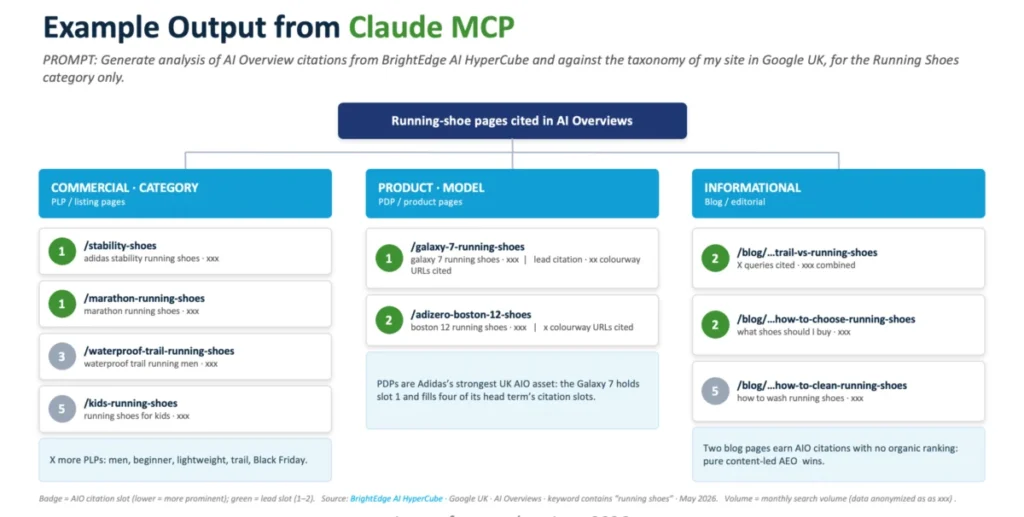
The real power of MCP for marketers lies in its ability to transform generic AI output into actionable, strategic intelligence. An unconnected AI might offer plausible, but ultimately vague, suggestions like "focus on SEO" or "create more engaging content." A connected AI, powered by MCP, provides data-backed directives:
- SEO & Content Strategy: Instead of generic advice, MCP-connected AI can identify specific keywords where competitors are winning AI recommendations, pinpoint content gaps where your brand is underrepresented, and prioritize pages for optimization based on live search demand and your current AI visibility. It can even suggest content topics that address emerging search trends directly relevant to your target audience and your current offerings.
- Paid Media Optimization: AI connected to ad platforms and analytics via MCP can analyze real-time campaign performance, identify underperforming ad creatives, suggest bid adjustments for specific audience segments, and even forecast campaign ROI based on historical data and current market conditions. This moves beyond basic automation to truly intelligent, data-driven campaign management.
- Customer Experience & Personalization: By connecting to CRM and customer service logs, AI can gain a holistic view of individual customer journeys. This enables highly personalized marketing messages, predictive analytics for customer churn, and proactive customer support recommendations.
- Social Media Engagement: MCP can link AI to social listening tools, allowing it to analyze brand sentiment in real-time, identify trending topics relevant to your industry, and even draft contextually appropriate responses to customer inquiries or comments, all informed by your brand guidelines and current campaigns.
- CMO & Leadership Insights: Higher up the organizational chart, MCP empowers AI to roll up live signals into strategic summaries. Instead of generic market platitudes, a connected AI can provide a CMO with a concise overview of the brand’s current AI visibility, a prioritized list of competitive threats, and data-backed recommendations for resource allocation – all without the need for manual dashboard digging or hand-built presentations. This transforms AI into a strategic advisor, providing clarity and direction at the executive level.
The Indispensable Role of "Good Data"
The core tenet underpinning MCP’s effectiveness is that AI is only as good as the data that feeds it. It’s a tempting fallacy to assume the "magic" resides solely within the AI model itself. However, while advanced models can draft briefs or suggest content ideas, they cannot inherently understand your unique business context—your brand’s specific strengths, weaknesses, competitor landscape, or precise content gaps. An unconnected model will offer the same general advice to you as it would to your fiercest rival.
The true differentiator is the quality and relevance of the data flowing into the model via MCP. For AI to become the "sharpest analyst on your team," the connected data must possess four critical traits:
- Accuracy: The data must be factually correct and free from errors. Incorrect data will lead to confidently wrong AI recommendations, undermining trust and efficacy.
- Precision: Data needs to be specific enough to provide granular insights. Broad, vague data yields equally broad, vague AI outputs.
- Current: Real-time or near real-time data is paramount. The fast-paced nature of digital marketing means stale data quickly becomes irrelevant. MCP’s ability to pull live feeds is a key advantage here.
- Trusted: Marketers must have confidence in the integrity and source of the data. If the data isn’t trusted, its AI-generated insights will be questioned and ultimately ignored.
Feeding an AI with stale, partial, or low-fidelity data doesn’t make it smarter; it merely makes it confidently inaccurate. The marketing platforms and strategies that will truly thrive in the AI era are those built upon a foundation of rigorously curated, high-quality, and trusted proprietary data. MCP provides the vital connection, but the onus remains on marketers to ensure the data flowing through it is worthy of the critical decisions it will inform.
Official Responses: Industry Adoption and the Call for Standardization
While the concept of "official responses" typically refers to public statements from organizations, within the context of MCP, it speaks more to the growing industry recognition of the need for such a protocol and the subsequent movement towards its adoption. The marketing technology ecosystem, once fragmented and siloed, has long grappled with the challenge of integrating disparate data sources. The explosion of AI assistants, each operating independently, only exacerbated this issue, creating a new layer of complexity.
Before the advent of standardized protocols like MCP, connecting AI to proprietary data often involved custom integrations, complex APIs, or manual data uploads – processes that were costly, time-consuming, and difficult to scale. This fragmented approach meant that insights generated by AI were often inconsistent, incomplete, or delayed, hindering their utility for agile marketing teams.

The industry’s "response" to this challenge has been a clear and accelerating demand for interoperability and standardization. Major AI developers, recognizing that the true value of their models for enterprise users lies in their ability to interact with real-world, proprietary data, have actively supported the development and adoption of open protocols. This support manifests in:
- API Development: AI providers increasingly offer robust APIs that allow third-party developers and platforms to integrate their models, creating the technical foundation for protocols like MCP.
- Partnerships: Strategic alliances between AI companies and marketing technology vendors aim to build seamless data flows, with MCP acting as a crucial enabling layer.
- Community Engagement: The open-source nature of many such protocols, including MCP, fosters a collaborative environment where developers and data scientists contribute to its refinement and broader acceptance.
- Platform Integration: Leading marketing analytics, CRM, and CMS platforms are actively exploring or implementing MCP compatibility, understanding that their clients need AI to leverage their stored data effectively. This signifies a collective acknowledgment that the future of marketing AI is "connected."
Early adopters of MCP-like solutions are already demonstrating a clear competitive edge. By being able to feed their unique data into AI models, these brands are generating hyper-personalized campaigns, optimizing spend with unprecedented precision, and gaining market intelligence that their less-connected rivals simply cannot access. This success acts as a powerful "official response" from the market itself, signaling that connected AI, facilitated by protocols like MCP, is not merely a trend but a strategic imperative that is rapidly becoming the industry standard.
Implications: The Future of Marketing in an MCP-Enabled World
The Model Context Protocol is more than just a technical bridge; it’s a strategic enabler that holds profound implications for the future of marketing, reshaping competitive dynamics, organizational structures, and the very nature of marketing decision-making.
1. A New Competitive Battleground: AI Visibility
The most immediate implication is the shift in competitive advantage. The battle for organic search rankings or ad placements will evolve into a battle for "AI visibility" – ensuring your brand is the one recommended by AI assistants. Brands leveraging MCP to accurately inform AI about their unique value proposition, product features, and customer satisfaction will gain a significant lead. This means a proactive approach to data quality and connection becomes a non-negotiable aspect of competitive strategy.
2. Hyper-Personalization at Scale
With AI models having direct access to granular, real-time customer data (via CRM, analytics, purchase history), the promise of true hyper-personalization becomes a reality. Marketing messages, product recommendations, and customer service interactions can be tailored with unprecedented precision, moving beyond segmentation to individual-level engagement at massive scale. This will significantly enhance customer loyalty and conversion rates.
3. Predictive Analytics and Proactive Marketing
MCP-connected AI can move beyond reactive analysis to powerful predictive capabilities. By correlating internal data (e.g., sales trends, inventory, website behavior) with external market signals, AI can forecast future demand, identify potential customer churn, or flag emerging market opportunities. Marketers can then proactively adjust strategies, optimize campaigns, and allocate resources with greater foresight and efficiency.
4. Enhanced Marketing Efficiency and ROI
The automation of data analysis, report generation, and even initial content drafting, all informed by proprietary data, will dramatically increase marketing team efficiency. Tasks that once required hours of manual data aggregation and interpretation can be completed in minutes, freeing up human marketers to focus on higher-level strategy, creativity, and relationship building. This translates directly into improved marketing ROI.

5. The Evolving Role of the Marketer
Far from rendering marketers obsolete, MCP elevates their role. The future marketer will be less of a data extractor and more of a data curator, strategist, and AI trainer. Their expertise will be in defining the right questions for the AI, interpreting its data-driven insights, ensuring data integrity, and translating AI recommendations into compelling, human-centric campaigns. Strategic thinking, creativity, and ethical judgment will become even more valuable.
6. Data Governance, Security, and Ethics
Connecting proprietary data to AI models, even through a secure protocol like MCP, brings critical considerations regarding data governance, privacy, and security. Marketers and IT teams must collaborate closely to establish robust frameworks for data access, usage permissions, and compliance with regulations like GDPR and CCPA. The ethical implications of AI recommendations, potential biases in data, and transparency with consumers will also become paramount.
Getting Started with MCP: A Strategic Roadmap
For marketers eager to harness the power of MCP, a structured approach is key:
- Prioritize Proprietary Data: Begin by identifying the unique data sources that truly differentiate your brand. This includes sales data, customer feedback, internal research, unique product specifications, and your historical performance metrics.
- Start Small, Scale Smart: Don’t attempt to connect every system at once. Select 2-3 high-impact data sources (e.g., your primary analytics platform, CRM, and a key content performance tool) for an initial pilot.
- Ensure Data Quality: Before connecting, audit your chosen data sources for accuracy, precision, and timeliness. Garbage in, garbage out applies rigorously to AI. Invest in data cleansing and ongoing data governance.
- Define Use Cases: Clearly articulate specific marketing challenges or questions you want AI to answer with your data. This helps focus your implementation and measure success.
- Test, Learn, and Iterate: Begin with controlled experiments. Analyze the AI’s output, compare it to insights from unconnected AI, and refine your data connections and prompts based on the results.
- Foster Cross-Functional Collaboration: Implementing MCP effectively requires collaboration between marketing, IT, data science, and legal teams to ensure technical integration, data security, and compliance.
Cautions and Responsible Implementation
While MCP offers immense potential, it’s crucial to proceed with caution:
- Data Security and Privacy: Never connect sensitive, public-facing, or highly confidential customer data without robust security measures, anonymization protocols, and strict access controls. Adhere to all relevant data privacy regulations.
- Avoid "Magic Wand" Expectations: MCP is an enabler, not a silver bullet. It won’t compensate for poor data, ill-defined strategies, or a lack of human oversight.
- Continuous Oversight: AI outputs, even when data-driven, require human review and judgment. Biases can exist in data, and AI can sometimes generate "hallucinations" or suboptimal recommendations.
- Transparency: Be transparent with customers about how AI is used in your marketing, especially regarding personalization and recommendations. Building trust is paramount.
The buyer journey has irrevocably changed. Consumers are increasingly outsourcing their initial research to AI, expecting instant, tailored recommendations. The marketers who will thrive in this new era are not those with the cleverest prompts, but those who strategically connect their AI to data worth trusting, and then act decisively on the resulting insights. MCP provides the essential bridge for this transformation. By grounding AI in accurate, precise, current, and trusted proprietary data, marketers can evolve a generic assistant into their sharpest, most invaluable strategic analyst, securing their brand’s place at the forefront of the AI-driven future.